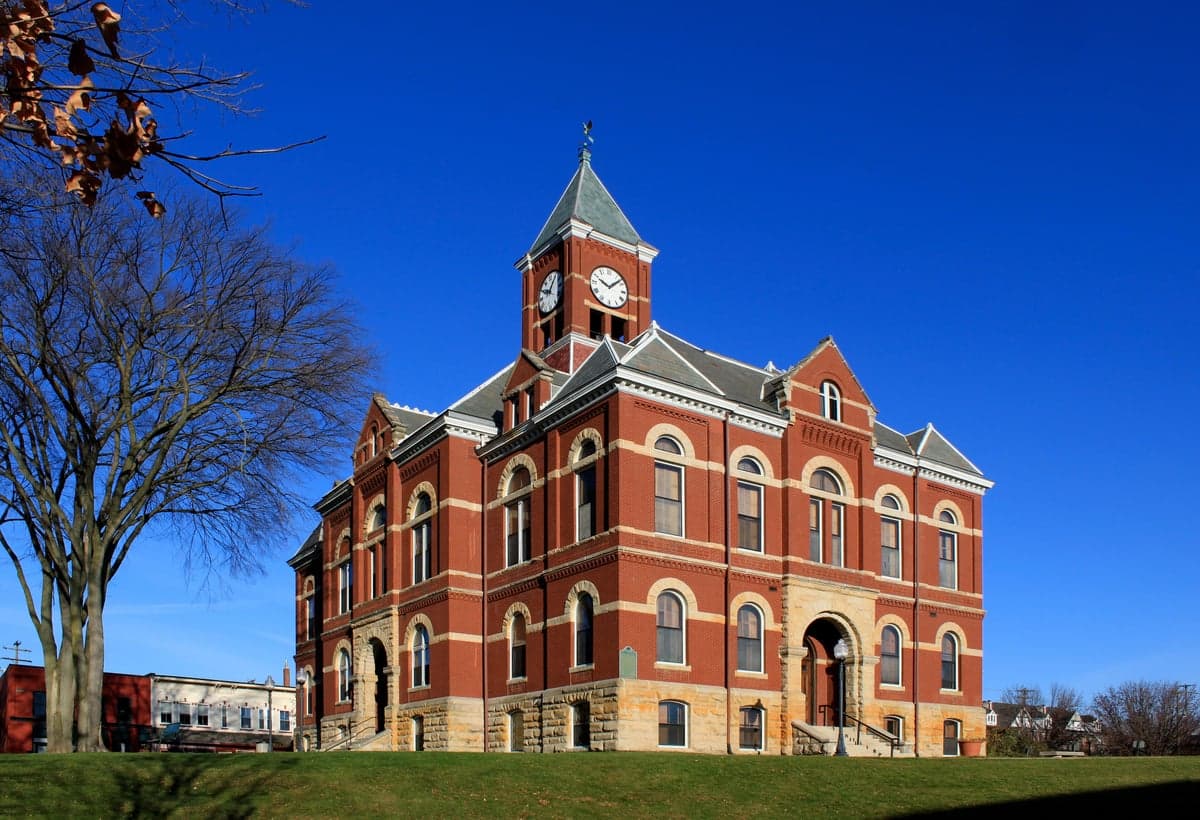
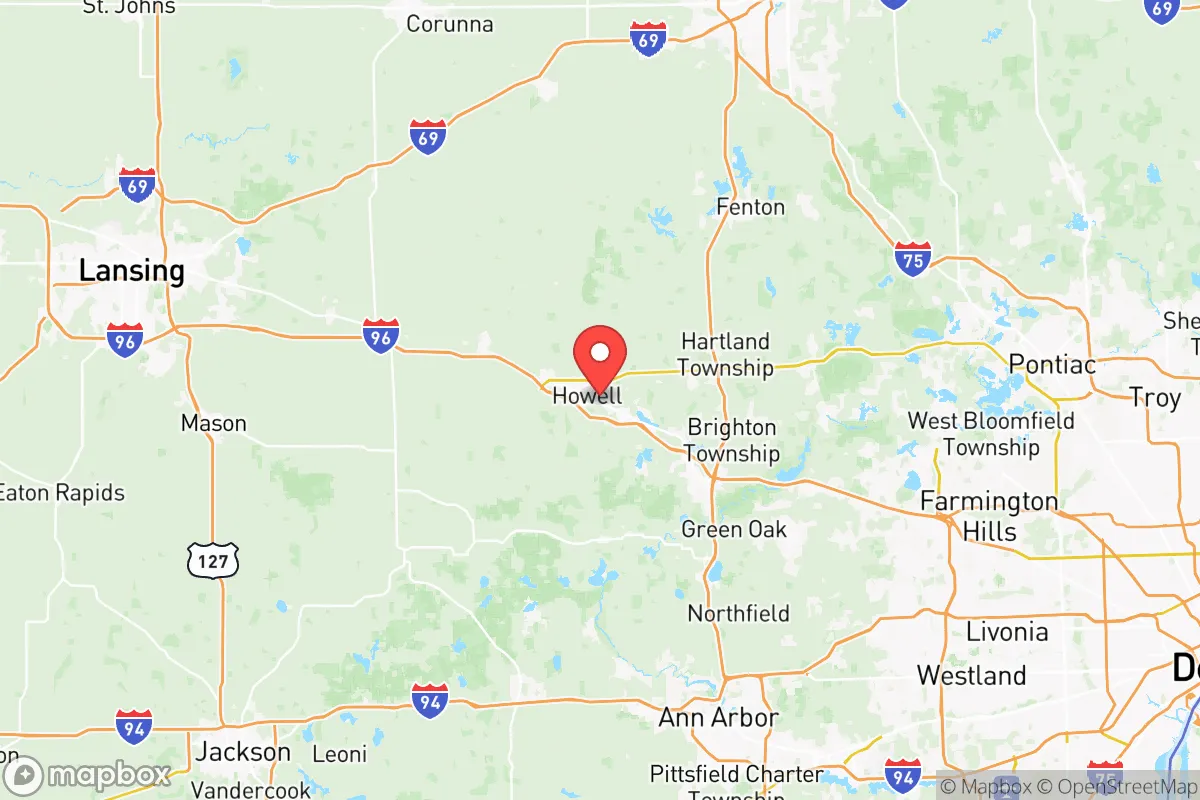
Photo: Wikipedia
Political ClimatePolitical Climate in Livingston County
Showing district-level results — no local-only data available.
Local Political AnalysisPolitical Analysis of Livingston County
Livingston County sits right at the political center of Michigan, carrying a Cook PVI of EVEN — meaning it votes almost identically to the national average. That's a remarkable shift for a county that was once a Republican stronghold, and it mirrors the state's own EVEN rating. The county's trajectory is the real story: it's been drifting leftward for a decade, and the 2024 results showed a county that's now a genuine battleground rather than a lock for either party.
How it compares
Livingston County's EVEN rating puts it in rare company — it's one of the few counties in Michigan that matches the state's overall partisan balance exactly. The state itself is EVEN, which means Livingston is essentially a microcosm of Michigan's political split. But the county's internal geography tells a more nuanced story. The western townships — Howell, Fowlerville, and Cohoctah — still lean reliably Republican, with Howell Township regularly delivering 55-60% of its vote to GOP candidates. The eastern edge, particularly Brighton and Genoa Township, has become the swing zone; Brighton's precincts around the downtown and the Mill Pond area have flipped blue in recent cycles, while the newer subdivisions on the township's outskirts remain red. Hartland Township is the county's bellwether — it's voted with the winning candidate in every presidential race since 2000, and its precincts along M-59 are where both parties focus their canvassing.
What this means for residents
For conservative residents, the EVEN rating means their votes genuinely matter — this isn't a county where the primary decides the general election. The Livingston County GOP has responded by running more moderate candidates in county commission races, particularly in the Brighton and Hartland districts, to hold onto seats that were once safe. For liberal residents, the shift has been tangible: the county Democratic Party now fields candidates in nearly every local race, and the Brighton and Howell city councils have seen competitive contests with progressive candidates winning seats in recent cycles. The practical effect is that local government has become more deliberative — the county board, which was once unanimous on most votes, now sees regular 5-4 splits on issues like zoning, road funding, and the annual budget.
What daily life is like for families
The political shift hasn't changed the county's fundamental character — it's still a place where school board meetings in Pinckney and Fowlerville draw more attention than national politics. But the changing demographics are visible: the county's population has grown about 12% since 2010, driven largely by young families moving from Oakland County for the school districts and lower property taxes. Those newcomers tend to be fiscally conservative but socially moderate, which explains why the county voted for Trump in 2020 and 2024 but also passed a millage for the Howell Area Parks and Recreation Authority by a wide margin. The county's gun culture remains strong — there are three gun shops along Grand River Avenue alone — but the local Republican Party has softened its rhetoric on issues like marijuana legalization, which passed in the county with 58% support in 2018.
Looking ahead, the county's EVEN rating is likely to hold for the next few cycles. The demographic trends — more Oakland County transplants, more young families, more remote workers — point toward continued leftward drift, but the county's rural western townships are solidifying as a conservative base. The real action will be in the swing precincts of Brighton and Hartland, where both parties are already investing heavily in local organizing. For residents, the practical takeaway is simple: every vote counts, and the county's political future is genuinely up for grabs in a way it hasn't been in generations.

State Political ClimatePolitical Climate in Michigan
State Political AnalysisPolitical Environment in the State
Michigan is the ultimate swing state, with a Cook PVI of EVEN, meaning it sits dead center on the national political map. The state has oscillated wildly over the last decade: it went for Trump in 2016 by a razor-thin 0.2%, flipped hard to Biden in 2020 by 2.8%, and then saw Republicans sweep the state House in 2024 while Democrats held the Governor’s mansion and Senate. If you’re moving here, you’re not joining a red state or a blue state—you’re joining a 50/50 battleground where every election is decided by a few thousand votes in a handful of specific suburbs.
Urban vs. rural divide
The political map of Michigan is a tale of three distinct regions. The urban core of Detroit is overwhelmingly Democratic, with Wayne County delivering margins of 68% or more for Democrats in recent cycles. That’s the anchor of the blue coalition, but it’s not the whole story. The real battleground is the ring of suburbs around Detroit—places like Macomb County (home to Warren and Sterling Heights) and Kent County (Grand Rapids). Macomb County is the famous "Reagan Democrat" territory that flipped to Trump in 2016 and has stayed competitive since; it’s working-class, union-heavy, and culturally conservative on social issues. Kent County, meanwhile, has been trending blue for a decade as Grand Rapids’ tech and healthcare sectors boom, but the surrounding rural townships remain deeply red.
Up north, the picture is starkly different. The entire Upper Peninsula and the northern Lower Peninsula—places like Traverse City, Marquette, and Alpena—are rural, resource-dependent, and vote Republican by wide margins. The exception is Traverse City itself, which has become a liberal enclave of retirees and remote workers. The Lansing area (Ingham County) is a blue island in a sea of red, driven by state government workers and Michigan State University. And Ann Arbor (Washtenaw County) is the most liberal jurisdiction in the state, routinely voting 75%+ Democratic, powered by the University of Michigan. The practical takeaway: if you live in a city or a college town, you’re in blue territory; if you live anywhere rural, you’re in red territory; and if you live in the outer suburbs, you’re the person who decides every election.
Policy environment
Michigan’s policy environment is a mixed bag that reflects its swing-state status. The state income tax is a flat 4.25%, which is moderate by national standards. Property taxes are on the higher side, but Proposal A (1994) caps annual increases at the rate of inflation or 5%, whichever is lower, so longtime homeowners pay far less than newcomers—a hidden cost to be aware of when buying. Sales tax is 6%. The regulatory posture is generally business-friendly in the suburbs and rural areas, but the state has a strong union legacy; Michigan is not a right-to-work state anymore, having repealed that law in 2023.
Education policy is a flashpoint. Detroit’s public schools have been under state oversight for years, and school choice is robust—charter schools are plentiful, and inter-district open enrollment is common. Healthcare is dominated by the Big Three automakers’ legacy health systems (Henry Ford, Beaumont, and the University of Michigan), and the state expanded Medicaid under the Affordable Care Act. Election laws are moderate: no voter ID requirement at the polls (though you can be asked to sign an affidavit), and same-day voter registration is available. Absentee voting is no-excuse and permanent, which conservatives often criticize as lax and liberals defend as accessible.
Recent policy direction
The 2023-2024 legislative session was a seismic shift. Democrats held a trifecta (Governor, House, Senate) for the first time in 40 years and used it aggressively. They repealed the 1931 abortion ban, passed a red-flag gun law (Extreme Risk Protection Order Act), expanded the Elliott-Larsen Civil Rights Act to include sexual orientation and gender identity, and restored prevailing wage. They also repealed the right-to-work law and reinstated a 100% tax on pension income for high earners. On the Second Amendment front, Michigan now requires universal background checks for all gun sales and safe storage of firearms when minors are present—a significant departure from the state’s historically permissive gun culture.
On the conservative side, the 2024 election gave Republicans the state House, and they’ve already introduced bills to repeal the red-flag law, ban sanctuary city policies, and require voter ID. The state’s parental rights landscape is still relatively open—Michigan has no explicit ban on critical race theory in schools, but local districts have wide latitude on curriculum. School mask and vaccine mandates were left to local districts during COVID, which created a patchwork of policies. Property rights are generally strong; Michigan is not a state with aggressive eminent domain use, and the state’s Right to Farm Act protects agricultural operations from nuisance lawsuits. On privacy, Michigan has a biometric data privacy law (the first in the nation) that restricts how companies can collect fingerprints and facial scans.
Civil unrest & political movements
Michigan has a history of high-voltage political activism. The 2020 Whitmer kidnapping plot put the state’s militia movement on the national map; several members of the Wolverine Watchmen were convicted on federal charges. The state also saw massive anti-lockdown protests at the Capitol in 2020, with armed demonstrators entering the building—a flashpoint that still resonates. On the left, Detroit and Ann Arbor have active progressive movements, and the 2023-2024 pro-Palestinian encampments at the University of Michigan were among the largest in the country. Immigration politics are relatively quiet—Michigan has no sanctuary cities, but Detroit and Ann Arbor have "welcoming city" ordinances that limit cooperation with ICE. Election integrity is a live issue: the 2020 results were certified without major controversy, but Republican county canvassers in Antrim County initially refused to certify, and the state has since seen a wave of election-denier candidates win local GOP primaries.
Projection
Over the next decade, Michigan is likely to stay a toss-up, but the demographics are shifting subtly. The state’s population is aging and slowly declining overall, but the suburbs of Grand Rapids and Detroit are growing with young families and remote workers. The Detroit metro is seeing an influx of out-of-state transplants from Illinois and California, which tilts the balance slightly blue. Meanwhile, the Upper Peninsula and northern rural areas are depopulating, which concentrates red votes but reduces their raw numbers. The wildcard is the auto industry’s transition to electric vehicles—if EV manufacturing booms in the state, it could bring in a wave of union workers who are culturally conservative but economically populist, which would keep the state competitive. Expect the next five to ten years to look a lot like the last five: close elections, divided government, and policy whiplash every time control flips.
For a new resident, the bottom line is that Michigan rewards political engagement and punishes complacency. If you’re conservative, you’ll find your strongest communities in the rural north and the outer suburbs of Detroit and Grand Rapids, and you’ll need to accept that the state’s largest cities will always vote against you. If you’re liberal, you’ll feel at home in Ann Arbor, Detroit, Lansing, and Traverse City, but you’ll need to tolerate a state legislature that flips red regularly. The practical takeaway: your vote genuinely matters here, your local school board and county commission elections are fiercely contested, and the state’s policy direction can change dramatically every two years. That’s the price of living in the most competitive state in the nation—and for many, it’s the appeal.
* Values derived from national, state, county, city and local statistics and may differ in a specific area. Last updated: 2026-10-13T12:16:39.000Z
Narrative content on this page is AI-generated and may contain mistakes. Verify any details that matter before acting on them.
ReloMaps may earn a commission from affiliate links at no extra cost to you.

