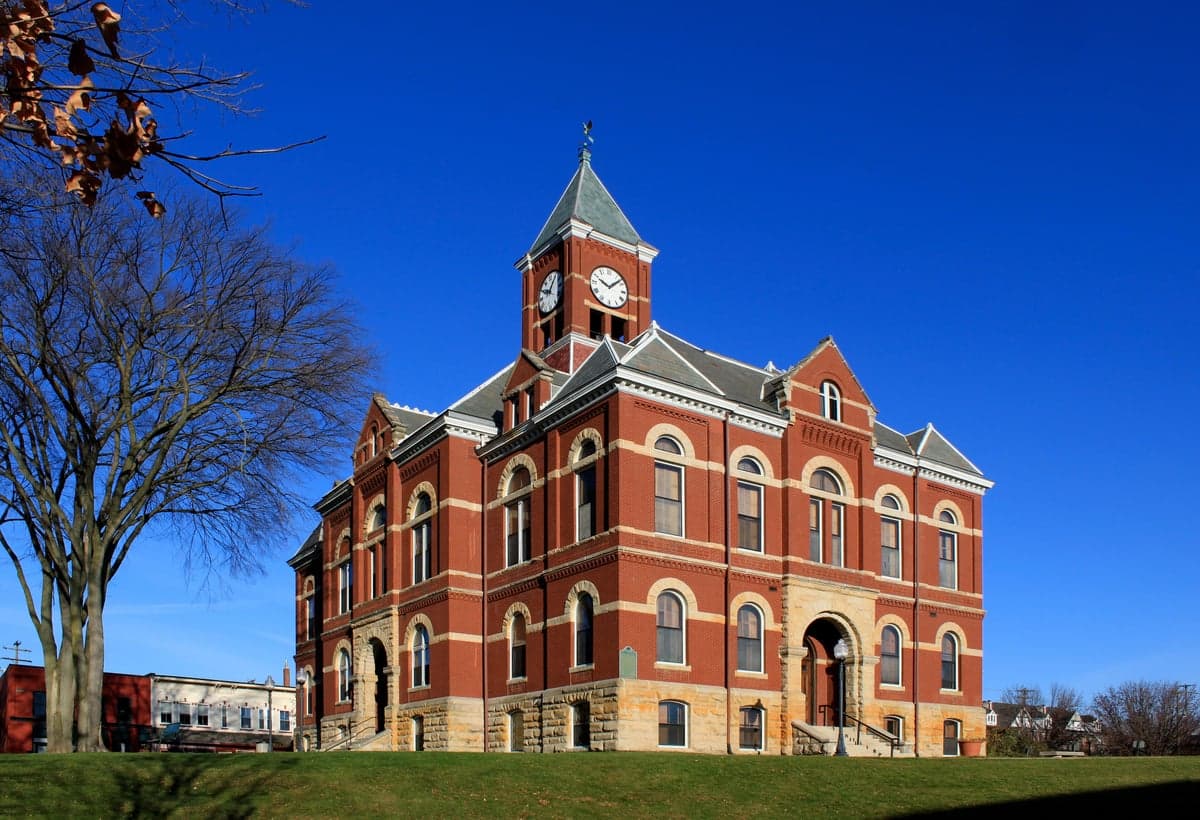
Photo: Wikipedia
Personal Sovereignty in Livingston County
Strong independent fundamentals that actively favor personal liberty and low regulation.
What does Personal Sovereignty tell us?
Personal Sovereignty measures your capacity for self-reliance and independence with minimal government friction. Higher scores mean fewer barriers between you and the way you want to live... but it assumes you have the space you need and good neighbors.
What does this tell us?
Personal Sovereignty measures your capacity for self-reliance and independence with minimal government friction. Higher scores mean fewer barriers between you and the way you want to live... but it assumes you have the space you need and good neighbors.
State Policy
Energy independence: Importer (20% of energy produced in-state)
Personal Liberty
Homesteading

Personal Liberty Analysis
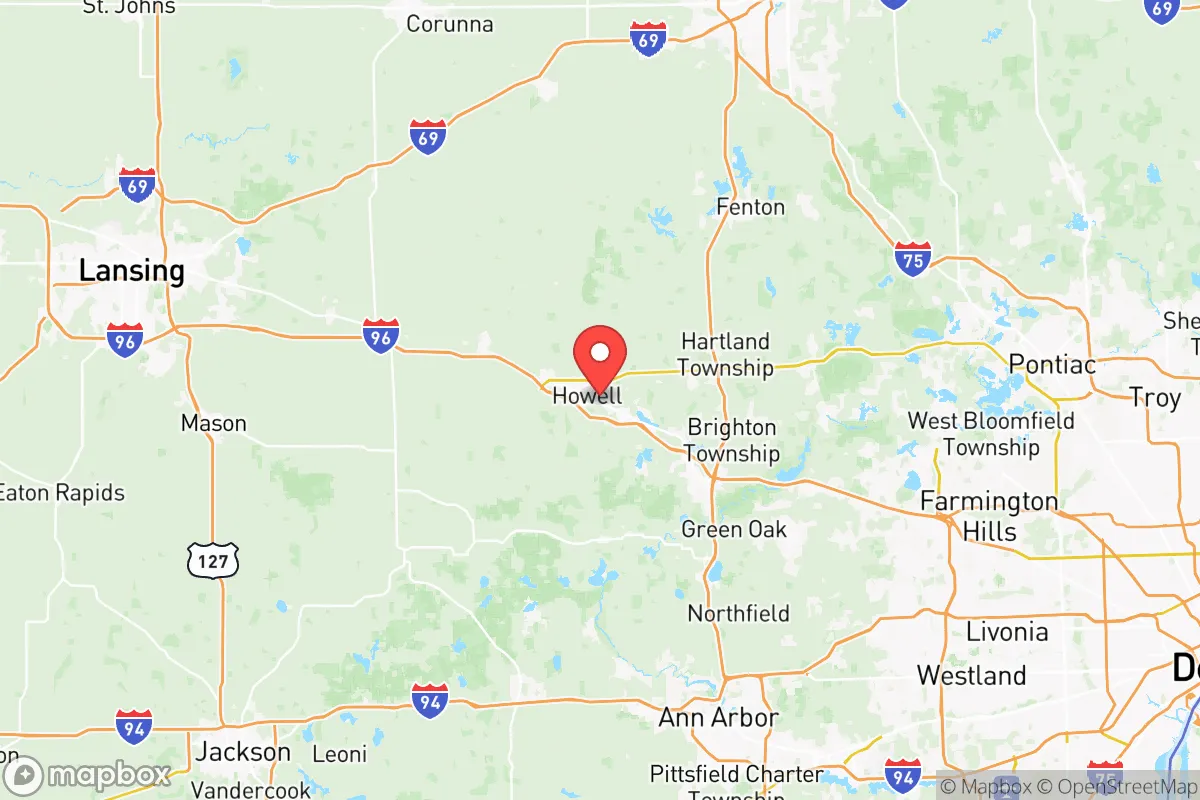
Livingston County, Michigan, offers a notably high degree of personal sovereignty compared to the urban cores of Metro Detroit, with a regulatory environment that leans light-touch on property use, taxation, and self-defense. The county’s roughly 1,300 square miles are dominated by small towns like Howell, Brighton, Fenton, and Pinckney, where local ordinances generally favor individual discretion over centralized control. For a single individual or family prioritizing autonomy, the practical question is less about whether freedom exists here and more about which specific township or village best matches your preferred level of independence.
How the tax burden and regulatory posture compare to surrounding counties
Livingston County’s tax environment is among the most favorable in Southeast Michigan, particularly when stacked against neighboring Washtenaw County (home to Ann Arbor) or Oakland County. The average residential property tax rate in Livingston hovers around 28 to 32 mills, which is roughly 10-15% lower than comparable properties in Washtenaw. There is no county-wide income tax, and Michigan’s flat 4.25% state income tax applies uniformly. The county government operates with a relatively lean administrative structure — there is no county executive, and the Board of Commissioners keeps a tight rein on spending, which has historically kept the general fund levy low.
Regulatory posture varies meaningfully by municipality. Howell Township and Marion Township are known for minimal zoning interference on agricultural and residential parcels, while the City of Brighton enforces more conventional suburban codes regarding setbacks, fences, and home-based businesses. If you run a trade or side business from home, unincorporated areas of Cohoctah Township and Deerfield Township are far more permissive than the villages, where occupational licenses and signage restrictions are more common. The county’s planning department generally defers to township boards, meaning the regulatory character you experience is decided at the local level — a fact worth verifying before you buy, as two parcels a mile apart can fall under entirely different rulebooks.
Self-defense law and gun culture specifics in Livingston County
Michigan is a shall-issue state for concealed pistol licenses (CPL), and Livingston County’s gun culture is robust and practical. The county sheriff’s office processes CPL applications with a typical turnaround of 2-4 weeks, well under the statutory 45-day limit, and the county clerk’s office in Howell handles the paperwork efficiently. Michigan law requires a CPL for concealed carry, but open carry without a license is legal for anyone 18 or older who can legally possess a firearm. Stand-your-ground protections are codified in Michigan statute, meaning you have no duty to retreat in any place you have a legal right to be.
Local culture is distinctly pro-2A. Gun shops and ranges are scattered throughout the county — Williams Gun Sight in Davison is a regional draw, but closer to home, H&H Shooting Sports in Brighton and Howell Gun Works serve the local community. The county’s annual Howell Melon Festival and other civic events see open carriers without incident, reflecting a social acceptance that differs sharply from Ann Arbor or Detroit. One nuance: the City of Fenton and the Village of Pinckney have local ordinances restricting discharge of firearms within their limits, so if you want to shoot on your own property, unincorporated townships like Putnam Township or Iosco Township are the safer bet. There is no county-wide discharge ban, and most rural townships allow target practice on parcels of two acres or more, provided you respect 450-foot setback rules from neighboring dwellings.
Self-reliance and homesteading viability: lot sizes, zoning, and off-grid feasibility
Homesteading is genuinely viable in Livingston County, but the degree of feasibility depends heavily on which township you choose. Agricultural zoning in the county’s western and northern tiers — Handy Township, Iosco Township, and Unadilla Township — requires minimum lot sizes of 5 to 10 acres for new splits, which preserves the rural character and gives you room for livestock, orchards, or a substantial garden. In contrast, the eastern townships near Brighton and Hartland are zoned for 1- to 2-acre residential lots, which still allow chickens and small-scale gardening but are less suited to serious agricultural production.
Off-grid feasibility is real but not frictionless. Michigan’s residential code requires a permit for any permanent dwelling, and the county enforces the 2015 International Residential Code with limited local amendments. That said, there is no county-wide mandate to connect to municipal water or sewer — most rural properties rely on private wells and septic systems, which the health department inspects but does not restrict by ideology. Solar panels are permitted as of right in all townships, and net metering through Consumers Energy or DTE Energy is available, though the utility companies have historically capped residential solar at 150 kW. Rainwater collection is legal without a permit for outdoor use, and composting toilets are allowed as an alternative to septic in several townships, though you should confirm with the local building official. The most significant constraint is winter: off-grid heating requires a robust wood supply or propane backup, and the county’s 5,000+ heating degree days make passive solar alone insufficient for year-round living.
Personal liberties: parental rights, medical autonomy, speech, and property
Livingston County’s social and legal environment is strongly oriented toward parental authority and individual medical choice. Michigan law requires parental consent for minors seeking most medical procedures, and the county’s school districts — including Howell Public Schools and Brighton Area Schools — have adopted policies that defer to parents on curriculum objections and opt-outs. The county is a recognized hub for homeschooling and micro-schooling; the Livingston Educational Service Agency reports that over 1,200 students are homeschooled in the county, and local co-ops like Livingston Christian Homeschoolers provide structured support. Medical freedom is less codified than in some Western states, but the county’s health department does not mandate any specific treatments, and vaccine exemptions for school attendance are available for medical, religious, or philosophical reasons under Michigan law.
Free speech and property rights are treated with a light hand. There are no county-wide noise ordinances beyond standard nuisance laws, and political signage is unrestricted on private property in unincorporated areas. The county’s Right to Farm Act protections are actively enforced — agricultural operations in townships like Tyrone Township and Genoa Township are shielded from nuisance lawsuits by non-farming neighbors, provided they follow generally accepted agricultural practices. Property taxes are capped at the rate of inflation or 5% per year under Michigan’s Proposal A, meaning your tax bill won’t spike dramatically as your property appreciates — a meaningful sovereignty protection for long-term landowners. One caveat: the county does enforce weed ordinances in subdivisions with homeowners’ associations, so if you prefer a wilder, naturalized yard, choose a non-HOA parcel in a rural township.
Overall, Livingston County ranks among the top Michigan counties for personal sovereignty, sitting comfortably between the heavy regulation of Washtenaw County and the near-absence of oversight in Michigan’s Upper Peninsula. The county’s strength is its granularity — you can find suburban convenience in Brighton, small-town community in Howell, and genuine rural independence in Cohoctah or Unadilla, all within a 30-minute drive of each other. For a freedom-oriented individual or family, the county offers a practical balance: enough infrastructure to make self-reliance feasible, and enough local control to keep government at arm’s length. The key is choosing your township deliberately, because in Livingston County, your sovereignty is defined less by the state than by the specific patch of ground you stand on.

* Values derived from national, state, county, city and local statistics and may differ in a specific area. Last updated: 2026-10-13T12:16:39.000Z
Narrative content on this page is AI-generated and may contain mistakes. Verify any details that matter before acting on them.
ReloMaps may earn a commission from affiliate links at no extra cost to you.

