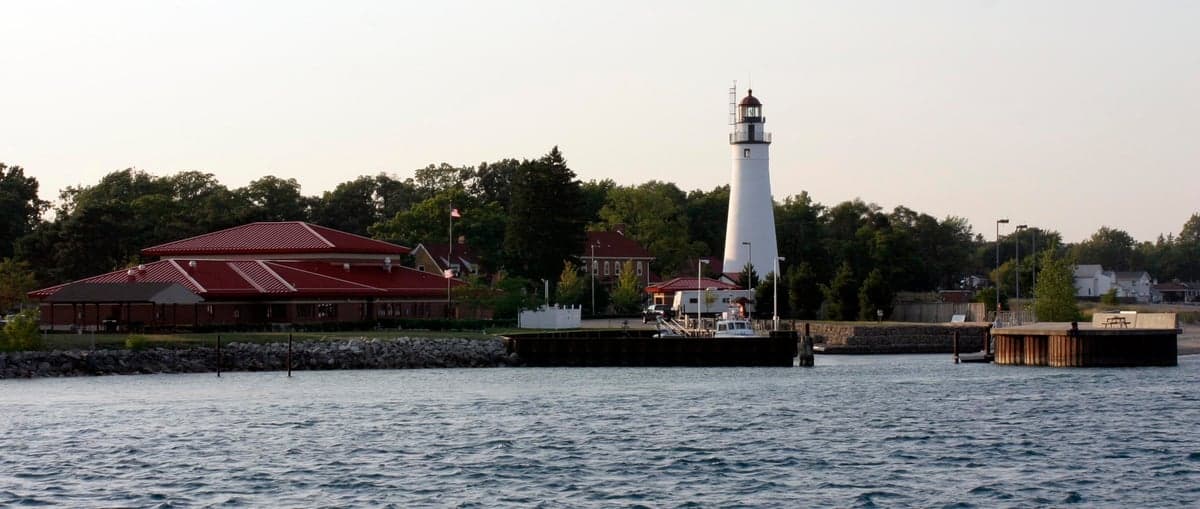
Photo: Wikipedia
Personal Sovereignty in St Clair County
Strong independent fundamentals that actively favor personal liberty and low regulation.
What does Personal Sovereignty tell us?
Personal Sovereignty measures your capacity for self-reliance and independence with minimal government friction. Higher scores mean fewer barriers between you and the way you want to live... but it assumes you have the space you need and good neighbors.
What does this tell us?
Personal Sovereignty measures your capacity for self-reliance and independence with minimal government friction. Higher scores mean fewer barriers between you and the way you want to live... but it assumes you have the space you need and good neighbors.
State Policy
Energy independence: Importer (20% of energy produced in-state)
Personal Liberty
Homesteading

Personal Liberty Analysis
St. Clair County, Michigan, offers a notably high degree of personal sovereignty compared to the urban cores of Metro Detroit, with a regulatory environment that leans toward light-touch governance in the rural eastern half of the county. For individuals and families prioritizing autonomy, the county presents a mixed but generally favorable landscape: property taxes are moderate by state standards, gun laws are among the most permissive in the Midwest, and large swaths of land in townships like Brockway and Clyde remain zoned for agricultural and residential use with minimal interference. However, the western communities bordering Macomb County—such as China Township and Casco—are experiencing creeping suburbanization that brings stricter zoning and higher assessments, so location within the county matters significantly.
How the tax burden and regulatory climate compare across the county
Michigan’s overall tax posture is a mixed bag, but St. Clair County sits on the favorable side of the state average. The statewide property tax rate hovers around 1.5% of assessed value, but St. Clair County’s average millage rate is slightly lower, particularly in rural townships like Fort Gratiot and Burtchville, where voters have historically rejected new millages for county-wide services. The state’s Headlee Amendment caps annual property tax increases at the rate of inflation (or 5%, whichever is less), which provides a predictable ceiling for long-term property owners—a critical factor for those planning to hold land for decades. Income tax is a flat 4.25%, and there is no local income tax anywhere in the county, unlike some neighboring areas. The regulatory posture is equally light: St. Clair County has no county-wide zoning ordinance, leaving land-use decisions to individual townships. This means a resident in Yale or Emmett Township can often get a building permit for an accessory structure or a home-based business with a single visit to the township clerk’s office, whereas a resident in Port Huron (the county seat) faces a more formalized permitting process with municipal inspection fees. For those seeking minimal bureaucratic friction, the unincorporated townships are the clear choice.
Self-defense law and the gun culture in St. Clair County
Michigan is a shall-issue state for concealed pistol licenses (CPL), but St. Clair County’s gun culture is distinctly more permissive than the state’s urban counties. The county sheriff’s office in Port Huron processes CPL applications with a typical turnaround of 2–3 weeks, and there is no county-level waiting period beyond the state’s background check requirement. Michigan law preempts local firearm ordinances, meaning no city or township in St. Clair County can impose its own gun bans or magazine restrictions—a fact that keeps the regulatory environment uniform from the St. Clair River waterfront to the farmland of Mussey Township. Open carry is legal without a permit for anyone 18 or older who can legally possess a firearm, and the county’s rural culture treats firearms as everyday tools rather than political statements. The Castle Doctrine in Michigan presumes a reasonable fear of death or great bodily harm when an intruder unlawfully enters a dwelling, and St. Clair County juries have historically been sympathetic to self-defense claims—there have been no high-profile prosecutions of lawful gun owners in the county in the past decade. For those who want to train, the Blue Water Sportsman’s Club near Kimball Township offers a 24-hour access range for members, and the county’s vast state game areas (including the Fort Gratiot State Game Area) provide free public shooting opportunities.
Homesteading viability, lot sizes, and off-grid feasibility in the eastern townships
For self-reliance-minded families, St. Clair County’s eastern and northern townships offer genuine homesteading potential at prices that are a fraction of comparable land in Washtenaw or Oakland Counties. Minimum lot sizes in agricultural zones across Brockway, Lynn, and Mussey Townships are typically 5 acres, with many parcels available at $4,000–$7,000 per acre—significantly below the $15,000+ per acre seen in the county’s western bedroom communities. Zoning in these townships explicitly permits livestock, poultry, and roadside farm stands as of-right uses, meaning no special-use permit is required for a family to keep chickens, goats, or a small beef herd. Off-grid feasibility is strong in the rural east: the county has no ordinance requiring grid connection, and the Michigan Uniform Energy Code allows owner-occupied homes to be built to alternative standards if the owner acts as their own general contractor. Several residents in Grant Township and Burtchville Township operate fully solar-powered homes with rainwater catchment systems, and the county’s building department has a track record of approving such structures without the adversarial pushback common in more urbanized counties. However, note that Port Huron Township and Fort Gratiot have adopted the stricter 2015 International Residential Code with amendments requiring engineered septic systems, which can add $8,000–$12,000 to an off-grid build. The rural townships have no such requirement, relying instead on the state’s minimum sanitary code.
Personal liberties: parental rights, medical autonomy, and property freedom
St. Clair County’s personal liberty environment is shaped more by local culture than by formal ordinance. Parental rights are strong in practice: the county’s school districts—including Yale Public Schools and Algonac Community Schools—have no mask mandates, no vaccine requirements beyond state law, and a documented pattern of accommodating homeschoolers and hybrid learners. The county is home to a robust homeschooling network, with the Blue Water Homeschool Co-op in Marysville serving over 200 families. Medical autonomy is similarly respected: Michigan’s 2020 repeal of the 1978 abortion ban means no local restrictions exist, but more relevant to this audience, the county has no ordinances restricting the sale of raw milk, unpasteurized honey, or home-processed foods—a contrast to neighboring Macomb County, which has actively enforced cottage food regulations. Property rights are protected by Michigan’s Right to Farm Act, which shields agricultural operations from nuisance lawsuits, and St. Clair County’s zoning boards have a consistent record of denying complaints against farms that predate nearby residential development. Speech and assembly rights are exercised freely; the county’s conservative majority has hosted annual Second Amendment rallies at the county courthouse in Port Huron without incident, and local officials have publicly declined to enforce any state-level firearm restrictions they deem unconstitutional.
Overall, St. Clair County ranks among the top Michigan counties for personal sovereignty, particularly when compared to the regulatory density of Wayne, Oakland, or Washtenaw Counties. The combination of low property tax growth caps, preempted gun laws, permissive agricultural zoning, and a culture that respects self-reliance makes it a strong candidate for families seeking to live with minimal state interference. The key variable is location: choose the rural eastern townships for maximum autonomy, or the western suburbs for convenience at the cost of additional regulation. For the freedom-oriented relocator, St. Clair County delivers a rare balance—proximity to Great Lakes recreation and Detroit’s job market, without the bureaucratic overhead that defines most of southeast Michigan.

* Values derived from national, state, county, city and local statistics and may differ in a specific area. Last updated: 2026-10-16T04:02:23.000Z
Narrative content on this page is AI-generated and may contain mistakes. Verify any details that matter before acting on them.
ReloMaps may earn a commission from affiliate links at no extra cost to you.

