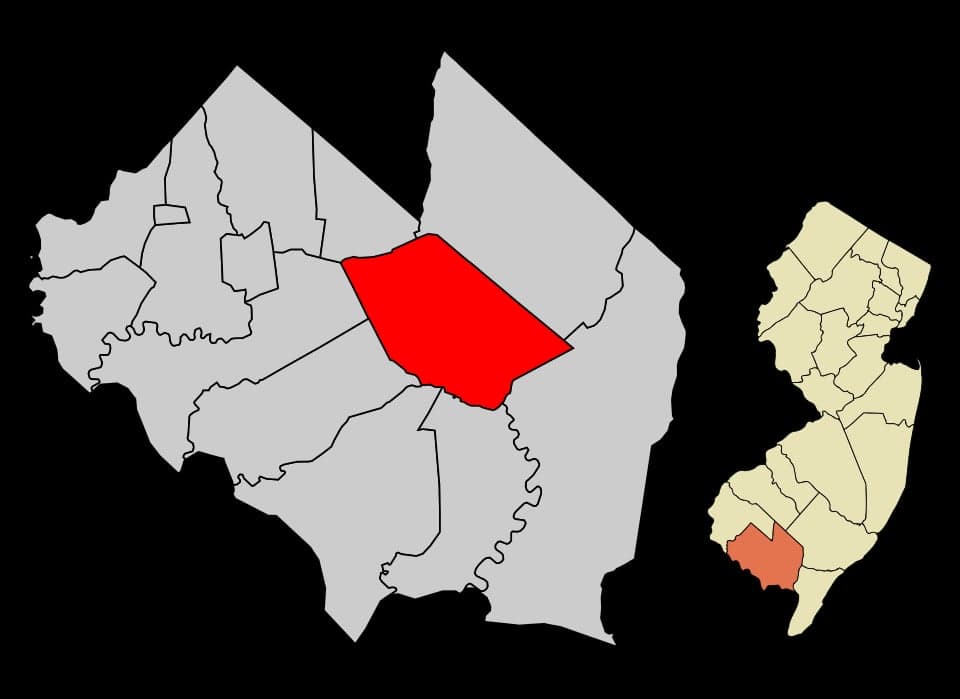
Photo: Wikipedia
Political ClimatePolitical Climate in Millville, NJ
District shown is the primary district for this city’s centroid. Cities may span multiple districts.
Local Political AnalysisPolitical Analysis of Millville, NJ
Millville, New Jersey, has long been a conservative stronghold in a state that leans further left every election cycle after election cycle. With a Cook Partisan Voting Index of R+5, this Cumberland County city consistently votes Republican, even as the surrounding state of New Jersey carries a D+5 rating. That 10-point gap isn't just a number—it reflects a real cultural and political divide between Millville and the rest of the state, one that has only widened as Trenton pushes more progressive policies on taxes, regulations, and personal freedoms.
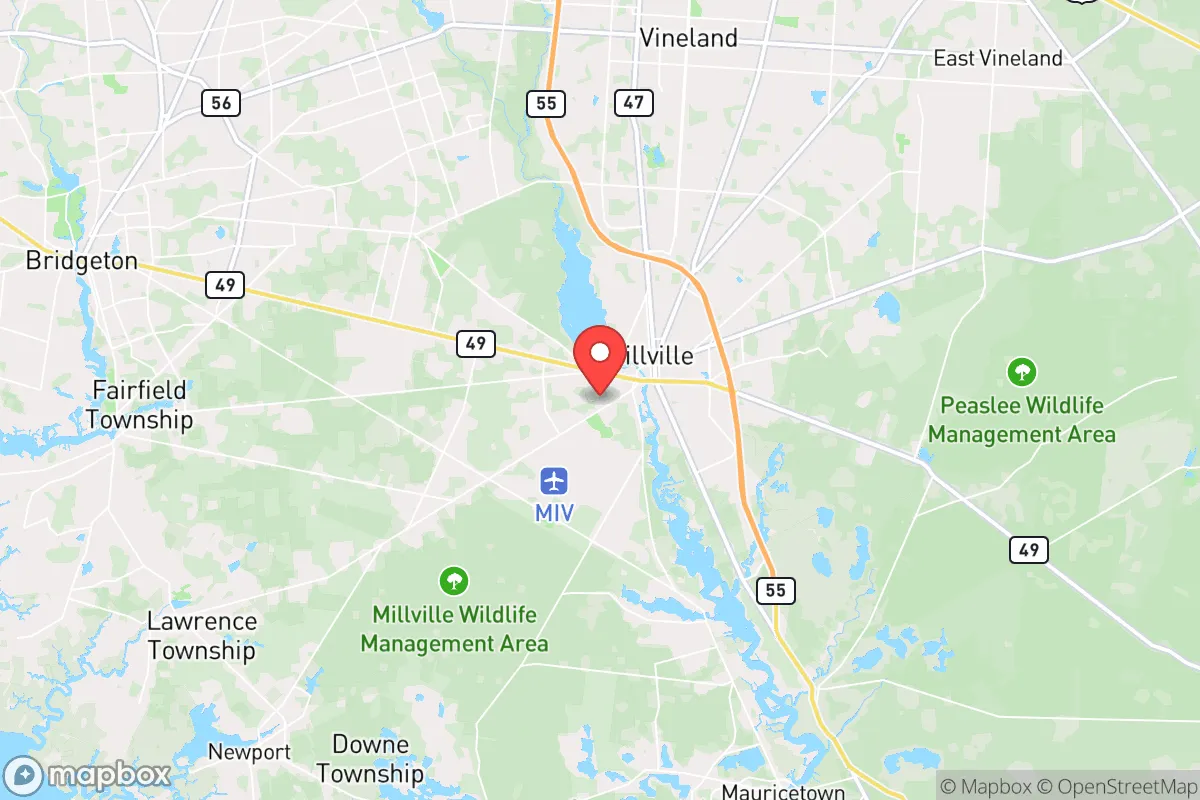
How it compares
To understand Millville's politics, you have to look at the map. Drive 30 minutes north to Vineland, and you hit Vineland, which leans more moderate but still has a Republican streak. Head east toward Atlantic City, and you're in deep blue territory. The real contrast is with the state capital, Trenton, and the suburban counties around New York City—places like Bergen or Essex—where progressive ideology dominates. Millville residents, by contrast, tend to value local control, lower taxes, and a hands-off approach from government. The city's R+5 rating isn't an accident; it's the result of a community that votes its conscience, often against the grain of state-level trends. While New Jersey as a whole has shifted leftward—especially on issues like gun rights, school curriculum, and energy mandates—Millville has held steady, with most local elections going to candidates who prioritize fiscal restraint and individual liberty over government expansion.
What this means for residents
For someone living in Millville, the political climate means you're often swimming against the current of state policy. You'll see it in property taxes, which are among the highest in the nation, driven by state mandates that local governments can't escape. You'll feel it in the push for electric vehicle mandates and renewable energy projects that get fast-tracked without much local input. The state's recent moves on gun control—like the 2022 carry law overhaul—have been a particular sore spot here, where hunting and sport shooting are part of the culture. Millville's conservative lean gives residents a sense of solidarity, but it doesn't shield them from Trenton's overreach. The long-term trajectory is concerning: as the state's population grows more diverse and urbanized, the rural and suburban conservative pockets like Millville risk being outvoted on issues that directly affect their way of life.
Cultural and policy distinctions
One thing that sets Millville apart is its strong sense of community self-reliance. You won't find the same enthusiasm for big government programs here—people prefer local charities, church groups, and volunteer fire departments over state-run solutions. The city's annual Wheels of Time car show and the historic Glasstown Arts District reflect a pride in local heritage that feels increasingly rare in a state where chain stores and cookie-cutter developments are the norm. Policy-wise, Millville has resisted some of the more aggressive affordable housing mandates from the state, arguing that local zoning should be decided by locals, not bureaucrats in Trenton. That tension is likely to grow as New Jersey continues to push for denser development and stricter environmental regulations. For now, Millville remains a place where you can still have a conversation about personal responsibility and limited government without being shouted down—but keeping it that way will require staying engaged and voting every single time.

State Political ClimatePolitical Climate in New Jersey
State Political AnalysisPolitical Environment in the State
New Jersey is a solidly blue state with a Cook PVI of D+5, meaning it votes about five points more Democratic than the national average in presidential elections. The dominant coalition is a mix of urban progressives, union households, and affluent suburbanites who have shifted left over the past two decades, while the GOP has been squeezed into rural and exurban pockets. Over the last 10-20 years, the state has moved from a competitive purple battleground—where Republicans like Chris Christie won landslides as recently as 2009—to a reliably Democratic stronghold, driven by demographic changes in the suburbs and a steady exodus of conservative-leaning residents to lower-tax states like Florida and Texas.
Urban vs. rural divide
The political map of New Jersey is a tale of two worlds. The urban core—Newark, Jersey City, Paterson, and Camden—is overwhelmingly Democratic, powered by dense populations of minority voters, public-sector unions, and progressive activists. These cities alone can swing statewide elections. The suburbs, particularly in Bergen, Essex, and Middlesex counties, have trended sharply blue since 2016, as college-educated professionals recoiled from Trump-era politics. Meanwhile, rural and exurban areas like Sussex, Warren, and Salem counties remain Republican strongholds, with towns like Newton and Flemington reliably red. The Jersey Shore, once a swing region, has also shifted left: Ocean County, a GOP bastion for decades, saw its margins shrink in 2020 and 2024 as retirees and working-class voters drifted toward Democrats. The divide is stark: drive 30 minutes west of Manhattan, you’re in deep-blue Montclair; 30 minutes further, you’re in red Hunterdon County, where Trump signs still dot the landscape.
Policy environment
New Jersey’s policy environment is a cautionary tale for conservatives. The state has the highest property taxes in the nation—averaging over $9,500 annually—and a progressive income tax that tops out at 10.75% for earners over $1 million. The regulatory posture is aggressive: businesses face a thicket of environmental, labor, and zoning rules that make it one of the hardest states to start or expand a company. Education policy is dominated by teachers’ unions, with per-pupil spending exceeding $25,000, yet outcomes in urban districts like Newark remain poor. Healthcare is heavily regulated, with a state-based Obamacare exchange and Medicaid expansion covering nearly 20% of residents. Election laws are among the most liberal: no-excuse mail-in voting, automatic voter registration, and same-day registration are all in place, which Republicans argue erodes ballot security. The state also has some of the nation’s strictest gun laws, including a 2022 “sensitive places” law that bans firearms in parks, libraries, and even private businesses unless the owner explicitly allows them.
Trajectory & freedom
New Jersey is becoming less free by almost any measure. The trend accelerated under Governor Phil Murphy, who signed a series of laws that expanded government control over personal choices. In 2022, the state passed a near-total abortion ban? No—actually, it went the opposite direction, codifying abortion rights up to viability and requiring insurers to cover it with no copays. That same year, Murphy signed a “parental rights” bill that sounds good but was watered down by progressive amendments, leaving schools with broad discretion to hide gender transitions from parents. On gun rights, the 2022 “sensitive places” law was so sweeping that a federal judge blocked parts of it, calling it “a breathtaking breach” of the Second Amendment. Property rights are under assault: the state’s affordable housing mandates force towns to rezone for high-density development, often overriding local zoning boards. And on taxation, there’s no relief in sight—the 2024 budget included a new “millionaires’ tax” surcharge and a fee on electric vehicles that critics call a backdoor gas tax. The message is clear: the state sees its citizens as revenue sources, not free individuals.
Civil unrest & political movements
New Jersey has seen its share of political flashpoints. In 2020, Paterson and Newark experienced Black Lives Matter protests that turned into looting and arson, with then-Mayor Ras Baraka blaming “systemic racism” rather than the rioters. The state’s sanctuary policies—codified in 2018’s “Immigrant Trust Directive”—limit local police cooperation with ICE, leading to tensions in towns like Woodbridge and Elizabeth, where illegal immigration has strained schools and hospitals. On the right, the “New Jersey 2nd Amendment Society” has organized rallies at the Statehouse, drawing thousands to protest gun laws, but their influence has waned as the legislature ignores them. Election integrity remains a sore spot: in 2020, a federal judge found that the state’s universal mail-in ballot law violated the Constitution, but the ruling was overturned on appeal. More recently, the 2023 school board elections in Middletown and Freehold saw parents’ rights groups win seats, only to be outmaneuvered by union-backed candidates in subsequent cycles. The flashpoint for any new resident: you’ll see “Defund the Police” graffiti in Jersey City, but also “Trump 2024” flags on pickup trucks in Phillipsburg—the state is a patchwork of warring tribes.
Projection
Over the next 5-10 years, New Jersey will likely become more Democratic and more progressive. The demographic trends are relentless: the state is losing native-born residents to Florida, Texas, and the Carolinas, while gaining immigrants—many from Asia and Latin America—who tend to vote Democratic. The suburbs are aging and being replaced by younger, more liberal families priced out of New York City. The GOP has no viable path to statewide power unless it moderates on social issues and finds a way to appeal to suburban women, but the party’s internal divisions make that unlikely. Expect more tax hikes, more gun restrictions, and more state mandates on everything from energy (the state aims for 100% clean electricity by 2035) to education (universal pre-K is being phased in). The one wild card: if the economy sours and property taxes continue to rise, a backlash could flip a few legislative seats, but it won’t change the overall trajectory. A conservative moving in now should expect to be a permanent minority, fighting rear-guard actions on school boards and town councils.
For a conservative considering New Jersey, the bottom line is sobering. You’ll pay high taxes for mediocre services, face a government that is hostile to gun rights and parental autonomy, and live in a state where your vote for president or Senate is essentially irrelevant. The upside? The job market is strong, the schools in suburbs like Ridgewood and Princeton are excellent, and you’re close to New York and Philadelphia. But if personal freedom and limited government are your priorities, this is not the place. The state’s trajectory is locked in, and it’s heading left. If you’re moving here for work or family, brace for a fight—or start planning your exit to a state that still values liberty.
* Values derived from national, state, county, city and local statistics and may differ in a specific area. Last updated: 2026-10-10T16:28:25.000Z
Narrative content on this page is AI-generated and may contain mistakes. Verify any details that matter before acting on them.
ReloMaps may earn a commission from affiliate links at no extra cost to you.

