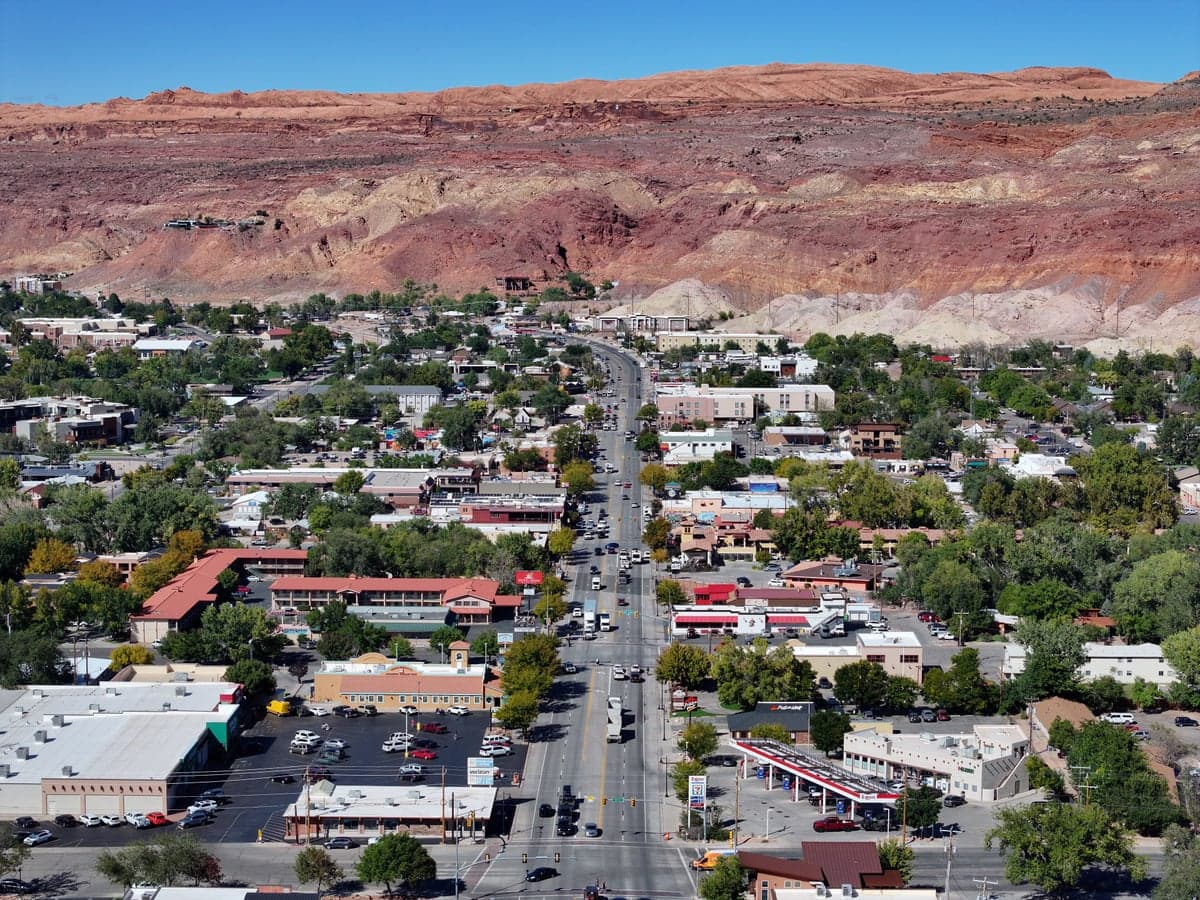
Photo: Wikipedia
Quality of Life in Moab, UT
A high quality of life with strong walkability, manageable living costs, healthy neighborhood signals, and solid amenity access.
What does Quality of Life tell us?
Quality of Life blends cost of living, nearby amenities, socioeconomic signals, and neighborhood character. City-level scores represent the whole municipality; individual neighborhoods can differ.
What does this tell us?
Quality of Life blends cost of living, nearby amenities, socioeconomic signals, and neighborhood character. City-level scores represent the whole municipality; individual neighborhoods can differ.
Cost of Living
17% above national average
The Real Cost of Living in Moab, UT for 2026
| Tier | Individual | Family (4) |
|---|---|---|
| Survival | $15k | $28k |
| Comfortable | $74k | $109k |
| Luxury | $100k+ | $155k+ |
| Elite (Top 5%) | $128k+ | $198k+ |
51%
The Area Signal
A metric tracking the socioeconomic signals of the area.
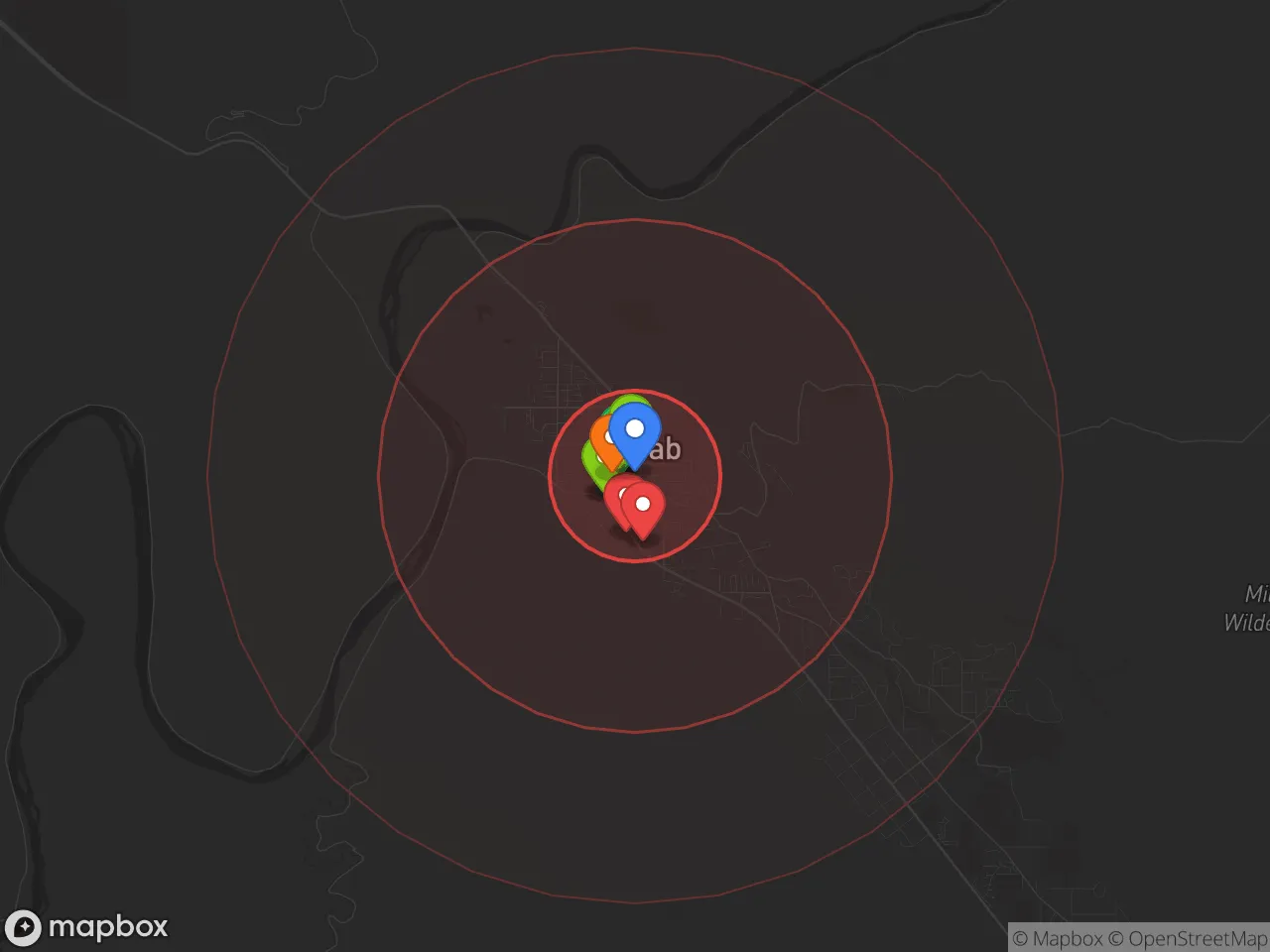
Hobbies
Explore the areaGroceries
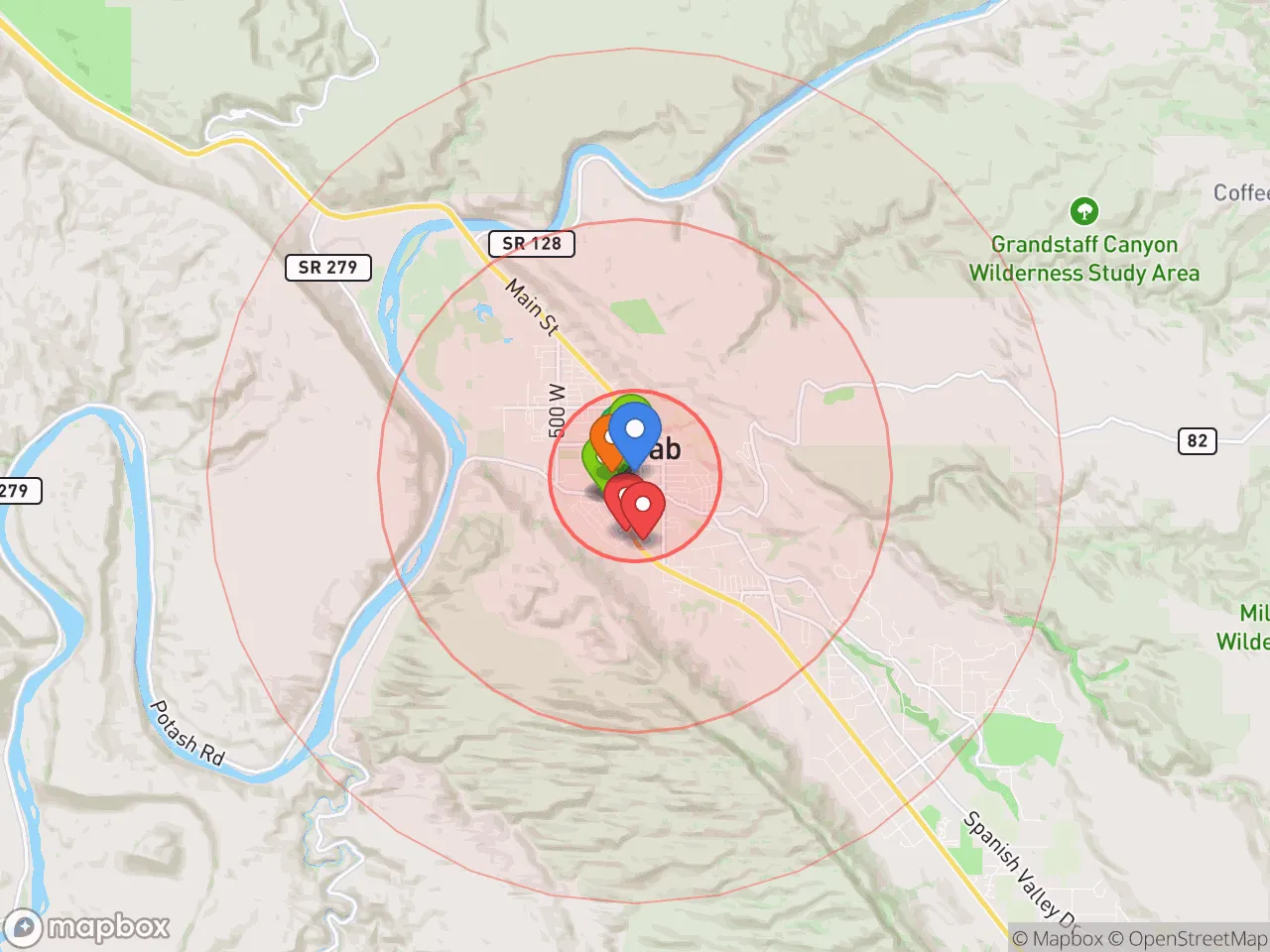
1 within 10 miles
Gas
10 within 10 miles
Hospital
1 within 20 miles
Airport
SLC — Salt Lake City International
Post Office
USPS — Moab, UT
Critical Amenities
Quality-of-Life Analysis
Moab, Utah, is a high-cost, high-amenity desert town where affluence is concentrated among retirees, remote workers, and second-home owners drawn by Arches and Canyonlands National Parks. The population of roughly 5,500 skews older and wealthier than the state average, with a median household income around $62,000—but the cost of living index of 117 (17% above the U.S. average) means that many service-industry workers and seasonal guides face a tight squeeze. The town’s economy is overwhelmingly tourism-driven, creating a sharp divide between those who can afford to live here year-round and those who commute in from cheaper outlying areas.
Cost of living, housing affordability, and how Moab compares to nearby towns
Moab’s cost of living index of 117 is driven almost entirely by housing. The median home value sits at $478,700, more than double the national median of roughly $230,000 and significantly higher than nearby towns like Green River (median home value ~$180,000) or Monticello (~$220,000). Renters fare slightly better: the median rent of $945 is below the national median of $1,200, but availability is extremely tight, with vacancy rates often below 2% during peak tourist seasons. The average commute of 22 minutes is short by national standards, but many workers live 30–40 minutes away in smaller communities like La Sal or Castle Valley to find affordable housing. Property taxes in Grand County are relatively low (roughly 0.5% of assessed value), but insurance costs—especially flood and wildfire coverage—can add $1,500–$2,500 annually. For comparison, a household earning the median income of $62,000 would spend about 38% of gross income on a mortgage at current rates, well above the 30% affordability threshold.
What daily life is like for families, retirees, and outdoor enthusiasts
Daily life in Moab revolves around the outdoors, but the town offers a surprisingly robust set of amenities for its size. The Grand County School District serves about 1,200 students across three schools: Helen M. Knight Elementary, Grand County Middle School, and Grand County High School, all with student-teacher ratios near 18:1. For healthcare, Moab Regional Hospital provides emergency and primary care, but specialists require a 2-hour drive to St. George or a 4-hour drive to Salt Lake City. Grocery shopping is limited to a single full-service supermarket (City Market) and a handful of natural food stores, with prices 15–20% higher than national averages due to shipping costs. The town’s rhythm is dictated by tourism seasons: spring and fall bring crowds that double or triple the population, while winter is quiet, with many restaurants and shops closing early. Retirees appreciate the mild winters (average January high of 42°F) and low crime rates—violent crime is roughly half the national average—but families often cite the lack of after-school activities and the high cost of youth sports programs as drawbacks.
Moab is best suited for outdoor enthusiasts who can afford the housing premium, retirees with significant savings, or remote workers earning a national salary. The town’s isolation and high cost of living make it a poor fit for young families on a single income or those needing frequent specialist medical care. For those who can swing it, the trade-off is unmatched access to world-class hiking, mountain biking, and river running—but the financial and logistical realities of living in a remote tourist hub mean that many residents ultimately leave after a few years.

Crime in Moab, UT
Generally safer than 70% of comparable U.S. locations.
Violent CrimeViolent Crime Analysis
Property CrimeProperty Crime Analysis
Crime Analysis
Moab, Utah, presents a mixed safety profile that is heavily shaped by its role as a tourism gateway. While the city’s violent crime rate of 215.9 incidents per 100,000 residents is notably lower than the national average, its property crime rate of 1,592.8 per 100,000 significantly exceeds both state and national benchmarks, driven largely by thefts from vehicles and seasonal crowds. This dynamic means that while violent confrontations are rare, residents and visitors face a heightened risk of property-related offenses, particularly during peak tourist seasons.
Crime in context
Moab’s violent crime rate sits well below the U.S. average of roughly 380 per 100,000, placing it in a safer tier for personal safety. However, the property crime rate is approximately 40% higher than the national average and far exceeds Utah’s statewide rate of around 1,200 per 100,000. This disparity is almost entirely attributable to the transient tourist population, which creates frequent opportunities for theft from unlocked cars, campsites, and rental properties. The city’s small permanent population of roughly 5,500 means that crime statistics can fluctuate noticeably year to year, but the property crime trend has remained persistently elevated since the post-pandemic travel boom.
What residents experience
For those living in Moab year-round, the most common safety concern is not violent crime but rather the steady stream of theft and vandalism tied to the tourism economy. Residents report that break-ins to vehicles parked at trailheads or in driveways are a routine occurrence, especially in summer and during events like the Moab Jeep Safari. The Grand County Sheriff’s Office and Moab City Police Department are generally responsive, but limited staffing means that property crime investigations often take a backseat to more urgent calls. A notable local concern is the influence of progressive judicial philosophies in the broader justice system. While Moab itself is politically mixed, Grand County has seen district attorneys and judges who prioritize diversion programs and reduced sentencing for non-violent offenders. Critics argue this approach, while sympathetic to offenders, leads directly to more criminals on the street and negatively impacts justice for victims and the public, as repeat property offenders cycle through the system without meaningful consequences.
Neighborhood-level variation
Safety in Moab varies noticeably by area. The downtown core and areas near Main Street experience the highest concentration of property crime, particularly theft from vehicles and occasional shoplifting. Residential neighborhoods farther from the tourist corridor, such as those along Mill Creek Drive or near the golf course, report lower incident rates. The outlying areas of Spanish Valley and the unincorporated parts of Grand County see very little violent crime but still contend with occasional thefts from rural properties. For those considering a move, properties with secure off-street parking and good lighting are a practical investment, as they significantly reduce the risk of becoming a property crime statistic.
* Values derived from national, state, county, city and local statistics and may differ in a specific area. Last updated: 2026-05-14T04:51:50.000Z
Narrative content on this page is AI-generated and may contain mistakes. Verify any details that matter before acting on them.
ReloMaps may earn a commission from affiliate links at no extra cost to you.

