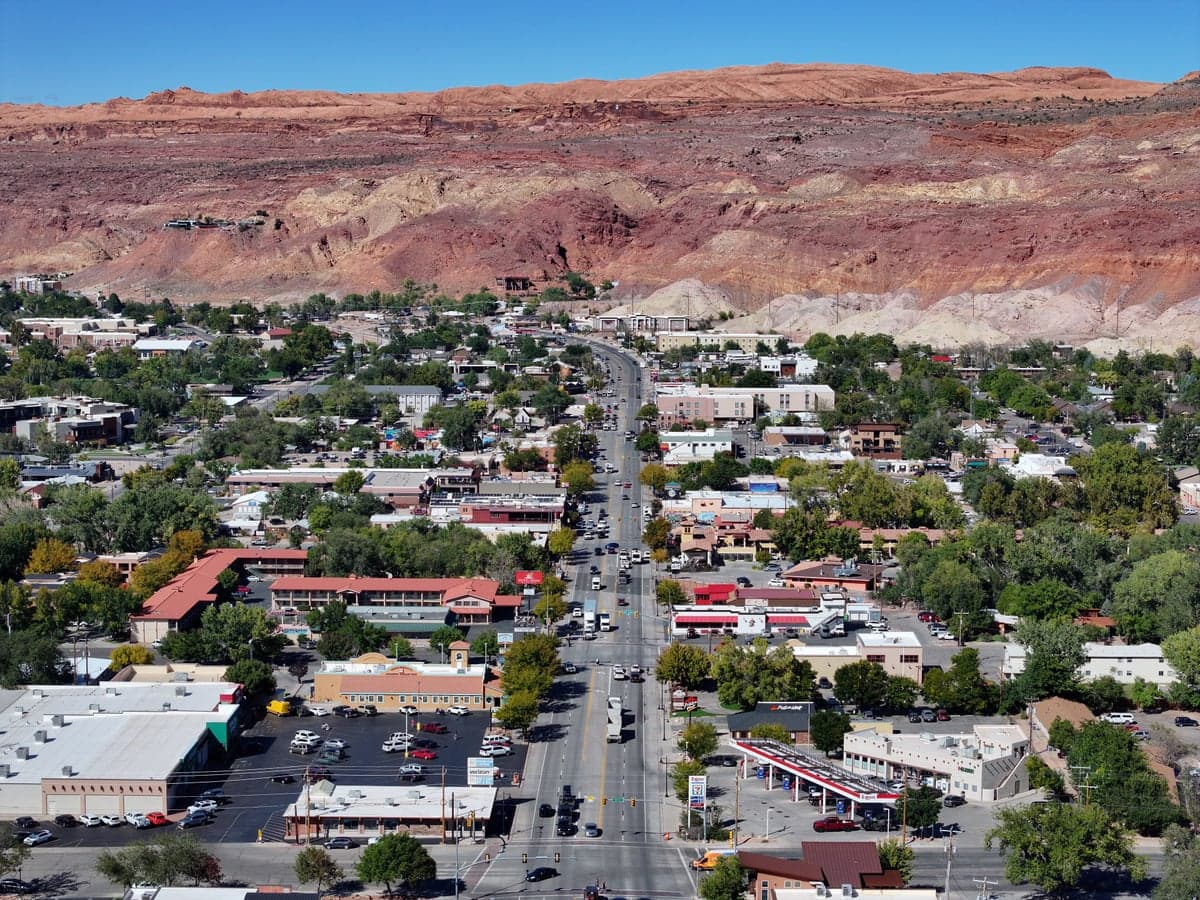
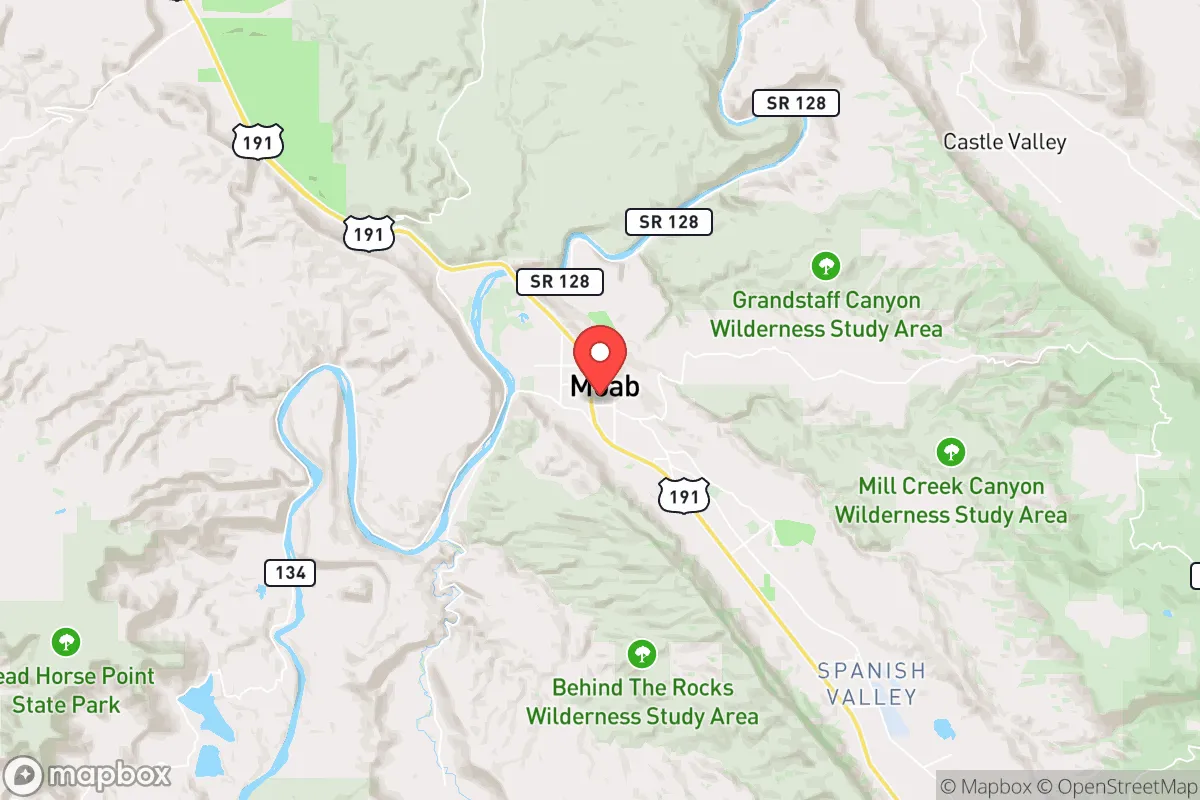
Photo: Wikipedia
Political ClimatePolitical Climate in Moab, UT
District shown is the primary district for this city’s centroid. Cities may span multiple districts.
Local Political AnalysisPolitical Analysis of Moab, UT
Moab, Utah, has long been a bit of an outlier in a deeply red state, but its political lean is still fundamentally conservative when you look at the big picture. The Cook PVI of R+10 tells you the county leans Republican by a solid margin, though it’s a hair less red than the state’s R+11. That one-point difference might not sound like much, but it reflects a real tension on the ground. For decades, this was a ranching and mining town where folks minded their own business and didn’t want the government telling them how to live. Lately, though, you’ve seen an influx of folks from places like Boulder and Salt Lake City, bringing a more progressive vibe that’s starting to shift local elections and land-use debates. It’s still a conservative place at heart, but the trajectory is concerning if you value limited government and personal freedom.
How it compares
Compared to the rest of Utah, Moab is a bit of a political island. Drive an hour north to Price or south to Blanding, and you’re in solid, unapologetic Trump country where the R+11 PVI feels like a floor, not a ceiling. Those towns haven’t seen the same tourism-driven migration that Moab has, so their politics remain rooted in traditional Western values: self-reliance, low taxes, and a healthy skepticism of federal land management. Moab, on the other hand, has become a flashpoint for clashes between the old guard and newcomers who want more government intervention in everything from housing to environmental regulations. The state legislature in Salt Lake City is still overwhelmingly conservative, but Moab’s local city council has seen a push for progressive policies like rent control and stricter short-term rental rules—both of which feel like government overreach to many long-time residents. The contrast is stark: the state trusts you to make your own choices, but Moab’s local government is increasingly tempted to meddle.
What this means for residents
For folks who’ve been here a while, the biggest worry is that the political shift will bring more rules and less freedom. The push for “smart growth” and “sustainability” often translates to higher fees, more permits, and a bureaucracy that treats you like a child. Property rights are a big deal in this part of the country, and seeing the city council entertain ideas like inclusionary zoning or vacation rental caps feels like a betrayal of the live-and-let-live ethos that made Moab great. On the flip side, the state government in Utah has been a bulwark against some of this, passing preemption laws that limit local control over things like firearms and land use. That’s a double-edged sword: it protects your rights from local overreach, but it also means the state can override local votes. For now, the balance still favors personal freedom, but the trend line is worrying. If you’re thinking of moving here, keep an eye on local elections—the city council races are where the real battle for Moab’s soul is being fought.
Culturally, Moab is still a place where you can wave at a neighbor without worrying about their politics, but the cracks are showing. The old-timers and the newcomers don’t always see eye to eye on how much government should be involved in daily life. The national parks bring in tourists and money, but they also bring in a transient population that doesn’t always respect the local way of doing things. Policy-wise, the biggest distinction from the rest of Utah is the tension between local progressive activism and the state’s conservative framework. If you value personal freedoms and want to avoid government overreach, Moab is still a decent bet—but you’ll need to stay engaged to keep it that way. The next few years will tell whether this town stays true to its independent roots or gets swallowed by the kind of top-down planning that’s ruined other mountain towns.

State Political ClimatePolitical Climate in Utah
State Political AnalysisPolitical Environment in the State
Utah is a deeply conservative state with a Cook PVI of R+11, meaning it votes about 11 points more Republican than the national average in presidential elections. The dominant coalition is a blend of The Church of Jesus Christ of Latter-day Saints (LDS) members, rural ranchers, and suburban families who prioritize low taxes, religious liberty, and traditional values. Over the last 10-20 years, the state has remained reliably red, but the Wasatch Front (Salt Lake City, Provo, Ogden) has seen a slow, steady influx of out-of-state transplants and younger voters, nudging some suburban areas toward purple while the rural counties have only hardened their conservative stance.
Urban vs. rural divide
The political map of Utah is stark. Salt Lake County, home to roughly 40% of the state’s population, is the only major swing area — it voted for Biden in 2020 by a narrow margin, driven by the more liberal city of Salt Lake City itself and the increasingly diverse suburbs like West Valley City and South Salt Lake. But drive 20 minutes south to Utah County (Provo, Orem, Lehi) and you’re in the heart of the LDS-dominated, deeply red corridor where Trump won by 30+ points. The rural counties — Duchesne, Uintah, San Juan, and Kane — are among the most Republican in the nation, often voting 80%+ for the GOP. The urban-rural split is essentially a battle between the Wasatch Front’s growing tech and service economy (which attracts moderates and libertarians) versus the rest of the state’s resource extraction and agricultural base, which remains rock-ribbed conservative.
Policy environment
Utah’s policy environment is a mixed bag for a conservative. On the plus side, the state has a flat income tax rate of 4.65% (down from 5% in 2022), no state-level property tax on vehicles, and a constitutional requirement for a balanced budget. The regulatory climate is business-friendly, with right-to-work laws and minimal zoning in rural areas. Education policy is a flashpoint: the state passed HB 261 in 2024, effectively banning DEI programs in public universities and K-12 schools, and HB 215 (the “Utah Fits All” scholarship) expanded school choice with $8,000 per student for private or homeschool expenses. However, the state also has a state-run liquor control system (the DABS) that limits alcohol sales and hours, which some see as government overreach. Election laws are solid: voter ID is required, same-day registration is allowed, and the state uses paper ballots with risk-limiting audits. No widespread fraud has been documented, but the system is transparent enough to satisfy most skeptics.
Trajectory & freedom
Utah is becoming more free in some areas, less in others. On the freedom front, the state passed constitutional carry (permitless concealed carry) in 2021, and SB 54 in 2024 expanded the right to carry on public transit and in certain government buildings. Parental rights were strengthened with HB 331 (2023), requiring schools to notify parents of any curriculum involving “human sexuality” and allowing opt-outs. Medical autonomy took a hit with HB 132 (2023), which banned gender-affirming care for minors — a move conservatives applaud but libertarians see as government intrusion into medical decisions. Property rights are generally strong, with no statewide rent control and low eminent domain usage. The biggest red flag for liberty-minded folks is the state’s aggressive approach to public health mandates during COVID — Utah had one of the longest-running mask mandates in the West, and the state health department still retains broad emergency powers. Recent legislation (HB 63, 2024) rolled back some of those powers, but the precedent remains concerning.
Civil unrest & political movements
Utah is not a hotbed of civil unrest, but there are visible flashpoints. The “Sovereign Utah” movement (a loose coalition of anti-federal activists) has held rallies at the state capitol, pushing for nullification of federal gun laws and land-use restrictions on federal lands (which cover 65% of the state). Immigration politics are tense but not explosive: HB 2001 (2024) banned “sanctuary city” policies, and local law enforcement in St. George and Washington County actively cooperates with ICE. On the left, the Utah Poor People’s Campaign and Mormon Women for Ethical Government have organized protests over housing affordability and environmental issues, but they remain small. The most visible political movement in recent years has been the “Parents’ Rights” wave — thousands of parents packed school board meetings in Davis County and Weber County in 2022-2023 over critical race theory and LGBTQ curriculum, leading to the passage of HB 261. Election integrity controversies are minimal; the state’s Republican governor, Spencer Cox, has publicly defended the 2020 and 2022 results, which has frustrated some Trump-aligned activists but kept the peace.
Projection
Over the next 5-10 years, Utah will likely remain solidly red but with a growing libertarian streak. The in-migration wave (Utah grew 18% from 2010-2020) is bringing in Californians and other out-of-staters who are often fiscally conservative but socially moderate — think tech workers in Lehi and Draper who want low taxes but don’t care about the liquor laws. This will push the Wasatch Front toward a more “live and let live” conservatism, while rural counties will only get redder as they resist any change. The biggest wildcard is the LDS Church’s influence — as younger members become less orthodox, the church’s political endorsements (which are rare but influential) may carry less weight. Expect continued fights over school choice (likely expanding), property taxes (already a hot issue in Summit County and Park City), and federal land control. A new resident moving in now should expect a state that is conservative but not authoritarian — you’ll have broad personal freedoms, but don’t expect to buy liquor on Sunday or find a weed dispensary anytime soon.
For a conservative single person or parent, Utah offers a strong alignment with traditional values, low taxes, and a safe environment for raising kids. The trade-off is a state government that still believes in some nanny-state controls (alcohol, public health) and a growing urban corridor that is slowly diversifying politically. If you’re looking for a place where your vote counts and your family’s values are respected, Utah is a solid bet — just keep an eye on the Wasatch Front’s purple drift and the ongoing battle over federal land use.
* Values derived from national, state, county, city and local statistics and may differ in a specific area. Last updated: 2026-05-14T04:51:50.000Z
Narrative content on this page is AI-generated and may contain mistakes. Verify any details that matter before acting on them.
ReloMaps may earn a commission from affiliate links at no extra cost to you.

