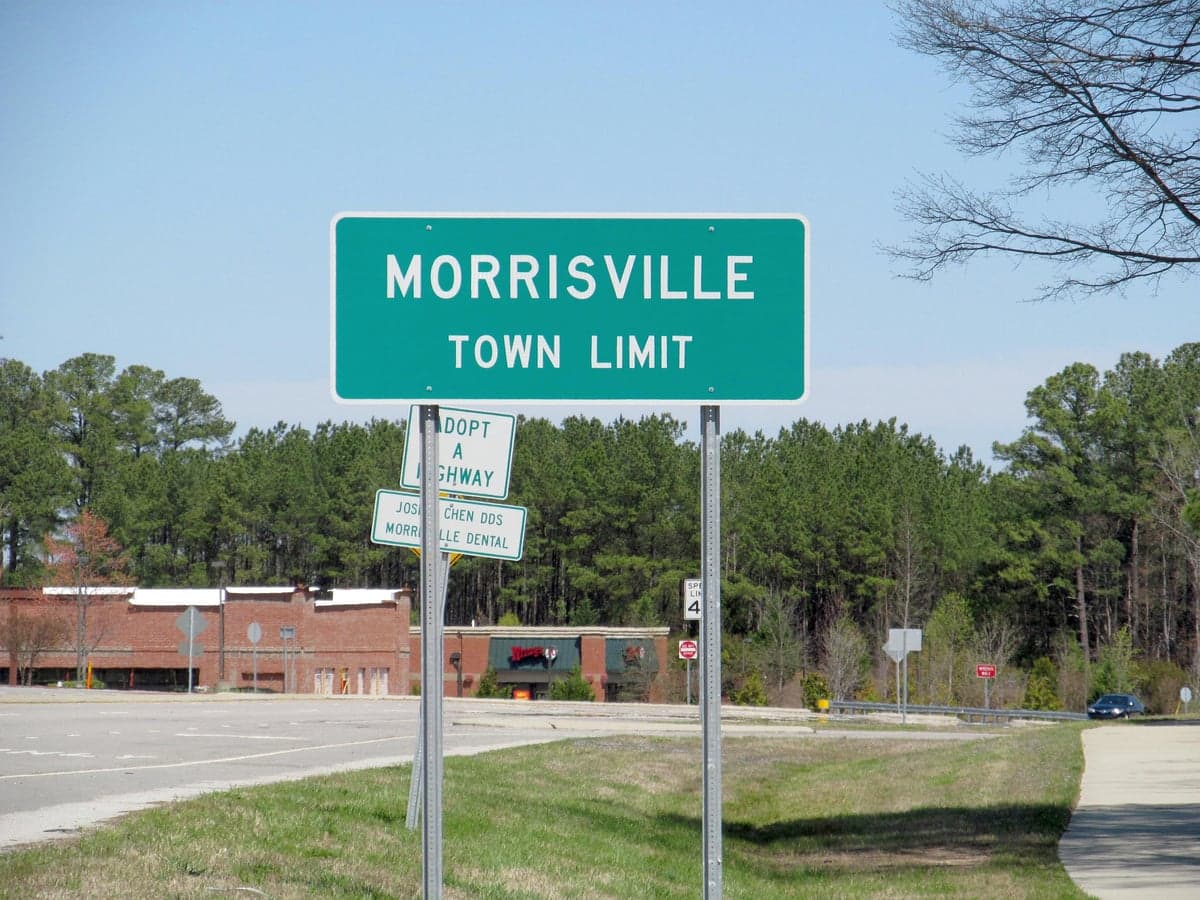
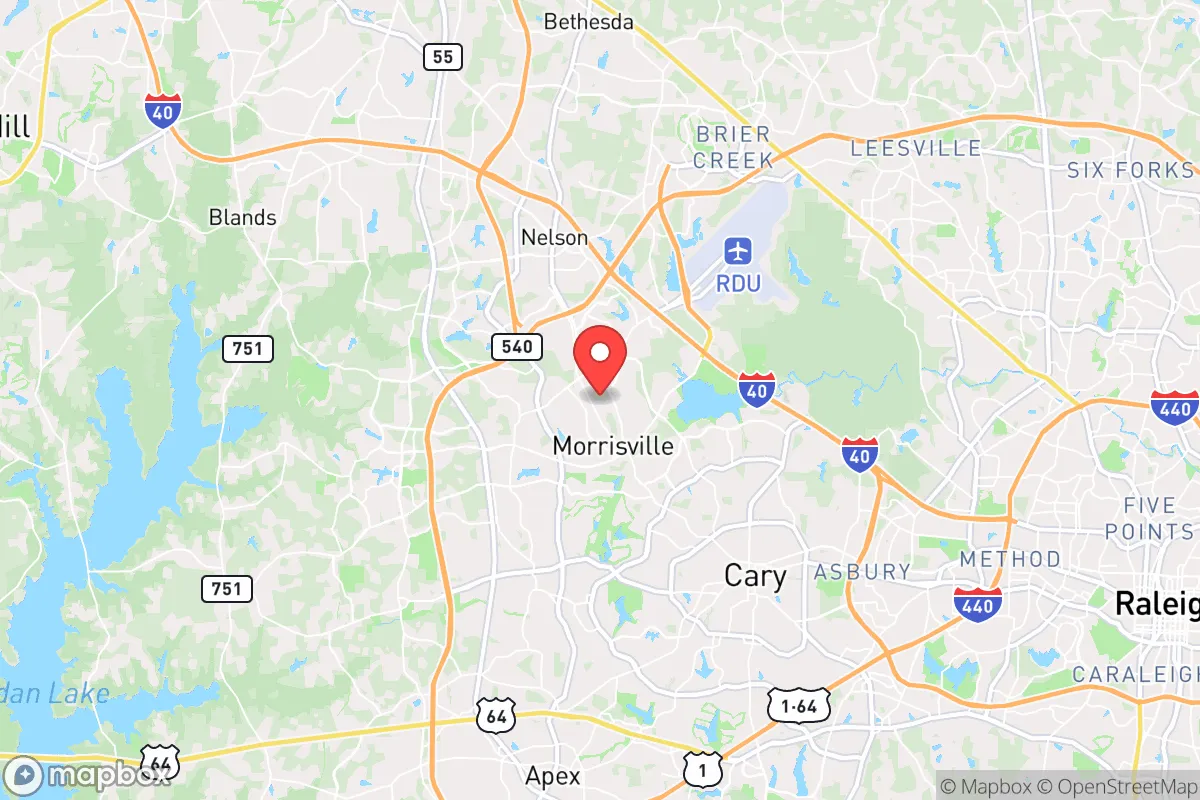
Photo: Wikipedia
Demographics of Morrisville, NC
Affluence Level in Morrisville, NC
An upper-middle-class area. Household wealth, education levels, and homeownership run ahead of national benchmarks.
People of Morrisville, NC
Morrisville, North Carolina, is a rapidly diversifying suburb of Raleigh-Durham where Indian-subcontinent residents now form the largest single ethnic group at 36.4%, followed by White non-Hispanic residents at 35.1%. With a population of 30,471 and a foreign-born share of 20.8%, the city is one of the most ethnically concentrated tech hubs in the Research Triangle. Its identity is shaped by a high-skill, high-education workforce—73.9% of adults hold a bachelor's degree or higher—and a built environment of master-planned subdivisions and office parks that cater to families and professionals.
How the city was settled and grew
Morrisville was originally a rural crossroads named after the Morris family, who operated a general store and post office in the 1850s. The arrival of the North Carolina Railroad in the 1850s spurred modest growth, but the town remained a small farming community—primarily White and native-born—through the early 20th century. The historic downtown Morrisville district, centered around Church Street and Morrisville-Carpenter Road, retains a few 19th-century structures that housed the original merchant and farming families. A second wave of growth came during World War II, when nearby Camp Butner (now Butner, NC) brought temporary military and support personnel, but the town's population stayed under 1,000 until the 1970s. The Morrisville Mills area, near the old railroad depot, was the original residential cluster for these early settlers, though few structures from that era remain.
Modern era (post-1965)
The modern transformation of Morrisville began after the 1965 Hart-Cellar Act and accelerated with the 1980s expansion of Research Triangle Park (RTP). The city's proximity to RTP—just 10 minutes from major employers like Cisco, IBM, and GlaxoSmithKline—drew a wave of domestic in-migration from the Northeast and Midwest, mostly White professionals who settled in subdivisions like Carpenter Village and Park Village in the 1990s. By the 2000s, the H-1B visa program and corporate transfers from India's IT sector created a rapid influx of Indian-subcontinent families. These newcomers concentrated in newer, higher-density neighborhoods such as Churchill Downs and McCrimmon Park, where large single-family homes and proximity to top-rated Wake County schools (like Morrisville Elementary and Panther Creek High) became key draws. East/Southeast Asian communities (5.4% of the population) arrived in smaller numbers during the same period, often settling in the Weston Lakes area near the RTP border. The Black population (13.1%) includes both long-standing African American families from the rural South and newer arrivals drawn by professional opportunities, with a visible presence in the Morrisville Town Center redevelopment zone. Hispanic residents (3.8%) remain a smaller but stable community, with many working in construction, hospitality, and landscaping, and living in older rental stock near the Highway 54 corridor.
The future
Morrisville's population is heading toward a bifurcated future: the Indian-subcontinent share is still growing, driven by continued tech hiring and chain migration, while the White share is declining slowly as older residents age out or move to lower-cost exurbs. The city is not homogenizing—instead, it is tribalizing into distinct enclaves. Churchill Downs and McCrimmon Park are increasingly Indian-majority, while Carpenter Village remains predominantly White. East/Southeast Asian families are a stable but small presence, and the Black and Hispanic shares are plateauing. Over the next 10–20 years, Morrisville will likely become a majority-Indian-subcontinent city, with a highly educated, family-oriented, and politically moderate-to-conservative character. New development in the Morrisville Town Center and along the NC 540 corridor will add more mixed-use housing, but affordability is a growing concern—median home prices exceed $500,000, which may slow in-migration from lower-income groups.
For a conservative-leaning mover, Morrisville offers a high-opportunity environment with strong schools, low crime, and a population that values professional achievement and family stability. The city is becoming less culturally homogenous but more economically stratified, with clear neighborhood boundaries between ethnic groups. New arrivals should expect a community where Indian-subcontinent culture is increasingly dominant in public life—from restaurants and festivals to school PTA leadership—while White and other groups remain significant but less central to the city's evolving identity.

* Values derived from national, state, county, city and local statistics and may differ in a specific area. Last updated: 2026-04-21T16:52:22.000Z
Narrative content on this page is AI-generated and may contain mistakes. Verify any details that matter before acting on them.
ReloMaps may earn a commission from affiliate links at no extra cost to you.

