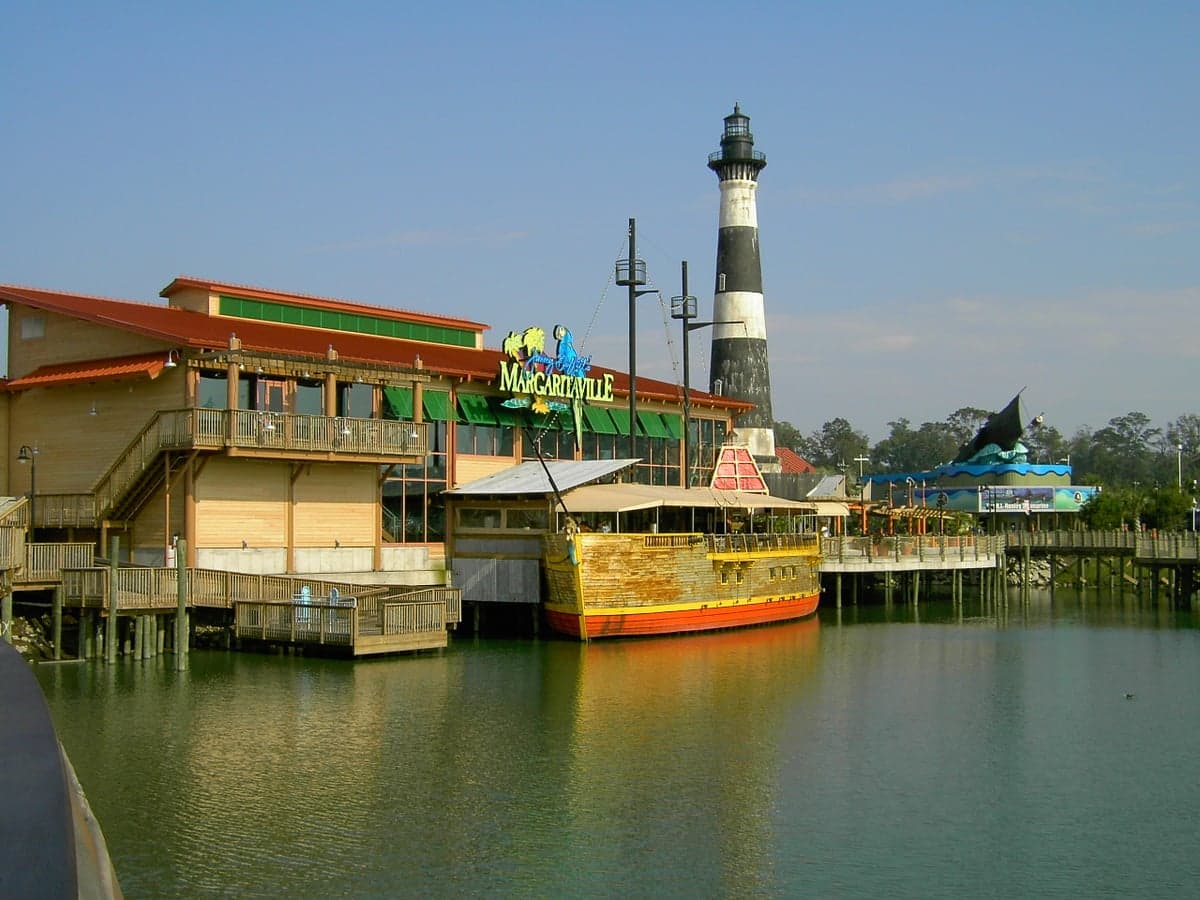
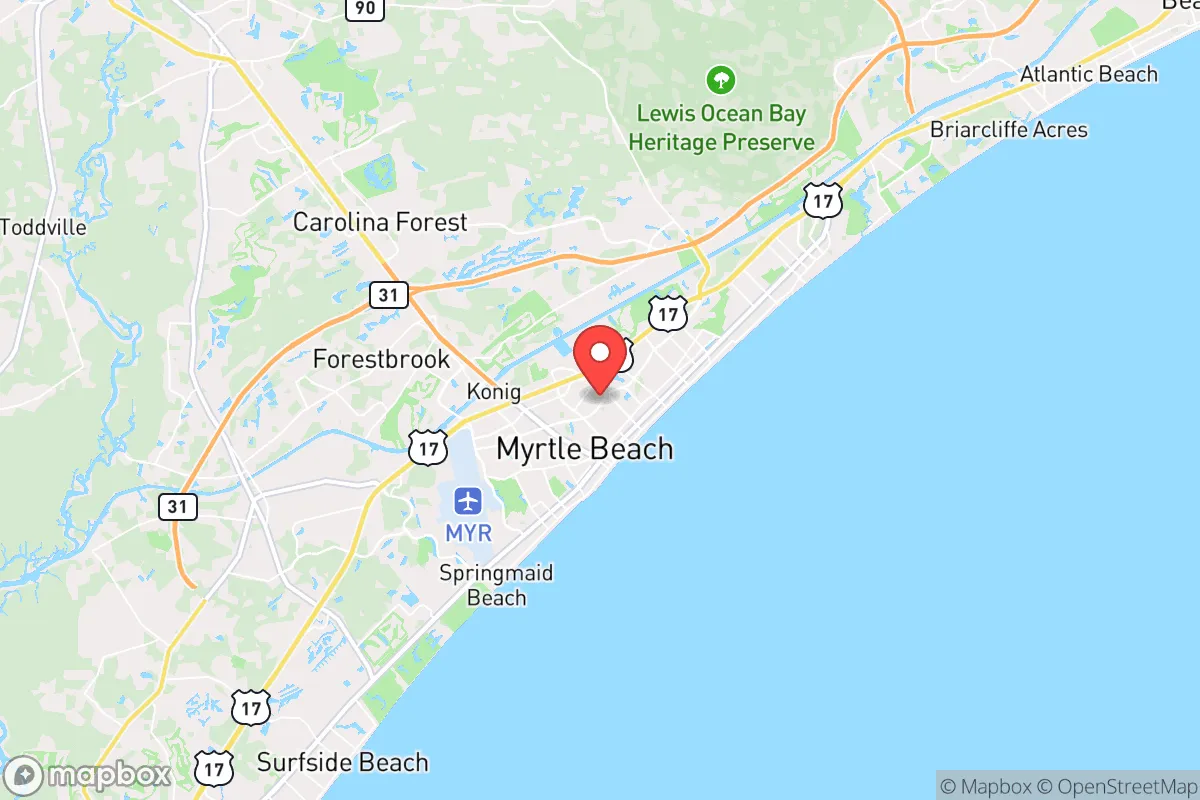
Photo: Wikipedia
Personal Sovereignty in Myrtle Beach, SC
Viable for self-reliance. Generally workable, though some barriers may limit total independence.
What does Personal Sovereignty tell us?
Personal Sovereignty measures your capacity for self-reliance and independence with minimal government friction. Higher scores mean fewer barriers between you and the way you want to live... but it assumes you have the space you need and good neighbors.
What does this tell us?
Personal Sovereignty measures your capacity for self-reliance and independence with minimal government friction. Higher scores mean fewer barriers between you and the way you want to live... but it assumes you have the space you need and good neighbors.
State Policy
Energy independence: Importer (25% of energy produced in-state)
Personal Liberty
Homesteading

Personal Liberty Analysis
Myrtle Beach offers a notably high degree of personal sovereignty compared to many coastal and urban areas, largely due to South Carolina’s consistently conservative state-level governance that pushes back against federal overreach. For a single individual or parent operating from a survivalist or prepper mindset, the key question isn’t whether the beach is pretty—it’s whether you can live your life, defend your family, and raise your children without the state breathing down your neck. The answer here is a qualified yes, with the caveat that Horry County’s rapid growth is bringing the usual pressures of zoning, tourism regulation, and creeping bureaucracy. If you’re looking for a place where the government largely stays out of your business, Myrtle Beach and its surrounding rural pockets rank well above the national average, though you’ll still need to navigate local ordinances that favor the tourism economy over individual autonomy.
Tax burden and regulatory posture: How South Carolina’s policies protect your wallet and choices
South Carolina’s tax structure is a clear win for personal sovereignty. The state has a flat income tax rate of 6.5% (as of 2025, with scheduled reductions to 6.0% by 2026), and no state-level tax on Social Security benefits—critical for retirees or those planning for long-term self-sufficiency. Property taxes in Horry County are among the lowest in the nation, with an effective rate around 0.55% of assessed value, thanks to a state law that caps annual increases. This means your home and land are yours, not the government’s, and you won’t be taxed out of your property as values rise. Sales tax is 8% in Myrtle Beach proper (including county and local add-ons), but groceries and prescription drugs are exempt. More importantly, South Carolina has no state-level estate or inheritance tax, allowing you to pass assets to your children without the state taking a cut. The regulatory posture is similarly light: there are no state-level rent control laws, no universal background checks for private firearm sales, and no state income tax on military pensions. For a prepper, this means fewer bureaucratic hurdles when buying land, building a workshop, or storing supplies—though you’ll still need to comply with Horry County’s building codes, which are less onerous than those in Charleston or Greenville.
Self-defense and gun law specifics: Stand your ground, permitless carry, and castle doctrine
South Carolina is a strong Second Amendment state, and Myrtle Beach reflects that. The state has permitless (constitutional) carry for anyone 18 or older who can legally possess a firearm, effective since 2024. No permit, no training requirement, no government permission slip—just the right to carry openly or concealed. The state also has a robust “Stand Your Ground” law with no duty to retreat, meaning you can use deadly force if you reasonably believe it’s necessary to prevent death, great bodily harm, or a violent felony. The castle doctrine extends this to your home, vehicle, and workplace. For parents, this means you can legally defend your family on your property without fear of prosecution, provided the threat is genuine. There are no state-level magazine capacity bans, no “assault weapon” bans, and no red flag laws as of 2025—though local municipalities like Myrtle Beach have attempted to restrict firearms in city parks and public buildings, a point of ongoing legal tension. The NRA gives South Carolina an A+ rating, and the state has preemption laws that generally prevent cities from enacting stricter gun ordinances than the state. For a survivalist, this is a critical advantage: you can stockpile, train, and carry without the government treating you as a potential criminal.
Self-reliance and homesteading viability: Lot sizes, zoning, and off-grid feasibility in Horry County
Myrtle Beach proper is dense and tourist-oriented, but Horry County offers significant opportunities for self-reliance if you’re willing to drive 15-30 minutes inland. Zoning in unincorporated areas allows for agricultural use on parcels as small as 2-3 acres, and many rural lots are available for under $20,000 per acre—far cheaper than coastal property. Raising chickens, goats, or even a small garden is generally permitted without a permit in rural zones, though you’ll need to check Horry County’s animal ordinances (no roosters in some subdivisions, for example). Off-grid feasibility is mixed: South Carolina has no state law prohibiting rainwater collection, and many rural homes use well water and septic systems, bypassing municipal utilities. However, the county requires building permits for any structure over 200 square feet, and you cannot legally live in an RV or tiny house on your land without a permanent foundation and septic approval—a common frustration for preppers. Solar panels are allowed, but net metering policies are less favorable than in states like California, and the local utility (Santee Cooper) has a monopoly in many areas. For a serious homesteader, the best bet is to buy land in the western part of the county, near Conway or Aynor, where zoning is looser and neighbors are farther apart. The trade-off is that you’ll be farther from supplies and medical care, but that’s often the point.
Personal liberties: Parental rights, medical autonomy, speech, and property protections
South Carolina is a strong state for parental rights, with a 2023 law requiring schools to notify parents of any changes in a child’s mental, emotional, or physical health—including discussions of gender identity or sexual orientation. This aligns with a conservative view that parents, not the state, are the primary authority over children. Medical autonomy is more mixed: the state has no vaccine mandate for adults, and COVID-era restrictions were lifted early, but there is no explicit right to refuse medical treatment for children in all circumstances (e.g., life-threatening conditions). Homeschooling is straightforward—you simply notify the school district and provide a basic educational plan—with no state testing requirements or curriculum oversight, making it a viable option for parents who want full control over their children’s education. Free speech is protected under the First Amendment, and South Carolina has no state-level hate speech laws that could be used to suppress political or religious expression. Property rights are strong: the state has a right-to-farm law that protects agricultural operations from nuisance lawsuits, and eminent domain is limited to public use (not private development). For a prepper, this means you can store supplies, build a bunker, or host a firearms training group on your land without the county shutting you down—as long as you don’t violate noise or fire ordinances. The main threat to personal liberties here is the tourism industry’s influence: Myrtle Beach city ordinances restrict short-term rentals, noise, and signage in ways that can feel like overreach, but these are easily avoided by living outside city limits.
Overall, Myrtle Beach and Horry County offer a level of personal sovereignty that is rare on the East Coast, particularly when compared to states like New York, California, or even Virginia. The combination of low taxes, strong gun rights, loose zoning in rural areas, and parental control over education creates an environment where a survivalist or prepper can live largely unbothered by government overreach. The main risks are the area’s rapid population growth—which brings more regulation and higher land prices—and the tourism-driven local ordinances that can feel intrusive if you live near the beach. For a single individual or parent who values autonomy and is willing to live 20-30 minutes from the coast, this is one of the best options in the Southeast. It’s not a libertarian paradise—you still have to deal with building permits, utility monopolies, and the occasional busybody HOA—but it’s far closer to that ideal than most of the country. If you’re looking for a place where the government mostly leaves you alone to live, work, and defend your family, Myrtle Beach’s inland areas are worth a serious look.

* Values derived from national, state, county, city and local statistics and may differ in a specific area. Last updated: 2026-04-29T19:15:11.000Z
Narrative content on this page is AI-generated and may contain mistakes. Verify any details that matter before acting on them.
ReloMaps may earn a commission from affiliate links at no extra cost to you.

