Photo: Wikipedia
Quality of Life in Myrtle Beach, SC
A high quality of life with strong walkability, manageable living costs, healthy neighborhood signals, and solid amenity access.
What does Quality of Life tell us?
Quality of Life blends cost of living, nearby amenities, socioeconomic signals, and neighborhood character. City-level scores represent the whole municipality; individual neighborhoods can differ.
What does this tell us?
Quality of Life blends cost of living, nearby amenities, socioeconomic signals, and neighborhood character. City-level scores represent the whole municipality; individual neighborhoods can differ.
Cost of Living
8% above national average
The Real Cost of Living in Myrtle Beach, SC for 2026
| Tier | Individual | Family (4) |
|---|---|---|
| Survival | $18k | $34k |
| Comfortable | $68k | $99k |
| Luxury | $97k+ | $150k+ |
| Elite (Top 5%) | $161k+ | $249k+ |
54%
The Area Signal
A metric tracking the socioeconomic signals of the area.
Hobbies
Explore the areaGroceries
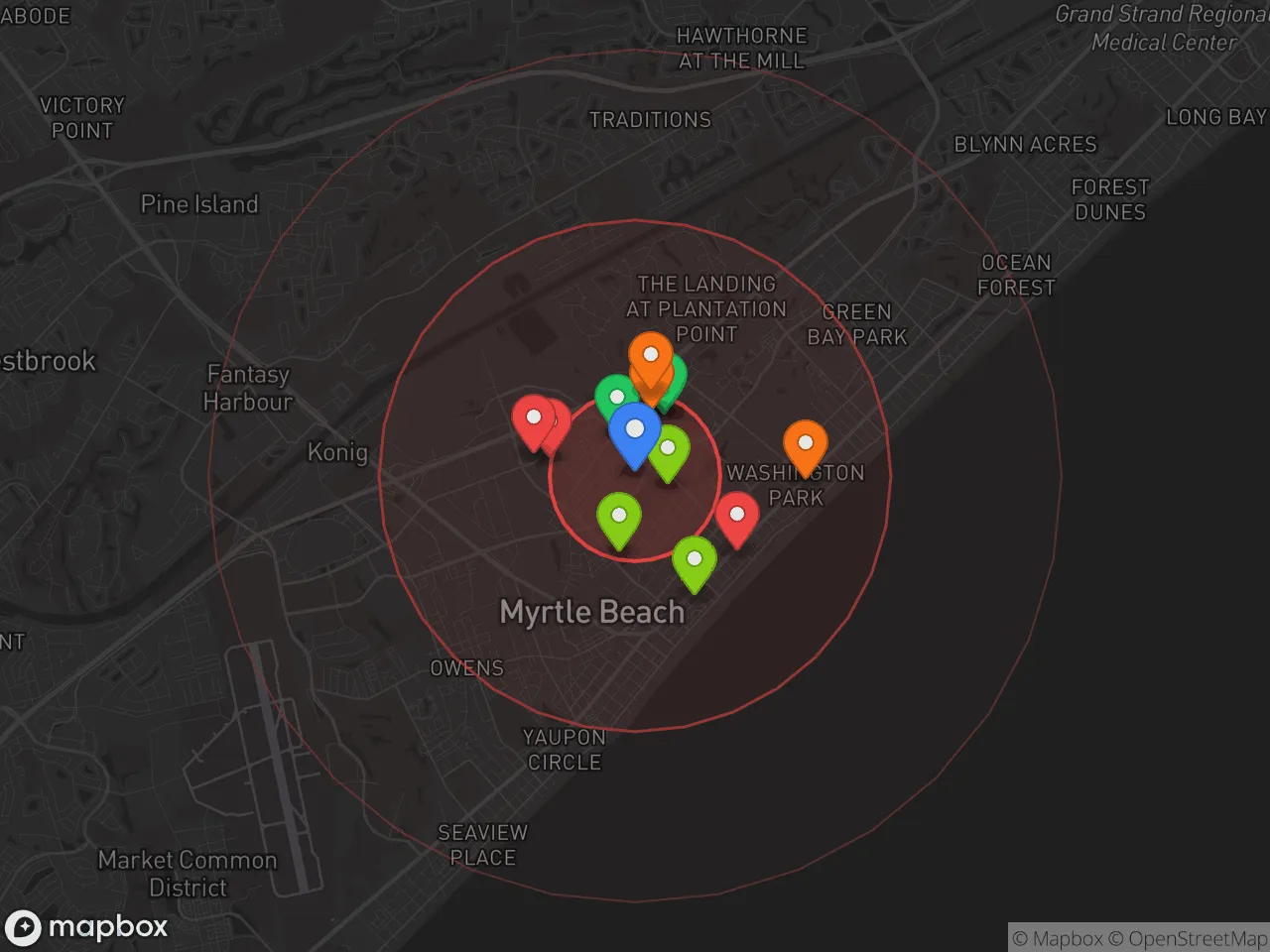
7 within 10 miles
Gas
20 within 10 miles
Hospital
7 within 20 miles
Airport
RDU — Raleigh–Durham International
Post Office
USPS — Myrtle Beach, SC
Critical Amenities
Quality-of-Life Analysis
Myrtle Beach presents a mixed quality-of-life profile, with a cost of living index of 108 (8% above the U.S. average) that is offset by a notably short average commute of just 18.5 minutes. The area attracts a diverse population of retirees, remote workers, and service-industry employees, creating a demographic blend that is neither uniformly affluent nor struggling. While the beachfront lifestyle draws many, the economic base remains heavily tied to tourism, which shapes both the opportunities and the seasonal rhythms of daily life.
Cost of living, housing affordability, and how Myrtle Beach compares to nearby areas
Housing is the primary driver of the area's above-average cost of living. The median home value of $347,700 is roughly 10% below the national median, but it is significantly higher than inland communities like Conway (median $289,000) or Loris (median $245,000). Renters fare better: the median rent of $1,132 is about 12% below the national median, making Myrtle Beach more affordable for renters than nearby Charleston ($1,550) or Wilmington, NC ($1,350). However, property taxes in Horry County are relatively low at roughly 0.55% of assessed value, which helps offset the higher purchase price for homeowners. The short commute—18.5 minutes on average—is a major quality-of-life advantage, as it is well below the national average of 26 minutes and far shorter than the 30+ minute commutes common in Charlotte or Atlanta. This means residents spend less time in traffic and more time at the beach or with family.
What daily life is like for families, retirees, and remote workers
Daily life in Myrtle Beach revolves around the beach, the boardwalk, and a calendar packed with events like the Myrtle Beach Bike Rally and the Carolina Country Music Fest. For families, the Horry County Schools system serves the area, with notable schools like Myrtle Beach High School and Ocean Bay Middle School receiving above-average ratings. However, the school system faces challenges with overcrowding and teacher retention, a common issue in fast-growing coastal districts. Retirees are drawn to the area's 60+ golf courses, the Grand Strand's medical infrastructure (including Grand Strand Medical Center and Tidelands Health), and the absence of state income tax on Social Security benefits. Remote workers benefit from decent broadband coverage, though fiber-optic availability is spotty outside the immediate beachfront corridor. The biggest drawback is the seasonal tourism surge: from March through September, traffic on Highway 17 and Ocean Boulevard can triple, and restaurant wait times spike. Locals often plan errands around tourist patterns, avoiding the main drag on weekends and holidays.
Myrtle Beach is best suited for those who prioritize beach access, a mild climate, and a relaxed pace over urban amenities or career diversity. Retirees and remote workers with stable incomes will find the cost of living manageable, especially if they buy before prices rise further. Families should weigh the school system's limitations against the recreational opportunities. The area is less ideal for professionals seeking high-paying jobs outside tourism or healthcare, as the local economy offers limited white-collar employment. For anyone who values a short commute, low property taxes, and year-round outdoor living, Myrtle Beach delivers a solid quality of life—provided they can tolerate the seasonal crowds.

Crime in Myrtle Beach, SC
Higher crime rates than 71% of comparable U.S. locations.
Violent CrimeViolent Crime Analysis
Property CrimeProperty Crime Analysis
Crime Analysis
Myrtle Beach, South Carolina, faces a serious public safety challenge, with crime rates that significantly exceed both state and national averages. The city's violent crime rate stands at 1,096.6 incidents per 100,000 residents, while property crime reaches 5,375.4 per 100,000—figures that place it among the most dangerous small cities in the United States. These statistics reflect a community where both personal safety and property security are pressing concerns for residents and visitors alike.
Crime in context
Myrtle Beach's crime rates are dramatically higher than national benchmarks. The violent crime rate is roughly three times the U.S. average, while property crime is nearly double. Compared to South Carolina as a whole—which itself has elevated crime rates—Myrtle Beach is an outlier. The city's violent crime rate is approximately 2.5 times the state average, and its property crime rate is about 1.8 times higher. These disparities are not explained solely by tourism; year-round residents face elevated risks of assault, robbery, and theft. A contributing factor is the local justice system's approach: Horry County, which includes Myrtle Beach, has seen progressive prosecutors and judges who prioritize diversion programs and reduced sentencing for repeat offenders. This ideology, while sympathetic to offenders, directly results in more criminals returning to the streets, undermining justice for victims and public safety.
What residents experience
For those living in Myrtle Beach, crime is not an abstract statistic but a daily reality. Property crime—particularly larceny, vehicle break-ins, and burglary—is the most common concern, with rates that make securing homes and vehicles a constant priority. Violent crime, while less frequent, is concentrated in specific areas and often involves disputes among individuals known to each other. The city's tourism-driven economy means that seasonal population surges can exacerbate crime, as opportunistic theft and assault increase during peak months. Residents report that police response times can vary, and community trust in law enforcement is mixed, partly due to perceptions that the justice system is lenient on repeat offenders.
Neighborhood-level variation
Safety in Myrtle Beach is not uniform. The Market Common district and areas near the Grand Strand's northern end tend to have lower crime rates, benefiting from higher property values and more active neighborhood watch programs. In contrast, sections along Ocean Boulevard and the central tourist corridor experience the highest concentrations of violent and property crime, driven by transient populations and nightlife activity. The Briarcliffe Acres enclave and parts of the Socastee area offer relative safety, but even these neighborhoods are not immune to property crime. Prospective residents should research specific blocks and consult local police crime maps, as a few blocks can separate relatively safe areas from high-risk zones. Overall, Myrtle Beach requires a cautious, informed approach to personal safety and property protection.
* Values derived from national, state, county, city and local statistics and may differ in a specific area. Last updated: 2026-04-29T19:15:11.000Z
Narrative content on this page is AI-generated and may contain mistakes. Verify any details that matter before acting on them.
ReloMaps may earn a commission from affiliate links at no extra cost to you.

