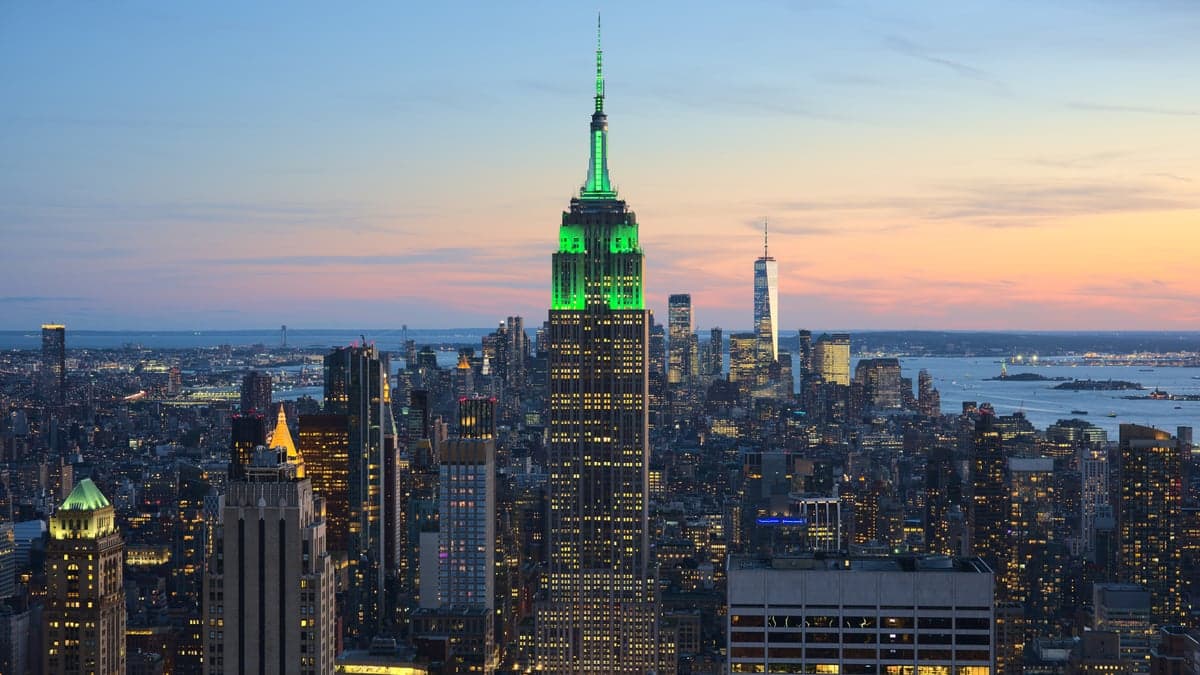
Photo: Wikipedia
Political ClimatePolitical Climate in New York, NY
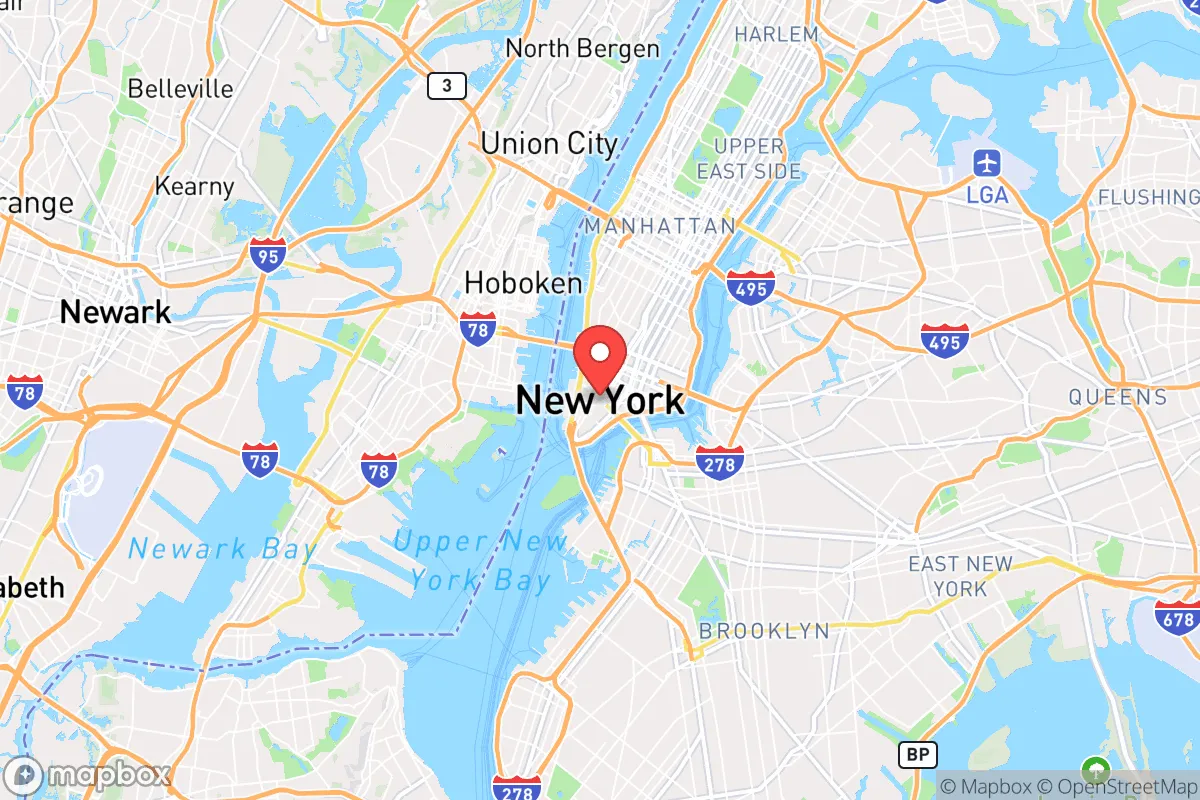
District shown is the primary district for this city’s centroid. Cities may span multiple districts.
Local Political AnalysisPolitical Analysis of New York, NY
New York City is about as blue as it gets, with a Cook PVI of D+32, meaning it votes 32 points more Democratic than the national average. That number isn't just a statistic—it's a lived reality. If you're a conservative or even a moderate who values personal freedom and limited government, you'll feel like a permanent minority here. The city hasn't just leaned left for decades; it's accelerated into progressive overdrive, especially since the early 2020s. I've lived here long enough to remember when New York was a tough, pragmatic place where people minded their own business. Now, it feels like every block has a new policy or program telling you how to live, work, and think.
How it compares
Drive an hour north to places like Staten Island or Westchester County, and you'll find a different story. Staten Island is the only borough that regularly votes Republican in local races, and it's a stronghold for folks who feel drowned out by Manhattan's progressive machine. Go further out to Nassau County on Long Island or Rockland County—those areas flipped red in recent gubernatorial and presidential elections, especially around 2022 and 2024. They're a stark contrast to the city's core. Even within the five boroughs, neighborhoods like Bay Ridge in Brooklyn or Howard Beach in Queens still hold onto a more traditional, blue-collar Democratic vibe, but they're being squeezed by the citywide push toward policies like defunding the police, sanctuary city status, and rent control expansions that treat property owners like enemies of the state.
What this means for residents
For a conservative or libertarian-leaning person, daily life here means constant friction. You'll pay some of the highest taxes in the nation—property taxes, state income taxes, and city income taxes—while watching your quality of life erode. The city's response to homelessness and mental health crises has been to decriminalize public drug use and open supervised injection sites, which has made streets in places like Midtown and the Lower East Side feel unsafe. Schools are dominated by progressive curricula that emphasize social justice over academics, and if you want to opt your kid out, good luck. The NYPD has been defunded by over $1 billion since 2020, and while crime rates have fluctuated, the sense of disorder is real. If you value the Second Amendment, you're out of luck—New York's gun laws are among the strictest in the country, and the city adds its own layers of bureaucracy that make it nearly impossible to get a permit.
On the cultural front, the city's identity has shifted from "melting pot" to "activist hub." You can't walk through Washington Square Park or Union Square without stumbling into a protest or a political rally. The local media, from the New York Times to the Daily News, overwhelmingly supports progressive candidates and policies, so you won't find much balanced coverage. In the long term, I see this trend continuing—the city's population has been shrinking since 2020, with many families and middle-class workers moving to Florida, Texas, or even upstate New York. The people who stay are either wealthy enough to insulate themselves or too tied to the city's economy to leave. If you're thinking of moving here, just know you're signing up for a place where your vote barely registers, your taxes fund programs you likely oppose, and your personal freedoms are treated as negotiable. It's a beautiful, vibrant city in many ways, but the political climate is suffocating if you don't toe the line.

State Political ClimatePolitical Climate in New York
State Political AnalysisPolitical Environment in the State
New York State has shifted from a classic purple battleground to a solidly Democratic stronghold over the past two decades, with Democrats now holding a supermajority in the State Assembly and a functional supermajority in the State Senate. The state hasn't voted Republican in a presidential election since 1984, and the margin has only widened—Joe Biden carried New York by 23 points in 2020, while Hillary Clinton won by 22 in 2016. But that top-line number hides a dramatic internal fracture: the five boroughs of New York City and their inner suburbs now supply the entire Democratic margin, while vast stretches of Upstate New York have swung hard in the opposite direction, becoming some of the most reliably Republican territory in the Northeast.
Urban vs. rural divide
The political map of New York is essentially a tale of two states. New York City alone accounts for roughly 40% of the state's population, and its five counties (New York, Kings, Queens, Bronx, Richmond) deliver Democratic margins of 60 to 80 points. The inner-ring suburbs of Long Island—Nassau and Suffolk counties—have been trending Democratic for a decade, with Nassau flipping blue in 2020 and Suffolk now a toss-up. Westchester County, just north of the city, is reliably Democratic. But drive an hour north of the city and the landscape changes completely. The Hudson Valley counties of Orange, Putnam, Dutchess, and Columbia have all moved rightward since 2016, with Orange County flipping from Obama to Trump and staying there. The real Republican strongholds are the "Southern Tier" counties along the Pennsylvania border—Steuben, Chemung, Allegany—and the North Country counties like St. Lawrence, Jefferson, and Lewis, where Trump won by 30 to 40 points. The Buffalo and Rochester suburbs (Erie and Monroe counties) are competitive but trending blue, while the cities themselves are Democratic machines. The most dramatic shift has been in the Mohawk Valley and Finger Lakes regions: counties like Oneida, Herkimer, and Ontario that were swing counties in the 1990s now vote Republican by 20 points or more.
Policy environment
New York's policy environment is defined by high taxes, heavy regulation, and a progressive legislative agenda that has accelerated sharply since 2019. The state has the highest combined state and local tax burden in the nation, with property taxes in places like Erie County and Westchester County among the highest in the country. The corporate tax rate is 7.25%, and the personal income tax tops out at 10.9% for high earners—one of the highest rates in the nation. On education, New York has some of the strongest teacher union protections in the country, with tenure laws that make it nearly impossible to fire ineffective teachers. The state's "Blue Ribbon Commission" on education has pushed for critical race theory and DEI mandates in curriculum, and the Board of Regents has adopted "culturally responsive-sustaining education" frameworks that many conservative parents view as ideological indoctrination. Healthcare is dominated by the state's Medicaid program, which covers roughly one in four New Yorkers and consumes over $70 billion annually. The state has codified abortion rights into law via the Reproductive Health Act of 2019, which removed all criminal penalties for late-term abortion and allowed non-physicians to perform the procedure. Election laws have been dramatically loosened: New York now has no-excuse absentee voting, early voting, and automatic voter registration, which critics argue has weakened ballot security. The state also passed the John R. Lewis Voting Rights Act in 2022, which requires pre-clearance for any local election changes in jurisdictions with a history of discrimination—a provision that has been used to block voter ID laws in places like Albany and Buffalo.
Trajectory & freedom
New York is becoming less free by almost any measure, and the pace has accelerated since the COVID-19 pandemic. The state's gun control regime is among the strictest in the nation: the SAFE Act of 2013 banned assault weapons and high-capacity magazines, and the 2022 "Concealed Carry Improvement Act" (CCIA) effectively eliminated public carry by requiring "good moral character" and banning guns in a vast list of "sensitive locations" including Times Square, public transit, and any place where alcohol is served. The Supreme Court struck down the "proper cause" requirement in NYSRPA v. Bruen (2022), but the state simply rewrote the law to be even more restrictive. On parental rights, the state has moved aggressively to limit parental control: in 2024, the legislature passed a bill that allows minors as young as 12 to consent to gender-affirming care without parental notification, and the state's "Safe Haven" laws have been expanded to shield undocumented immigrant families from federal immigration enforcement. Property rights have been eroded by the state's rent stabilization laws, which apply to over one million apartments in New York City and its suburbs, effectively creating a permanent landlord-tenant relationship that can be inherited by family members. The state's "Green New Deal" (the Climate Leadership and Community Protection Act of 2019) mandates a 100% zero-emission electricity grid by 2040 and has effectively banned natural gas hookups in new construction, driving up energy costs across the state. On medical freedom, New York was one of the most aggressive states in mandating COVID-19 vaccines for healthcare workers, school employees, and public employees, and those mandates remain in place despite the end of the public health emergency.
Civil unrest & political movements
New York has been a flashpoint for political activism on both sides. The 2020 George Floyd protests in New York City were among the largest and most destructive in the nation, with over 1,000 arrests and an estimated $1 billion in property damage. The city's "defund the police" movement led to a $1 billion cut to the NYPD budget in 2020, though much of that was later restored after a surge in violent crime. The state's sanctuary policies have made it a target for immigration politics: New York City has been busing migrants to upstate communities like Albany, Rochester, and Buffalo, creating tension between the city and the rest of the state. In 2023, Governor Kathy Hochul deployed the National Guard to the subway system to address a surge in violent crime, a move that was praised by conservatives but criticized by progressives. The "New York State Rifle & Pistol Association" has been the lead plaintiff in multiple Supreme Court cases challenging the state's gun laws, and the organization remains active in litigation. There have been scattered calls for secession from upstate counties—the "New York State of Mind" movement in 2021 proposed splitting the state into two, but it gained little traction. Election integrity remains a live issue: the 2020 election saw widespread use of mail-in ballots, and the state's Board of Elections was criticized for slow counting and inconsistent procedures. In 2024, the state's new "John Lewis Voting Rights Act" was used to block a voter ID law in the town of Hempstead on Long Island, sparking a legal battle that is ongoing.
Projection
Over the next 5-10 years, New York is likely to become more progressive and less free, driven by demographic trends that favor the Democratic coalition. The state's population has been declining since 2020, with net domestic out-migration of over 300,000 people, but the losses are concentrated in upstate counties and among higher-income households. The people leaving are disproportionately conservative-leaning and tax-sensitive, while the people arriving—mostly international immigrants and young professionals moving to New York City—tend to vote Democratic. This means the political balance will continue to shift leftward, even as the state's overall population shrinks. The state's fiscal situation is precarious: the budget deficit is projected to reach $4.3 billion by 2027, and the state's pension system is underfunded by over $100 billion. This will likely lead to even higher taxes or cuts to services, which will accelerate the exodus of businesses and families. The state's housing crisis—driven by restrictive zoning and rent control—will continue to push young families to lower-cost states like Florida, Texas, and Tennessee. For a conservative-leaning newcomer, the realistic outlook is that New York will become an increasingly hostile environment for traditional values, economic freedom, and personal autonomy.
For someone considering a move to New York, the bottom line is this: if you're looking for a state that respects your Second Amendment rights, keeps taxes low, protects parental authority, and doesn't mandate ideological conformity in schools, New York is probably not the right fit. The state's progressive supermajority is entrenched, and the trajectory is toward more regulation, higher taxes, and less personal freedom. The places that still feel like "old New York"—the rural counties of the Southern Tier, the North Country, and parts of the Finger Lakes—are fighting a rear-guard action, but they're losing population and political influence every year. If you do move here, you'll find beautiful landscapes, strong communities in the upstate areas, and a rich cultural heritage, but you'll also be living under a state government that is increasingly at odds with your values. Choose your county carefully, and be prepared for a political environment that will likely get worse before it gets better.
* Values derived from national, state, county, city and local statistics and may differ in a specific area. Last updated: 2026-04-15T19:12:32.000Z
Narrative content on this page is AI-generated and may contain mistakes. Verify any details that matter before acting on them.
ReloMaps may earn a commission from affiliate links at no extra cost to you.

