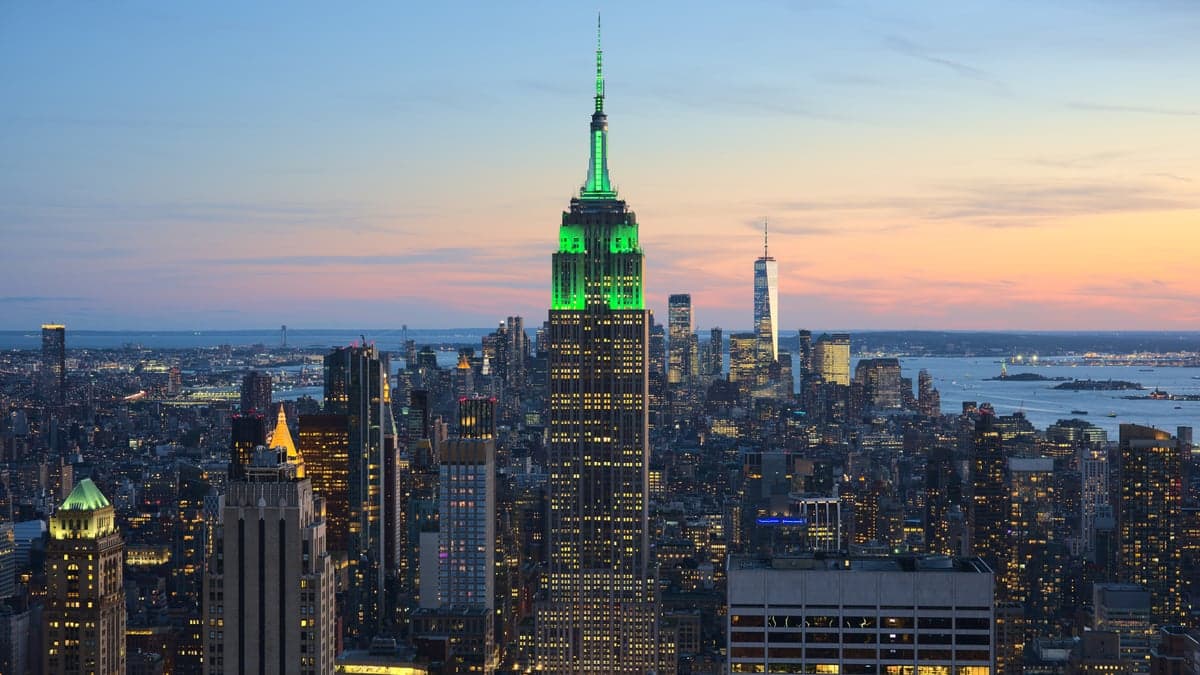
Photo: Wikipedia
Quality of Life in New York, NY
A livable area that tracks near national norms for affordability, walkability, and neighborhood health.
What does Quality of Life tell us?
Quality of Life blends cost of living, nearby amenities, socioeconomic signals, and neighborhood character. City-level scores represent the whole municipality; individual neighborhoods can differ.
What does this tell us?
Quality of Life blends cost of living, nearby amenities, socioeconomic signals, and neighborhood character. City-level scores represent the whole municipality; individual neighborhoods can differ.
Cost of Living
98% above national average
The Real Cost of Living in New York, NY for 2026
| Tier | Individual | Family (4) |
|---|---|---|
| Survival | $28k | $53k |
| Comfortable | $138k | $202k |
| Luxury | $144k+ | $223k+ |
| Elite (Top 5%) | $237k+ | $368k+ |
39%
The Area Signal
A metric tracking the socioeconomic signals of the area.


Hobbies
Explore the areaGroceries
4 within 10 miles
Gas
0 within 10 miles
Hospital
3 within 20 miles
Airport
EWR — Newark Liberty International
Post Office
USPS — New York, NY
Critical Amenities
Quality-of-Life Analysis
New York, NY, is one of the most affluent and densely populated urban centers in the world, drawing a diverse mix of high-earning professionals, creatives, and ambitious transplants who prioritize career opportunity and cultural access over square footage. The city’s quality of life is defined by a constant trade-off: extraordinary amenities and global connectivity come at a cost of living that is nearly double the national average, with a cost-of-living index of 198 (100 = U.S. average). This financial reality shapes who can comfortably live here—typically households earning well above $150,000 annually—while many others rely on rent stabilization, roommates, or long commutes to make ends meet.
Cost of living, housing, and affordability compared to nearby areas
New York’s cost of living is the highest in the continental U.S., driven overwhelmingly by housing. The median home value sits at $751,700, though in Manhattan that figure easily exceeds $1.2 million, while more affordable outer boroughs like Queens and the Bronx offer median values closer to $550,000 and $400,000 respectively. Median rent citywide is $1,779, but this number masks wide variation: a studio in Manhattan averages over $3,200, while a similar unit in Upper Manhattan or the Bronx can be found for $1,500–$1,800. Compared to nearby suburbs like White Plains (COL index 140) or Jersey City (COL index 145), New York is roughly 30–40% more expensive for housing, though those suburbs add commuting costs and time. The average commute in New York is 40.6 minutes—among the longest in the nation—reflecting the reality that many workers live in outer boroughs or New Jersey to afford rent. For renters, the city’s rent stabilization laws offer some protection, but vacancy rates below 3% mean competition is fierce.
What daily life is like: amenities, schools, and neighborhood rhythm
Daily life in New York is defined by 24/7 access to world-class amenities: over 1,700 parks, 2,000+ restaurants per square mile in Manhattan, and a public transit system that moves 5.5 million riders daily. The city’s public schools are a mixed bag—elite magnet schools like Stuyvesant High School (acceptance rate under 5%) coexist with underfunded district schools, driving many middle-class families to private or parochial options. Neighborhood rhythm varies dramatically: the Financial District hums with suits by 8 a.m. and empties by 7 p.m., while the East Village pulses with nightlife until 4 a.m. Families often cluster in Park Slope, Brooklyn (median home value $1.4M) or Forest Hills, Queens (median home value $650,000) for better schools and quieter streets. The city’s 24-hour subway system and dense walkability mean a car is optional for most, though ride-share and taxi costs add up quickly. Cultural amenities are unmatched—Broadway, the Met, MoMA, and over 100 museums—but accessing them requires both time and money, with a typical night out costing $100–$200 per person.
New York is best suited for those who thrive on intensity, career ambition, and constant stimulation—professionals in finance, tech, media, and law who earn enough to absorb the high costs, as well as artists and entrepreneurs willing to trade space for opportunity. Families with children often find the city challenging unless they secure a spot in a top public school or can afford private tuition (averaging $45,000/year). Retirees on fixed incomes generally struggle unless they own rent-stabilized apartments or have substantial savings. For singles and couples without children who prioritize career growth, cultural access, and social density above all else, New York remains unmatched—but the financial and logistical demands mean it is not a place where quality of life comes easily or cheaply.

Crime in New York, NY
WARNING: The crime statistics are unreliable for this jurisdiction. Local authorities have either not reported or under reported their data to the FBI. This could be due to bad intentions, incompetence or technical issues. Regardless, we suggest skepticism.
Higher crime rates than 62% of comparable U.S. locations.
Violent CrimeViolent Crime Analysis
Property CrimeProperty Crime Analysis
Crime Analysis
New York, NY, reports a violent crime rate of 331.5 incidents per 100,000 residents and a property crime rate of 1,323.4 per 100,000, according to the most recent data. While these figures place the city below the national average for violent crime in some categories, the overall safety picture is heavily influenced by the city's progressive criminal justice policies. The combination of bail reform, reduced prosecution for certain offenses, and district attorneys focused on decarceration has created an environment where property crime is a persistent concern and violent incidents remain a serious risk in specific neighborhoods.
Crime in context
New York's violent crime rate of 331.5 per 100,000 is roughly 10% lower than the national average, but this comparison masks a troubling trend. Since 2020, major felony crimes—including robbery, burglary, and grand larceny auto—have increased significantly, reversing years of decline. The property crime rate of 1,323.4 per 100,000 is approximately 15% higher than the national average, driven largely by a surge in shoplifting, car break-ins, and package theft. Compared to the rest of New York State, the city's crime rates are elevated, though upstate urban centers like Buffalo and Rochester report higher violent crime per capita. The progressive policies championed by Manhattan District Attorney Alvin Bragg and other borough prosecutors, which emphasize diversion programs and reduced sentences for non-violent offenders, are frequently cited by critics as a direct cause of the rise in recidivism and a decline in public confidence in the justice system.
What residents experience
Daily life for New Yorkers involves a heightened awareness of property crime. Subway crime, while still statistically rare per rider, has become a major quality-of-life issue, with a 2023 NYPD report showing a 15% increase in transit felony assaults compared to pre-pandemic levels. Residents in neighborhoods like the Upper East Side, Park Slope, and Astoria report frequent package thefts and car break-ins, while commercial corridors in Midtown and SoHo have seen organized retail theft rings operate with impunity. Violent crime is more concentrated: the Bronx's 44th Precinct recorded over 1,200 felony assaults in 2024, while parts of Brooklyn's Brownsville and East New York experience shooting rates comparable to much larger cities. The liberal judicial philosophy that prioritizes "alternatives to incarceration" has led to a revolving door for repeat offenders, frustrating victims and eroding the sense that the justice system provides meaningful consequences.
Neighborhood-level variation is extreme. Staten Island's South Shore and parts of Queens like Forest Hills and Bayside report violent crime rates below 150 per 100,000, comparable to suburban towns. In contrast, the South Bronx, Harlem, and central Brooklyn see rates exceeding 600 per 100,000. Property crime is more evenly distributed, though Manhattan's tourist-heavy areas—Times Square, the Theater District, and Lower East Side—experience the highest rates of theft and fraud. For those considering relocation, the safest choices are generally the outer-borough residential enclaves with strong community policing and neighborhood watch programs, while areas with high concentrations of progressive district attorney policies and bail reform effects should be approached with caution.
* Values derived from national, state, county, city and local statistics and may differ in a specific area. Last updated: 2026-04-15T19:12:32.000Z
Narrative content on this page is AI-generated and may contain mistakes. Verify any details that matter before acting on them.
ReloMaps may earn a commission from affiliate links at no extra cost to you.

