Photo: Wikipedia
Quality of Life in Newton, MA
A high quality of life with strong walkability, manageable living costs, healthy neighborhood signals, and solid amenity access.
What does Quality of Life tell us?
Quality of Life blends cost of living, nearby amenities, socioeconomic signals, and neighborhood character. City-level scores represent the whole municipality; individual neighborhoods can differ.
What does this tell us?
Quality of Life blends cost of living, nearby amenities, socioeconomic signals, and neighborhood character. City-level scores represent the whole municipality; individual neighborhoods can differ.
Cost of Living
194% above national average
The Real Cost of Living in Newton, MA for 2026
| Tier | Individual | Family (4) |
|---|---|---|
| Survival | $38k | $72k |
| Comfortable | $234k | $343k |
| Luxury | $334k+ | $518k+ |
| Elite (Top 5%) | $439k+ | $680k+ |
54%
The Area Signal
A metric tracking the socioeconomic signals of the area.
Hobbies
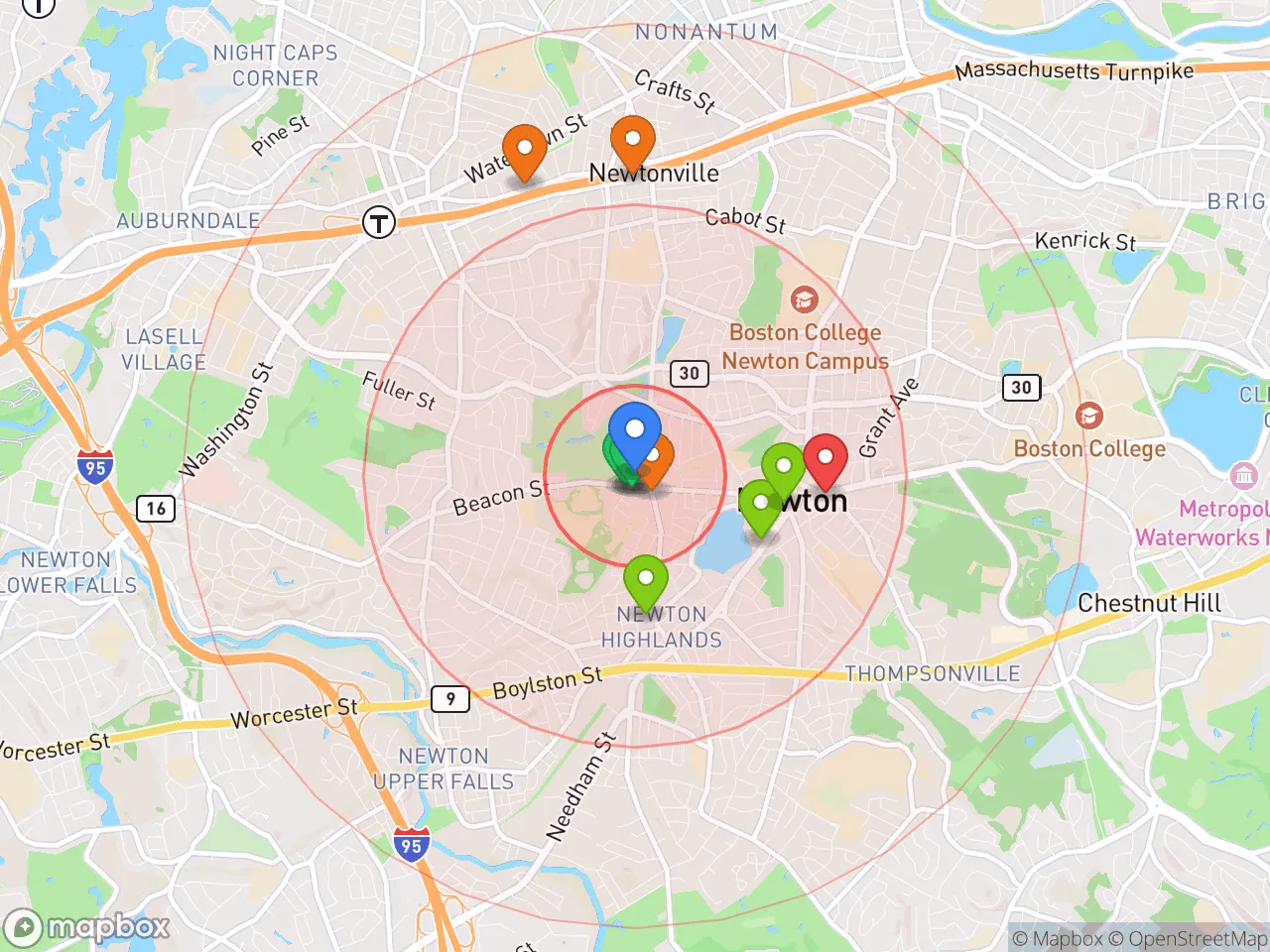
Explore the areaGroceries
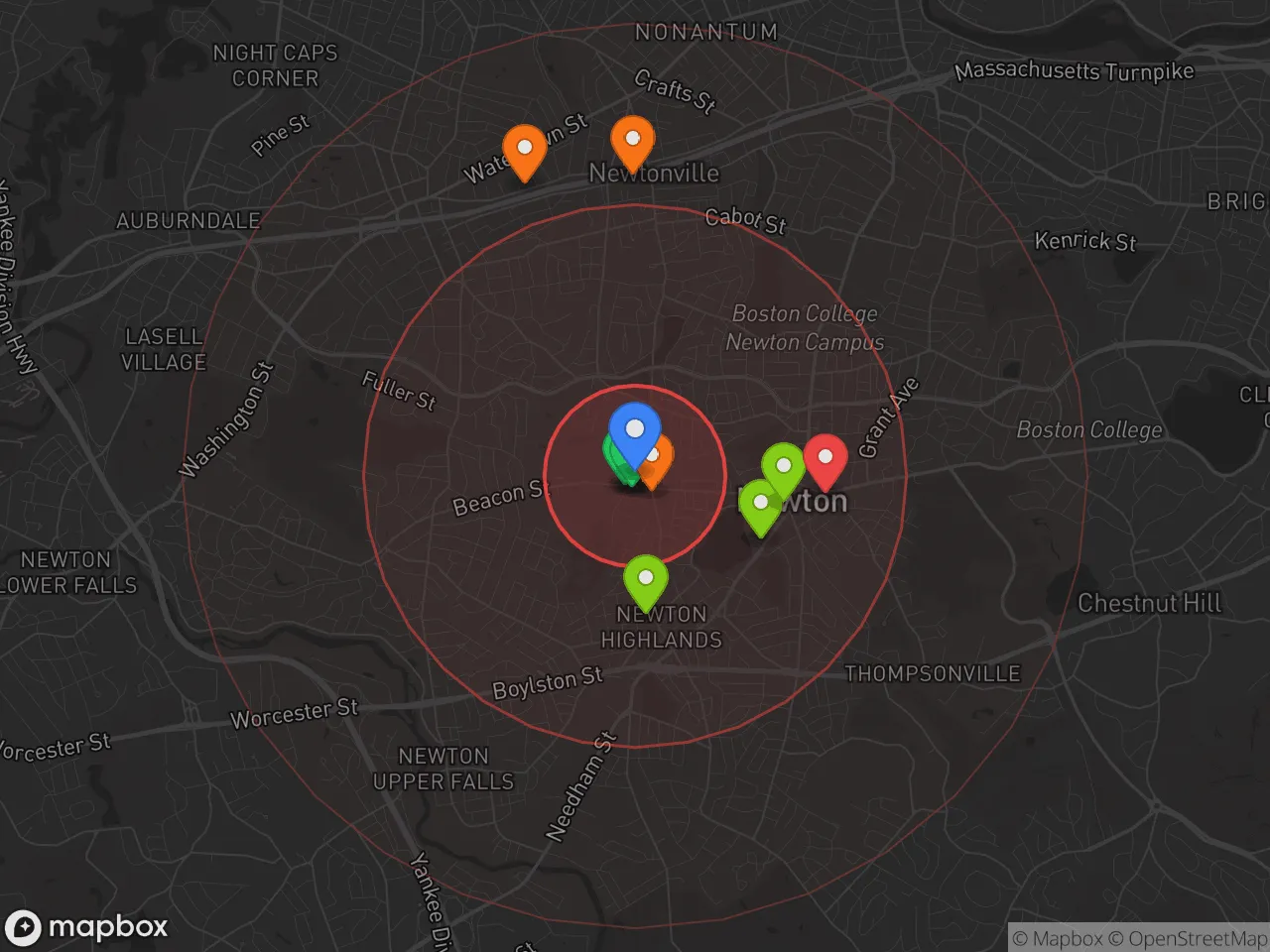
5 within 10 miles
Gas
20 within 10 miles
Hospital
20 within 20 miles
Airport
PDX — Portland International Jetport
Post Office
USPS — Newton Highlands, MA
Critical Amenities
Quality-of-Life Analysis
Newton, Massachusetts, is one of the most affluent and sought-after suburbs in Greater Boston, with a cost of living index of 294 (nearly three times the U.S. average) that reflects its concentration of high-earning professionals, academics, and families. The city’s population of roughly 88,000 is notably well-educated and upper-income, drawn by top-tier public schools, historic housing stock, and a direct commuter rail connection to downtown Boston. Life here is defined by a blend of suburban tranquility and urban accessibility, but the financial barrier to entry is steep, making it a place where financial comfort is a prerequisite for most residents.
Cost of living, housing affordability, and how Newton compares to nearby suburbs
Newton’s cost of living is among the highest in Massachusetts, driven almost entirely by housing. The median home value sits at $1,202,500, placing it well above neighboring suburbs like Brookline ($1.1M) and Wellesley ($1.3M), though slightly below Weston’s $1.5M median. For renters, the median monthly rent of $2,388 is comparable to Cambridge but significantly higher than more distant suburbs like Framingham ($1,800). The average commute of 26.7 minutes is shorter than the Boston metro average of 31 minutes, thanks to Newton’s location along the Massachusetts Turnpike (I-90) and the MBTA’s Green Line and Commuter Rail. Property taxes are moderate for the area at roughly 1.1% of assessed value, but the sheer price of entry means that even dual-income professional households often need a down payment of $200,000 or more to afford a typical single-family home. Condos and townhouses offer a more accessible entry point, with median prices around $650,000, but inventory is tight and bidding wars are common.
Schools, amenities, and what daily life is like for families
Newton’s public school system is the primary draw for families, consistently ranked among the top five in Massachusetts. The district operates 15 elementary schools, four middle schools, and two high schools (Newton North and Newton South), both of which offer extensive Advanced Placement and International Baccalaureate programs. Daily life revolves around the city’s 14 distinct villages—such as Newton Centre, Newton Highlands, and Chestnut Hill—each with its own walkable commercial core featuring independent bookstores, farm-to-table restaurants, and boutique shops. The city maintains over 1,000 acres of parkland, including the 200-acre Hammond Pond Reservation and the Charles River Greenway, which provides 20 miles of paved trails for cycling and jogging. Cultural amenities include the Newton Free Library (one of the busiest in the state), the New Art Center, and the historic Scandinavian Living Center. For groceries, residents rely on Whole Foods, Roche Bros., and the seasonal Newton Farmers Market. The MBTA’s Green Line D branch runs through the center of the city, offering a 25-minute ride to Boston’s Back Bay, while the Commuter Rail’s Newtonville stop reaches South Station in 20 minutes.
Newton is best suited for families and professionals who prioritize exceptional public education, walkable village centers, and a short commute to Boston, and who have the financial resources to afford the area’s premium housing costs. Empty-nesters and retirees also find appeal in the city’s cultural offerings and proximity to world-class medical care at nearby hospitals like Brigham and Women’s and Massachusetts General. However, young singles and renters on a median income may struggle with the high cost of living, as the median rent consumes over 40% of the area’s median household income of $140,000. For those who can afford it, Newton offers a rare combination of suburban safety, urban convenience, and academic excellence that few other Boston suburbs can match.

Crime in Newton, MA
Lower crime rates than 96% of comparable U.S. locations.
Violent CrimeViolent Crime Analysis
Property CrimeProperty Crime Analysis
Crime Analysis
Newton, Massachusetts, is one of the safest cities of its size in the United States, with violent crime rates that are a fraction of both the state and national averages. The city recorded a violent crime rate of just 39.6 incidents per 100,000 residents, compared to the national average of roughly 380 per 100,000. Property crime in Newton stands at 256.2 per 100,000, also well below the national benchmark of approximately 2,000 per 100,000, making it a consistently low-crime suburb within the Greater Boston area.
Crime in context
Newton’s crime statistics place it among the safest municipalities in Massachusetts. The city’s violent crime rate is roughly 85% lower than the state average, and its property crime rate is about 70% lower. This safety record is sustained despite Newton’s location within a large, liberal-leaning metropolitan area. Progressive district attorneys and judges in Middlesex County and Suffolk County have adopted policies that prioritize diversion and reduced incarceration for non-violent offenders, which critics argue can lead to higher recidivism and more property crime. However, Newton’s own police department maintains a strong community-oriented presence, and the city’s socioeconomic profile—high median income, excellent schools, and engaged residents—acts as a natural buffer against the crime trends seen in nearby urban centers like Boston or Cambridge.
What residents experience
For daily life in Newton, serious violent crime is extremely rare. The 39.6 per 100K figure translates to roughly 30-35 violent incidents per year across the entire city of 88,000 residents. Residents are far more likely to encounter property crimes such as package theft, bicycle theft, or an occasional car break-in, particularly in areas near public transit stops like the Riverside or Woodland MBTA stations. The Newton Police Department publishes a daily crime log, and most entries involve larceny from motor vehicles or vandalism. The city’s proactive neighborhood watch programs and well-lit, walkable streets contribute to a strong sense of security, though residents are advised to lock vehicles and secure packages promptly.
Neighborhood-level variation is modest but worth noting. Wards closer to the Boston city line, such as Newton Corner and Newton Lower Falls, see slightly higher property crime rates due to proximity to urban transit corridors. In contrast, the more secluded, higher-income areas like Waban and Chestnut Hill report near-zero violent crime and very low property crime. Overall, Newton remains a top-tier safe suburb, but the broader regional context of progressive criminal justice policies means residents should remain vigilant about property theft and support local policing efforts to maintain the current low crime environment.
* Values derived from national, state, county, city and local statistics and may differ in a specific area. Last updated: 2026-05-01T10:33:13.000Z
Narrative content on this page is AI-generated and may contain mistakes. Verify any details that matter before acting on them.
ReloMaps may earn a commission from affiliate links at no extra cost to you.

