Photo: Wikipedia
Political ClimatePolitical Climate in Nogales, AZ
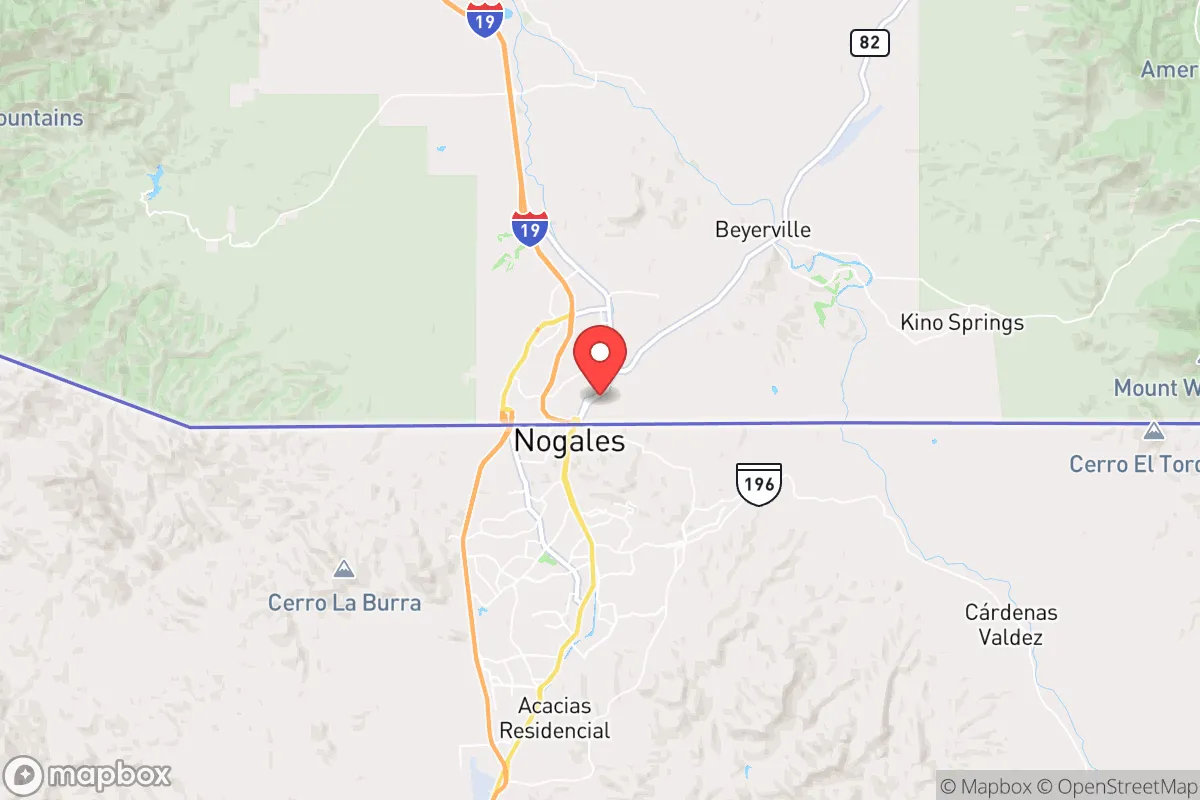
District shown is the primary district for this city’s centroid. Cities may span multiple districts.
Local Political AnalysisPolitical Analysis of Nogales, AZ
Nogales, Arizona, leans heavily Democratic, with a Cook PVI of D+13, meaning it votes about 13 points more Democratic than the national average in presidential elections. This isn't a new development—the city has been a blue stronghold for decades, driven largely by its binational character and the priorities of a border community. But if you've lived here as long as I have, you've seen the political winds shift in ways that feel less about local needs and more about outside ideological experiments, and that's where the concern creeps in.
How it compares
Drive just 20 miles north to Rio Rico or 30 miles to Green Valley, and you'll hit a different world politically. Those areas lean more conservative, with Green Valley's retiree-heavy population often voting Republican by wide margins. Even nearby Sahuarita, about 40 miles north, is a purple-to-red contrast. Nogales, though, is an island of deep blue in Santa Cruz County, which itself is one of the most Democratic counties in Arizona. The difference isn't subtle—it's a reminder that border towns often vote based on trade and immigration realities, not the culture-war battles that dominate state politics. But that doesn't mean the local Democratic machine is immune to overreach. The county government has pushed progressive policies on land use and public health mandates that feel disconnected from the everyday concerns of folks just trying to run a small business or keep their property taxes from climbing.
What this means for residents
For residents, the practical effect of this political climate is a government that tends to expand its footprint. You'll see more regulations on everything from short-term rentals to water usage, often justified as necessary for "equity" or "sustainability." The city council has shown a willingness to take on debt for projects that sound good on paper—like new public spaces or transit studies—but that can mean higher taxes or fees down the line. If you value personal freedom, like the right to decide how to use your own land or run your own business without endless permitting hoops, Nogales can feel like a place where the bureaucracy is growing faster than the economy. The school board has also leaned into progressive curriculum changes, which might not sit well if you want your kids taught basics without ideological flavoring. It's not a nightmare scenario, but it's a slow drift toward more government control over daily life.
What sets Nogales apart culturally and politically
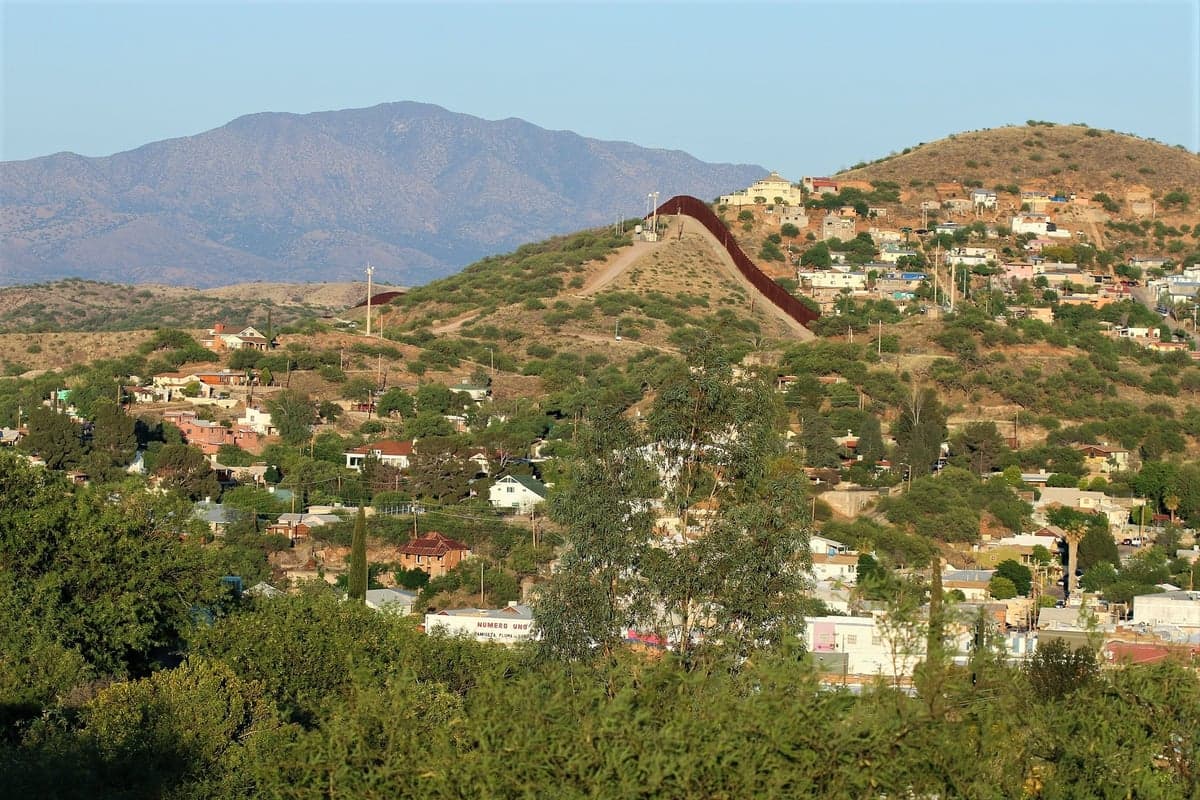
Culturally, Nogales is defined by its border—the twin city of Nogales, Sonora, sits just across the fence. This creates a unique dynamic where local politics often revolve around cross-border commerce, port-of-entry wait times, and federal immigration policy. You'll hear more talk about NAFTA-era trade routes than about national political scandals. But there's a growing tension: as the national Democratic Party pushes for more open-border rhetoric and sanctuary-city policies, Nogales has become a testing ground. The county sheriff's office has publicly resisted cooperating with federal immigration enforcement, which sounds noble until you realize it can strain resources and create friction with state law. For a conservative-leaning resident, this feels like local officials prioritizing ideology over practical safety and cooperation. The long-term trajectory? If the progressive trend continues, expect more mandates, higher taxes, and a government that sees itself as a social engineer rather than a servant of the people. It's not the end of the world, but it's worth watching—and voting against when you can.

State Political ClimatePolitical Climate in Arizona
State Political AnalysisPolitical Environment in the State
Arizona has transformed from a reliably conservative stronghold into a genuine battleground state over the past two decades, with its partisan lean shifting from solidly Republican to a narrow +2.5-point margin for Joe Biden in 2020 and a razor-thin +0.3-point win for Donald Trump in 2024. The state’s political coalition is now a three-way tug-of-war between Maricopa County’s sprawling suburban moderates, the deep-red rural and exurban counties, and the fast-growing Latino and transplant-heavy population in metro Phoenix and Tucson. Over the last 10-15 years, Arizona has moved leftward by about 8-10 points in presidential races, driven largely by in-migration from California and the Midwest, but the 2024 results suggest the pendulum may be swinging back as conservative voters consolidate around economic and border issues.
Urban vs. rural divide
The political map of Arizona is starkly divided between its two major metro areas and everything else. Maricopa County, home to Phoenix, Mesa, Chandler, and Scottsdale, casts about 60% of the state’s votes and has become the epicenter of the state’s political shift. In 2020, Maricopa went for Biden by about 2 points; in 2024, it flipped back to Trump by roughly 1 point, reflecting the county’s volatile suburban electorate. Tucson and Pima County lean reliably Democratic, voting for Biden by 14 points in 2020 and Harris by 11 in 2024, but they lack the population weight to offset the rest of the state. The rural and exurban counties—places like Yavapai (Prescott), Mohave (Lake Havasu City), and Cochise (Sierra Vista)—vote Republican by margins of 30-40 points. The real political drama is in the suburban donut around Phoenix: cities like Gilbert, Queen Creek, and Buckeye have grown explosively and are trending more conservative as families flee higher taxes and progressive policies in California and Colorado. Meanwhile, Flagstaff in Coconino County is a liberal island in the north, voting Democratic by 25+ points, while Yuma County along the border is a swing area with a large Latino population that has shifted rightward in 2024 over immigration concerns.
Policy environment
Arizona’s policy environment is a mixed bag for conservatives, with some bright spots and some real frustrations. The state has a flat income tax rate of 2.5% as of 2023, down from 4.5% in 2020, thanks to Republican-led tax cuts that are phased in through 2025. Property taxes are relatively low, with an effective rate around 0.62% of home value, and there is no estate tax. However, the state’s sales tax is moderately high at 5.6% state-level, plus local add-ons that can push it to 8-10% in cities like Phoenix and Tucson. On education, Arizona was a pioneer in school choice with its Empowerment Scholarship Accounts (ESA) program, which was expanded in 2022 to allow nearly all K-12 students to use public funds for private school or homeschooling—a major win for parental rights. However, the state also has a large public university system (ASU, UA, NAU) that leans left culturally. Healthcare policy is relatively free-market, with no state-level individual mandate and a robust private insurance market, but Medicaid expansion under the Affordable Care Act was adopted in 2013 and remains popular. Election laws have been a flashpoint: in 2022, the legislature passed stricter voter ID requirements and banned ballot harvesting, but the state still has no-excuse mail-in voting, which conservatives view as a vulnerability. The state’s regulatory posture is generally business-friendly, with right-to-work laws and minimal zoning in many rural areas, but Phoenix and Tucson have imposed stricter building codes and environmental regulations.
Trajectory & freedom
Arizona’s trajectory on personal freedom is a tale of two trends: it has become freer on some fronts while losing ground on others. On the positive side, the state expanded gun rights significantly in 2021 with the passage of permitless carry (HB 2580), allowing law-abiding adults to carry concealed firearms without a permit. The ESA school choice expansion in 2022 was a landmark victory for parental rights, giving families control over their children’s education. On property rights, the state has strong eminent domain protections and no statewide rent control, though some cities like Tucson have flirted with tenant protections. On the concerning side, the state’s COVID-era emergency powers were used to impose mask mandates and business closures in 2020-2021, particularly in Phoenix and Tucson, though the legislature later curbed the governor’s emergency authority in 2021. Medical autonomy took a hit in 2024 when voters passed Proposition 139, enshrining a constitutional right to abortion up to fetal viability, overriding the 15-week ban passed by the legislature in 2022. This was a major loss for pro-life conservatives. On speech and religious liberty, Arizona has a Religious Freedom Restoration Act (RFRA) from 1999, but it has been tested in court over LGBT nondiscrimination laws in cities like Phoenix and Flagstaff. The state’s overall freedom ranking from the Cato Institute is middling—around 20th nationally—held back by high incarceration rates and local government overreach in the metros.
Civil unrest & political movements
Political activism in Arizona is intense and visible, with both left and right organizing aggressively. The most prominent flashpoint in recent years has been the border crisis. In 2024, the state legislature passed and Governor Katie Hobbs vetoed multiple bills aimed at cracking down on illegal immigration, including a bill to make it a state crime to cross the border outside a port of entry. The issue has energized conservative grassroots groups like the Arizona Border Patrol and the Yuma County Republican Party, who hold regular rallies and border-watch events. On the left, groups like LUCHA (Living United for Change in Arizona) and the Arizona Democracy Project have been active in voter registration and protests against election integrity laws. The 2020 election aftermath saw massive protests in Phoenix, with both Trump supporters and anti-Trump activists clashing outside the Maricopa County Recorder’s Office. The state has also seen significant election integrity controversies: the 2021 audit of Maricopa County’s ballots by Cyber Ninjas was a national story, and while it found no evidence of widespread fraud, it exposed deep distrust in the system. Immigration politics are the most visible daily issue for new residents, especially in border towns like Nogales and Douglas, where Border Patrol activity is constant. There is no serious secession or nullification movement in Arizona, but the state has a strong strain of libertarian and constitutionalist sentiment, particularly in rural counties like Mohave and Yavapai.
Projection
Over the next 5-10 years, Arizona is likely to remain a competitive swing state, but the trend lines favor a slight rightward shift if current migration patterns hold. The state is adding about 100,000 new residents per year, with a significant share coming from California, Oregon, and Washington—many of whom are fleeing high taxes and progressive policies. These newcomers tend to be more moderate or conservative on economic issues but may lean left on social issues like abortion and marijuana. The Latino population, now about 32% of the state, is not monolithic: younger Latinos trend Democratic, but older and more religious Latinos, especially in Yuma and rural areas, are moving toward the GOP on border security and economic opportunity. The biggest wildcard is the Phoenix suburbs: if cities like Surprise, Goodyear, and Maricopa continue to attract conservative families, the state could flip back to reliably Republican by 2030. However, if the Democratic Party moderates on crime and immigration, they could hold the line. For a new resident, expect continued political volatility, with ballot measures on abortion, school choice, and taxes likely every cycle. The state’s freedom trajectory will depend on which party controls the legislature and governor’s office—currently split, with a Democratic governor and Republican legislature, leading to gridlock on many issues.
For someone moving to Arizona now, the bottom line is that you’ll find a state that is still fundamentally conservative in its rural and exurban areas, but with metro pockets that are increasingly progressive. If you’re looking for a place where your gun rights are protected, your taxes are low, and your kids can use school choice, Arizona delivers—especially if you settle in places like Gilbert, Prescott, or Lake Havasu City. But if you land in Phoenix or Tucson proper, you’ll encounter more government overreach, higher local taxes, and a cultural environment that may feel like a blue island in a red state. The key is picking your community wisely: the state’s political climate varies dramatically from one city to the next, and your experience will depend entirely on where you put down roots.
* Values derived from national, state, county, city and local statistics and may differ in a specific area. Last updated: 2026-04-19T11:55:17.000Z
Narrative content on this page is AI-generated and may contain mistakes. Verify any details that matter before acting on them.
ReloMaps may earn a commission from affiliate links at no extra cost to you.

