 Popular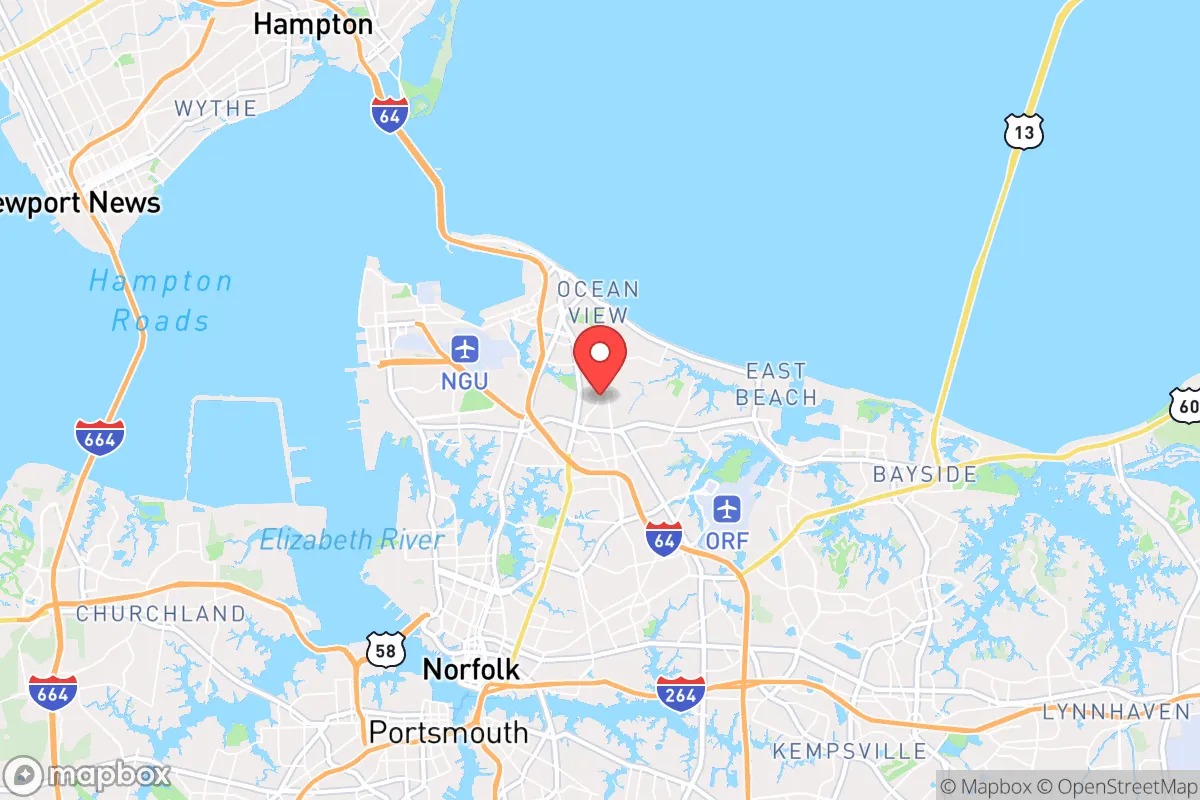
Photo: Wikipedia
Political ClimatePolitical Climate in Norfolk, VA
District shown is the primary district for this city’s centroid. Cities may span multiple districts.
Local Political AnalysisPolitical Analysis of Norfolk, VA
Norfolk, Virginia, has long been a deep blue stronghold in a state that's been trending that way for years, and it's not hard to see why. With a Cook PVI of D+18, this city is about as reliably Democratic as they come, and that's a far cry from the more balanced, common-sense politics that used to define this region. The shift hasn't been subtle—it's a full-on march toward progressive policies that, frankly, feel more like government overreach into our personal lives and wallets than genuine community improvement.
How it compares
If you drive just a few miles west or south, you'll hit a completely different world. Places like Chesapeake and Virginia Beach still lean conservative, with more of a live-and-let-live attitude toward taxes, property rights, and local business regulations. Even Suffolk, just across the river, has a more balanced political mix. But Norfolk? It's the epicenter of the progressive experiment in Hampton Roads. The city council and local school board have embraced policies that feel less about safety and freedom and more about social engineering—think heavy-handed zoning changes, tax hikes for "equity" programs, and a police department that's been defunded in spirit if not in name. It's a stark contrast to the surrounding towns where folks still believe in personal responsibility and limited government.
What this means for residents
For the average person living here, this political climate translates into a few real headaches. First, property taxes have crept up faster than in neighboring cities, funding initiatives that many residents never voted for. Second, the school system has become a battleground for ideological fights—parents have less say in what their kids are taught, and the focus has shifted from academics to social activism. Third, if you own a small business, you're dealing with more red tape and higher fees than you would just a few miles down the road. The city's leadership seems more interested in making national headlines with progressive stances than in fixing potholes or keeping the streets safe. It's a classic case of the government knowing what's best for you, whether you like it or not.
On the cultural side, Norfolk has always had a unique character thanks to the massive Navy presence—Naval Station Norfolk is the world's largest naval base. That military influence used to balance out the politics, bringing in folks from all over the country with more conservative values. But over the last decade, the city's civilian leadership has pushed that influence aside. You'll still see plenty of flags and uniforms, but the local government's priorities have shifted away from supporting the military community. The arts scene and downtown development have gotten a lot of attention, which is fine, but it often comes at the expense of the practical, everyday concerns of families and veterans. Looking ahead, unless there's a serious course correction, Norfolk is likely to keep drifting further left, making it an increasingly tough place for anyone who values personal freedom, fiscal sanity, and a government that stays out of your business.

State Political ClimatePolitical Climate in Virginia
State Political AnalysisPolitical Environment in the State
Virginia has shifted from a reliably purple swing state to a solidly blue one over the past 15 years, driven largely by explosive growth in the Washington, D.C. suburbs. The state’s overall partisan lean is now Democratic-leaning by about 5-7 points in statewide races, but that masks a deep and growing urban-rural chasm. The 2021 gubernatorial election saw Republican Glenn Youngkin win by a narrow 1.6 points, but that was an outlier fueled by parental rights backlash; the 2024 presidential race saw the state go blue by over 5 points, and Democrats now control both chambers of the General Assembly. For a conservative considering relocation, the key takeaway is that Virginia is no longer the competitive, center-right commonwealth it was in the 2000s — it’s a state where progressive policy is increasingly locked in by the suburban vote.
Urban vs. rural divide
The political map of Virginia is a tale of two commonwealths. The entire northern Virginia crescent — Arlington, Alexandria, Fairfax, Loudoun, and Prince William counties — now accounts for roughly one-third of the state’s vote and delivers margins of 60-70% for Democrats. This region is essentially an extension of the D.C. metro area, filled with federal employees, defense contractors, and tech workers who lean heavily progressive. Richmond and Norfolk/Virginia Beach add another 15-20% of the vote with similar blue margins. Meanwhile, rural and exurban Virginia — places like Roanoke, Lynchburg, the Shenandoah Valley, and Southside Virginia — votes 65-75% Republican. The Richmond suburbs like Chesterfield and Hanover have been slowly trending purple, while Fredericksburg and Charlottesville have flipped blue as D.C. spillover expands. The result is that a conservative voter in Abingdon or Staunton has almost no say in statewide outcomes, because the urban crescent simply outvotes the rest of the state.
Policy environment
Virginia’s policy environment has become increasingly unfriendly to conservative priorities. The state income tax is a flat 5.75%, but there’s no sales tax on groceries or prescription drugs. Property taxes are set locally and vary widely — Loudoun County has some of the highest in the state at around 1.2% of assessed value, while Pittsylvania County is under 0.6%. The regulatory posture is moderate but trending left: the 2020 Virginia Clean Economy Act mandates a 100% carbon-free grid by 2050, which has driven up electricity costs. Education policy is a major flashpoint — the state eliminated charter schools as a viable option and has moved toward progressive curriculum standards, though Governor Youngkin did manage to ban critical race theory in K-12 classrooms via executive order in 2022. Healthcare is dominated by the expansion of Medicaid under the Affordable Care Act, which Virginia accepted in 2018. Election laws have tightened: Virginia now has no-excuse absentee voting, same-day voter registration, and automatic voter registration, which conservatives argue erodes ballot integrity. The state also has a Democratic trifecta as of 2024, meaning the governor’s veto can be overridden.
Trajectory & freedom
Virginia’s trajectory on personal freedom is concerning for conservatives. The most significant contraction came in 2020 when the Democratic legislature passed a sweeping gun control package: universal background checks, a “one handgun a month” limit, a red flag law, and a ban on assault weapons for those under 21. Loudoun County and Fairfax County have also enacted local gun storage ordinances. On parental rights, the 2023 battle over the “Model Policies” for transgender students — which required schools to affirm a child’s gender identity without parental notification — was a major flashpoint. Youngkin’s 2022 executive order on parental notification was a win, but the underlying law remains contested. Medical freedom took a hit with the state’s strict COVID-19 vaccine mandates for state employees and healthcare workers, which were upheld in court. Property rights are relatively strong — Virginia is a “Dillon’s Rule” state, meaning localities only have powers granted by the state, which has limited some local overreach. However, the 2020 zoning reform bill (HB 582) allowed accessory dwelling units by right in many areas, which some see as a property rights expansion. The overall trend is clear: the state is becoming less free on guns, education, and medical choice, while remaining moderate on taxes and property.
Civil unrest & political movements
Virginia has been a battleground for political movements on both sides. The 2017 “Unite the Right” rally in Charlottesville remains a national symbol of far-right activism and the violent backlash it provoked. Since then, the left has been more organized: groups like Indivisible Virginia and the Virginia Civic Engagement Table have driven grassroots turnout in the suburbs. On the right, the “Parents Matter” movement — sparked by the 2021 Loudoun County sexual assault case and the school board’s handling of transgender policies — was the engine behind Youngkin’s win. Immigration politics are less visible than in border states, but Arlington County and Fairfax County have declared themselves “sanctuary” jurisdictions, limiting cooperation with ICE. Election integrity remains a live issue: the 2020 election saw no major fraud in Virginia, but the 2021 gubernatorial race was decided by just 66,000 votes out of 3.3 million cast, and the 2024 presidential race saw allegations of ballot drop-box irregularities in Prince William County. The most visible flashpoint for a new resident would be the constant political signage wars along major roads — you’ll see “Defend the Police” signs in Chesterfield and “Trans Rights Are Human Rights” signs in Richmond within the same commute.
Projection
Over the next 5-10 years, Virginia is likely to continue its leftward drift, but at a slower pace. The D.C. suburbs are still growing — Loudoun County added 40,000 residents between 2020 and 2024 — and these new arrivals are overwhelmingly Democratic. The rural areas are shrinking or stagnant. However, there are two wild cards. First, the parental rights movement could re-energize suburban conservatives if school boards continue to push progressive policies. Second, the state’s high cost of living — especially in Northern Virginia — could drive some Democratic-leaning families to lower-cost states, while remote work might bring some conservatives back to cheaper rural areas. The 2025 gubernatorial election will be a key test: if a Republican can win again, it would signal that the state is not a lost cause. But the structural math is brutal — Democrats only need to win the D.C. suburbs and Richmond to win statewide, and those areas are only getting bluer. A conservative moving to Virginia now should expect to live in a state where their vote is increasingly irrelevant in statewide races, but where local control in rural counties remains strong.
For a conservative considering Virginia, the bottom line is this: if you’re moving to Loudoun County or Arlington, you’re moving to a deep-blue enclave with high taxes, progressive schools, and restrictive gun laws. If you’re moving to Roanoke, Lynchburg, or Fredericksburg (the exurban fringe), you’ll find a more conservative community, but you’ll still be subject to statewide policies you didn’t vote for. The state’s natural beauty, strong economy, and military presence are real draws, but the political climate is increasingly hostile to traditional conservative values. If personal freedom and limited government are your top priorities, you may want to look at states like Tennessee or Florida instead. But if you’re willing to fight at the local level — school boards, county commissions, and city councils — Virginia still offers pockets where conservative voices can make a difference.
* Values derived from national, state, county, city and local statistics and may differ in a specific area. Last updated: 2026-05-01T18:44:04.000Z
Narrative content on this page is AI-generated and may contain mistakes. Verify any details that matter before acting on them.
ReloMaps may earn a commission from affiliate links at no extra cost to you.

