Photo: Wikipedia
Demographics of Carteret County
Affluence Level in Carteret County
A middle-class area roughly in line with national averages across income, home values, education, and employment.
People of Carteret County
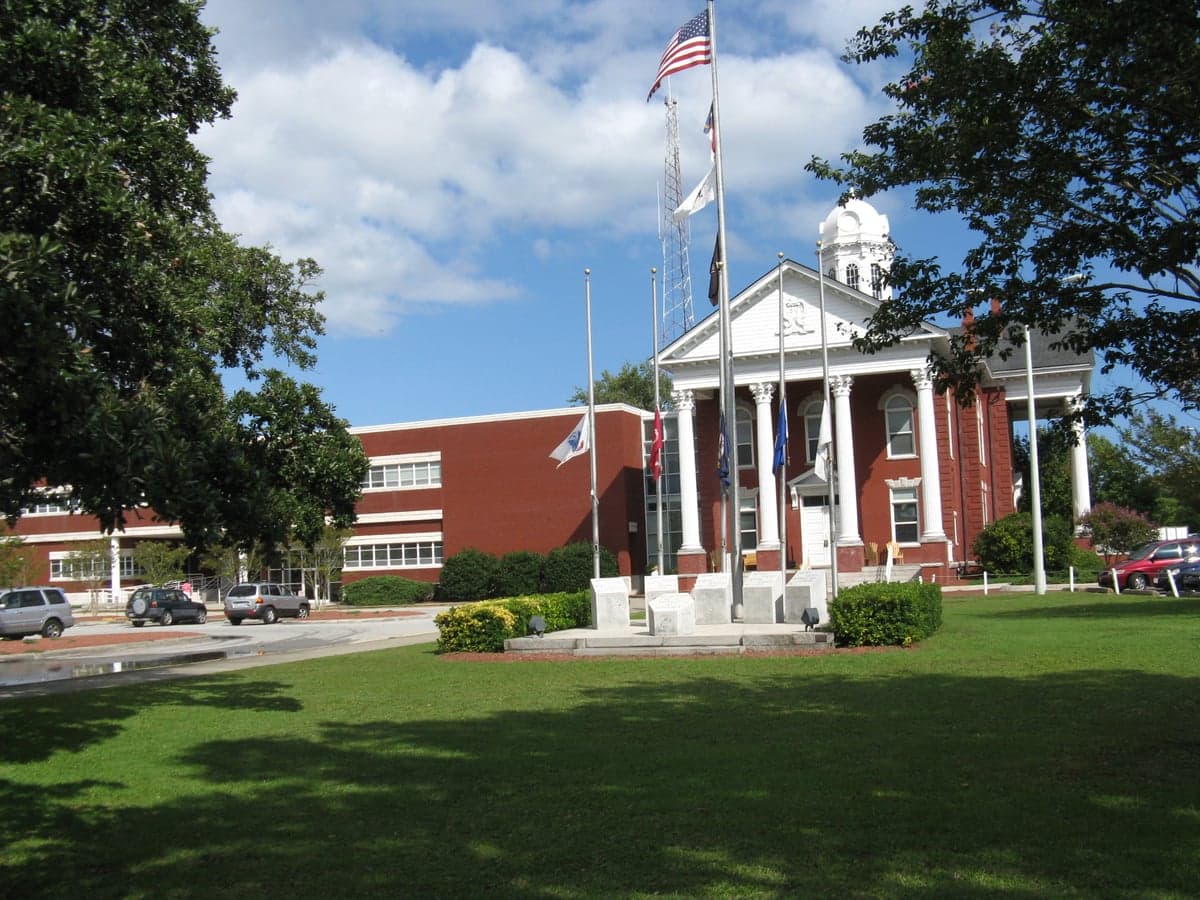
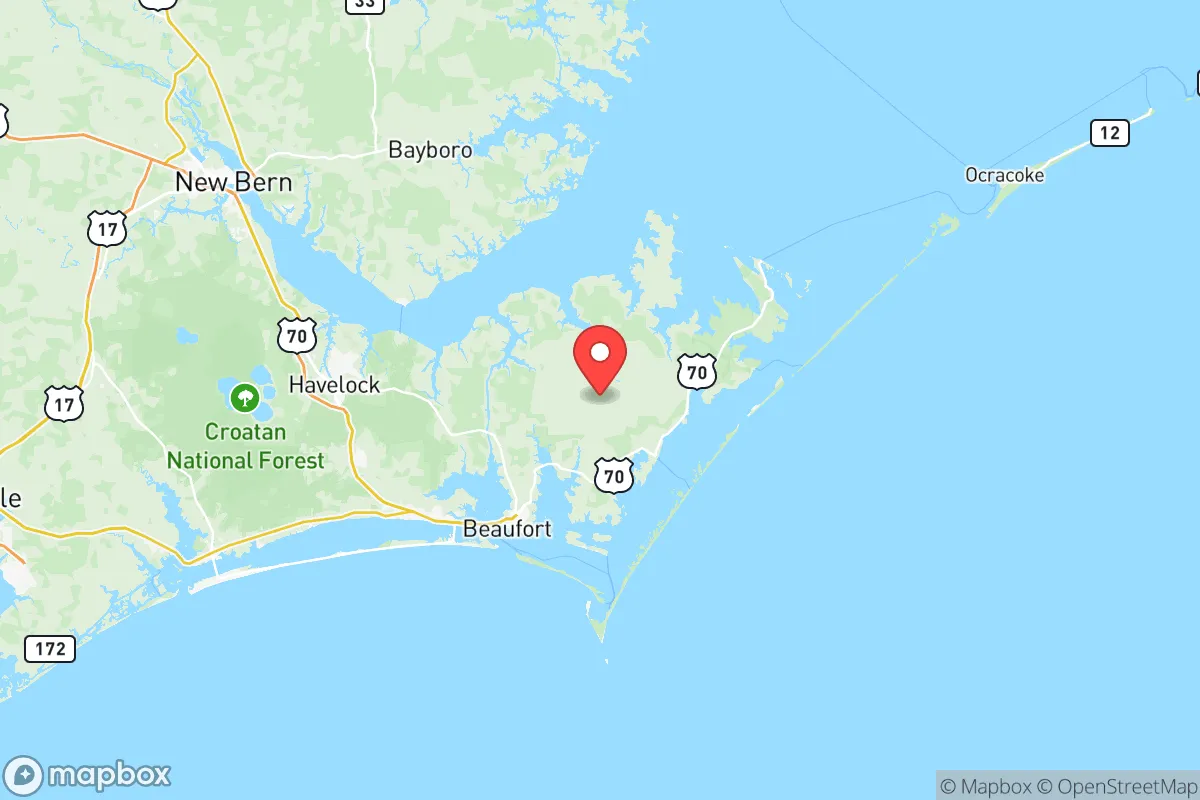
The people of Carteret County, North Carolina, today number roughly 68,652, forming a community that is predominantly white (85.5%) and notably less diverse than the national average, with a foreign-born population of just 1.4%. This coastal county, anchored by the historic port town of Beaufort and the tourist hub of Atlantic Beach, retains a distinct maritime character shaped by centuries of fishing, shipping, and military presence. Residents often describe the area as a place where traditional Southern values meet a laid-back coastal lifestyle, with a strong sense of local identity rooted in the waters of the Crystal Coast.
Settlement & growth (pre-1960)
Long before European arrival, the region was home to the Coree and Neusiok tribes, Algonquian-speaking peoples who lived along the coast and barrier islands. Their presence is preserved in place names like Core Sound and the town of Core Creek. Spanish explorers briefly visited the Outer Banks in the 16th century, but sustained European settlement did not begin until the early 1700s, when English colonists from the Virginia Tidewater and the Albemarle region pushed southward.
The first permanent English settlement in what is now Carteret County was established at Beaufort in 1709, making it one of the oldest towns in North Carolina. Beaufort quickly became a busy port for the export of naval stores—tar, pitch, and turpentine—as well as lumber and fish. The county itself was formed in 1722 from parts of Craven County, named for Sir John Carteret, a British nobleman. During the colonial period, the population was overwhelmingly of English and Scots-Irish descent, with a small number of enslaved Africans brought in to work on plantations and in maritime trades.
Through the 18th and 19th centuries, the county's economy remained tied to the sea. Fishing villages like Harkers Island, Marshallberg, and Davis Shore grew up along the mainland coast and the barrier islands, populated by families who made their living from the sounds and the Atlantic. These "Down East" communities, as they are known locally, developed a distinctive maritime culture and dialect, with many residents tracing their ancestry back to the original English settlers. The Civil War brought disruption but no major battles to the county, and Reconstruction saw a modest increase in the Black population, though the county remained overwhelmingly white.
The early 20th century brought the railroad to Morehead City, transforming it from a small fishing village into a major port and the county's largest municipality. The construction of the Morehead City Port in the 1920s and the establishment of Marine Corps Base Camp Lejeune just across the county line in Onslow County during World War II brought new economic opportunities and a small influx of military-affiliated families. However, Carteret County itself remained relatively isolated and rural through the 1950s, with a population that was still almost entirely native-born and white.
Modern era (post-1965)
The post-1965 period brought gradual but significant changes to Carteret County's population. The 1965 Hart-Cellar Act, which reshaped U.S. immigration policy, had a relatively muted direct effect here compared to major metropolitan areas. The county's foreign-born population remains just 1.4%, far below the national average of roughly 14%. However, the act's indirect effects—particularly the expansion of family-based immigration—have contributed to a slow diversification of the county's Hispanic and Asian communities.
The most notable demographic shift since the 1970s has been domestic migration from the Rust Belt and the Northeast. Retirees and second-home buyers from Ohio, Pennsylvania, New York, and New Jersey have been drawn to the Crystal Coast's mild climate, relatively low cost of living, and recreational opportunities. This "coastal flight" has concentrated in the beach communities of Atlantic Beach, Emerald Isle, and Pine Knoll Shores, as well as in the newer subdivisions around Morehead City and Newport. These newcomers have brought higher incomes and a more politically moderate outlook, though the county remains solidly conservative.
The Hispanic population, now 4.7% of the total, has grown steadily since the 1990s, driven largely by labor demand in construction, hospitality, and agriculture. Many Hispanic residents work in the tourism industry along the Bogue Banks barrier islands or in the seafood processing plants of Beaufort and Morehead City. The Asian population, at 0.7%, is small but growing, with families often connected to the medical and research sectors at Carteret Health Care and the Duke University Marine Lab in Beaufort. The Indian subcontinent population is a tiny 0.2%, mostly professionals in healthcare and technology.
The Black population, at 4.2%, has remained relatively stable in absolute numbers but has declined as a share of the total due to the influx of white retirees and second-home buyers. Historically concentrated in Beaufort and Morehead City, the Black community has deep roots in the county, with families tracing their lineage back to the post-Civil War era. Suburbanization has been modest compared to the Raleigh-Durham area, but new developments have spread outward from Morehead City along Highway 24 toward Cape Carteret and Swansboro.
The future
Carteret County's population is projected to continue growing at a moderate pace, driven primarily by domestic migration of retirees and remote workers from the Northeast and Midwest. The county's appeal as a lower-cost, lower-density alternative to the Outer Banks and Myrtle Beach will likely sustain this trend. The population is expected to become slightly more diverse, with the Hispanic share potentially reaching 7-8% by 2040, while the white share will gradually decline from its current 85.5%.
New residential development is concentrating along the Highway 24 corridor between Morehead City and Swansboro, as well as in the mainland communities of Newport and Havelock (the latter technically in Craven County but closely tied to Carteret's economy). The barrier island communities of Atlantic Beach and Emerald Isle are largely built out, limiting further growth there. The county's cultural identity will likely remain rooted in its maritime heritage and conservative politics, though the influx of out-of-state newcomers may introduce more moderate voices over time.
For someone moving in now, Carteret County offers a stable, family-oriented community with strong ties to the sea and a slower pace of life than the booming Research Triangle. The population is aging—the median age is 46.7, well above the national median—so families with children will find a community that values schools and outdoor recreation. The county is becoming more diverse, but slowly, and newcomers should expect a predominantly white, native-born environment where local traditions run deep. The key trade-off is between the tranquility and natural beauty of the Crystal Coast and the limited economic and cultural opportunities compared to larger metropolitan areas.

* Values derived from national, state, county, city and local statistics and may differ in a specific area. Last updated: 2026-10-18T15:21:25.000Z
Narrative content on this page is AI-generated and may contain mistakes. Verify any details that matter before acting on them.
ReloMaps may earn a commission from affiliate links at no extra cost to you.

