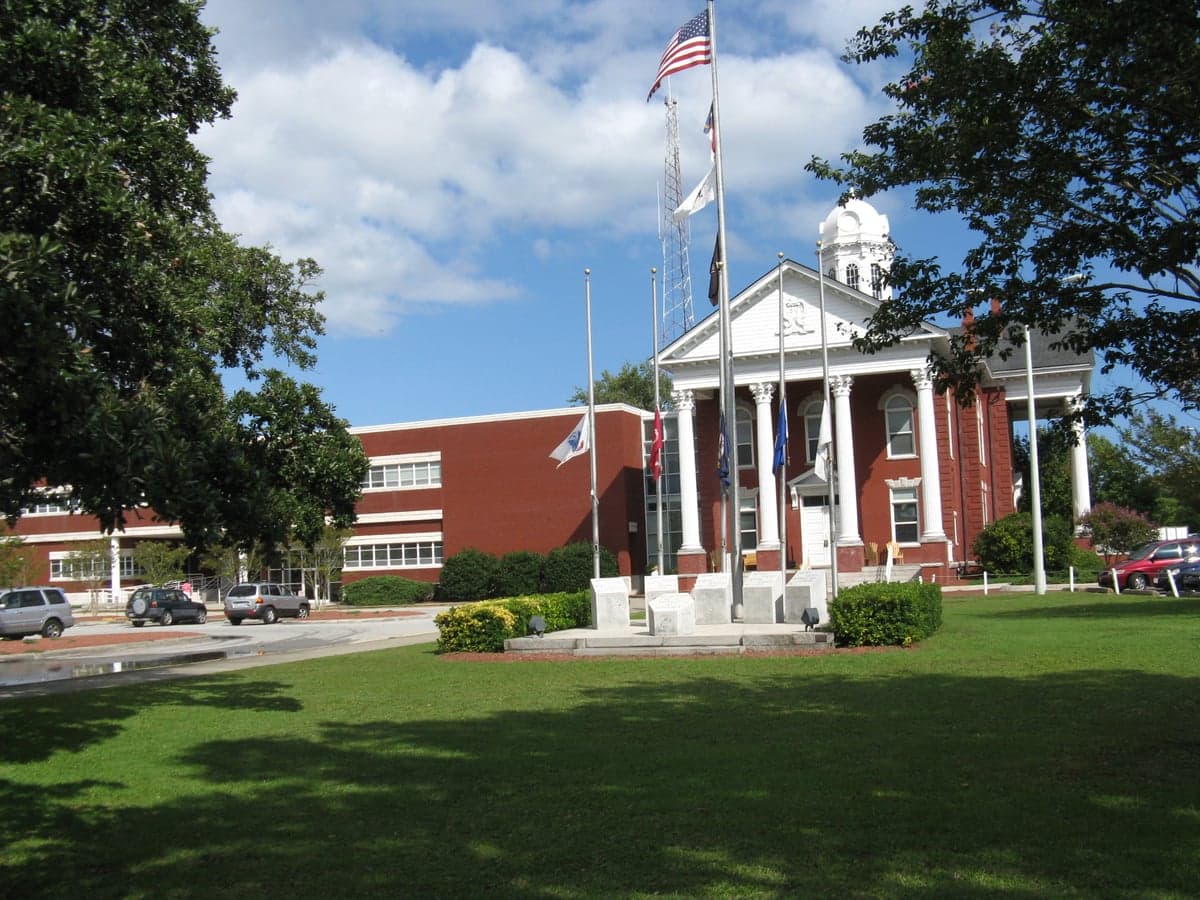
Photo: Wikipedia
Political ClimatePolitical Climate in Carteret County
Showing district-level results — no local-only data available.
Local Political AnalysisPolitical Analysis of Carteret County
Carteret County, North Carolina, is a reliably Republican stronghold, but it’s not the deep-red monolith many outsiders assume. The county’s Cook Partisan Voting Index (PVI) of R+1 is identical to the state of North Carolina as a whole, which means it’s a competitive, lean-Republican area in a competitive, lean-Republican state. In practice, that R+1 rating translates to a political environment where Republicans consistently win local and federal races, but by margins that are far narrower than in the rural counties to the west. The county has been trending slightly more Republican over the last decade, driven by an influx of retirees and second-home owners from more conservative areas, but the coastal towns and the growing service economy have kept the Democratic vote alive and well in specific pockets.
How it compares
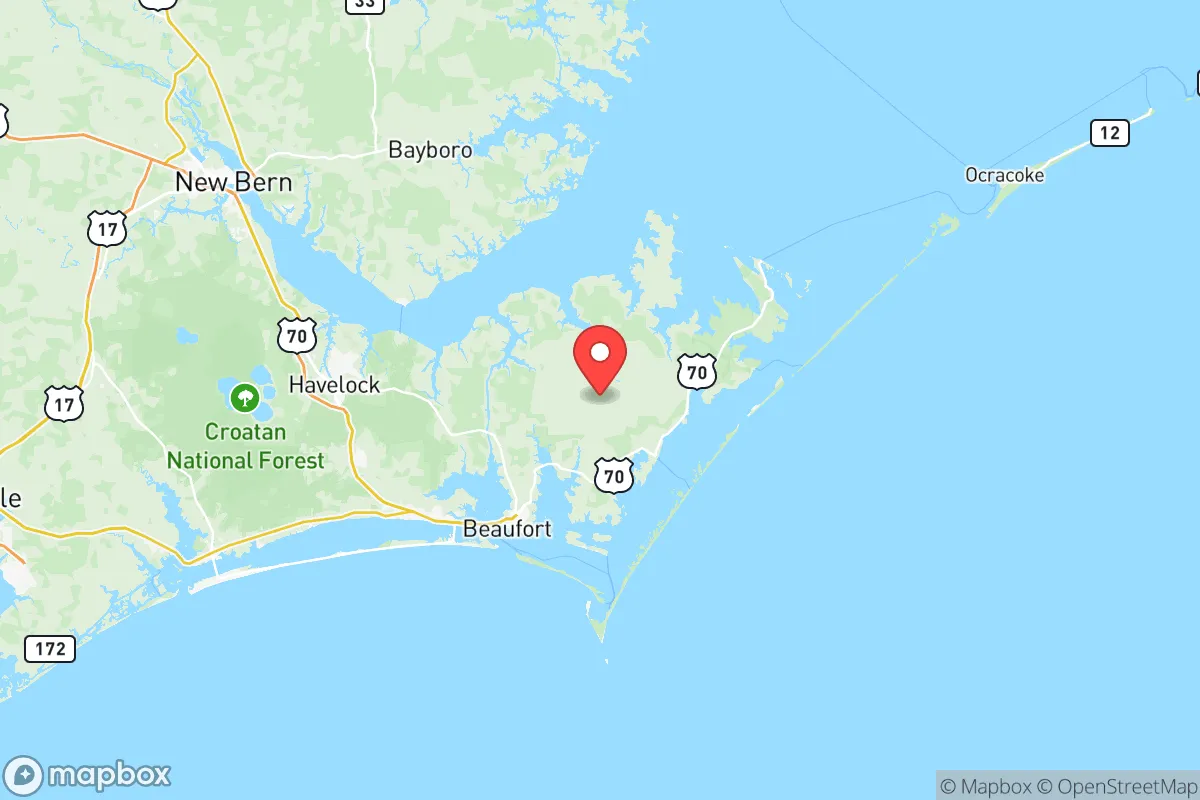
When you compare Carteret County to the rest of North Carolina, the R+1 PVI is the headline, but the real story is in the internal variation. The county’s political geography is split between the more conservative, rural mainland and the more moderate-to-liberal beach towns. Morehead City and Beaufort are the blue dots on the map, with Beaufort’s historic district and waterfront consistently voting Democratic in recent presidential and state-level elections. Emerald Isle, a popular vacation and retirement destination, is a classic swing precinct—it went for Trump in 2020 but by a much smaller margin than the county average. On the other hand, Newport, Cape Carteret, and the unincorporated areas along Highway 24 are reliably red, often delivering 60-65% of the vote for Republican candidates. This is a sharp contrast to the state’s major urban centers like Wake and Mecklenburg counties, which are solidly blue, and to the rural northeastern counties, which are deep red. Carteret sits right in the middle, a microcosm of the state’s suburban and exurban battleground.
What this means for residents
For conservative residents, the political climate is comfortable but not complacent. You can expect your local commissioners and school board members to be Republican, and the county’s approach to development, taxes, and environmental regulation will generally lean pro-business and property-rights. However, the narrow margins mean that conservative candidates can’t take the base for granted—they have to campaign in Morehead City and Beaufort, not just in the rural precincts. For liberal residents, the picture is more nuanced. You’ll find a supportive community in the downtown areas of Beaufort and Morehead City, with active Democratic Party chapters and a visible presence in local civic life. But you’ll also encounter a lot of Trump signs and conservative talk radio. The key is that the political divide here is rarely hostile; it’s more of a live-and-let-live coastal culture, where the shared love of the water and the military presence (Marine Corps Base Camp Lejeune is just across the bridge in Onslow County) tends to soften partisan edges. The county’s politics are also heavily influenced by the military and veteran population, which leans conservative but is often more pragmatic on issues like healthcare and infrastructure.
Culturally, Carteret County stands apart from the rest of North Carolina in a few distinct ways. The local economy is driven by tourism, commercial fishing, and military-related industries, which creates a unique set of policy priorities. Environmental regulation is a hot-button issue—not in the abstract, but in the very concrete debates over beach renourishment, inlet dredging, and stormwater management. Both Republicans and Democrats here tend to support robust funding for coastal infrastructure, even if they disagree on the broader climate agenda. The county also has a strong tradition of local control, with residents fiercely protective of their ability to make land-use decisions without state interference. This means that while the county votes Republican, it’s not a rubber stamp for the state party’s agenda, especially on issues like offshore drilling or wind energy, where local economic interests can diverge from party orthodoxy. In short, Carteret County is a place where the political labels matter less than the practical realities of living on the coast, and that’s a distinction that sets it apart from much of the rest of North Carolina.

State Political ClimatePolitical Climate in North Carolina
State Political AnalysisPolitical Environment in the State
North Carolina has been the quintessential swing state for the past two decades, but the pendulum has settled with a slight rightward lean. With a Cook PVI of R+1, the state is genuinely competitive, but Republicans have consistently held the governorship only once since 1993 (Pat McCrory, 2013-2017) while the legislature has been under GOP control since 2011. The real story is the 10-20 year arc: the Research Triangle (Raleigh-Durham-Chapel Hill) and Charlotte have exploded in population, pulling the state leftward, while the rural east and the Charlotte exurbs have hardened in the opposite direction. The result is a state that votes for Trump in presidential years but then elects Democratic governors and attorneys general in midterms — a split-ticket reality that defines daily life here.
Urban vs. rural divide
The political map of North Carolina is a story of three distinct regions. The urban crescent — Charlotte, the Raleigh-Durham-Chapel Hill Research Triangle, Greensboro, and Winston-Salem — drives the Democratic vote. Mecklenburg County (Charlotte) and Wake County (Raleigh) alone account for roughly a quarter of the state's population and vote reliably blue by double digits. The Triangle is powered by the tech and biotech workforce, university faculty, and a massive influx of out-of-state transplants from blue states. Charlotte is more moderate, with a strong banking sector (Bank of America, Truist) that leans center-right on economics but socially liberal. In contrast, the rural east — places like Robeson County, Duplin County, and the northeastern coastal plain — votes heavily Republican, driven by conservative rural values, agriculture, and military communities around Jacksonville (Camp Lejeune) and Fayetteville (Fort Liberty). The western mountains, including Asheville, are a blue island in a sea of red: Buncombe County votes Democratic, but the surrounding mountain counties are deeply Republican. The real battlegrounds are the suburban exurbs — Union County (southeast of Charlotte), Johnston County (southeast of Raleigh), and Cabarrus County — which have shifted rightward as urban refugees seek lower taxes and more conservative school boards.
Policy environment
North Carolina's policy environment reflects its split personality. The state has a flat income tax rate of 4.5% (down from 7% in 2013), with a scheduled phase-down to 3.99% by 2027 — a clear win for conservatives. The corporate income tax is 2.5%, one of the lowest in the Southeast. There is no state property tax; property taxes are levied at the county and municipal level, which keeps overall tax burdens moderate. On education, the state has a robust school choice program: the Opportunity Scholarship Program provides vouchers for private school tuition, and charter schools are plentiful. However, the state's public school funding has been the subject of ongoing litigation (the Leandro case), with courts ordering the legislature to increase funding for low-wealth districts — a fight that continues. Healthcare is a mixed bag: the state expanded Medicaid in 2023 under Democratic Governor Roy Cooper, a major shift after a decade of legislative resistance. Election laws are a flashpoint: the state requires photo ID to vote (implemented in 2023 after years of litigation), has strict absentee ballot rules, and has drawn congressional maps that have been repeatedly challenged in court for partisan gerrymandering. The state also has a right-to-work law and is a "shall-issue" state for concealed carry permits.
Recent policy direction
The last five years have seen a clear conservative legislative push, tempered by a Democratic governor's veto pen. In 2023, the Republican supermajority (since reduced by special elections) passed a 12-week abortion ban (down from the previous 20-week limit), overriding Governor Cooper's veto. The same session saw the Parents' Bill of Rights (HB 755), which requires schools to notify parents about instructional materials involving sexuality and prohibits instruction on gender identity and sexual orientation in K-4 classrooms. On gun rights, the state eliminated the pistol purchase permit requirement in 2023 (SB 41), a long-sought goal of gun rights advocates, and allows permitless concealed carry for military members. On property rights, the state has strong eminent domain protections and no statewide rent control. On voting, the 2023 omnibus election law (SB 747) shortened the absentee ballot return window, banned private funding of election administration, and made it harder for third parties to register voters — all defended by Republicans as election integrity measures and criticized by Democrats as voter suppression. The state has no broad privacy law (like a state-level GDPR), but it does have a data breach notification statute. On medical freedom, the state banned COVID-19 vaccine mandates for state employees and contractors in 2023.
Civil unrest & political movements
North Carolina has a history of visible political activism on both sides. The Moral Monday movement, led by the NAACP, has staged regular protests at the General Assembly since 2013, focusing on voting rights, Medicaid expansion, and education funding. On the right, the state has a strong Second Amendment sanctuary movement — over 60 counties have passed resolutions declaring themselves "sanctuary counties" for gun rights, vowing not to enforce future federal gun restrictions. Immigration politics are less heated than in border states, but there is a persistent debate over sanctuary policies: several cities, including Charlotte and Durham, have "welcoming city" ordinances limiting cooperation with ICE, while the legislature has repeatedly tried to ban such policies statewide. The 2020 election saw significant controversy in the state, with Trump winning by 1.3 points and Republicans alleging irregularities in absentee ballot processing, though no widespread fraud was found. The state's congressional maps have been redrawn three times since 2020 due to court challenges, creating ongoing uncertainty. A new resident would notice the ubiquity of political yard signs, the intensity of local school board races, and the presence of activist groups like the John Locke Foundation (libertarian-leaning think tank) on one side and Progress NC on the other.
Projection
Over the next 5-10 years, North Carolina is likely to become more competitive, not less. The in-migration from blue states — particularly to the Charlotte metro and the Triangle — is pulling the state leftward on social issues, while the rural exodus and the aging of the conservative base are slowly eroding the GOP's structural advantages. However, the Republican legislature has shown a willingness to entrench its power through gerrymandering and voter ID laws, which may slow the demographic shift. The wild card is the suburban vote: if the exurbs continue to harden rightward while the inner suburbs trend left, the state could settle into a stable R+2 or R+3 lean. A new resident moving in now should expect a state where the governor's mansion and the legislature are often controlled by different parties, leading to constant policy gridlock on hot-button issues. The tax environment will remain favorable for business, but social policy will oscillate depending on which party holds the trifecta. The state is not going to flip blue overnight, but it is also not going to become Texas — it will remain a purple state with a red tint.
For a new resident, the bottom line is this: North Carolina offers a low-tax, business-friendly environment with a moderate cost of living, but the political climate is a constant tug-of-war. If you are conservative, you will find a legislature that largely shares your values on taxes, guns, and education, but you will have to contend with a Democratic governor who can veto the most aggressive social legislation. If you are liberal, you will find welcoming cities and a growing progressive base, but you will face a legislature that is structurally tilted against you. The practical takeaway is that your experience will depend heavily on where you live — Raleigh and Charlotte feel like purple cities, Asheville feels like a blue island, and the rural counties feel like deep red territory. Pick your county carefully, and you can find a community that matches your political comfort zone.
* Values derived from national, state, county, city and local statistics and may differ in a specific area. Last updated: 2026-10-18T15:21:25.000Z
Narrative content on this page is AI-generated and may contain mistakes. Verify any details that matter before acting on them.
ReloMaps may earn a commission from affiliate links at no extra cost to you.

