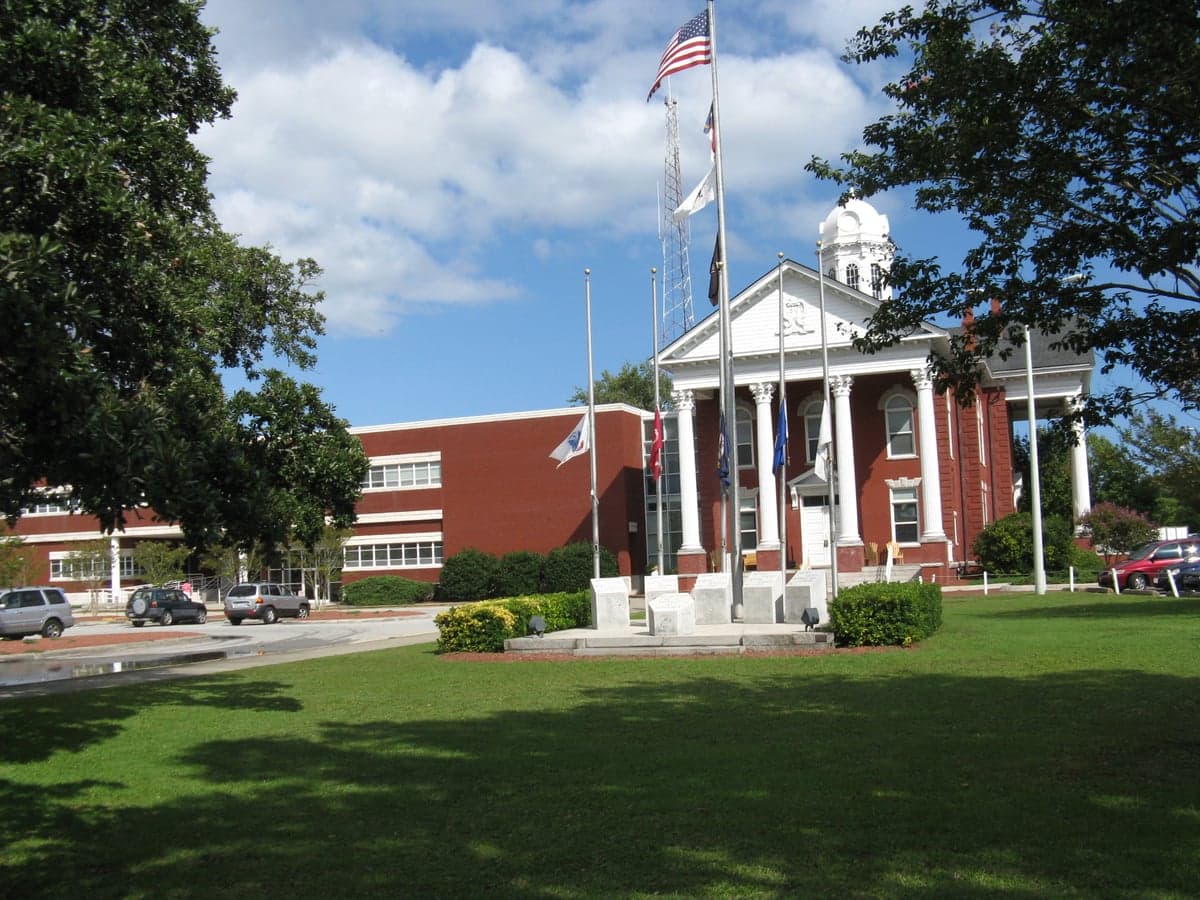
Photo: Wikipedia
Personal Sovereignty in Carteret County
Viable for self-reliance. Generally workable, though some barriers may limit total independence.
What does Personal Sovereignty tell us?
Personal Sovereignty measures your capacity for self-reliance and independence with minimal government friction. Higher scores mean fewer barriers between you and the way you want to live... but it assumes you have the space you need and good neighbors.
What does this tell us?
Personal Sovereignty measures your capacity for self-reliance and independence with minimal government friction. Higher scores mean fewer barriers between you and the way you want to live... but it assumes you have the space you need and good neighbors.
State Policy
Energy independence: Importer (15% of energy produced in-state)
Personal Liberty
Homesteading

Personal Liberty Analysis
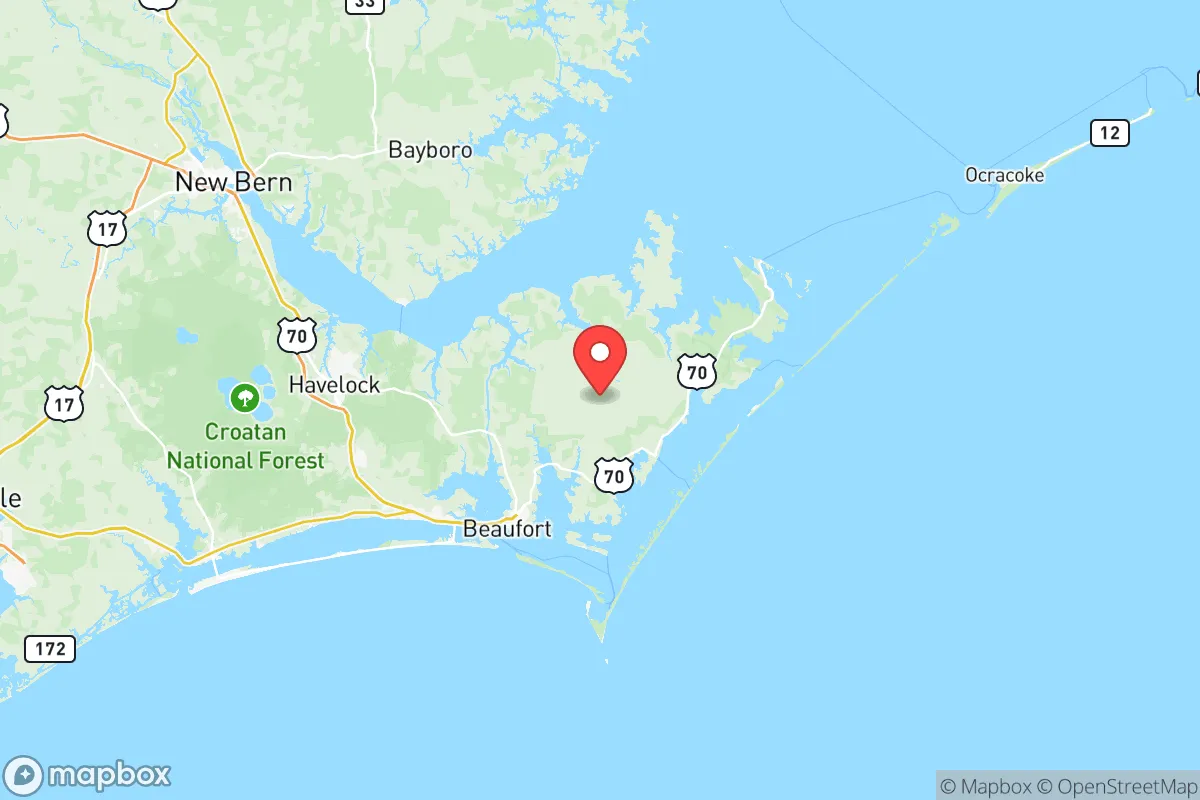
Carteret County, North Carolina, offers a notably high degree of personal sovereignty, anchored by North Carolina’s strong preemption laws and a coastal culture that values self-reliance. The county’s regulatory environment is generally light-touch compared to urban centers like Raleigh or Charlotte, but it varies significantly between the unincorporated areas and the more tourist-oriented towns. For individuals and families prioritizing autonomy, the key considerations are the tax burden, gun laws, homesteading feasibility, and the scope of personal liberties, all of which tilt favorably here relative to many other parts of the Southeast.
Tax burden and regulatory posture in Carteret County
North Carolina’s flat income tax rate of 4.5% and a state sales tax of 4.75% (with local options pushing the combined rate to 7% in most of Carteret County) keep the overall tax burden moderate. Carteret County itself levies a property tax rate of approximately $0.53 per $100 of assessed value, which is competitive for a coastal county. The regulatory posture is notably business-friendly; there is no county-level minimum wage or paid leave mandate, and zoning is largely permissive outside of the incorporated towns. In Morehead City and Beaufort, zoning is more structured to manage tourism and waterfront development, but in unincorporated areas like Stacy or Sea Level, land-use regulations are minimal. The county does not impose its own building codes beyond the state’s standard, and there are no county-level rent control or eviction moratoria. For a reader seeking low regulatory friction, the unincorporated areas are the clear choice, while the towns impose modest but noticeable constraints on property use and business operations.
Self-defense and gun law specifics in Carteret County
North Carolina is a shall-issue state for concealed carry permits, and Carteret County’s sheriff’s office processes permits efficiently, typically within the statutory 45-day window. The state has permitless open carry for handguns and long guns, and no state-level assault weapons ban or magazine capacity limit. Stand-your-ground law is in effect, with no duty to retreat in any place where the individual is lawfully present. The county’s culture is strongly pro-Second Amendment; Newport and Cape Carteret have multiple gun shops and ranges, and local law enforcement is generally supportive of lawful carry. There are no county-specific restrictions beyond state law, and the sheriff’s office has publicly stated it will not enforce any future federal firearms restrictions it deems unconstitutional. For a reader prioritizing self-defense rights, Carteret County offers a permissive legal environment with minimal local friction, though concealed carry is still recommended for those who travel into the more tourist-heavy areas of Beaufort or Atlantic Beach.
Self-reliance and homesteading viability in Carteret County
Homesteading and off-grid living are viable in Carteret County, but feasibility depends heavily on location and proximity to the coast. In unincorporated areas like Stacy and Sea Level, minimum lot sizes are typically 1 acre in residential zones, and there are no county-level bans on rainwater collection, composting toilets, or solar panels. The county does not require a building permit for structures under 200 square feet, which makes small sheds, workshops, or tiny homes easy to erect. However, in the floodplain (which covers much of the county’s eastern half), FEMA elevation requirements and flood insurance mandates add cost and complexity. Newport and Morehead City have stricter zoning for accessory dwelling units and livestock, while Beaufort prohibits chickens and goats within town limits. Off-grid solar is legal statewide, and net metering is available through Duke Energy, though the county does not have its own renewable energy mandates. For a reader seeking maximum self-reliance, the western and northern unincorporated areas—near Stacy and Sea Level—offer the best combination of low regulation, affordable land (often under $5,000 per acre), and minimal HOA or covenant restrictions.
Personal liberties in Carteret County: parental rights, medical autonomy, and property
North Carolina law provides strong protections for parental rights, including the right to direct a child’s education, medical care, and religious upbringing. Carteret County Public Schools do not have mask or vaccine mandates for students, and the school board has resisted state-level curriculum mandates on controversial topics. Medical autonomy is generally respected; the state does not have a vaccine passport requirement, and there are no county-level health orders that restrict private medical choices. Property rights are robust, with no county-level rent control, no inclusionary zoning, and no transfer taxes on real estate sales. The county’s planning board has rejected proposals for short-term rental caps in unincorporated areas, preserving the ability to use property for vacation rentals without heavy regulation. In Beaufort and Morehead City, short-term rentals are permitted but require a permit and occupancy limits, while Atlantic Beach has stricter seasonal restrictions. For a reader who values the ability to make personal medical, educational, and property decisions without government interference, Carteret County’s unincorporated areas offer a high degree of freedom, while the towns impose moderate but reasonable constraints.
Overall, Carteret County ranks among the more sovereignty-friendly areas in coastal North Carolina, particularly for those who choose unincorporated land over the more regulated towns. The combination of low taxes, permissive gun laws, viable off-grid homesteading, and strong personal liberties makes it a strong candidate for individuals and families who prioritize autonomy. Compared to the Outer Banks or Wilmington, Carteret County has fewer tourist-driven restrictions and a more rural, self-reliant culture. For a reader seeking a balance between coastal access and personal freedom, the unincorporated areas near Stacy, Sea Level, and Newport offer the best value, while those who prefer a walkable town with some regulatory structure will find Beaufort and Morehead City acceptable but less permissive.

* Values derived from national, state, county, city and local statistics and may differ in a specific area. Last updated: 2026-10-18T15:21:25.000Z
Narrative content on this page is AI-generated and may contain mistakes. Verify any details that matter before acting on them.
ReloMaps may earn a commission from affiliate links at no extra cost to you.

