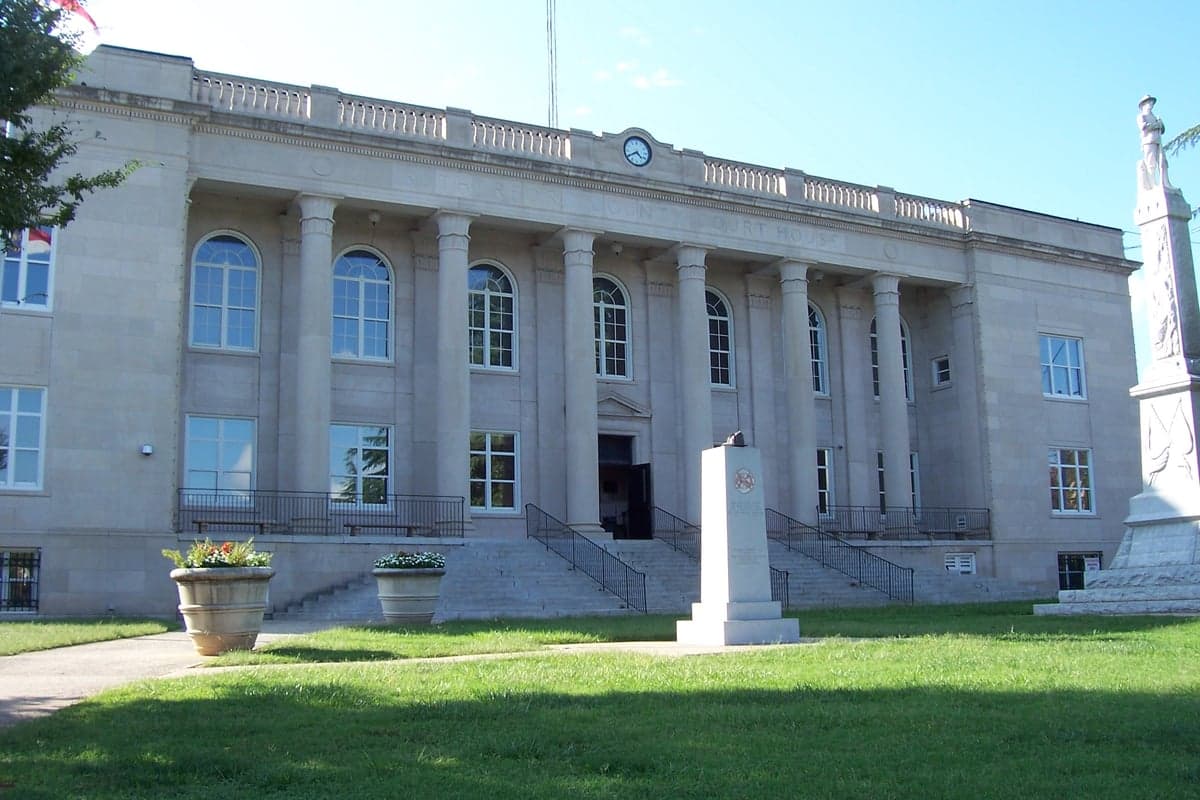
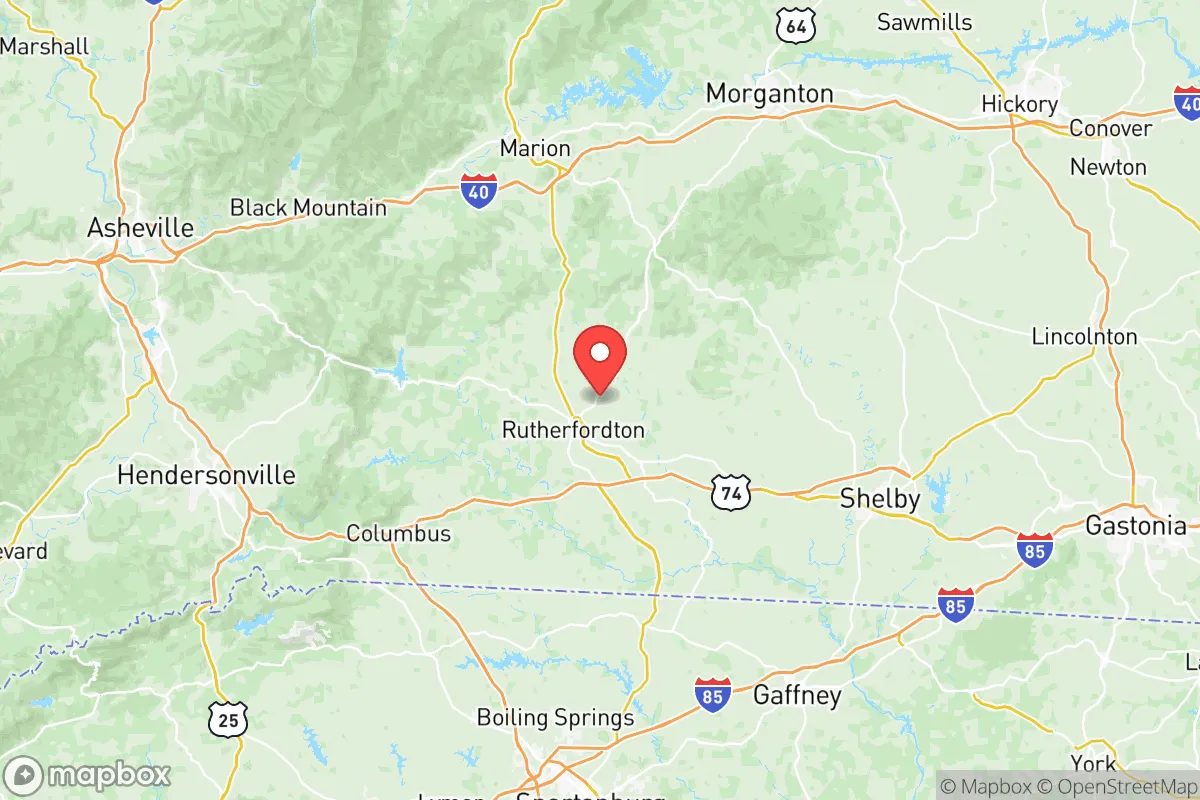
Photo: Wikipedia
Quality of Life in Rutherford County
A livable area that tracks near national norms for affordability, walkability, and neighborhood health.
What does Quality of Life tell us?
Quality of Life measures an area by evaluating factors like cost of living, nearby amenities, country club access, airport proximity, socioeconomic signals and neighborhood character. For large states, this is a general average — quality of life can vary dramatically between metro areas, suburbs, and rural communities within the same state.
What does this tell us?
Quality of Life measures an area by evaluating factors like cost of living, nearby amenities, country club access, airport proximity, socioeconomic signals and neighborhood character. For large states, this is a general average — quality of life can vary dramatically between metro areas, suburbs, and rural communities within the same state.
Cost of Living
36% below national average
96%
The Real Cost of Living in Rutherford County for 2026
| Tier | Individual | Family (4) |
|---|---|---|
| Survival | $12k | $22k |
| Comfortable | $35k | $52k |
| Luxury | $90k+ | $139k+ |
| Elite (Top 5%) | $114k+ | $176k+ |
Quality-of-Life Analysis
Rutherford County, North Carolina, offers one of the most pronounced quality-of-life spectrums in the western Piedmont, ranging from the walkable, historic streets of Forest City and Rutherfordton to the deeply rural, mountain-adjacent hollows around Lake Lure and Chimney Rock. With a cost of living index of 64 (36 percent below the U.S. average), the county attracts both young families seeking affordable acreage and retirees looking for a slower pace near the Blue Ridge escarpment. The trade-off is a commute that averages 26.3 minutes, a figure that reflects the long distances between residential pockets and the county’s main employment hubs in Forest City and Spindale.
Largest town(s) & population centers
Forest City is the county’s commercial anchor, with roughly 7,400 residents and the region’s densest concentration of retail, dining, and industrial employment. Daily life here revolves around the downtown’s restored storefronts and the nearby Tryon International Equestrian Center, which draws a steady stream of visitors and has spurred new housing construction on the town’s eastern edge. Rutherfordton, the county seat, is smaller but more historic, with a courthouse square lined with 19th-century brick buildings and a growing arts scene centered on the Bechtler Arts Foundation. Spindale, the third population center, is the most working-class of the trio, with a mix of older mill housing and light manufacturing plants along U.S. 221; it offers the county’s most affordable home prices but fewer amenities than its larger neighbors.
Smaller towns & rural pockets
Beyond the three main towns, the county’s character shifts dramatically. Lake Lure, a planned resort community from the 1920s, sits in the eastern foothills and functions as a vacation-home market, with a gated golf community and the iconic Flowering Bridge drawing seasonal crowds; its permanent population of about 1,200 swells in summer. Chimney Rock Village, just north of Lake Lure, is almost entirely tourism-dependent, centered on the state park’s 315-foot monolith. On the western side, the unincorporated communities of Caroleen and Harris—former textile mill villages along the Second Broad River—offer some of the cheapest land in the county, with many homes selling below $150,000, but they lack grocery stores and require a 20-minute drive to Forest City for basic services. The southern tier around Union Mills and Logan is pure farmland, with tobacco and cattle operations interspersed among single-wide trailers and restored farmhouses on 5-to-20-acre parcels.
Cost & lifestyle range
The financial spread across Rutherford County is stark. At the low end, Spindale and the mill villages of Caroleen and Henrietta offer median home values well under the countywide figure of $180,800, with some move-in-ready houses listed between $120,000 and $150,000; median rent in these areas runs $748 or less, making them viable for minimum-wage workers. At the high end, Lake Lure’s lakefront properties and the gated communities along Buffalo Creek routinely list from $400,000 to over $1 million, and the Tryon International corridor has pushed new construction prices in the $350,000-to-$500,000 range. The middle ground—Rutherfordton’s older neighborhoods and Forest City’s post-war subdivisions—offers the best balance, with homes in the $180,000-to-$250,000 band and commutes under 15 minutes to jobs. Property taxes are uniformly low (the county rate is roughly $0.57 per $100 of assessed value), but the trade-off is limited public transit and a reliance on personal vehicles for everything from groceries to medical care.
The county’s real divide is not financial but geographic: residents in the flat, industrial west (Forest City, Spindale) live in a working-class, manufacturing economy, while those in the mountainous east (Lake Lure, Chimney Rock) inhabit a tourism-and-retirement economy with higher prices and seasonal rhythms. Rutherford County works best for people who want genuine rural living with access to a small-city core—remote workers, equestrian enthusiasts, and retirees who value the low tax burden and proximity to Asheville (about 45 minutes north) over urban convenience. Families dependent on local wages will find the affordability attractive but should budget for the long commutes and sparse amenities that come with the county’s cheapest housing.

Crime in Rutherford County
Crime rates similar to the national median for U.S. locations.
Violent CrimeViolent Crime Analysis
Property CrimeProperty Crime Analysis
Crime Analysis
Rutherford County, North Carolina, sits in the foothills of the Blue Ridge Mountains, and its overall violent crime rate of 319.3 incidents per 100,000 residents is a mixed picture when compared to state and national benchmarks. The county’s property crime rate, however, is notably higher at 1,749.1 per 100,000, a figure that warrants attention for anyone considering a move to the area. While the county seat of Rutherfordton and the larger town of Forest City anchor the local economy, safety conditions vary noticeably between these municipal centers and the more rural unincorporated areas.
Crime in context
To understand Rutherford County’s public safety landscape, it helps to stack its numbers against broader averages. The national violent crime rate hovers around 380 per 100,000, meaning Rutherford County’s 319.3 figure sits slightly below the U.S. average. However, North Carolina’s statewide violent crime rate is roughly 360 per 100,000, so the county is actually performing better than the state as a whole on this metric. The property crime picture is less reassuring: the national property crime rate is approximately 1,950 per 100,000, and North Carolina’s is around 2,100. Rutherford County’s 1,749.1 rate is thus below both the state and national averages, but it remains a persistent issue, particularly in specific corridors. The 46th Prosecutorial District, which covers Rutherford County, handles cases through the Superior Court in Rutherfordton, and local law enforcement coordination between the Rutherford County Sheriff’s Office and municipal police departments in Forest City, Spindale, and Rutherfordton shapes how these numbers play out on the ground.
What residents experience
Crime in Rutherford County is not evenly distributed. Forest City and Spindale historically account for a disproportionate share of reported property crimes, including larceny and burglary, driven largely by their denser commercial strips along U.S. 74 and U.S. 221. Rutherfordton, the county seat, sees a lower volume of violent incidents but still experiences occasional aggravated assaults tied to domestic disputes and alcohol-related altercations near the downtown square. By contrast, the unincorporated communities of Lake Lure and Chimney Rock, which sit in the eastern part of the county, consistently report the lowest crime rates—a reflection of their tourism-oriented, low-density residential character and smaller year-round populations. Residents in these areas often cite a slower pace of life and a stronger neighborhood-watch culture as tangible safety factors. For families, the school resource officer program run jointly by the sheriff’s office and Rutherford County Schools provides a visible law enforcement presence at the county’s public schools, including R-S Central High School in Rutherfordton and East Rutherford High School in Forest City.
One factor that deserves scrutiny is the judicial philosophy of the local district attorney’s office. In recent years, some North Carolina counties have adopted progressive prosecution policies that emphasize diversion programs and reduced sentencing for property crimes. While Rutherford County has not embraced the sweeping reform agenda seen in larger metros like Charlotte or Raleigh, the DA’s office in the 46th District does participate in state-mandated pretrial release programs. For victims, this can mean that repeat property offenders cycle through the system more quickly than residents would prefer. The practical takeaway for newcomers is to prioritize basic security measures—motion-sensor lighting, deadbolts, and neighborhood communication—especially if purchasing property in Forest City or Spindale, where property crime rates are highest.
Neighborhood-level variation is pronounced. The area around Oak Grove and the U.S. 74 bypass in Forest City sees the most frequent calls for service, while the gated communities along Lake Lure report near-negligible crime. For those seeking the safest possible environment, the rural western townships of Gilkey and Union Mills offer the lowest incident rates in the county, though they come with longer commutes to shopping and medical care in Rutherfordton. Overall, Rutherford County is not a high-violence area, but its property crime numbers and the uneven distribution of incidents mean that location choice within the county matters as much as the county-wide statistics suggest.
* Values derived from national, state, county, city and local statistics and may differ in a specific area. Last updated: 2026-10-09T03:10:58.000Z
Narrative content on this page is AI-generated and may contain mistakes. Verify any details that matter before acting on them.
ReloMaps may earn a commission from affiliate links at no extra cost to you.

