Photo: Wikipedia
Demographics of Ocean Pointe, HI
Affluence Level in Ocean Pointe, HI
A wealthy area with high-earning, well-educated households. Incomes, home values, and educational attainment meaningfully outpace national averages.
People of Ocean Pointe, HI
The people of Ocean Pointe, Hawaii, today form a distinctive multicultural community of 16,276 residents, characterized by its high proportion of East and Southeast Asian residents (32.8%) alongside a significant White population (23.7%) and a growing Hispanic community (15.1%). With a foreign-born rate of just 3.4%—well below the national average—this is a largely native-born population that reflects decades of domestic migration and intergenerational settlement rather than recent international immigration. The city’s 47.8% college-educated rate signals a professional-class tilt, and its relatively small Black (4.6%) and Indian-subcontinent (0.3%) populations round out a demographic profile that is distinctly Asian-Pacific in character, with a notable absence of the large immigrant enclaves seen in Honolulu proper.
How the city was settled and grew
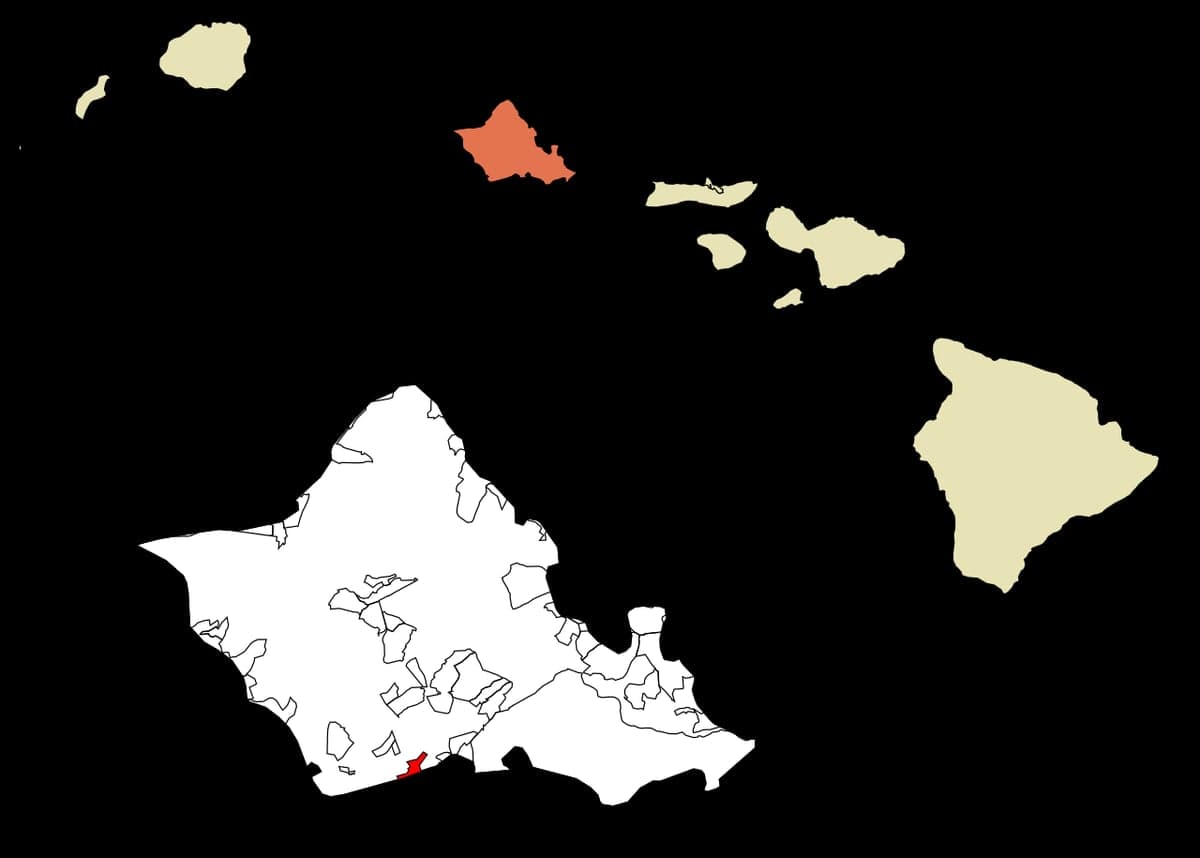
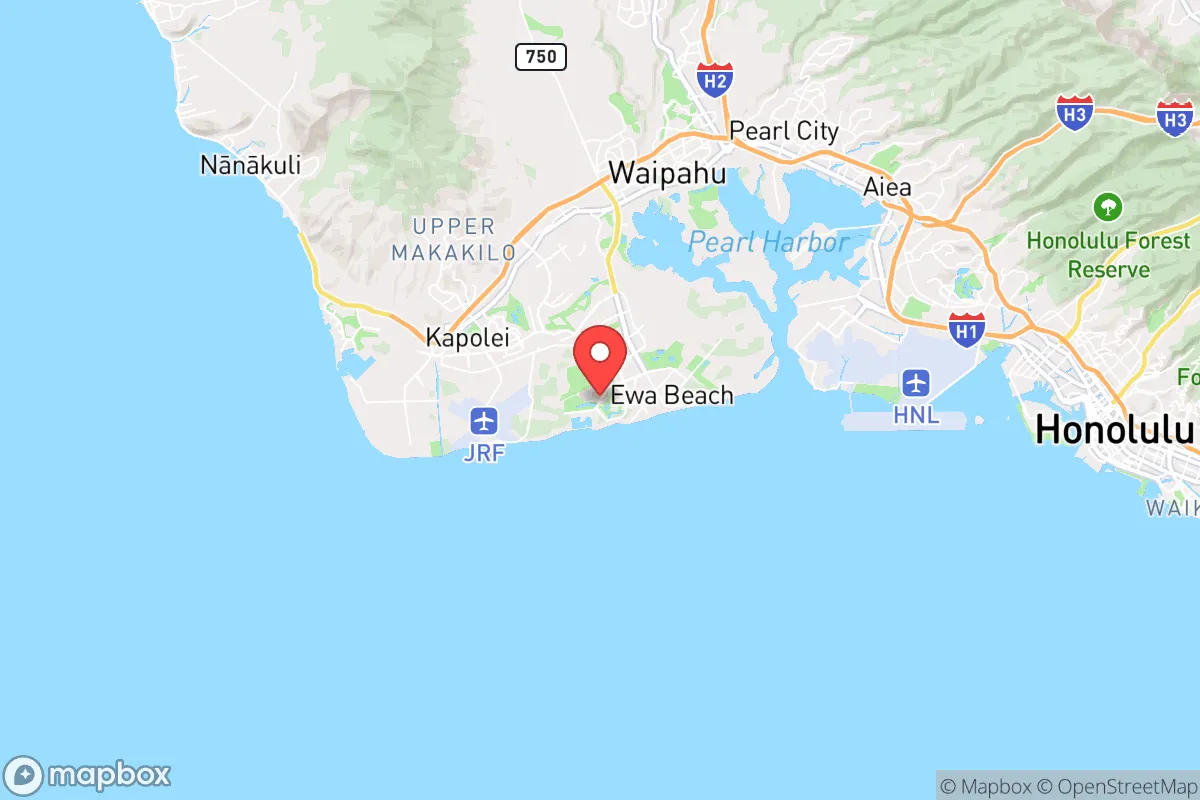
Ocean Pointe is a genuinely post-1900 community, having been developed primarily from the 1990s onward as a master-planned residential area within the larger Ewa Beach region on Oahu’s leeward coast. Unlike older Hawaiian towns shaped by sugar plantations or whaling, Ocean Pointe’s founding population was drawn by affordable housing development and the expansion of Honolulu’s suburban footprint. The original settlers were a mix of military families from nearby Joint Base Pearl Harbor-Hickam, local professionals seeking newer homes, and multi-generational Asian-American families moving outward from central Honolulu. The earliest neighborhoods—Hoakalei and Alii Plantation—were built around golf course and marina amenities, attracting a predominantly White and Japanese-American middle class in the 1990s and early 2000s. A second wave followed with the Iroquois Point and Barbers Point redevelopment areas, which drew more Filipino-American and mixed-race families from the broader Ewa region, cementing the area’s Asian-Pacific demographic base.
Modern era (post-1965)
The post-1965 Hart-Cellar Act had little direct effect on Ocean Pointe, as the city’s growth has been driven almost entirely by domestic migration within Hawaii rather than new international arrivals. The major demographic shift came in the 2000s and 2010s as the development expanded southward into Ewa Gentry and Ewa Villages neighborhoods, which absorbed a growing Hispanic population (now 15.1%)—largely families of Puerto Rican and Mexican descent who had previously lived in older Ewa Beach or Waipahu. The East and Southeast Asian population (32.8%) is concentrated in the older, more established sections of Hoakalei and Alii Plantation, where Japanese-American and Filipino-American families have maintained multigenerational roots. The White population (23.7%) is more evenly distributed but skews toward the newer, higher-priced homes near the marina. Notably, the Indian-subcontinent population remains tiny (0.3%), reflecting the absence of the tech-driven South Asian immigration seen on the mainland. The Black population (4.6%) is largely military-affiliated, concentrated near the base-adjacent Iroquois Point area.
The future
Ocean Pointe’s population is heading toward gradual homogenization rather than tribalization into distinct ethnic enclaves. The foreign-born rate (3.4%) is so low that new immigrant communities are unlikely to form; instead, the city will continue to be shaped by intermarriage and assimilation among its existing Asian, White, and Hispanic groups. The Hispanic share is the fastest-growing segment, projected to rise toward 20% by 2035 as families from the broader Ewa region move into newer developments like Ewa by Gentry and Ocean Pointe South. The East and Southeast Asian population is plateauing as younger generations move to the mainland for education and careers, while the White population is stable but aging. Over the next 10-20 years, Ocean Pointe will likely become more mixed-race and less ethnically distinct, with the Asian-Pacific character softening as Hispanic and mixed-heritage residents become a larger share. The city’s low crime rate and good schools will continue to attract military and professional families, but the demographic story is one of slow blending rather than new waves.
For a conservative-leaning individual or family considering relocation, Ocean Pointe represents a stable, family-oriented community where the population is largely native-born, college-educated, and politically moderate—a place where demographic change is gradual and assimilation is the norm, not a source of friction. The city’s future is one of quiet consolidation: a suburban Pacific community where Asian, White, and Hispanic residents are increasingly indistinguishable in lifestyle and values, and where the biggest demographic story is simply that everyone is getting along.

* Values derived from national, state, county, city and local statistics and may differ in a specific area. Last updated: 2026-04-24T07:05:37.000Z
Narrative content on this page is AI-generated and may contain mistakes. Verify any details that matter before acting on them.
ReloMaps may earn a commission from affiliate links at no extra cost to you.

