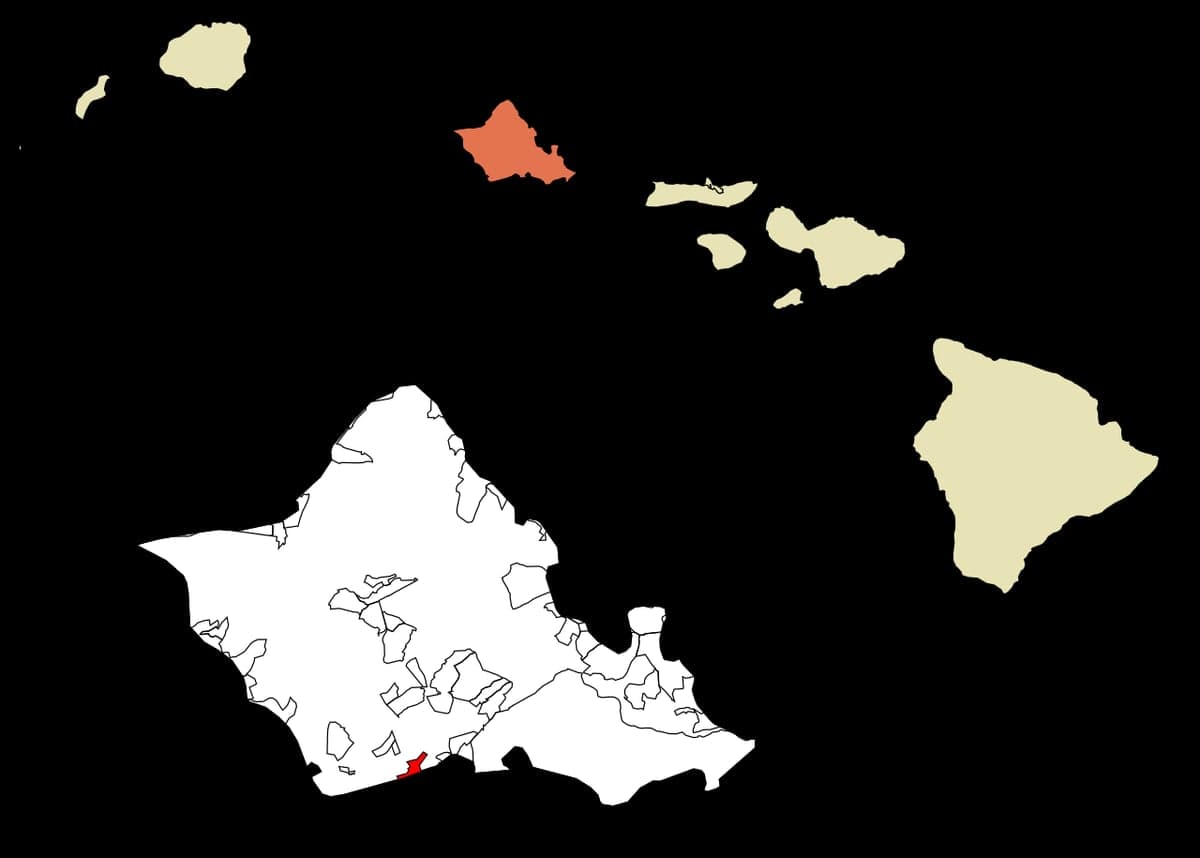
Photo: Wikipedia
Political ClimatePolitical Climate in Ocean Pointe, HI
District shown is the primary district for this city’s centroid. Cities may span multiple districts.
Local Political AnalysisPolitical Analysis of Ocean Pointe, HI
Ocean Pointe, HI, leans heavily Democratic, with a Cook PVI of D+13 that places it among the most reliably blue communities in the state. This wasn't always the case—back in the early 2000s, this area had a more balanced mix of independent and conservative voices, but the last decade has seen a steady shift leftward as new development brought in a wave of mainland transplants and younger families drawn to the promise of "progressive" governance. If you've been here long enough, you've watched the local political culture change from a live-and-let-live island vibe to something that feels increasingly like a one-party echo chamber, where dissent on issues like property rights or school curriculum is met with social pressure rather than open debate.
How it compares
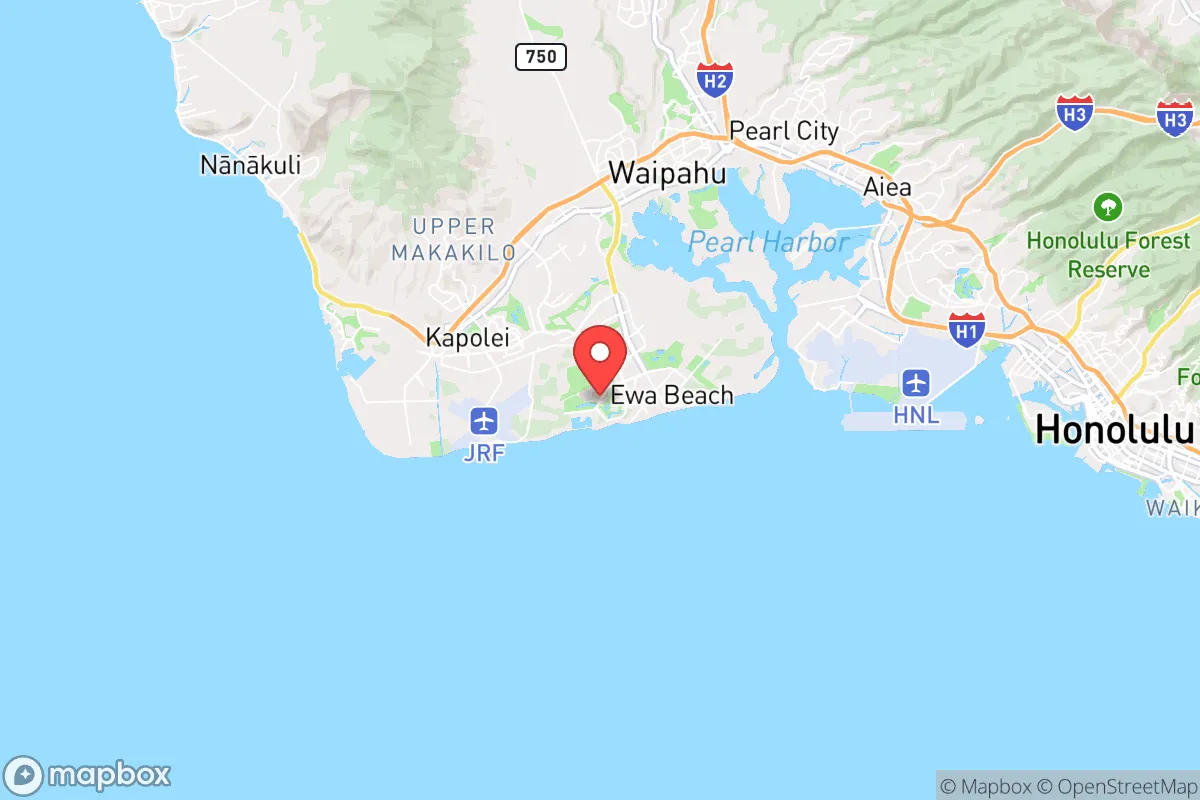
To understand Ocean Pointe's political climate, you have to look at its neighbors. Head north to Kapolei, and you'll find a more moderate, working-class electorate that still votes blue but with less enthusiasm—think D+5 or D+6 territory. Drive east toward Honolulu proper, and you're in the heart of Hawaii's progressive machine, where D+20+ districts are common and policies like mandatory paid family leave and strict rent control are celebrated. But the real contrast is with the rural areas: go west to Waianae or north to the North Shore, and you'll find communities that are more skeptical of government expansion, especially when it comes to land use and fishing rights. Ocean Pointe sits in this uncomfortable middle—too suburban to have the rugged independence of the country, but too far from downtown to feel the full weight of Honolulu's activist energy. That said, the D+13 rating means local elections here are effectively decided in the Democratic primary, leaving conservative and libertarian-leaning residents with little real choice at the ballot box.
What this means for residents
For those who value personal freedom and limited government, living in Ocean Pointe means navigating a system that increasingly prioritizes collective mandates over individual choice. The county council and state legislature have pushed through measures that feel like overreach to many locals: mandatory composting programs with fines for noncompliance, strict vacation rental bans that limit property rights, and a growing web of environmental regulations that make even minor home renovations a bureaucratic headache. Property taxes here are relatively low compared to the mainland, but the cost of living is sky-high, and many residents feel the government's hand in everything from water rates to building permits. The school board has also leaned progressive, with curriculum changes that emphasize social justice over traditional academics—a move that has driven some families to consider private or charter options, though those are scarce on this side of the island. If you're the type who likes to be left alone to run your own life, you'll find the political climate here increasingly suffocating, with little sign of a course correction on the horizon.
Culturally, Ocean Pointe still holds onto some of the old Hawaii spirit—neighbors wave when they pass, and there's a strong sense of community at the local farmers market and beach park. But the policy direction is unmistakable: this is a place that has embraced the progressive agenda wholeheartedly, from plastic bag bans to "equity" initiatives in local hiring. The long-term trend is concerning for anyone who believes in fiscal responsibility and personal accountability. As more mainlanders arrive with their big-city expectations, the political center of gravity will only shift further left, making Ocean Pointe a tougher place for conservatives and libertarians to call home without constant friction. If you're considering a move here, come for the weather and the ocean views—just don't expect the government to stay out of your way.

State Political ClimatePolitical Climate in Hawaii
State Political AnalysisPolitical Environment in the State
Hawaii has been a one-party Democratic stronghold for decades, with Democrats holding supermajorities in both legislative chambers and every statewide office since 1962. The state’s overall partisan lean is roughly D+25 in presidential elections, but that masks a growing conservative undercurrent in the rural outer islands and among Native Hawaiian sovereignty activists who distrust both major parties. Over the last 10-20 years, the Democratic coalition has shifted further left on social and environmental issues, while the Republican Party has all but collapsed at the state level, leaving many conservatives feeling politically homeless. For a conservative considering relocation, the key takeaway is that Hawaii’s political climate is deeply progressive at the state level, but local dynamics vary dramatically depending on where you land.
Urban vs. rural divide
The political map of Hawaii is starkly divided between the urban core of Honolulu on Oahu and the rest of the state. Honolulu and its suburbs, including Waipahu and Kaneohe, drive the state’s progressive lean, with Democrats routinely winning 70-80% of the vote in these districts. The Big Island (Hawaii County) is more mixed: the Hilo side leans left, while the Kona side and rural areas like Pahoa and Waimea have a noticeable libertarian-conservative streak, especially among farmers, ranchers, and off-grid homesteaders. Maui County is reliably Democratic but with a strong localist flavor, while Kauai is the most consistently progressive of the outer islands. The only reliably Republican-leaning precincts are in the Leeward Coast of Oahu (Nanakuli, Waianae) and parts of Hawaii County’s Puna district, where anti-establishment sentiment runs high. The rural-urban divide is less about red vs. blue and more about a split between the government-dependent Honolulu metro and the more self-reliant outer islands.
Policy environment
Hawaii’s policy environment is among the most interventionist in the nation. The state has the highest combined state and local tax burden in the country, with a general excise tax (GET) of 4% that applies to nearly all goods and services, plus county surcharges that push it to 4.5% in Honolulu. There is no state income tax on capital gains, but ordinary income is taxed at progressive rates up to 11%. Property taxes are relatively low (around 0.3-0.5% of assessed value), but the state’s land use commission and county zoning boards heavily restrict development, driving housing costs sky-high. Education policy is dominated by a single statewide school district, the Hawaii Department of Education, which has been criticized for bureaucratic inefficiency and low test scores. Charter schools exist but are tightly regulated. Healthcare is heavily regulated, with the state’s Prepaid Health Care Act mandating employer-provided coverage for most workers. Election laws are moderately restrictive: Hawaii has all-mail voting, same-day registration, and no voter ID requirement, which has raised concerns among conservatives about election integrity. The state also has some of the nation’s strictest gun laws, including a permit-to-purchase requirement, a ban on assault weapons, and a 10-day waiting period.
Trajectory & freedom
Hawaii is becoming less free by almost any measure, especially in the areas of property rights, gun rights, and parental rights. In 2023, the legislature passed Act 240, which expanded the state’s red flag law to allow family members and law enforcement to petition for temporary gun seizure without a criminal conviction. In 2024, Act 50 banned the sale of most semi-automatic firearms to anyone under 21, effectively raising the age for gun ownership. On parental rights, the state’s Department of Education has adopted policies that allow students to use preferred names and pronouns without parental notification, and the legislature has repeatedly killed bills that would require parental consent for gender-related medical procedures. Property rights are under constant assault from the Land Use Commission, which has denied or delayed numerous development projects, and from county-level short-term rental bans that have crushed the vacation rental market. On the positive side for conservatives, the state has no personal income tax on military retirement pay, and the Hawaii State Teachers Association has been a reliable opponent of school choice expansion. The overall trajectory is toward more government control over daily life, with little organized resistance from the weakened Republican Party.
Civil unrest & political movements
Hawaii has a long history of civil unrest, much of it centered on land rights and Native Hawaiian sovereignty. The Mauna Kea protests (2019-2020) against the Thirty Meter Telescope drew thousands of activists and became a flashpoint for both left-wing environmentalists and Native Hawaiian nationalists. The Kahoʻolawe occupation in the 1970s and the ongoing Waikiki eviction protests show that land disputes remain a live issue. On the right, the Hawaii Republican Party is a shell of its former self, but there are active libertarian and constitutionalist groups on the Big Island, particularly around Pahoa and Volcano, where off-grid living and Second Amendment advocacy are common. The Hawaii Firearms Coalition is the most visible gun rights group, but it faces an uphill battle in the legislature. Immigration politics are relatively quiet, as Hawaii has a small undocumented population and no sanctuary city policies at the county level. Election integrity concerns have been raised by conservative groups over the all-mail voting system, but no major fraud has been proven. The most visible political flashpoint for a new resident would be the constant tension between development and preservation, with localist activists often blocking projects that would lower housing costs.
Projection
Over the next 5-10 years, Hawaii’s political trajectory is likely to continue leftward, driven by demographic trends and in-migration from the mainland. The state’s population is aging and declining, with many native-born residents leaving for lower-cost states, while newcomers from California and the Pacific Northwest tend to be more progressive. The Democratic supermajority is unlikely to be seriously challenged, but internal splits between the establishment and the progressive wing (over housing, tourism, and environmental regulation) could create openings for moderate Republicans or independents in local races. The Big Island and Maui may see more libertarian-leaning candidates win county council seats as frustration with state overreach grows. The biggest wildcard is the Native Hawaiian sovereignty movement, which could reshape the political landscape if it gains federal recognition or pushes for a separate governing entity. For a conservative moving in now, expect to live in a state where your vote for president or governor will almost certainly not matter, but where local activism on land use, school boards, and county councils can have real impact.
For a conservative considering relocation, the bottom line is that Hawaii offers a beautiful, unique lifestyle but a political environment that is deeply hostile to many core conservative values. The state’s high taxes, heavy regulation, and progressive social policies are unlikely to change anytime soon. If you value personal freedom in the areas of gun rights, parental rights, and property rights, you will find Hawaii increasingly restrictive. However, if you are willing to focus on local politics and accept that state-level elections are a lost cause, you can carve out a life in the more libertarian-leaning communities on the Big Island or in rural Maui. The trade-off is simple: you get paradise, but you pay for it in both dollars and liberty.
* Values derived from national, state, county, city and local statistics and may differ in a specific area. Last updated: 2026-04-24T07:05:37.000Z
Narrative content on this page is AI-generated and may contain mistakes. Verify any details that matter before acting on them.
ReloMaps may earn a commission from affiliate links at no extra cost to you.

