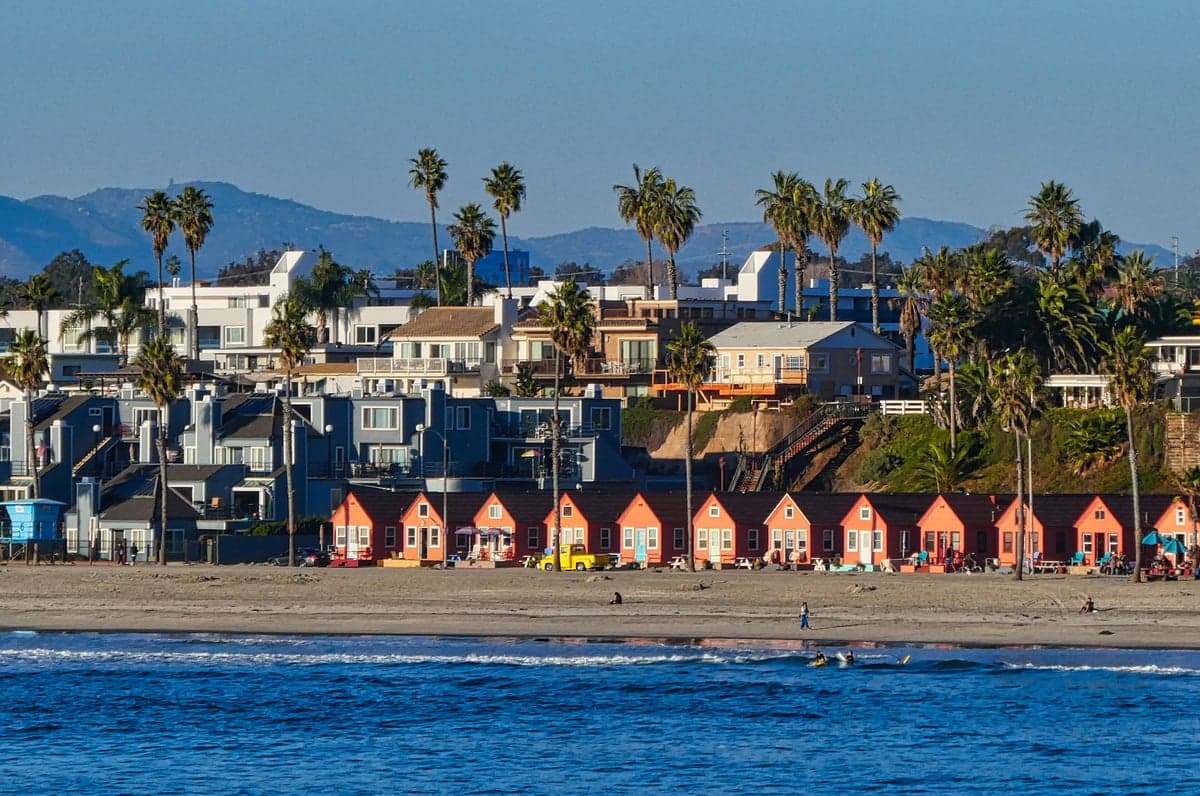
Photo: Wikipedia
Political ClimatePolitical Climate in Oceanside, CA
District shown is the primary district for this city’s centroid. Cities may span multiple districts.
Local Political AnalysisPolitical Analysis of Oceanside, CA
Oceanside, California, sits in a tricky spot politically. While the city itself leans left with a Cook PVI of D+4, that number doesn't tell the whole story. It used to be a solidly conservative military town, but over the last decade or so, you've seen a steady shift as more people from Orange County and Los Angeles move down, bringing their progressive politics with them. The result is a place that's increasingly split—you'll find Trump signs next to Pride flags in some neighborhoods, but the city council and local policies are definitely trending in a more progressive direction.
How it compares
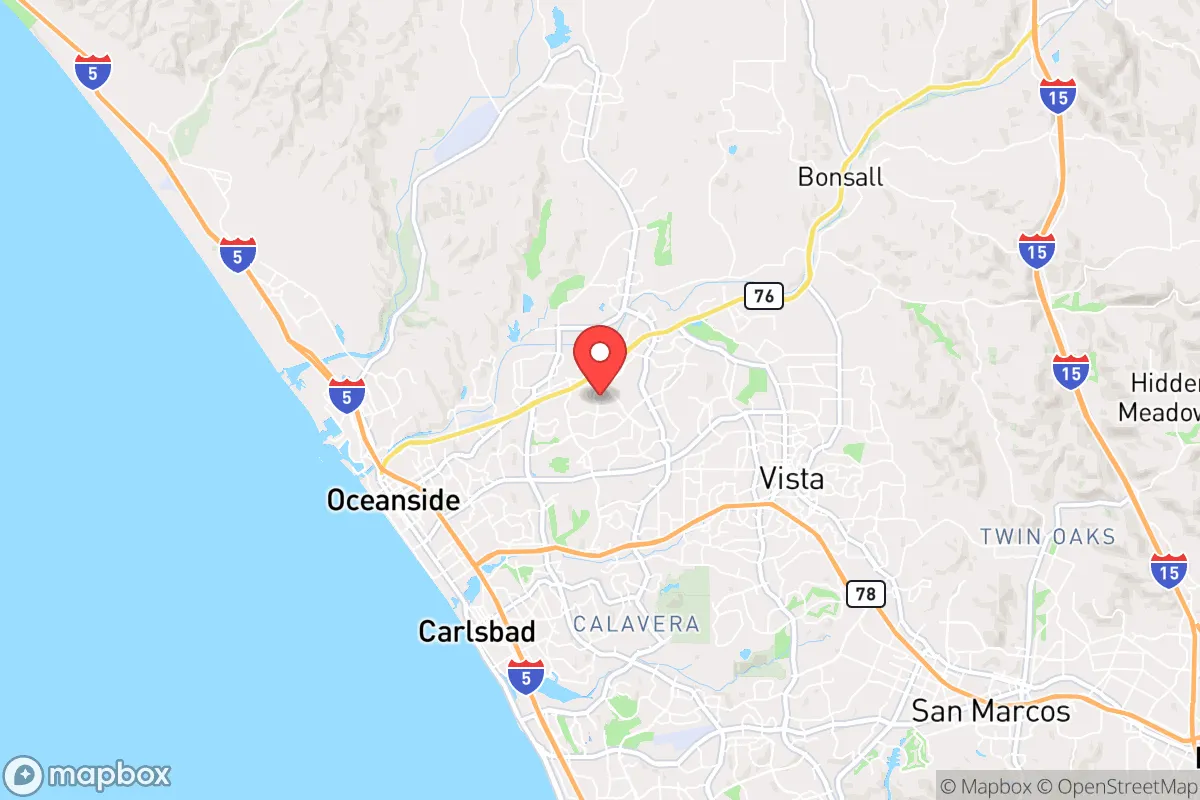
Drive just a few miles inland and you'll hit Vista or San Marcos, which still feel more like the old Oceanside—more working-class, more military families, and generally more conservative. Head north to Camp Pendleton itself, and you're in a federal bubble where politics barely matter day-to-day. But go south to Carlsbad or Encinitas, and you're in deep blue territory, with higher taxes, stricter regulations, and a much louder progressive activist scene. Oceanside is basically the buffer zone: it's got the beach-town vibe without the full-on coastal elite price tag, but that also means it's ground zero for the cultural tug-of-war. The D+4 rating is a compromise number—it's not San Francisco, but it's not San Diego's East County either. That middle ground is getting harder to hold as new development brings in younger, more liberal transplants who don't remember when this was a place where you could buy a house on a sergeant's salary.
What this means for residents
For folks who value personal freedom and want to be left alone, the trend is concerning. The city council has been pushing higher density housing mandates and more restrictive short-term rental rules, which feel like government overreach into what you can do with your own property. You're also seeing more pressure on Second Amendment rights at the county level, and Oceanside's local leadership isn't exactly fighting it. The school board has gotten more activist too, with curriculum changes that prioritize social justice over basics like math and reading. If you're a conservative or even a moderate who just wants to live your life without a bunch of new rules, you're starting to feel like an outsider in your own town. The military presence used to anchor the culture here—veterans and active-duty families kept things grounded—but that influence is fading as the base shrinks and more civilians move in.
On the flip side, if you're okay with a little more government involvement in exchange for green energy mandates and homeless outreach programs, you'll find plenty of neighbors who agree. The city has poured money into affordable housing projects and public transit expansions, which some see as progress and others see as a waste of tax dollars. The homeless encampments along the riverbed and near the pier are a visible reminder that the progressive approach hasn't solved everything—it's just moved the problem around. Long-term, if the trend continues, Oceanside will likely become a smaller version of Santa Monica or Long Beach: expensive, regulated, and politically uniform. That's a future a lot of us who've been here for decades are worried about, but it's not here yet. For now, it's still a place where you can find your own corner and keep your head down—if you're willing to fight for it at the ballot box every couple of years.

State Political ClimatePolitical Climate in California
State Political AnalysisPolitical Environment in the State
California is a one-party Democratic state where the progressive coalition has held total control of the governorship, legislature, and every statewide office for over a decade, with a partisan lean of roughly D+20 in statewide elections. The state’s political trajectory over the last 20 years has been a steady march leftward, driven by massive population growth in coastal metros and a shrinking rural base, though the 2020-2024 cycle showed the first signs of a modest rightward shift in some inland areas. For a conservative considering relocation, the reality is that California’s political machinery is deeply entrenched, but the cracks are showing—especially in places like Bakersfield, Huntington Beach, and Temecula, where local resistance is growing.
Urban vs. rural divide
The political map of California is a tale of two states. The Bay Area (San Francisco, Oakland, San Jose) and Los Angeles County are the Democratic engine rooms, delivering margins of 70-85% for Democrats in most races. These metros are home to the state’s tech, entertainment, and finance sectors, which overwhelmingly fund progressive causes. In contrast, the Central Valley—places like Fresno, Bakersfield, and Visalia—votes reliably Republican, often by 15-25 points, driven by agriculture, oil, and a more traditional working-class culture. The Inland Empire (Riverside and San Bernardino counties) is a true battleground; it flipped from red to blue in the 2010s but has been drifting back toward the center, with Temecula and Murrieta now electing conservative school boards and city councils. Orange County, once a GOP stronghold, flipped blue in 2018 and 2020, but Huntington Beach remains a defiant conservative enclave, passing its own voter-ID law and pushing back on state mandates. The rural north—Shasta County and Modoc County—votes 70%+ Republican, but its population is too small to offset the coastal cities.
Policy environment
California’s policy environment is a case study in progressive governance with heavy costs. The state has the highest personal income tax rate in the nation (13.3% for top earners), a state sales tax of 7.25% (plus local add-ons that push it to 10%+ in many cities), and some of the highest gas taxes in the country. Property taxes are capped at 1% of assessed value under Prop 13, but annual increases and transfer taxes can bite. The regulatory posture is aggressive: California has its own environmental review process (CEQA) that can delay any construction for years, and the California Air Resources Board (CARB) effectively sets emissions rules for the entire nation. Education policy is dominated by the California Teachers Association, a powerful union that has blocked school choice and charter expansion. Healthcare is heavily regulated, with a state-run exchange (Covered California) and mandates that push toward single-payer. Election laws are among the most liberal in the country: universal mail-in voting (every registered voter gets a ballot), same-day registration, and no voter-ID requirement. For a conservative, the policy environment feels like a constant chipping away at personal autonomy—especially in areas like housing, energy, and education.
Trajectory & freedom
California is becoming less free by almost any measure. The state has enacted some of the nation’s strictest gun laws, including a 2023 law (SB 2) that bans carrying firearms in most public places, and a 2024 law (AB 1594) that allows the state to sue gun manufacturers. On parental rights, California passed AB 1955 in 2024, which prohibits school districts from requiring parental notification when a child changes their gender identity—a direct attack on family authority. Medical autonomy has been curtailed by vaccine mandates for schoolchildren and healthcare workers, though the COVID-era emergency orders have mostly expired. Property rights are under constant assault: rent control was expanded statewide in 2019 (AB 1482), and a 2024 ballot measure (Prop 33) would have allowed even stricter local rent control (it failed, but narrowly). On the speech front, California’s AB 587 (2023) requires social media companies to report their content-moderation policies, which critics call a backdoor to censorship. The only bright spot for freedom advocates is the growing secession movement in rural counties—Shasta County and Siskiyou County have passed resolutions exploring separation from the state, though these are symbolic. The trajectory is clear: more regulation, higher taxes, and less individual discretion.
Civil unrest & political movements
California has been a flashpoint for political unrest for decades. The 2020 George Floyd protests in Los Angeles, Oakland, and San Francisco saw widespread looting and property destruction, with some estimates of $1 billion in damages. The homelessness crisis in cities like San Francisco and Los Angeles has spawned a growing “quality of life” backlash, with voters in 2024 passing Prop 36, which re-criminalizes some drug possession and theft offenses—a direct rebuke to the progressive “defund the police” movement. Immigration politics are a constant battleground: California is a sanctuary state (SB 54, 2017), prohibiting local law enforcement from cooperating with federal immigration authorities. This has led to tensions with the Trump administration and a steady flow of migrants, particularly in border-adjacent areas like San Diego and Imperial County. Election integrity is a hot-button issue: the state’s universal mail-in system has been criticized for lax signature verification and ballot harvesting, though no major fraud has been proven. The 2021 recall election of Gavin Newsom was a high-water mark for conservative organizing, but it failed by a 24-point margin. The California Republican Party is weak and fractured, but local movements—like the Huntington Beach voter-ID law and the Temecula school board wars—show that grassroots conservatism is alive in the suburbs.
Projection
Over the next 5-10 years, California will likely remain a Democratic stronghold, but the margins will narrow. The state is losing population to Texas, Arizona, and Idaho—about 500,000 people net between 2020 and 2024—and those leaving are disproportionately moderate and conservative. The remaining population is younger, more diverse, and more progressive, but there’s a growing “exhausted majority” of centrists and independents who are fed up with high costs, crime, and homelessness. The 2026 gubernatorial election could be a bellwether: if a moderate Democrat wins, the state might tack slightly toward the center on crime and housing. But the legislature will remain firmly progressive, and new laws on climate, AI regulation, and healthcare will continue to expand government’s role. For a conservative moving in now, expect to live in a state where your vote for president or Senate is essentially meaningless, but your local vote—for city council, school board, or sheriff—can actually matter. The Inland Empire and Central Valley will become the last redoubts of conservative influence, while coastal cities will double down on progressive policies.
Bottom line: California is not a state where a conservative will feel politically at home, but it’s not a lost cause either. If you’re moving here, pick your county carefully—Riverside County or San Diego County’s northern suburbs offer a better balance of climate, economy, and political culture than the Bay Area or LA. Expect to pay a premium in taxes and regulation, but you’ll also find communities where your values are shared, especially in the growing conservative suburbs. The state’s trajectory is leftward, but the resistance is real, and local elections are where the fight happens.
* Values derived from national, state, county, city and local statistics and may differ in a specific area. Last updated: 2026-04-24T14:29:58.000Z
Narrative content on this page is AI-generated and may contain mistakes. Verify any details that matter before acting on them.
ReloMaps may earn a commission from affiliate links at no extra cost to you.

