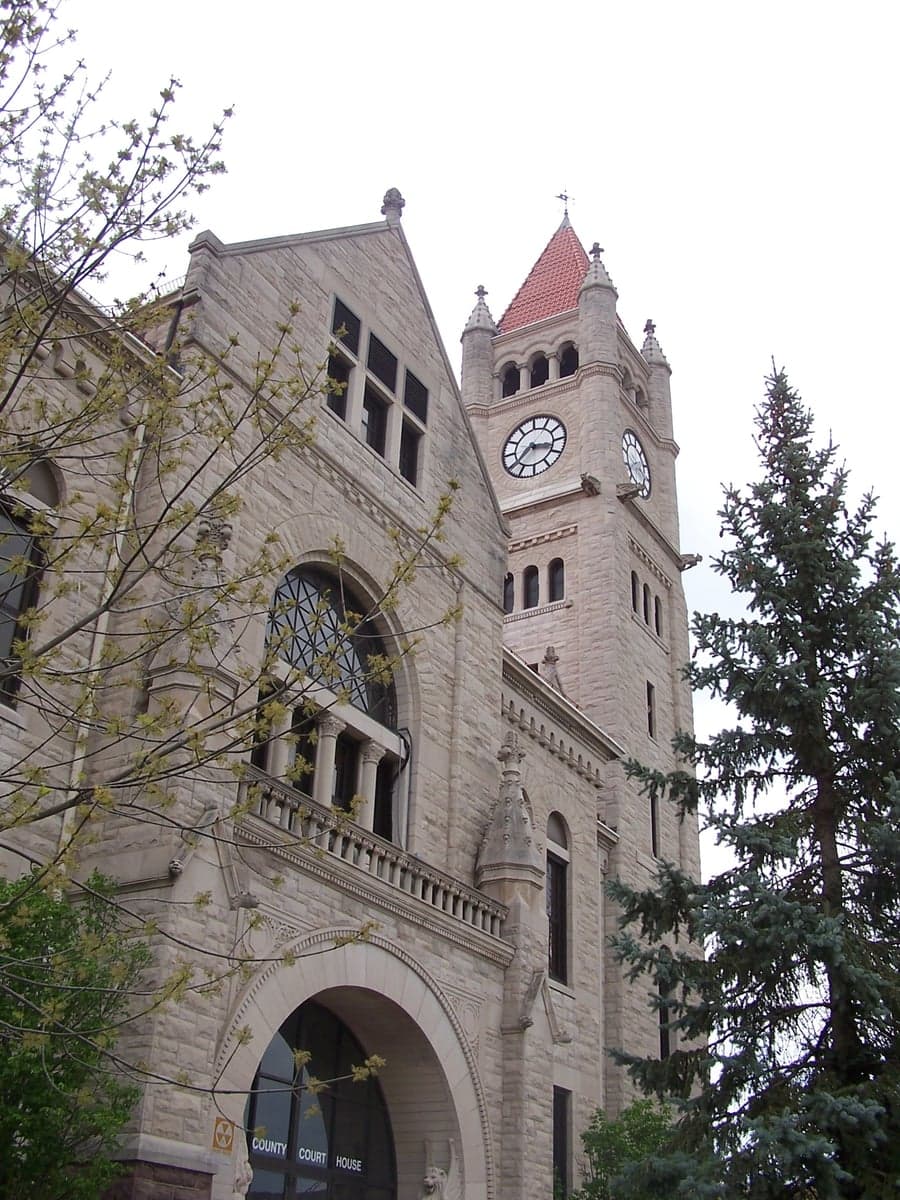
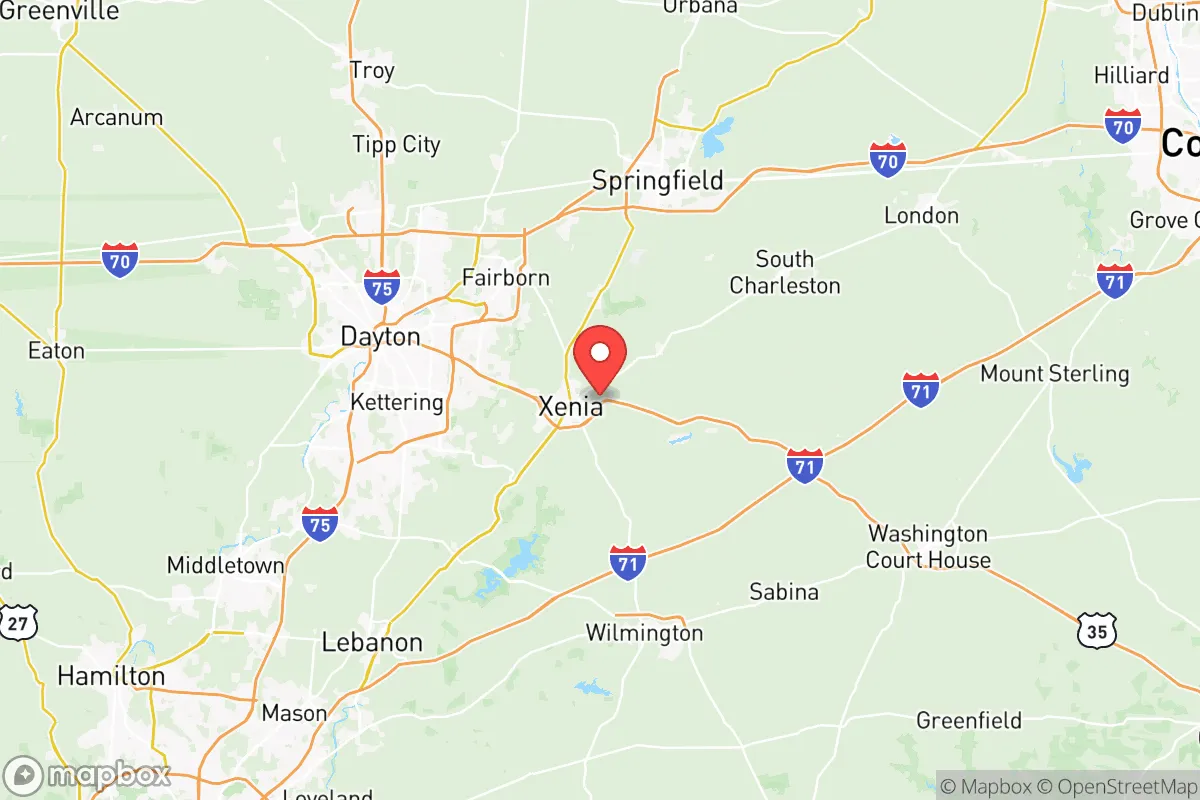
Photo: Wikipedia
Demographics of Greene County
Affluence Level in Greene County
A middle-class area roughly in line with national averages across income, home values, education, and employment.
People of Greene County
Greene County, Ohio, is a predominantly white, well-educated, and politically moderate-conservative community of 168,531 residents, anchored by Wright-Patterson Air Force Base and the research institutions of the Miami Valley. The county’s population is notably stable and rooted, with a foreign-born share of just 1.8%—far below the national average—and a college attainment rate of 41.3% that reflects its role as a hub for engineering, logistics, and defense-related employment. The people of Greene County today are characterized by a blend of old-stock Midwestern families, a significant concentration of military-affiliated households, and a small but growing Hispanic and Asian presence, primarily clustered in the suburban corridor between Fairborn and Beavercreek.
Settlement & growth (pre-1960)
Before American settlement, the area now known as Greene County was the domain of the Shawnee and Miami nations, who used the Mad River and Little Miami River valleys for hunting and seasonal agriculture. The region was contested during the Ohio Indian Wars, and the 1795 Treaty of Greene Ville—after which the county is named—opened the area to Euro-American settlement. The first permanent white settlers were largely of Scots-Irish and German stock, arriving from Pennsylvania, Virginia, and Kentucky in the first decade of the 1800s. They founded the county seat of Xenia in 1803 and the river town of Yellow Springs shortly after, drawn by fertile bottomland and the promise of land grants for Revolutionary War veterans.
The 1830s and 1840s brought a second wave of German immigrants, who established farming communities in the central and southern parts of the county, particularly around Bellbrook and Jamestown. These settlers were predominantly Lutheran and Catholic, and they built the dense network of family farms that defined Greene County’s economy through the 19th century. A smaller number of English and Welsh Quakers settled in the Spring Valley area, where they established a station on the Underground Railroad. By 1850, the county’s population had reached roughly 20,000, overwhelmingly native-born white and of British Isles or German descent.
The post-Civil War period saw modest industrial growth in Xenia and Fairborn (then two separate villages, Fairfield and Osborn), driven by the arrival of the Little Miami Railroad. This brought a small influx of Irish laborers and, later, a handful of Italian and Polish families who worked in the railroad yards and the emerging milling and manufacturing sector. However, Greene County remained predominantly agricultural and ethnically homogeneous well into the 20th century. The single most transformative event for the county’s population was the establishment of Wright-Patterson Air Force Base in 1917 (then McCook Field, later consolidated at Patterson Field in the 1930s). The base drew a steady stream of military personnel, civilian engineers, and technical workers from across the United States, many of whom settled in Fairborn and Riverside. This in-migration was overwhelmingly white and native-born, but it diversified the county’s occupational profile and raised its educational attainment significantly.
Modern era (post-1965)
The 1965 Hart-Cellar Act had a muted direct effect on Greene County compared to major urban centers. The foreign-born population remained below 2% through the 1990s, and the county did not experience the large-scale immigration from Latin America or Asia seen in nearby Columbus or Cincinnati. However, the post-1965 period brought two important demographic shifts. First, the expansion of Wright-Patterson and the rise of defense-contractor employment (particularly at companies like MacAulay-Brown and the Air Force Research Laboratory) attracted a wave of domestic migrants from the Rust Belt and the Northeast. These were primarily white, college-educated professionals who settled in the fast-growing suburbs of Beavercreek and Sugarcreek Township, transforming them from rural crossroads into affluent bedroom communities. Second, the base’s role in aerospace research drew a small but notable cohort of East/Southeast Asian engineers and scientists—primarily Chinese, Taiwanese, and Vietnamese—who began arriving in the 1980s and 1990s. Today, the Asian population (East/Southeast Asian, excluding Indian subcontinent) stands at 1.6%, concentrated in Beavercreek and Fairborn near the base. The Indian-subcontinent population (1.3%) is similarly clustered in Beavercreek, drawn by IT and engineering roles at Wright-Patterson and at nearby Wright State University.
The Hispanic population, now 3.2%, grew more slowly and is more dispersed. It includes a mix of Mexican-origin families who arrived for agricultural work in the 1970s and 1980s, settling in Xenia and Jamestown, and a smaller number of Puerto Ricans and Central Americans who came for manufacturing and service jobs in the 1990s and 2000s. The Black population (5.8%) is concentrated in Xenia and Fairborn, reflecting both historic settlement patterns and more recent migration from Dayton and Cincinnati. Suburbanization has been the dominant trend since 1970: the county’s population grew by roughly 40% between 1970 and 2020, almost entirely in the Beavercreek, Sugarcreek Township, and Bellbrook corridors, while Xenia’s population stagnated and Yellow Springs remained a small liberal enclave.
The future
Greene County’s population is likely to continue its slow, steady growth, driven by the expansion of Wright-Patterson and the broader Dayton-area defense and aerospace sector. The county is not homogenizing into a single cultural bloc; rather, it is tribalizing into distinct enclaves. Beavercreek and Sugarcreek Township will become more affluent, more educated, and slightly more diverse, with the Asian and Indian populations growing as the base recruits specialized technical talent. Xenia and Fairborn will likely see a modest increase in Hispanic and Black populations, driven by affordable housing and service-sector employment. The foreign-born share may rise to 3-4% by 2040, but Greene County will remain one of Ohio’s least diverse counties by national standards. The cultural identity of the county is being shaped by in-migration from other parts of Ohio and the Midwest, not by international immigration, meaning the conservative-leaning, family-oriented, military-friendly character of the county is likely to persist.
For someone moving in now, Greene County offers a stable, safe, and well-educated community where the population is growing slowly and predictably. The county is not experiencing the rapid demographic change or cultural conflict seen in many suburban counties; instead, it is absorbing modest diversity into a deeply rooted Midwestern framework. The key decision for a new resident is whether to settle in the high-growth, higher-cost Beavercreek corridor or in the older, more affordable towns of Xenia or Fairborn, each of which offers a distinct slice of the county’s character.

* Values derived from national, state, county, city and local statistics and may differ in a specific area. Last updated: 2026-05-28T09:31:32.000Z
Narrative content on this page is AI-generated and may contain mistakes. Verify any details that matter before acting on them.
ReloMaps may earn a commission from affiliate links at no extra cost to you.

