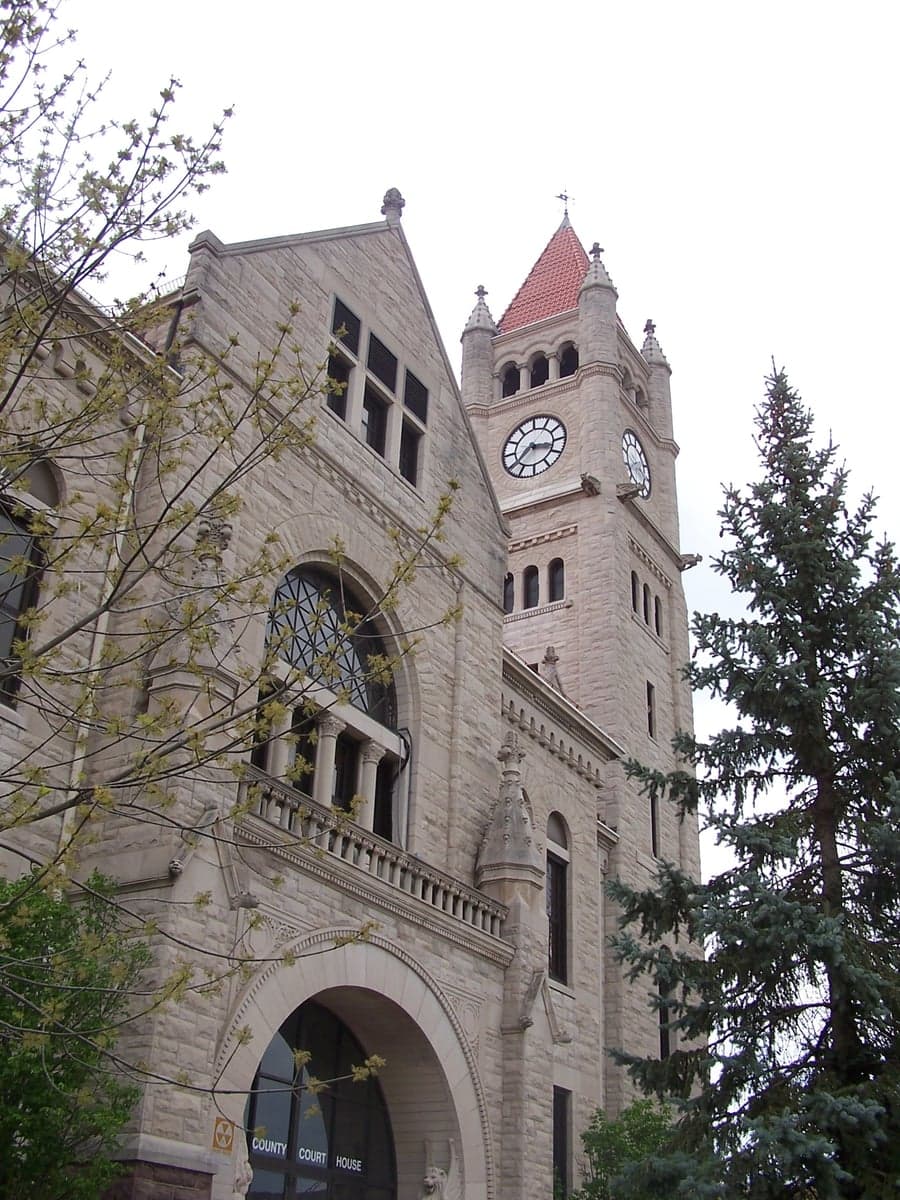
Photo: Wikipedia
Political ClimatePolitical Climate in Greene County
Showing district-level results — no local-only data available.
Local Political AnalysisPolitical Analysis of Greene County
Greene County, Ohio, has long been a reliably conservative area, but it’s not the rock-ribbed Republican stronghold you might expect from its R+3 Cook PVI. That number actually makes it a shade more moderate than the state as a whole, which sits at R+5. What that means on the ground is a county that’s been trending leftward over the last decade, especially in its more populated corners, while the rural stretches hold the line. If you’re looking at the big picture, Greene County is a bellwether for the kind of suburban shift that’s been reshaping Ohio politics—and not always in a direction that sits well with folks who value limited government and personal freedoms.
How it compares
The R+3 rating puts Greene County about two points to the left of Ohio’s statewide R+5. That gap is driven almost entirely by the city of Yellow Springs, a small college town that reliably votes Democratic by margins of 70% or more. In the 2024 presidential race, Yellow Springs went for the Democratic candidate by a staggering 78-point spread, while the rest of the county—places like Beavercreek, Bellbrook, and Xenia—voted heavily Republican. Beavercreek, the county’s largest city, is a solid red anchor, often voting +20 to +25 points for the GOP. Xenia, the county seat, is more of a swing precinct; it went for Trump in 2024 but by a narrower margin than in 2020, suggesting some erosion. The rural townships—like Bath Township and Miami Township—remain deeply conservative, but the suburban precincts around Wright-Patterson Air Force Base are showing signs of a slow drift toward the center. Compared to Ohio as a whole, Greene County is less reliably red than the rural counties to its north and west, but it’s still a far cry from the deep-blue urban cores of Columbus or Cleveland.
What this means for residents
For a conservative resident, the biggest concern here is the creeping influence of progressive policies, especially in Yellow Springs, where local government has pushed initiatives like rent control and diversity-equity-inclusion mandates that feel like government overreach into personal property rights and free association. The county commission remains Republican-controlled, but the margin has tightened in recent cycles. In 2022, the GOP won the county commission seats by about 8 points, down from 15 points a decade earlier. If you value low taxes and minimal interference in your daily life, the trend is worrying. The school boards in Beavercreek and Xenia have stayed conservative, but there’s been a noticeable uptick in activism around curriculum and library content—a sign that the culture war is alive and well here. The good news is that the county’s strong military presence (Wright-Patterson employs over 30,000 people) tends to anchor the local culture toward patriotism and traditional values, which helps keep the progressive drift in check.
On a cultural and policy level, Greene County still feels like a place where a handshake matters and the Second Amendment is respected. You won’t see the kind of zoning overreach or business mandates that plague Columbus or Cincinnati. But the long-term trajectory is uncertain. If the suburban shift continues, especially in the fast-growing areas around Beavercreek, the county could become a true swing jurisdiction within a decade. For now, it’s a conservative place with a few blue pockets—and a reminder that no place is immune to the broader political currents reshaping Ohio.

State Political ClimatePolitical Climate in Ohio
State Political AnalysisPolitical Environment in the State
Ohio is a classic battleground that has shifted from a true swing state to a solidly Republican-leaning one, with a Cook PVI of R+5. Over the past 10-20 years, the state has moved rightward by about 10 points, driven by the collapse of union-heavy Democratic strongholds in the Mahoning Valley and Appalachian southeast, while the suburbs around Columbus and Cincinnati have become more competitive. The dominant coalition is now a mix of rural conservatives, ex-urban families, and working-class voters who have soured on the national Democratic brand, though the state still has deep blue pockets in Cleveland, Toledo, and Akron that keep it from being a deep red state like Indiana.
Urban vs. rural divide
The political map of Ohio is a tale of three regions. The urban cores of Cleveland (Cuyahoga County), Columbus (Franklin County), and Cincinnati (Hamilton County) are reliably Democratic, with Franklin County voting for Joe Biden by 31 points in 2020. But the real story is the suburbs: Delaware County (north of Columbus) voted for Trump by 18 points in 2020, up from Romney’s 16-point margin in 2012, while Warren County (northeast of Cincinnati) went for Trump by 34 points. The rural counties in the northwest (like Van Wert and Mercer) and the southeast (like Monroe and Noble) are deep red, often voting 70-80% Republican. The swingiest areas are the industrial Mahoning Valley (Youngstown area) and the Appalachian foothills, where Trump made huge gains among white working-class voters who had previously voted for Obama. The divide isn’t just urban vs. rural—it’s also about education and economic anxiety, with college-educated suburbs like Bexley (Columbus) and Shaker Heights (Cleveland) trending left while non-college areas harden right.
Policy environment
Ohio’s policy environment is broadly conservative but with notable exceptions. The state has a flat income tax rate of 3.5% (phased down from 4% in 2023), and no tax on Social Security benefits, which is a big draw for retirees. Property taxes are moderate, averaging about 1.5% of home value, but can be higher in high-cost suburbs like Dublin or Westlake. The regulatory posture is business-friendly, with right-to-work laws not on the books (a 2011 law was repealed by referendum in 2011), but the state has loosened occupational licensing and reduced red tape for small businesses. Education policy is a mixed bag: Ohio has a robust school choice program, including the EdChoice Scholarship for low-income families and the Jon Peterson Special Needs Scholarship, but public schools in urban districts like Cleveland Metropolitan School District are chronically underfunded and struggle with low test scores. Healthcare is a flashpoint: the state expanded Medicaid under the Affordable Care Act in 2014, but the legislature has passed laws restricting abortion (a six-week ban after a heartbeat is detected, currently blocked by court order) and requiring parental consent for minors. Election laws have tightened: the state requires a photo ID to vote (effective 2023), limits drop boxes to one per county, and has purged inactive voters from rolls, which conservatives see as election integrity measures but progressives call voter suppression.
Trajectory & freedom
Ohio is becoming more free in several key areas, but there are worrying trends. On the plus side, the state passed constitutional carry (permitless carry of a concealed handgun) in 2022, and the legislature overrode Governor Mike DeWine’s veto of a bill banning transgender surgeries for minors (the Save Adolescents from Experimentation (SAFE) Act) in 2024. Parental rights were strengthened with the Parents’ Bill of Rights (2023), which requires schools to notify parents about curriculum changes and medical services. Property rights were bolstered by a 2023 law limiting eminent domain for private economic development. However, the state has seen a troubling expansion of government overreach in other areas: the Ohio Department of Health imposed sweeping business closures and mask mandates during COVID-19, which were later struck down by the state Supreme Court. The state also has a sales tax on digital goods (like streaming services) and a gas tax hike in 2019 that raised the rate by 10.5 cents per gallon. Medical freedom took a hit with the state’s strict vaccine mandates for healthcare workers, though these were later relaxed. The biggest concern for liberty-minded residents is the state’s high incarceration rate (one of the highest in the Midwest) and the continued expansion of the Ohio Bureau of Criminal Investigation’s surveillance powers.
Civil unrest & political movements
Ohio has seen its share of political flashpoints. The 2020 protests in Columbus over the death of George Floyd turned violent, with looting and arson in the Short North district, leading to a heavy National Guard presence. The anti-lockdown protests at the Ohio Statehouse in 2020 were among the largest in the country, with armed demonstrators demanding the state reopen. The Issue 1 ballot measure in 2023, which would have made it harder to amend the state constitution (requiring 60% voter approval), was defeated after a massive campaign from progressive groups, but it galvanized conservative activists who saw it as a necessary check on out-of-state money. Immigration politics are relatively quiet compared to border states, but there have been tensions in Springfield (Clark County) over a surge of Haitian immigrants, which led to local school districts struggling with language services. Election integrity remains a hot-button issue: the 2020 election in Ohio was relatively smooth, but the 2022 primary saw long lines in Cuyahoga County due to a shortage of poll workers, fueling distrust. The Ohio Election Integrity Network is active, pushing for stricter voter ID laws and audits. There is no serious secession or nullification movement, but the Ohio Freedom Alliance advocates for state sovereignty on gun and health mandates.
Projection
Over the next 5-10 years, Ohio is likely to continue its rightward drift, but not as dramatically as the last decade. The demographic trends are mixed: the state is losing population in rural areas and the Rust Belt cities, but gaining in the Columbus suburbs and the Cincinnati exurbs. In-migration is modest—mostly from other Midwest states and the Northeast—and these newcomers tend to be more conservative (fleeing high taxes in Illinois and New York). The Columbus metro is the key battleground: as it grows, its suburbs (like Powell and New Albany) are becoming more Republican, while the city core is solidifying as a Democratic stronghold. The state’s political future hinges on whether the GOP can hold the working-class voters who flipped in 2016 and 2020, or if the national party’s stance on trade and immigration alienates them. The 2026 gubernatorial race will be a bellwether: if a hardline conservative wins the primary, expect more legislation on school choice, gun rights, and election integrity. The biggest wildcard is the state’s aging population—Ohio has one of the oldest populations in the Midwest, and older voters tend to be more conservative, but they also care deeply about Social Security and Medicare, which could make them receptive to populist messaging. A new resident moving in now should expect a state that is increasingly conservative on cultural issues but still pragmatic on economics, with a growing divide between the vibrant, liberal cities and the quiet, conservative countryside.
For a conservative-leaning individual or family, Ohio offers a solidly red political environment outside the major cities, with low taxes, strong gun rights, and a growing school choice ecosystem. The state is not a libertarian paradise—government overreach during COVID and high incarceration rates are real concerns—but it is trending in the right direction on most freedom metrics. The key practical takeaway: if you move to the Columbus or Cincinnati suburbs, you’ll find a community that shares your values on family, faith, and fiscal responsibility, but you’ll need to stay engaged in local politics to keep the state from backsliding on issues like property taxes and parental rights. The urban cores are a different world, but they’re easy to avoid. Ohio is a state where your vote matters, and your voice can still make a difference.
* Values derived from national, state, county, city and local statistics and may differ in a specific area. Last updated: 2026-05-28T09:31:32.000Z
Narrative content on this page is AI-generated and may contain mistakes. Verify any details that matter before acting on them.
ReloMaps may earn a commission from affiliate links at no extra cost to you.

