
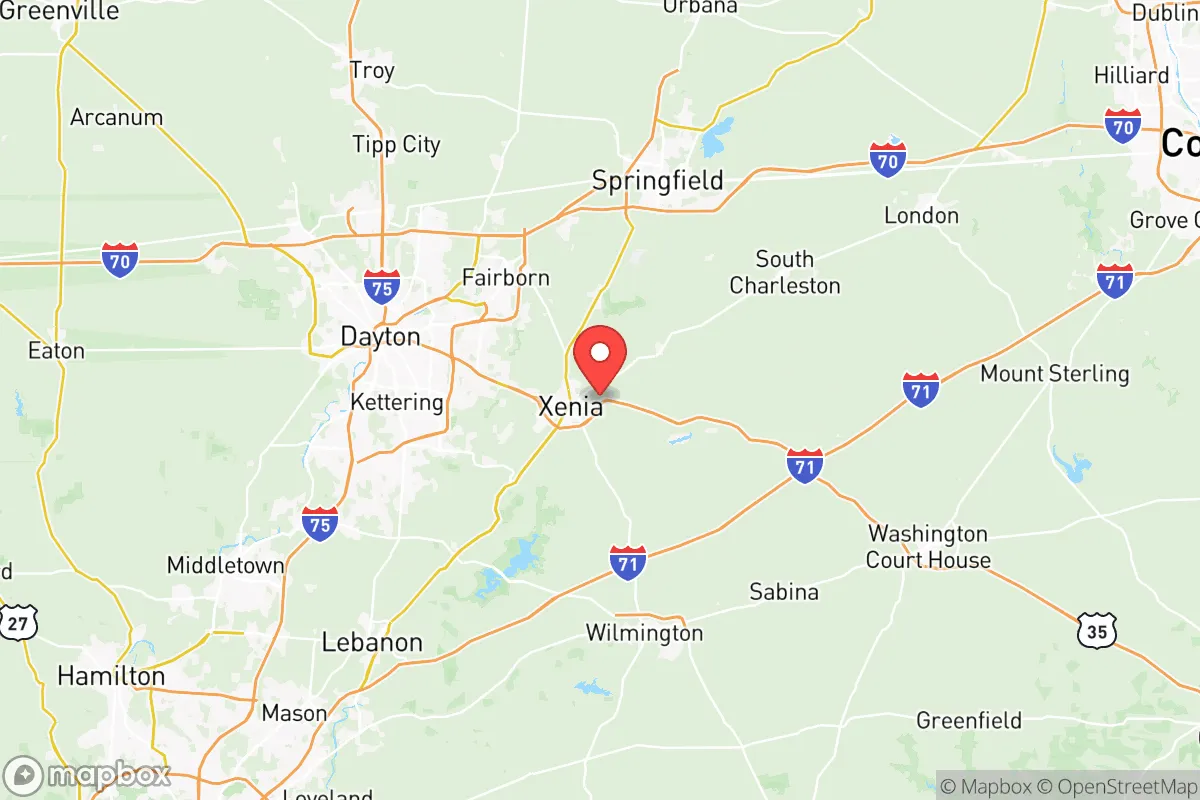
Photo: Wikipedia
Personal Sovereignty in Greene County
Viable for self-reliance. Generally workable, though some barriers may limit total independence.
What does Personal Sovereignty tell us?
Personal Sovereignty measures your capacity for self-reliance and independence with minimal government friction. Higher scores mean fewer barriers between you and the way you want to live... but it assumes you have the space you need and good neighbors.
What does this tell us?
Personal Sovereignty measures your capacity for self-reliance and independence with minimal government friction. Higher scores mean fewer barriers between you and the way you want to live... but it assumes you have the space you need and good neighbors.
State Policy
Energy independence: Importer (40% of energy produced in-state)
Personal Liberty
Homesteading

Personal Liberty Analysis
For the individual or family prioritizing personal sovereignty, Greene County, Ohio offers a notably favorable environment compared to the increasingly restrictive urban centers of the Midwest. The county’s blend of low-density rural townships, a strong agricultural heritage, and a political culture that leans distinctly conservative creates a landscape where self-reliance is not just tolerated but expected. While no area is immune from state-level overreach, Greene County’s local governance and community norms provide a buffer against the most aggressive encroachments on personal freedom, making it a serious consideration for those seeking to live with minimal interference.
Tax burden and regulatory posture: How Greene County compares to surrounding areas
Ohio’s state-level tax structure is a mixed bag, but Greene County’s local implementation leans toward fiscal restraint. The county’s property tax rates are moderate, with effective rates typically hovering around 1.5% to 1.8% of assessed home value, which is competitive with neighboring counties like Montgomery (Dayton) and Warren. However, the real advantage lies in the regulatory posture of its townships. In areas like Beavercreek Township and Xenia Township, zoning is far less intrusive than in the city of Xenia itself, where municipal codes can be more restrictive. For a prepper or homesteader, the key is to target unincorporated areas within the county, such as Spring Valley Township or Silvercreek Township, where building permits are simpler and there is no city income tax. The county’s sales tax is a manageable 7.25%, and there is no local income tax in the townships, which is a significant savings over living in Dayton or Cincinnati. This regulatory lightness is a deliberate choice by local commissioners who prioritize property rights over planning control.
Self-defense and gun law specifics: What the Second Sanctuary status means for residents
Greene County is a stronghold for Second Amendment rights, having declared itself a Second Amendment Sanctuary in 2020. This means local law enforcement is directed not to enforce any future state or federal gun control measures they deem unconstitutional. For the resident, this translates to a permissive environment for concealed carry, open carry, and firearm ownership. Ohio is a constitutional carry state, so no permit is needed to carry a concealed handgun for those legally allowed to possess one. The county sheriff, particularly in rural precincts like Jamestown and Bowersville, is known for a pro-ownership stance and quick processing of permits for those who still want them for reciprocity. There are no local magazine capacity bans or assault weapon restrictions, and the county’s gun culture is deeply embedded—you will see firearms displayed in vehicles and homes without stigma. For the survivalist, this means you can build a defensive arsenal without fear of local crackdowns, though you must still comply with state-level background checks for private sales (a minor but notable infringement). The proximity to Dayton does not dilute this; the county line acts as a clear cultural boundary.
Self-reliance and homesteading viability: Lot sizes, zoning, and off-grid feasibility
Greene County is a prime location for homesteading and off-grid living, provided you choose the right township. In unincorporated areas, minimum lot sizes are typically one to three acres, but many parcels in Caesarscreek Township and Miami Township are available in five- to ten-acre increments, offering genuine rural privacy. Zoning in these townships is minimal—no HOA-style restrictions on livestock, outbuildings, or vehicle storage. You can keep chickens, goats, and even a few head of cattle without special permits. Off-grid feasibility is high: well water is common and affordable to drill (typically $5,000–$10,000), and septic systems are straightforward to install with county health department approval. Solar panels are legal and encouraged by state net metering laws, though you will need to work with a local installer familiar with township codes. The biggest hurdle is in the villages like Yellow Springs, where progressive zoning bans certain agricultural uses and restricts building materials. Stick to the townships—Bath Township and Beavercreek Township are more permissive than the village of Yellow Springs—and you can achieve a high degree of self-sufficiency. The county’s soil is fertile, and the growing season is long enough for a substantial garden, making food independence a realistic goal.
Personal liberties: Parental rights, medical autonomy, speech, and property
On the spectrum of personal liberties, Greene County ranks well above the national average, particularly in areas of parental rights and medical autonomy. The county’s school boards, especially in Xenia Community Schools and Greeneview Local Schools, have resisted the more intrusive curriculum mandates seen in urban districts, and parental opt-out rights for health and sex education are robust. Medical freedom is supported by a network of independent doctors and chiropractors who are less tied to hospital systems, and the county has a strong presence of vaccine-choice advocates. Free speech is protected by a conservative community that does not tolerate cancel-culture mobs; public meetings in Xenia and Jamestown are known for robust, uncensored debate. Property rights are the crown jewel: eminent domain abuse is rare, and the county’s zoning appeals board is known to side with landowners against overreach. The only notable restriction is in Yellow Springs, where a local noise ordinance and strict tree-cutting rules can feel like a violation of autonomy. For the prepper, this means you can build a bunker, store supplies, and raise your children according to your values without fear of state intervention, as long as you avoid the few progressive enclaves.
In the broader context of Ohio and the Midwest, Greene County stands out as a bastion of personal sovereignty. While it lacks the extreme libertarian bent of some rural Western counties, its combination of low taxes, permissive gun laws, homestead-friendly zoning, and strong property rights creates a balanced environment for those seeking to live free from government overreach. The key is to choose your specific location wisely—townships like Silvercreek and Caesarscreek offer the highest degree of autonomy, while Yellow Springs and the city of Xenia present more regulatory friction. For the survivalist or conservative family looking to plant roots in a community that values self-reliance, Greene County is a strategic choice that delivers on the promise of personal sovereignty without the isolation of more remote regions.

* Values derived from national, state, county, city and local statistics and may differ in a specific area. Last updated: 2026-05-28T09:31:32.000Z
Narrative content on this page is AI-generated and may contain mistakes. Verify any details that matter before acting on them.
ReloMaps may earn a commission from affiliate links at no extra cost to you.

