
Photo: Wikipedia
Personal Sovereignty in Hamilton County
Viable for self-reliance. Generally workable, though some barriers may limit total independence.
What does Personal Sovereignty tell us?
Personal Sovereignty measures your capacity for self-reliance and independence with minimal government friction. Higher scores mean fewer barriers between you and the way you want to live... but it assumes you have the space you need and good neighbors.
What does this tell us?
Personal Sovereignty measures your capacity for self-reliance and independence with minimal government friction. Higher scores mean fewer barriers between you and the way you want to live... but it assumes you have the space you need and good neighbors.
State Policy
Energy independence: Importer (40% of energy produced in-state)
Personal Liberty
Homesteading

Personal Liberty Analysis
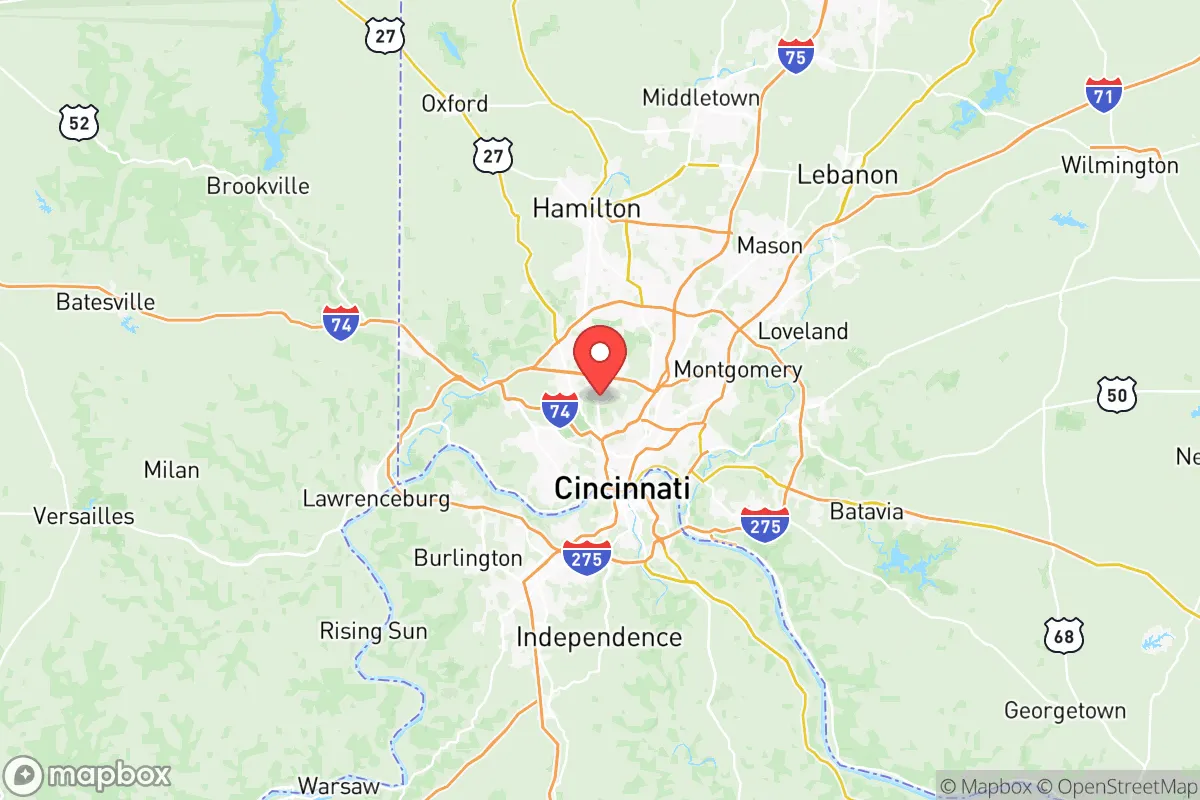
Hamilton County, Ohio presents a deeply mixed picture for those prioritizing personal sovereignty, where the urban core of Cincinnati exerts significant regulatory pressure while outlying townships and villages offer considerably more breathing room. For the conservative-leaning individual or parent concerned with government overreach, the county’s autonomy environment is best understood as a patchwork—not a monolith—with your specific address determining whether you live under relatively light governance or face the kind of municipal oversight that chafes against self-reliance. The key takeaway is that Hamilton County is not a single sovereignty zone; it is a collection of jurisdictions where your rights and freedoms vary block by block.
Tax burden and regulatory posture across Hamilton County’s jurisdictions
Ohio’s state-level tax structure is moderately favorable for those seeking to keep more of their earnings, with a flat income tax rate of 3.5% as of 2025 and no state-level estate tax. However, Hamilton County adds its own layer: a county sales tax of 7.8% (combining state and local) and property taxes that average around 1.8% of assessed home value, which is above the national median. The real sovereignty friction comes from municipal income taxes. Cincinnati levies a 2.1% city income tax on residents and a 1.8% tax on non-residents working within city limits—a double-edged sword that hits both earners and commuters. In contrast, townships like Colerain Township and Green Township have no municipal income tax, relying instead on property and sales taxes, which can save a family earning $75,000 roughly $1,500 annually compared to living inside Cincinnati proper. Regulatory posture varies sharply: Cincinnati has a robust zoning code, strict rental inspection programs, and a growing list of business licensing requirements, while unincorporated areas like Springfield Township and Sycamore Township maintain lighter touch regulations. For the prepper-minded, this means choosing a township over the city can reduce bureaucratic friction significantly, especially for home-based businesses or property modifications.
Self-defense and gun law specifics in Hamilton County’s urban and rural zones
Ohio is a constitutional carry state as of 2022, meaning no permit is required to carry a concealed firearm for anyone legally allowed to possess one. This applies uniformly across Hamilton County, but the practical experience of exercising that right differs dramatically by location. In Cincinnati, the city council has passed symbolic resolutions opposing state preemption laws, and while they cannot legally ban concealed carry, they have created de facto restrictions through “gun-free zone” signage at city-owned parks, recreation centers, and public buildings. Enforcement is inconsistent but creates a chilling effect. In contrast, Anderson Township and Miami Township have no such local ordinances and maintain a more gun-friendly culture, with multiple gun ranges and firearms dealers operating openly. The county sheriff’s office, which handles concealed carry licensing for those who still want permits for reciprocity purposes, processes applications within 45 days on average. Stand-your-ground laws are in effect statewide, and there is no duty to retreat in any place where you are lawfully present. For parents, the legal landscape for firearm storage in homes is permissive—no safe storage mandate exists at the state level, though Cincinnati has attempted to pass such measures locally, only to be blocked by state preemption. The practical advice: if you want to exercise your Second Amendment rights without municipal interference, live outside the Cincinnati city limits, preferably in a township where local government respects state preemption.
Self-reliance and homesteading viability: lot sizes, zoning, and off-grid feasibility
Hamilton County’s density gradient makes homesteading a realistic option only in specific pockets. The county’s eastern and western townships offer the best prospects. Colerain Township has several neighborhoods with lots of one to five acres, and zoning allows for backyard chickens, small livestock, and substantial gardening without special permits. Green Township similarly permits hobby farming on parcels over two acres, though you will need to register with the county agricultural extension for any livestock beyond chickens. Off-grid feasibility is limited by building codes: the county requires connection to public water and sewer in most subdivisions, but in the more rural reaches of Whitewater Township and Crosby Township, private wells and septic systems are standard. Solar panels are allowed statewide, but homeowners associations (HOAs) in subdivisions like those in Symmes Township often restrict visible installations. Rainwater collection is legal without permit for non-potable uses. For the serious prepper, the best bet is to target the unincorporated areas of Miami Township or Anderson Township, where you can find five-acre parcels with minimal zoning interference, allowing for root cellars, wood stoves, and substantial food storage without municipal oversight. The county’s building department does require permits for structural changes, but enforcement is lax in rural townships compared to the city.
Personal liberties: parental rights, medical autonomy, speech, and property
Parental rights in Ohio are relatively strong compared to coastal states. The state has a “Parents’ Bill of Rights” law (enacted 2023) that requires schools to notify parents of any medical or mental health services offered to minors and to obtain parental consent for most non-emergency care. Hamilton County’s school districts vary in compliance: suburban districts like Mason City Schools (which extends into Warren County but serves Hamilton County residents) and Lakota Local Schools have been proactive in honoring parental notification, while Cincinnati Public Schools have faced criticism for opaque policies around student surveys and health services. Medical autonomy is more constrained: Ohio has a vaccine mandate for school attendance (with medical and religious exemptions), and the state’s COVID-era emergency powers have been rolled back, but local health departments in Hamilton County retain authority to issue quarantine orders. Speech protections are robust under Ohio’s constitution, but Cincinnati has a “disorderly conduct” ordinance that has been used to ticket protesters, though such cases rarely hold up in court. Property rights are the strongest liberty in the county: Ohio is a “property rights” state with no statewide rent control, and Hamilton County’s township governments generally respect private property use as long as it does not create public nuisances. The exception is Cincinnati’s historic preservation board, which can block exterior modifications in designated neighborhoods like Over-the-Rhine and Mount Adams—a direct infringement on property sovereignty that does not apply in the townships.
Overall, Hamilton County offers a tiered sovereignty environment where the urban core of Cincinnati imposes the most restrictions on personal freedoms, while the surrounding townships—particularly Colerain, Green, Miami, and Anderson—provide a much more permissive landscape for the self-reliant individual. Compared to neighboring counties like Butler or Warren, Hamilton is more regulatory and tax-heavy, but it still beats most urban counties in blue states for gun rights, property autonomy, and parental control. The strategic move for the conservative-leaning prepper is to live in a township, work in a township, and treat Cincinnati as a resource for employment or entertainment rather than a place to put down roots. Your sovereignty in Hamilton County is not guaranteed by the county line—it is determined by your specific jurisdiction, and the difference between city and township is the difference between a leash and open range.

* Values derived from national, state, county, city and local statistics and may differ in a specific area. Last updated: 2026-05-14T04:57:29.000Z
Narrative content on this page is AI-generated and may contain mistakes. Verify any details that matter before acting on them.
ReloMaps may earn a commission from affiliate links at no extra cost to you.

