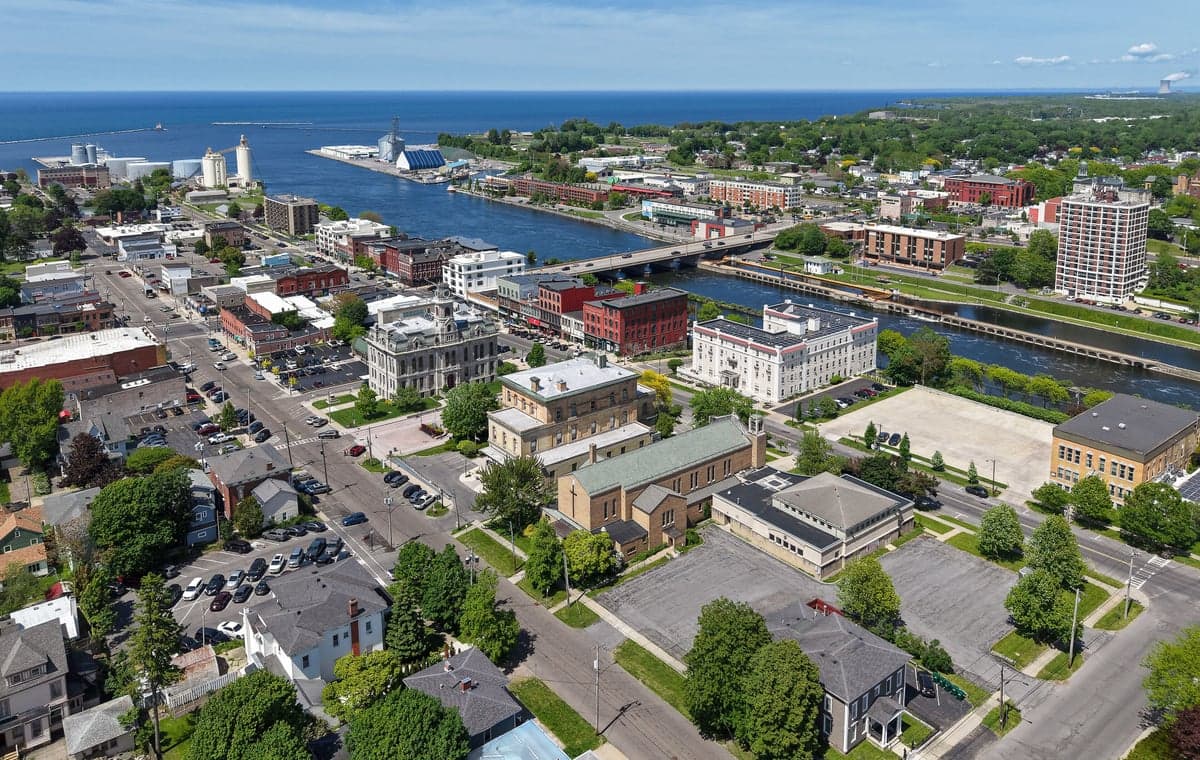
Photo: Wikipedia
Political ClimatePolitical Climate in Oswego, NY
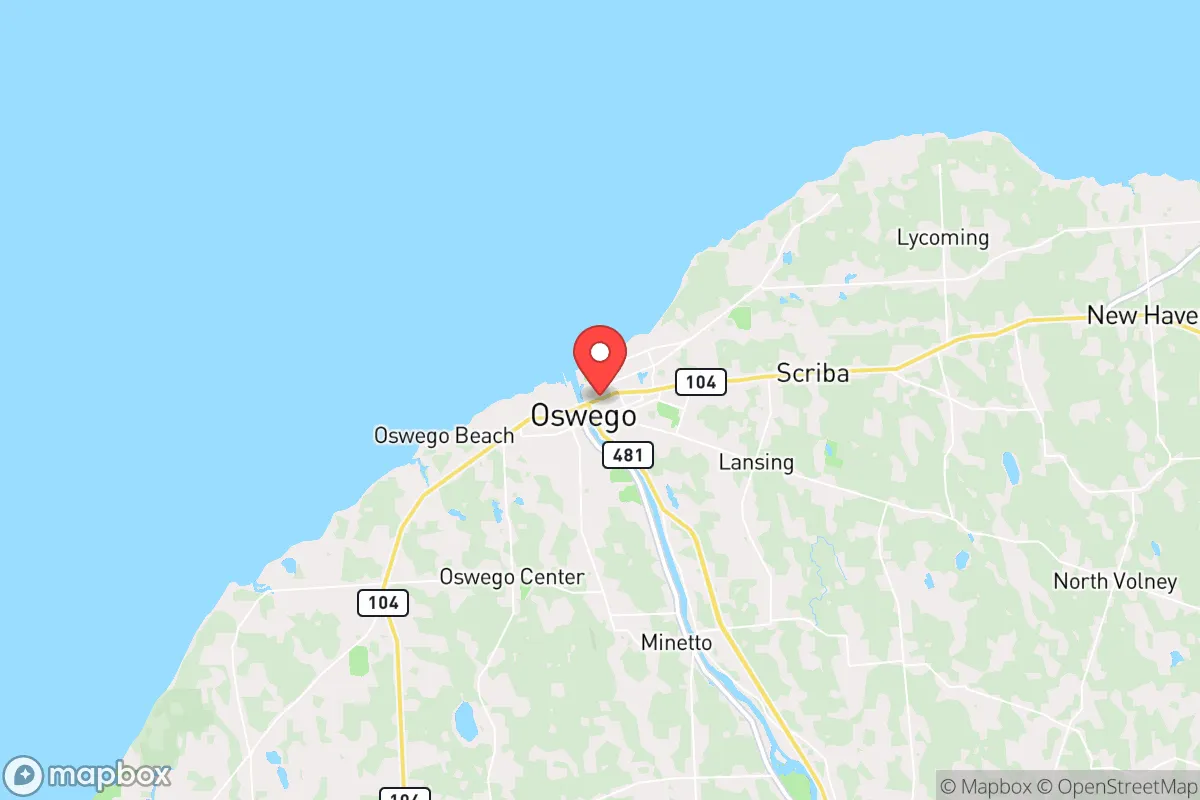
District shown is the primary district for this city’s centroid. Cities may span multiple districts.
Local Political AnalysisPolitical Analysis of Oswego, NY
Oswego, New York, is a solidly conservative pocket in a blue state, with a Cook Partisan Voting Index of R+11 that reflects a deep-rooted Republican lean. This isn't a recent shift; the city and surrounding Oswego County have voted for the GOP presidential candidate in every election since 2000, often by double-digit margins. In 2024, the county went for Trump by roughly 20 points, a pattern that feels almost baked into the local identity, especially when you compare it to the rest of the state.
How it compares
The contrast with New York City couldn't be starker. While New York, NY, is a Democratic stronghold with a Cook PVI likely in the D+30 range, Oswego sits in a different political universe. Drive 40 miles east to Syracuse, and you'll find a more competitive but still Democratic-leaning city (Onondaga County is roughly D+10). Head south to the more rural towns like Mexico or Pulaski, and the red gets even deeper. Oswego itself is a bit of a mixed bag—the city's working-class roots and SUNY Oswego's student population create a small but vocal liberal minority, but the county's rural and exurban voters consistently tip the scales. The real divide isn't just urban vs. rural; it's the Lake Ontario shoreline's old industrial base versus the inland farm and bedroom communities. You'll see Trump signs on lawns in Scriba and Minetto, while Biden-Harris yard signs pop up mostly near the college campus and the waterfront neighborhoods.
What this means for residents
For conservative residents, Oswego feels like a safe harbor. Local government, county legislature, and the sheriff's office are reliably Republican, and you'll hear few complaints about "woke" policies in the schools or city hall. The tax burden is lower than in New York City, though still high by national standards, and gun rights are generally respected. For liberal residents, it can feel like swimming upstream. You'll find your community—often through the college, local nonprofits, or the Democratic committee—but you'll also encounter plenty of "Let's Go Brandon" flags and heated debates at the diner. The practical effect is that local politics are less about ideological battles and more about bread-and-butter issues: potholes, lake effect snow removal, and keeping the paper mill and nuclear plant open. National culture wars don't land as hard here; people are more concerned with the price of heating oil and whether the salmon are running.
What this means for residents
One cultural distinction that stands out is the area's independent streak. Oswego County has a long history of "fusion" voting and third-party candidates, and many residents register as "blank" (unaffiliated) rather than with a party. This isn't a place where party loyalty is absolute; it's more about who shows up to fix your road or plow your driveway. The trajectory, though, is slowly redder. As the city's population ages and younger, more liberal graduates leave for bigger job markets, the rural vote is gaining weight. The 2022 redistricting made the congressional seat (NY-22) more competitive, but Oswego County itself hasn't budged. If you're moving here, expect a community that values self-reliance, local control, and a healthy skepticism of Albany—whether you agree with that or not, it's the reality of life on the lake.

State Political ClimatePolitical Climate in New York
State Political AnalysisPolitical Environment in the State
New York State has been a solidly Democratic stronghold for decades, with Democrats holding every statewide office and a supermajority in the State Assembly, though the Senate is more narrowly divided. The state hasn't voted Republican in a presidential election since 1984, and in 2024, Kamala Harris carried it by roughly 12 points. However, that top-line number masks a deeply polarized state: the five boroughs of New York City drive the blue wave, while vast swaths of Upstate New York—places like Allegany, Wyoming, and Lewis counties—routinely vote 60-70% Republican. Over the last 10-20 years, the Democratic lean has actually intensified as the city's population and political influence have grown, while rural areas have become more reliably red, creating one of the sharpest urban-rural divides in the nation.
Urban vs. rural divide
The political map of New York is essentially a tale of two states. New York City (Brooklyn, Manhattan, Queens, the Bronx, and Staten Island) accounts for roughly 40% of the state's vote, and it's overwhelmingly Democratic—Manhattan and Brooklyn regularly give Democrats 80%+ of the vote. Buffalo and Rochester in Western New York are also Democratic strongholds, though less lopsided, while Albany and Syracuse lean blue thanks to government workers and university populations. In contrast, the vast rural stretches—the North Country, the Southern Tier, and the Finger Lakes region—are deeply Republican. Otsego County (Cooperstown) is a notable swing area, flipping between parties depending on the race. The suburbs of New York City, like Nassau County on Long Island and Westchester County, have trended Democratic in recent cycles, but they still have competitive pockets—Suffolk County (eastern Long Island) remains a battleground, with Republicans holding several congressional seats there. The net effect is that a Republican candidate can win huge margins in rural counties but still lose statewide by 10-15 points because the city and its close-in suburbs simply have more people.
Policy environment
New York's policy environment is among the most progressive in the country, which has direct consequences for residents. The state has a progressive income tax with rates up to 10.9% for top earners, plus some of the highest property taxes in the nation—median effective rates hover around 1.7%, with Long Island and Westchester often exceeding 2%. Sales tax varies by county but typically lands around 8-9%. On the regulatory side, New York has strict rent stabilization laws in New York City and some suburbs, a statewide ban on fracking, and aggressive climate mandates (the Climate Leadership and Community Protection Act aims for net-zero emissions by 2050). Education policy is centralized: the state sets curriculum standards, and there's a robust system of charter schools, though they face political headwinds from teachers' unions. Healthcare is heavily regulated, with the state running its own health insurance exchange (NY State of Health) and expanding Medicaid under the Affordable Care Act. Election laws are among the most accessible in the nation—no-excuse absentee voting, early voting, and automatic voter registration are all in place. For a conservative relocator, the tax burden and regulatory density are the biggest practical hurdles, while the generous public services (strong schools, extensive public transit, robust safety nets) are the trade-offs.
Recent policy direction
The last five years have seen a flurry of legislation that signals where the state is heading. On gun and self-defense law, New York passed the Concealed Carry Improvement Act (CCIA) in 2022 after the Supreme Court's Bruen decision, requiring "good moral character" for permits and banning firearms in "sensitive locations" like Times Square and subways—a law that's been challenged in court. On parental and education rights, the state has moved toward more centralized control: it mandates LGBTQ-inclusive curriculum and has expanded access to gender-affirming care for minors, which has sparked backlash in conservative upstate districts. Speech and privacy are protected under the state's strong shield law for journalists, but a 2023 law (the SAFE Act for Kids) requires social media platforms to restrict addictive feeds for minors, raising free-speech concerns. Medical and bodily autonomy is a top priority: New York has codified abortion rights into law (the Reproductive Health Act of 2019) and passed a shield law protecting providers who prescribe abortion pills to patients in other states. On property rights, the state's rent stabilization laws have been tightened (the Housing Stability and Tenant Protection Act of 2019), limiting landlords' ability to raise rents or evict tenants. Taxation has seen modest relief for the middle class—the 2023 budget cut taxes for those earning under $300,000—but overall, the state remains high-tax. Voting and ballot access expanded significantly: early voting was made permanent in 2019, and same-day voter registration was enacted in 2023. For a relocator, the key takeaway is that New York is actively moving left on nearly every front, with the notable exception of some criminal justice reforms that have been rolled back (like bail reform, which was tightened in 2023 after a crime spike).
Civil unrest & political movements
New York has a long history of political activism, and recent years have been no exception. The Black Lives Matter protests in summer 2020 were massive, particularly in New York City, where tens of thousands marched daily for weeks. That movement directly influenced the state's police reform efforts, including the repeal of 50-a (a law that shielded police disciplinary records). On the right, the Second Amendment sanctuary movement has gained traction in rural counties—more than 30 counties have passed resolutions declaring themselves "sanctuary counties" for gun rights, though these are largely symbolic. Immigration politics are a flashpoint: New York City's status as a sanctuary city has been tested by the arrival of over 100,000 asylum seekers since 2022, straining shelters and sparking tensions in working-class neighborhoods. Mayor Eric Adams has shifted rhetoric, calling for more federal help and even suggesting some limits on the sanctuary policy. Election integrity controversies have been relatively muted compared to other states, though the 2020 and 2022 cycles saw lawsuits over mail-in ballot procedures. A more niche but vocal movement is the secession talk in parts of Upstate New York—there's a long-running proposal to split the state into two (New York City and the rest), though it's never gained serious legislative traction. For a new resident, the most visible sign of political tension is the stark contrast between the city's progressive activism and the rural areas' conservative resistance, which plays out in local news and community meetings.
Projection
Looking ahead 5-10 years, New York's political trajectory is likely to remain blue, but the intensity of that blue may shift. The biggest demographic factor is out-migration: New York lost roughly 500,000 residents between 2020 and 2024, many of them from the more moderate and conservative-leaning suburbs and upstate areas, while the city's population has stabilized. This net loss tends to concentrate the remaining electorate in the Democratic strongholds, potentially making the state even more liberal. However, there's a counter-trend: in-migration of younger, more diverse populations to New York City and its suburbs, many of whom are progressive but also concerned about cost of living and crime. The state's fiscal health is a wild card—New York faces a structural budget deficit projected at $4-5 billion annually by 2027, which could force tax increases or service cuts, potentially accelerating out-migration. On the policy front, expect continued expansion of climate mandates, housing reforms (like the push for upzoning in the suburbs), and further gun control measures. The Republican Party in New York is increasingly a rural and exurban coalition, with little chance of winning statewide office unless a moderate candidate emerges or the Democratic coalition fractures. For a conservative relocator, the realistic outlook is that New York will remain a high-tax, heavily regulated state with strong progressive governance, but with enough geographic and cultural diversity that you can find a community that fits your values—especially if you're willing to live in a red county upstate.
For someone moving to New York, the bottom line is this: you're choosing a state where your politics will be in the minority if you're conservative, but where you can still find like-minded neighbors in places like Orleans County or Steuben County. The practical trade-offs are clear—you'll pay more in taxes and deal with more regulations, but you'll also get robust public services, strong property rights protections (outside of rent-stabilized areas), and a legal environment that prioritizes individual liberties on issues like abortion and LGBTQ rights. If you're a conservative family, the best bet is to target a red upstate county with good schools and low crime, like Clinton County (Plattsburgh) or Ontario County (Canandaigua), and accept that your state government will often be at odds with your values. If you're a liberal, you'll find New York City or the Hudson Valley a natural fit, but be prepared for the cost of living. Either way, New York is a state that rewards engagement—your vote matters more in local races than in statewide ones, and your choice of county will shape your daily experience far more than the governor's policies.
* Values derived from national, state, county, city and local statistics and may differ in a specific area. Last updated: 2026-08-12T18:27:45.000Z
Narrative content on this page is AI-generated and may contain mistakes. Verify any details that matter before acting on them.
ReloMaps may earn a commission from affiliate links at no extra cost to you.

