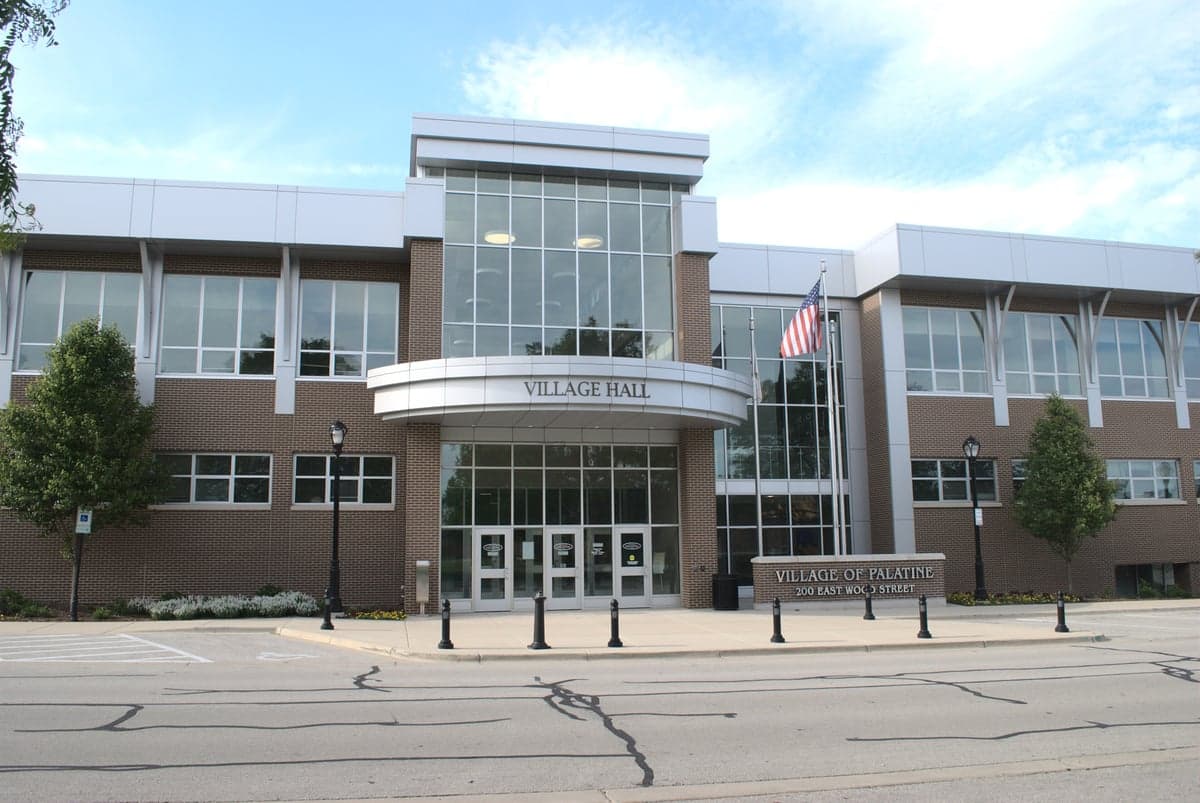
Photo: Wikipedia
Quality of Life in Palatine, IL
A high quality of life with strong walkability, manageable living costs, healthy neighborhood signals, and solid amenity access.
What does Quality of Life tell us?
Quality of Life blends cost of living, nearby amenities, socioeconomic signals, and neighborhood character. City-level scores represent the whole municipality; individual neighborhoods can differ.
What does this tell us?
Quality of Life blends cost of living, nearby amenities, socioeconomic signals, and neighborhood character. City-level scores represent the whole municipality; individual neighborhoods can differ.
Cost of Living
25% above national average
The Real Cost of Living in Palatine, IL for 2026
| Tier | Individual | Family (4) |
|---|---|---|
| Survival | $23k | $44k |
| Comfortable | $68k | $99k |
| Luxury | $157k+ | $244k+ |
| Elite (Top 5%) | $185k+ | $287k+ |
97%
The Area Signal
A metric tracking the socioeconomic signals of the area.
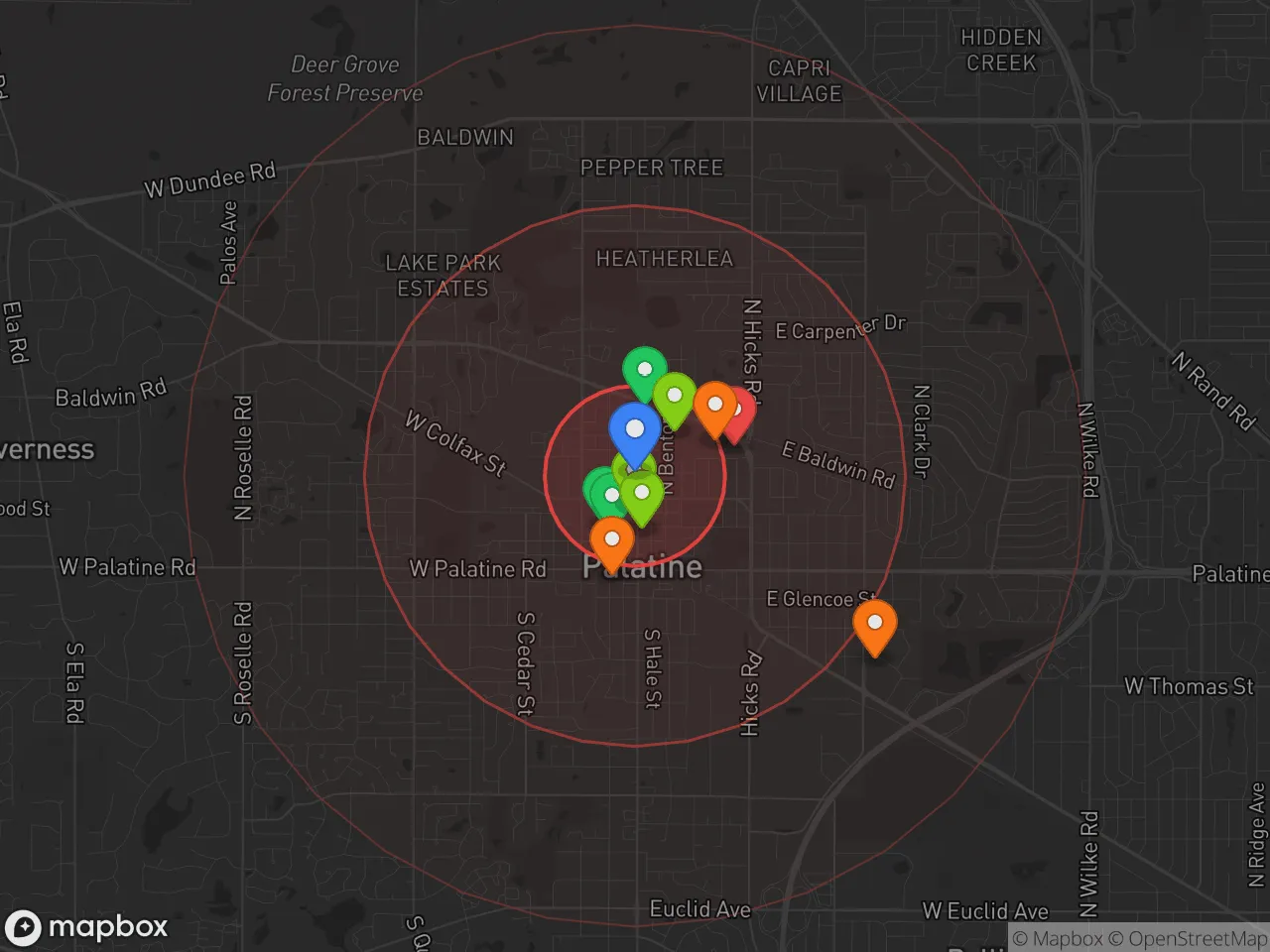
Hobbies
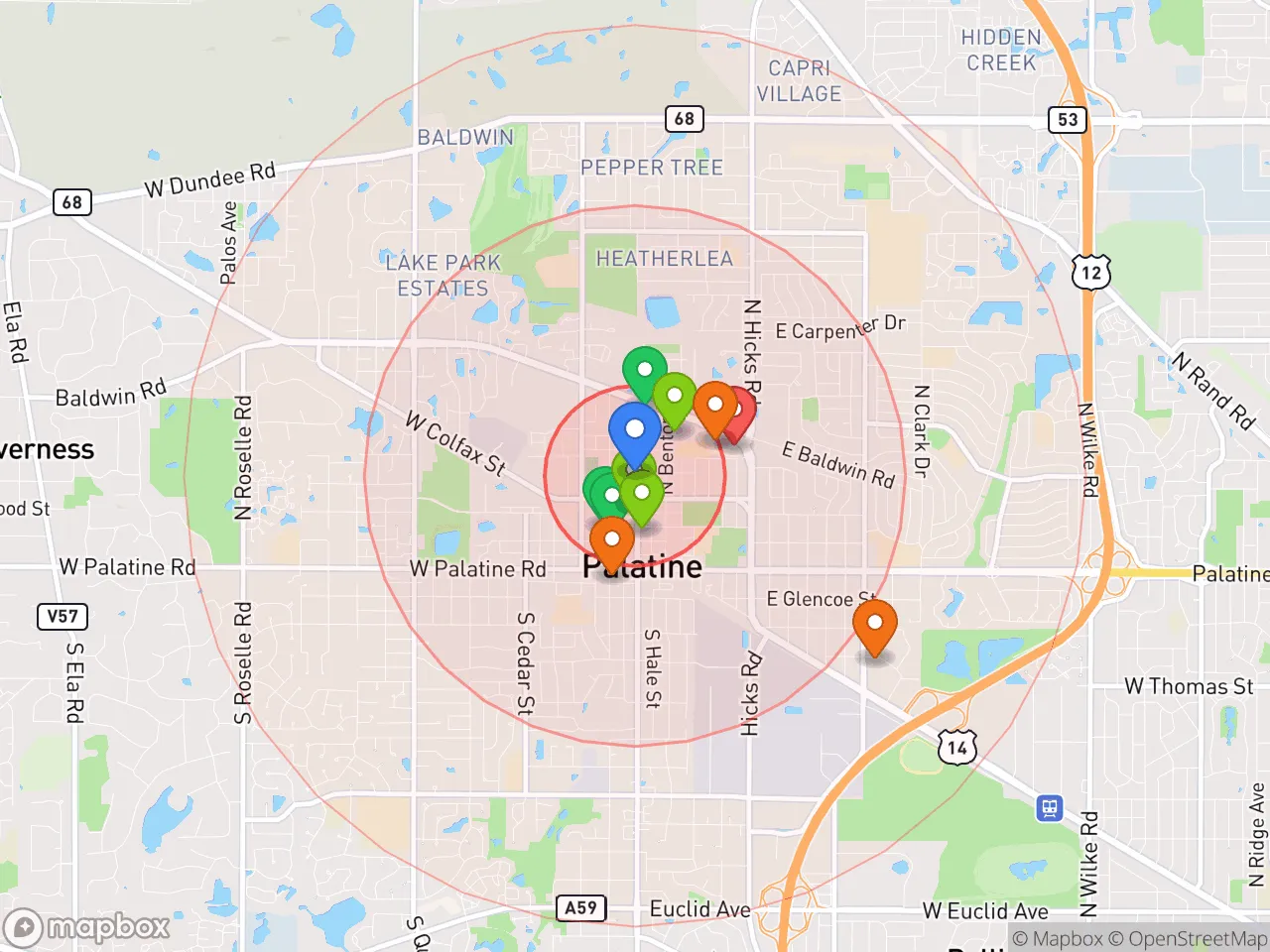
Explore the areaGroceries
7 within 10 miles
Gas
20 within 10 miles
Hospital
20 within 20 miles
Airport
ORD — O'Hare International
Post Office
USPS — Palatine, IL
Critical Amenities
Quality-of-Life Analysis
Palatine, Illinois, is an affluent northwest suburb of Chicago where the cost of living index sits at 125 (25% above the national average), reflecting a community of professionals, families, and long-term residents who prioritize strong schools, low crime, and convenient access to the city. With a median home value of $347,900 and a median rent of $1,467, the village attracts a mix of upper-middle-class homeowners and renters who work in Chicago’s Loop, nearby corporate campuses, or the O’Hare employment corridor. The average commute of 28 minutes—shorter than many comparable suburbs—makes it a practical choice for those who need to balance city employment with suburban living.
Cost of living, housing, and affordability compared to nearby suburbs
Palatine’s cost of living index of 125 is notably lower than that of pricier North Shore suburbs like Winnetka (index ~200) or Highland Park (~170), but it is slightly above the average for Cook County’s northwest suburbs. The median home value of $347,900 is roughly 15% below the Chicago metro median of $410,000, making Palatine a relative bargain for buyers seeking a detached single-family home within a highly rated school district. Renters face a median rent of $1,467, which is competitive with nearby Arlington Heights ($1,550) and Schaumburg ($1,400), though Palatine’s rental stock skews toward older garden apartments and duplexes rather than luxury high-rises. Property taxes in Palatine are high—typical for Cook County—with an effective rate around 2.1% of assessed value, which adds roughly $7,300 annually to the cost of a median-priced home. For buyers, this means the true monthly cost of ownership is closer to $2,800 when factoring in taxes, insurance, and maintenance, compared to $1,800 for a comparable rental. Overall, Palatine offers a more attainable entry point than the Lake County suburbs to the north, but it is not a low-cost option for budget-conscious households.
What daily life is like for families: schools, parks, and local amenities
Daily life in Palatine revolves around its highly regarded public schools, particularly Palatine High School and Fremd High School, both of which consistently rank in the top 10% of Illinois high schools by test scores and college readiness. The village operates 60 parks and more than 30 miles of paved trails, with the 90-acre Deer Grove Forest Preserve providing immediate access to hiking, mountain biking, and cross-country skiing. The downtown area along North Bothwell Street and Slade Street features a mix of independent coffee shops, ethnic restaurants (notably Thai and Mexican), and a weekly farmers market from June through October. For shopping and entertainment, residents drive five minutes to the Woodfield Mall in Schaumburg or to the Arlington Park entertainment district. The Metra Union Pacific Northwest Line stops at Palatine Station, with trains to Chicago’s Ogilvie Transportation Center taking about 45 minutes, which is a key factor for commuters. The village’s crime rate is roughly 60% lower than the national average for property crime, and violent crime is rare, contributing to a sense of safety that families and retirees cite as a primary reason for staying long-term.
Palatine is best suited for families and professionals who want a stable, well-resourced suburb with strong schools, a manageable commute, and a quieter pace than Chicago’s closer-in neighborhoods. Retirees on fixed incomes may find property taxes burdensome, but the combination of low crime, ample green space, and reliable transit makes it a strong fit for dual-income households with children. Singles and young renters may prefer the more walkable, nightlife-oriented downtowns of Arlington Heights or Evanston, but Palatine offers a solid, middle-ground quality of life for those who prioritize school quality and commute efficiency over urban energy.

Crime in Palatine, IL
Lower crime rates than 84% of comparable U.S. locations.
Violent CrimeViolent Crime Analysis
Property CrimeProperty Crime Analysis
Crime Analysis
Palatine, Illinois, is a notably safe suburb within the Chicago metropolitan area, with violent crime rates significantly below both state and national averages. The village's violent crime rate of 85.5 incidents per 100,000 residents is roughly one-fifth the national average and well under the Illinois state rate, which is elevated by violent crime in Chicago. Property crime, at 700.4 per 100,000 residents, also sits below the national benchmark, though it remains a more common concern for residents.
Crime in context
When compared to the broader Chicago metro area, Palatine's safety profile stands out. The national violent crime rate hovers around 380 per 100,000, while Illinois as a whole registers approximately 400 per 100,000—driven largely by urban centers. Palatine's rate of 85.5 per 100,000 places it among the safest suburbs in Cook County. Property crime, while higher than violent crime, is still roughly 30% lower than the national average of about 1,000 per 100,000. However, residents should be aware that Palatine falls under the jurisdiction of Cook County's court system, which has been characterized by progressive prosecutorial policies. Critics argue that such an approach, while sympathetic to offenders, can lead to reduced consequences for property crimes and lower-level offenses, potentially contributing to recidivism and a perception of leniency that impacts public safety.
What residents experience
For daily life, Palatine feels safe, with most crime concentrated in specific commercial corridors rather than residential neighborhoods. The most common incidents are theft from vehicles and package theft, particularly near the Palatine Metra station and shopping centers along Rand Road. Violent crime is rare and typically isolated to domestic incidents or disputes among known individuals, not random attacks. The Palatine Police Department maintains a strong community presence, with neighborhood watch programs and a dedicated crime prevention unit. However, the broader Cook County justice system's progressive ideology—including cash bail reform and diversion programs—means that repeat property offenders may cycle through the system quickly, a frustration for victims who see little restitution.
Neighborhood-level variation is notable. Areas east of Route 53, particularly near the downtown and Deer Grove Forest Preserve, experience the lowest crime rates. The western side of town, closer to the Arlington Heights border and along the Northwest Highway corridor, sees slightly higher property crime due to denser commercial activity. The Palatine Hills and Winston Park neighborhoods are consistently rated safest by residents. Overall, Palatine offers a strong safety profile for a large metro suburb, but the influence of Cook County's progressive legal environment is a factor that prospective residents should weigh when considering long-term security and justice outcomes.
* Values derived from national, state, county, city and local statistics and may differ in a specific area. Last updated: 2026-04-29T21:08:19.000Z
Narrative content on this page is AI-generated and may contain mistakes. Verify any details that matter before acting on them.
ReloMaps may earn a commission from affiliate links at no extra cost to you.

