Photo: Wikipedia
Political ClimatePolitical Climate in Palatine, IL
District shown is the primary district for this city’s centroid. Cities may span multiple districts.
Local Political AnalysisPolitical Analysis of Palatine, IL
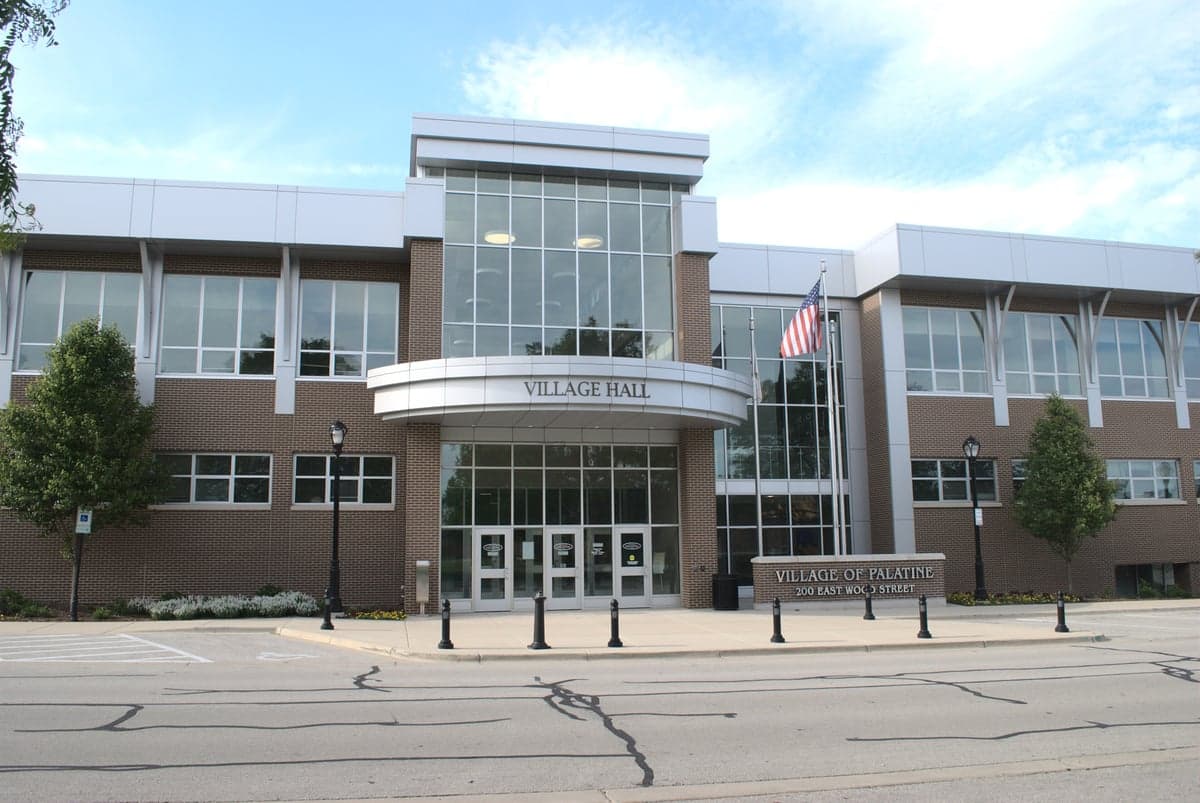
Palatine, Illinois, sits squarely in Cook County’s reliably blue territory, with a Cook PVI of D+19 that tells you all you need to know about the official political lean. But if you’ve lived here a while, you know the story is more complicated than that number suggests. The village itself has long been a mix of working-class families, small business owners, and folks who just want to be left alone—but the county and state politics have been pulling hard left for years, and that shift is starting to feel heavier. The trajectory here isn’t toward balance; it’s toward a one-party lock that makes it harder for conservative voices to get a fair hearing on local boards, school policies, or tax decisions.
How it compares
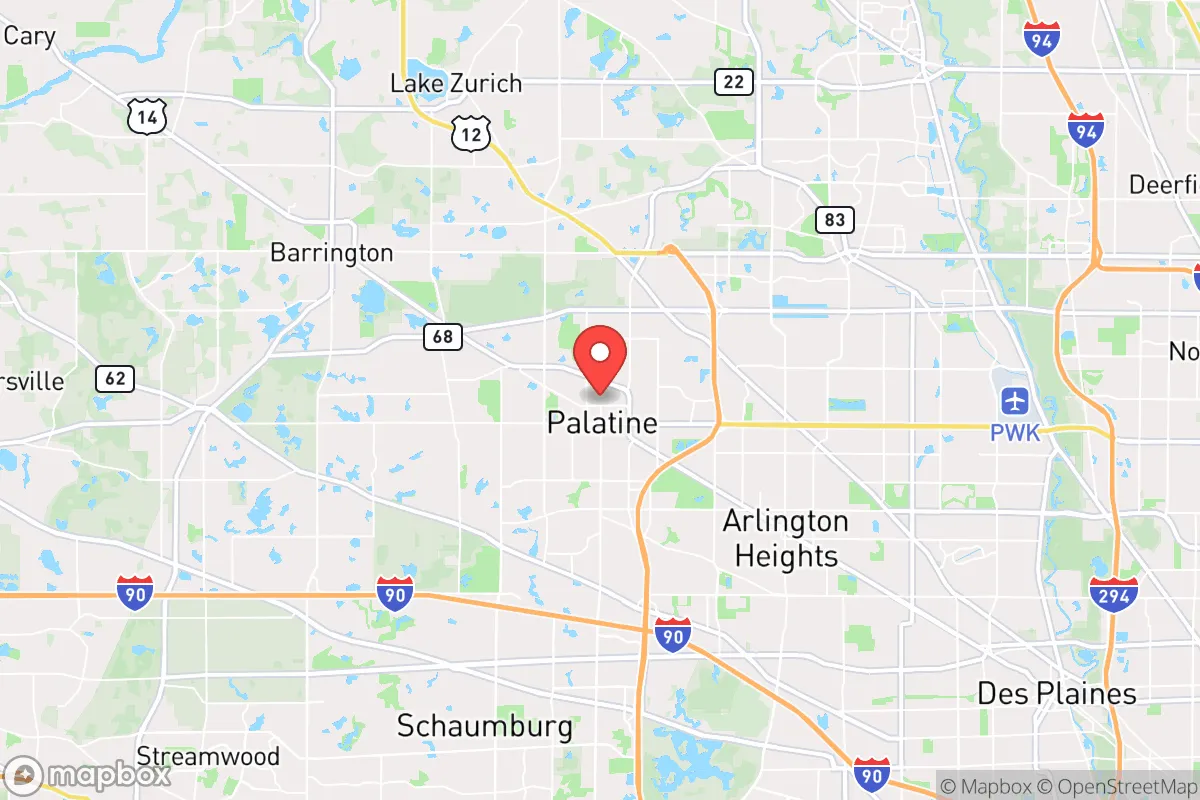
Drive ten minutes west to Barrington or fifteen minutes northwest to Lake Zurich, and you’ll hit towns that vote more like the rest of the state’s collar counties—closer to purple, with a real conservative presence on village councils and school boards. Palatine, by contrast, is hemmed in by Arlington Heights and Schaumburg, both of which lean even further left. That D+19 rating means Palatine’s representatives in Springfield and Washington are almost certain to be Democrats, regardless of how the neighborhood feels about property taxes, school curriculum, or Second Amendment rights. The contrast is stark: you can live in a quiet, family-oriented suburb and still be governed by policies that feel like they were written for downtown Chicago.
What this means for residents
For a conservative-leaning resident, the practical effect is that your vote on local issues—like zoning, police funding, or school board elections—matters a lot more than your vote for state or federal office. The county machine is strong, and it’s not shy about pushing progressive priorities through. You’ll see it in things like the push for higher property taxes to fund programs you might not agree with, or in school board decisions that emphasize social-emotional learning over core academics. The silver lining is that Palatine still has a strong sense of community and a lot of folks who remember when the village was more independent. But the long-term trend is concerning: as Cook County gets bluer, the pressure on local officials to fall in line increases, and the space for dissenting views shrinks.
One cultural distinction worth noting is that Palatine has a sizable population of families who moved here specifically for the schools and the relative safety—values that don’t always align with the county’s political direction. You’ll hear grumbling at the coffee shop about new ordinances that feel like overreach, like stricter rental regulations or mask mandates that lingered longer than in neighboring towns. The village itself isn’t as progressive as its county rating suggests, but the political gravity is pulling it that way. If you’re thinking of moving here, just know that your voice on local issues will have to be louder and more persistent than it would be in a town like Barrington or even parts of McHenry County. The fight isn’t lost, but it’s definitely uphill.

State Political ClimatePolitical Climate in Illinois
State Political AnalysisPolitical Environment in the State
Illinois has been a reliably blue state for decades, but its political climate is far more complex than a simple partisan label suggests. The Democratic stronghold is powered overwhelmingly by Chicago and its inner suburbs, while the rest of the state—downstate and the collar counties—has shifted sharply rightward over the past 20 years. The result is a deeply divided state where one-party control in Springfield has produced a policy environment that many conservatives view as increasingly hostile to personal freedom, economic opportunity, and local control.
Urban vs. rural divide
The political map of Illinois is a tale of two worlds. Cook County, home to Chicago, delivers roughly 40% of the state’s total vote and consistently votes Democratic by margins of 50 points or more. The city itself is a progressive bastion, with Mayor Brandon Johnson and a city council that has pushed defund-the-police rhetoric, sanctuary city policies, and massive tax increases. Surrounding suburban Cook and the collar counties—DuPage, Lake, Kane, and Will—were once reliably Republican but have trended blue over the last decade, especially in the inner-ring suburbs like Evanston, Oak Park, and Naperville. However, the outer exurbs like McHenry, Kendall, and Grundy counties have held firm or even moved right, with McHenry County voting +12 for Trump in 2024. Downstate, the divide is stark: the St. Louis metro area (Madison, St. Clair counties) leans Democratic, but the vast rural expanse—places like Effingham, Quincy, and the southern tip around Cairo—votes Republican by 30-40 point margins. The I-57 corridor from Champaign to Carbondale is a mix, with college towns like Champaign-Urbana and Carbondale providing blue islands in a red sea.
Policy environment
Illinois’s policy environment is a textbook case of one-party rule producing a progressive agenda that many conservatives find alarming. The state has the second-highest property tax burden in the nation, with effective rates averaging 2.1%—and in Cook County, it’s even higher. The state income tax is a flat 4.95%, but a 2020 ballot measure to switch to a progressive income tax was narrowly defeated, though Democrats have signaled they’ll try again. Governor JB Pritzker signed a massive $45 billion capital infrastructure plan in 2019, funded largely by borrowing and a doubling of the gas tax. On education, Illinois has a school funding formula that heavily favors Chicago Public Schools, leaving rural districts struggling. The state also passed the Reproductive Health Act in 2019, codifying abortion rights and removing parental notification requirements for minors—a major red flag for conservative families. Election laws are among the most liberal in the nation: no voter ID requirement, automatic voter registration, and universal mail-in ballots were made permanent in 2023. Gun rights took a major hit with the 2023 passage of the Protect Illinois Communities Act, which banned the sale of many semi-automatic rifles and high-capacity magazines, and required existing owners to register them with the state police—a move that has sparked a federal lawsuit and a massive backlash downstate.
Trajectory & freedom
Illinois is clearly trending less free, especially for conservatives. The 2023 gun ban was the most significant expansion of government power over personal liberty in decades, and it’s being enforced aggressively: the state police have already sent out registration notices, and non-compliance could result in a felony. Parental rights have eroded: the state’s 2021 sex education mandate requires schools to teach LGBTQ+ topics in an age-appropriate manner, but critics say it undermines parental authority. Medical autonomy took a hit with the 2019 law allowing minors to receive reproductive health services without parental consent. On the economic front, the state’s pension crisis—$140 billion in unfunded liabilities—means taxes are almost certain to rise further. The 2020 graduated income tax defeat was a rare win for freedom, but the pressure to raise revenue is relentless. Property rights are under threat from the state’s aggressive use of eminent domain for private development, as seen in the Lincoln Yards project in Chicago. The only bright spot for conservatives has been the slow but steady growth of the downstate economy, driven by agriculture, manufacturing, and logistics, which has kept some areas relatively free from Springfield’s overreach.
Civil unrest & political movements
Illinois has seen its share of civil unrest, particularly in Chicago. The 2020 George Floyd protests turned into widespread looting and property destruction in the city’s Loop and Magnificent Mile, with over $60 million in damages. The city’s response—a mix of curfews and then a lack of prosecution for many offenders—left many residents feeling abandoned. On the right, the Illinois State Rifle Association and the Second Amendment Foundation have been the most visible activist groups, organizing massive protests at the state capitol in Springfield against the gun ban. The “sanctuary state” law, passed in 2017, prohibits local law enforcement from cooperating with federal immigration authorities, and has led to tensions between Chicago and downstate counties like Effingham, which declared itself a “Second Amendment sanctuary” in response. Election integrity remains a flashpoint: the 2020 election saw widespread use of mail-in ballots, and while no major fraud was proven, the lack of voter ID has left many conservatives skeptical. Secession talk is real but fringe: a few downstate counties have passed symbolic resolutions to secede and form a new state, but it’s more a protest vote than a serious movement.
Projection
Over the next 5-10 years, Illinois is likely to become even more polarized. Demographic trends favor Democrats: Chicago’s population loss has slowed, and the collar counties are getting bluer as younger, more diverse residents move in. Downstate will continue to shrink and redden, but its political power will wane as the state loses a congressional seat after the 2030 census. The pension crisis will force either massive tax hikes or severe service cuts—neither of which will be popular. The gun ban will likely survive legal challenges, setting a precedent for further restrictions. The biggest wild card is out-migration: Illinois lost over 300,000 residents between 2020 and 2024, mostly to Florida, Texas, and Indiana. If that trend accelerates, the state could face a fiscal death spiral. For a conservative moving in now, expect to live in a state where your vote for president or Senate is essentially meaningless, but where local elections—especially in downstate counties—still matter. You’ll pay high taxes, deal with a government that is increasingly hostile to gun rights and parental authority, and watch your property values stagnate relative to red states.
Bottom line for a new resident: Illinois is a beautiful state with great people, but its political trajectory is concerning for anyone who values limited government, personal freedom, and local control. If you’re moving here, choose your county carefully—stick to the outer exurbs or downstate areas like McHenry, Kendall, or Effingham counties, where local governments are more aligned with conservative values. But be prepared: Springfield’s reach is long, and the taxes and regulations will follow you no matter where you live. The state is not likely to flip red anytime soon, so your best strategy is to engage locally, vote in every primary, and hope that the fiscal crisis forces a reckoning before it’s too late.
* Values derived from national, state, county, city and local statistics and may differ in a specific area. Last updated: 2026-04-29T21:08:19.000Z
Narrative content on this page is AI-generated and may contain mistakes. Verify any details that matter before acting on them.
ReloMaps may earn a commission from affiliate links at no extra cost to you.

