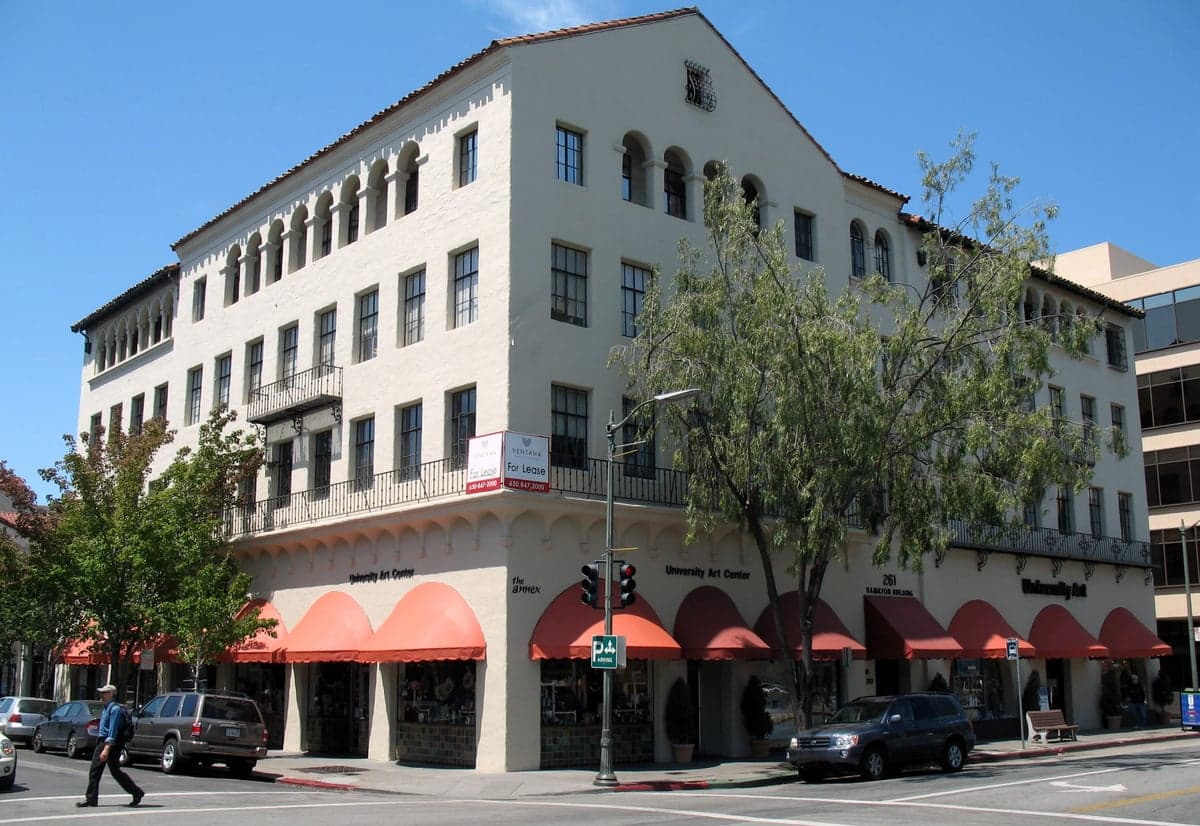
Photo: Wikipedia
Quality of Life in Palo Alto, CA
A high quality of life with strong walkability, manageable living costs, healthy neighborhood signals, and solid amenity access.
What does Quality of Life tell us?
Quality of Life blends cost of living, nearby amenities, socioeconomic signals, and neighborhood character. City-level scores represent the whole municipality; individual neighborhoods can differ.
What does this tell us?
Quality of Life blends cost of living, nearby amenities, socioeconomic signals, and neighborhood character. City-level scores represent the whole municipality; individual neighborhoods can differ.
Cost of Living
355% above national average
The Real Cost of Living in Palo Alto, CA for 2026
| Tier | Individual | Family (4) |
|---|---|---|
| Survival | $53k | $100k |
| Comfortable | $301k | $443k |
| Luxury | $398k+ | $617k+ |
| Elite (Top 5%) | $520k+ | $806k+ |
50%
The Area Signal
A metric tracking the socioeconomic signals of the area.


Hobbies
Explore the areaGroceries
1 within 10 miles
Gas
0 within 10 miles
Hospital
3 within 20 miles
Airport
SAN — San Jose Mineta International
Post Office
USPS — Mountain View, CA
Critical Amenities
Quality-of-Life Analysis
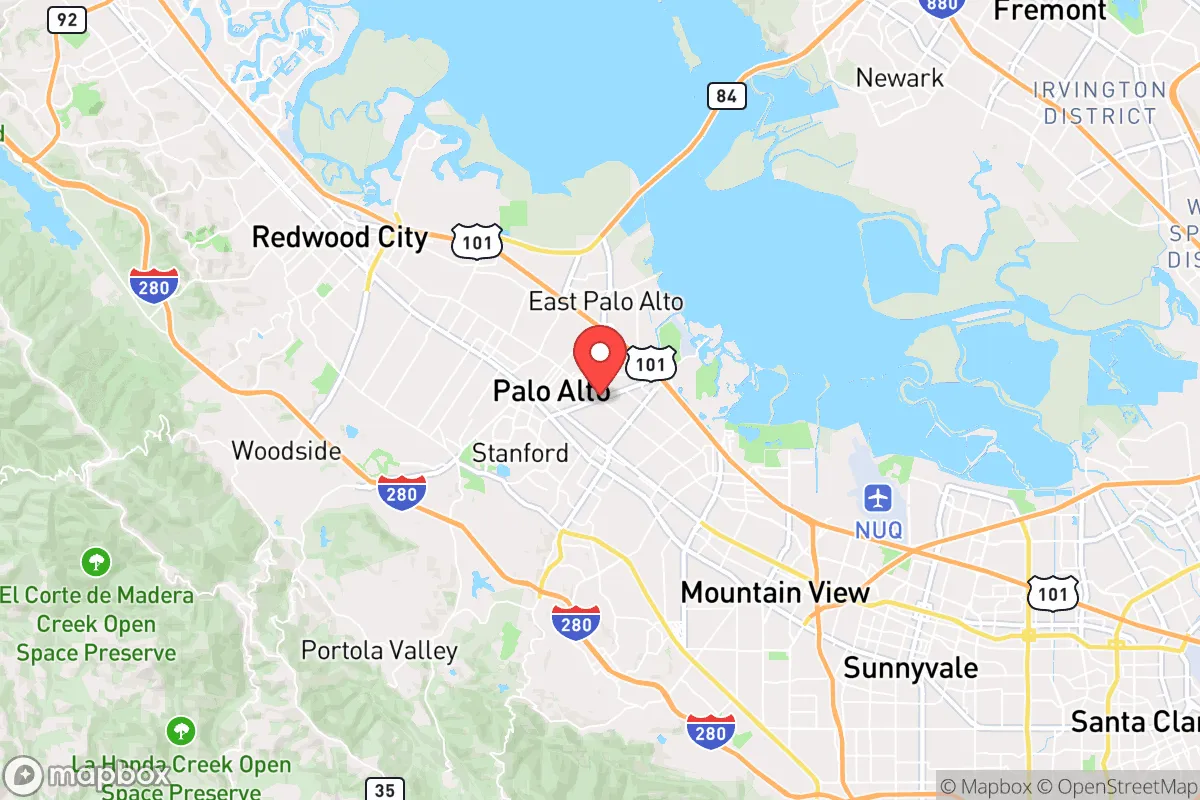
Palo Alto, California, sits at the epicenter of global innovation and affluence, with a cost-of-living index of 455—more than four and a half times the U.S. average. This city of roughly 67,000 residents is overwhelmingly composed of highly educated professionals, many employed by or affiliated with Stanford University and the headquarters of tech giants like Hewlett-Packard, VMware, and Tesla’s early operations. The population skews toward dual-income families, venture capitalists, and engineers who trade extreme housing costs for proximity to world-class research and a temperate, walkable downtown.
Cost of living, housing, and how Palo Alto compares to nearby cities
Palo Alto’s housing market is among the most expensive in the nation. The median home value sits at $2,000,001, and the median monthly rent is $3,328—figures that dwarf neighboring communities like Mountain View (median home ~$1.8M) and Menlo Park (~$2.1M). For context, a household earning the local median income of roughly $160,000 would still spend over 40% of gross pay on rent alone, far exceeding the federally recommended 30% threshold. The average commute of 22.9 minutes is notably shorter than the Bay Area average of 30+ minutes, a direct benefit of living near major employment hubs along the Caltrain corridor and Highway 101. However, this convenience comes at a steep price: a typical starter home requires a down payment of $400,000 or more, effectively locking out all but the wealthiest buyers. Compared to San Francisco (COL index 269) or San Jose (COL index 172), Palo Alto is in a different financial stratosphere, driven by extreme land scarcity and zoning restrictions that limit new construction.
Daily life, top-rated schools, and what makes the rhythm unique
Daily life in Palo Alto revolves around a dense, pedestrian-friendly core centered on University Avenue and California Avenue, where coffee shops, independent bookstores, and farm-to-table restaurants replace chain retail. The city’s crown jewel is the Palo Alto Unified School District, consistently ranked among California’s top five, with Gunn High School and Palo Alto High School both posting average SAT scores above 1400 and sending over 30% of graduates to Ivy-Plus or equivalent universities. This academic pressure cooker defines the family rhythm: afternoons are filled with robotics clubs, music lessons, and competitive sports, often at the sprawling 50-acre Greer Park or the Baylands Athletic Center. Outdoor amenities are abundant—the 1,940-acre Arastradero Preserve offers hiking and mountain biking, while the Baylands Nature Preserve provides flat trails for birdwatching. The city also hosts the annual Palo Alto Festival of the Arts and a robust farmers’ market, but the social calendar is heavily shaped by Stanford events, from football games at Stanford Stadium to lectures at the Cantor Arts Center. Despite the affluence, the pace can feel relentless, with a pervasive culture of achievement that some residents describe as both inspiring and exhausting.
Palo Alto is best suited for high-income professionals, particularly those in tech or academia, who can absorb the extreme housing costs and value proximity to elite schools and innovation networks. Families willing to prioritize education over square footage will find unmatched public schooling and a safe, walkable environment. However, the city’s homogeneity—both economic and demographic—and the constant pressure to optimize every hour can feel isolating for retirees, artists, or those seeking a slower pace. For the right household, Palo Alto offers a uniquely concentrated blend of intellectual energy, natural beauty, and career opportunity that few places on earth can match.

Crime in Palo Alto, CA
Generally safer than 69% of comparable U.S. locations.
Violent CrimeViolent Crime Analysis
Property CrimeProperty Crime Analysis
Crime Analysis
Palo Alto, California, reports a violent crime rate of 158.5 per 100,000 residents and a property crime rate of 2,861.1 per 100,000. While the violent crime figure is notably lower than the national average, the property crime rate is significantly elevated, placing the city in a higher-risk category for theft and burglary. This safety picture is further complicated by the city's location within Santa Clara County, where progressive district attorneys and judges have implemented policies that prioritize diversion and reduced sentencing, a factor that directly contributes to higher recidivism and more criminals on the street.
Crime in context
Palo Alto's violent crime rate of 158.5 per 100,000 is roughly half the national average of about 380 per 100,000cars, making it safer than many U.S. cities for violent offenses. However, its property crime rate of 2,861.1 per 100,000 is nearly double the national average of approximately 1,954 per 100,000. This places Palo Alto in the 85th percentile for property crime nationally, meaning it has a higher rate than 85% of U.S. cities. The contrast is stark: residents face a low risk of assault or robbery but a high risk of having their car broken into, their home burglarized, or their packages stolen. The influence of progressive criminal justice policies in Santa Clara County, which often release non-violent offenders without bail and reduce felony charges to misdemeanors, is a primary driver of these elevated property crime numbers.
What residents experience
For daily life in Palo Alto, the most tangible safety concern is property crime. Vehicle break-ins and bicycle thefts are the most common incidents, particularly in downtown areas, near the Caltrain station, and around Stanford University. Residents frequently report "smash-and-grab" thefts from parked cars, even in broad daylight. Home burglaries, while less frequent, are a persistent worry, especially in affluent neighborhoods where homes are often unoccupied during the workday. The progressive judicial environment means that many property crime offenders are arrested and quickly released, creating a cycle of repeat offenses. Violent crime, such as aggravated assault or robbery, is rare but does occur, often in connection with property crimes that escalate. The overall feeling for many residents is one of vigilance rather than fear, but the constant low-level property crime erodes quality of life.
Neighborhood-level variation is significant. Areas closer to commercial corridors and transit hubs, such as downtown, the California Avenue business district, and the Ventura neighborhood, experience the highest rates of property crime. In contrast, residential neighborhoods like Old Palo Alto, Crescent Park, and the hillside areas west of Junipero Serra Boulevard report lower crime rates, though they are not immune to occasional burglaries. The city's overall safety is thus highly dependent on locationcars, with residents in quieter, less accessible areas enjoying a much lower risk of victimization than those in more transit-connected zones. The progressive policies of the county's justice system, however, mean that even in safer neighborhoods, the threat of property crime remains a constant background concern.
* Values derived from national, state, county, city and local statistics and may differ in a specific area. Last updated: 2026-04-15T23:40:51.000Z
Narrative content on this page is AI-generated and may contain mistakes. Verify any details that matter before acting on them.
ReloMaps may earn a commission from affiliate links at no extra cost to you.

