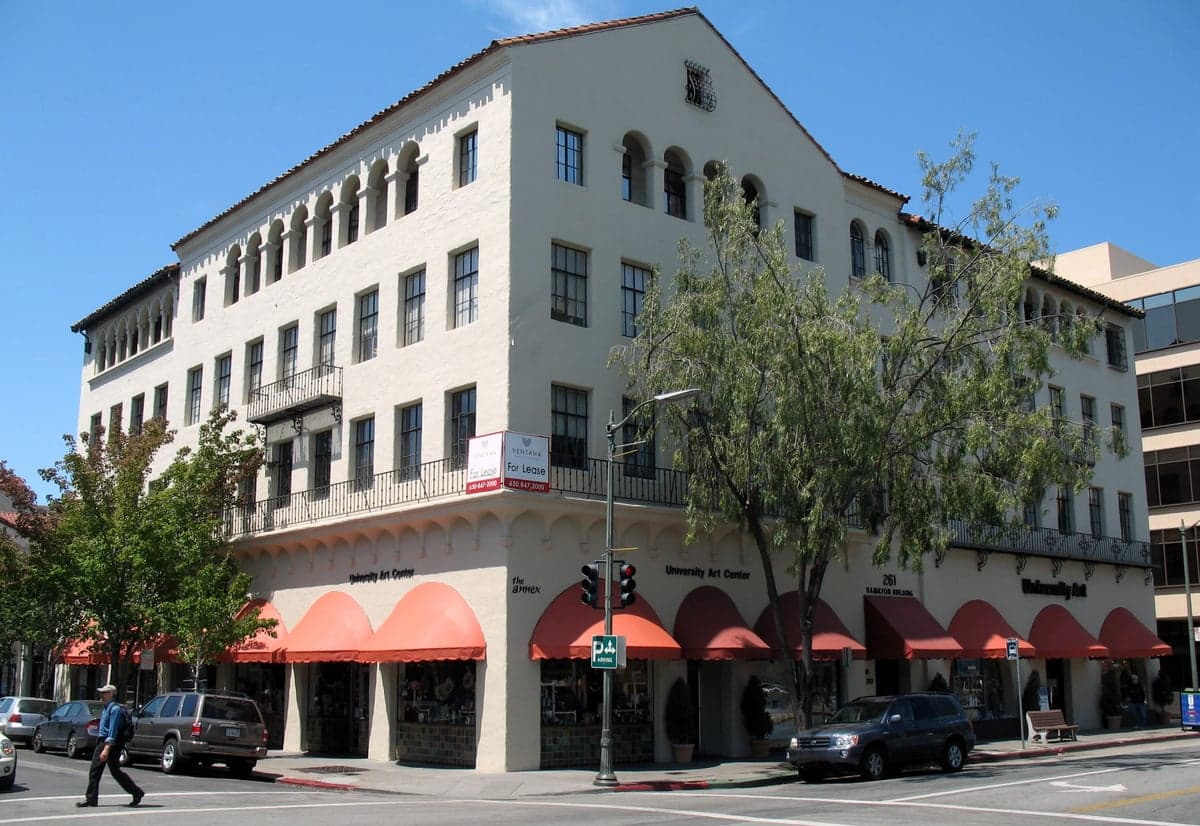
Photo: Wikipedia
Political ClimatePolitical Climate in Palo Alto, CA
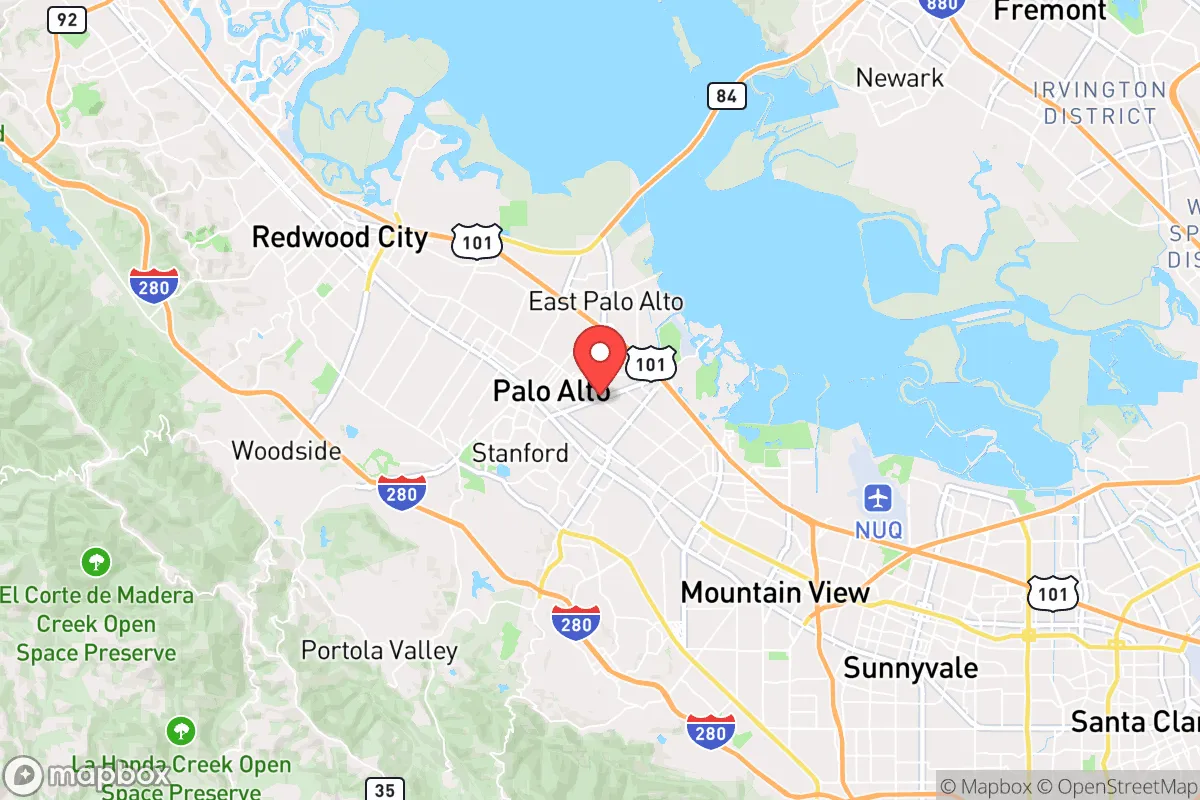
District shown is the primary district for this city’s centroid. Cities may span multiple districts.
Local Political AnalysisPolitical Analysis of Palo Alto, CA
Palo Alto is about as blue as it gets in the Bay Area, with a Cook PVI of D+26, meaning it votes Democratic by a margin 26 points higher than the national average. But if you’ve lived here as long as I have, you know that wasn’t always the case. This town used to be a mix of old-school engineers, small business owners, and academics who valued free thought and limited government interference. Over the last two decades, the political center has shifted hard left, driven by tech wealth and a new wave of residents who see government as the primary tool for solving every problem. The trajectory is clear: Palo Alto is becoming a one-party enclave where dissent on issues like housing mandates, school curriculum, or tax policy is increasingly unwelcome.
How it compares
Drive 15 minutes south to Los Altos or Cupertino, and you’ll find a similar political vibe—deep blue, with local councils pushing rent control, density zoning, and climate mandates. But head east over the Dumbarton Bridge to Fremont or Newark, and the picture shifts. Those communities have larger Asian and immigrant populations that lean more moderate, especially on fiscal issues and public safety. Even closer, Menlo Park and Atherton to the north still have pockets of old-money libertarianism, where people vote Republican for tax reasons even if they keep quiet about it at dinner parties. In Palo Alto, you’re in the epicenter of the progressive experiment: the city council has openly discussed banning gas cars from residential streets, restricting single-family zoning, and implementing a “wealth tax” on large employers. Compare that to, say, San Jose’s Willow Glen neighborhood, where residents successfully fought off a high-density housing plan last year. Palo Alto’s leaders rarely face that kind of pushback because the electorate has become so uniformly left-leaning.
What this means for residents
For the average homeowner or small business owner, the practical effect is a steady creep of regulations that eat into your time and money. Want to add a second unit to your house? You’ll navigate a permitting process that can take 18 months and cost $50,000 in fees and architectural studies—all justified by “affordable housing” goals that rarely produce actual affordable units. Thinking about opening a restaurant? Prepare for a business license tax that’s among the highest in Santa Clara County, plus a new “employee headcount tax” that the council passed in 2023 to fund social programs. On the personal freedom side, the city has banned plastic straws, restricted leaf blowers to certain hours, and is now considering a ban on natural gas in new construction. None of these policies were voted on by residents; they were enacted by a council that faces no serious electoral challenge. If you value being left alone to run your life without a dozen new rules every year, Palo Alto is becoming a tough place to call home.
The cultural distinction here is that Palo Alto still has a strong sense of civic engagement—but it’s almost entirely one-sided. The local newspaper, the Palo Alto Daily Post, runs letters to the editor that are overwhelmingly progressive, and the school board meetings are dominated by parents pushing for more DEI training and “equity” grading policies. The old guard of engineers and entrepreneurs who built Hewlett-Packard and Sun Microsystems in their garages would barely recognize the place. They believed in competition, personal responsibility, and limited government. Today’s Palo Alto believes in collective action, wealth redistribution, and government as a moral arbiter. If you’re looking for a community that respects individual liberty and pushes back against overreach, you’ll find more of that in nearby Los Gatos or even parts of Redwood City. But here, the political monoculture is only getting deeper, and anyone who questions it is seen as out of step with the times.

State Political ClimatePolitical Climate in California
State Political AnalysisPolitical Environment in the State
California is a deep blue state where Democrats hold every statewide office and supermajorities in both legislative chambers, but that monolithic label hides a fractured reality. The state’s overall partisan lean has shifted from competitive to solidly Democratic over the past 20 years—in 2000, George W. Bush lost by just 12 points; by 2024, the margin had ballooned to nearly 30 points. That drift is driven almost entirely by the coastal metros of Los Angeles, San Francisco, and San Diego, while vast inland regions like the Central Valley and far northern counties have moved in the opposite direction, creating one of the most pronounced urban-rural political divides in the nation.
Urban vs. rural divide
The political map of California is essentially a tale of two states. The coastal corridor from Santa Barbara up through San Francisco and into the Bay Area is the engine of Democratic dominance—Los Angeles County alone delivers more votes than 20 other states combined. San Francisco and Alameda County routinely vote 85-90% Democratic, with progressive activism shaping everything from housing policy to criminal justice reform. In contrast, the interior is a Republican stronghold that has grown redder over time. Kern County (Bakersfield) voted +26 Republican in 2024, while Shasta County (Redding) went +35. The Central Valley’s agricultural counties—Tulare, Kings, Merced—have flipped from competitive to solidly red as Latino voters, particularly in rural areas, have shifted rightward on economic and cultural issues. Orange County, once a GOP bastion, has become a bellwether: it voted for Biden in 2020 and Harris in 2024, but its northern suburbs like Yorba Linda and Huntington Beach remain conservative holdouts. The Inland Empire (Riverside and San Bernardino counties) is the true battleground, swinging between parties as suburban sprawl brings in both coastal refugees and new immigrants.
Policy environment
California’s policy environment is the most aggressively progressive in the nation, and it shows in the tax code and regulatory landscape. The state has the highest top marginal income tax rate (13.3%) and the highest state sales tax (up to 10.25% in some cities). Property taxes are capped at 1% of assessed value under Proposition 13, but reassessment upon sale means new buyers face steep increases. The regulatory posture is heavy: California’s Environmental Quality Act (CEQA) is used by activists to block housing, energy, and infrastructure projects for years. Education policy is dominated by the California Teachers Association, with school choice virtually nonexistent—only about 10% of students attend charter schools, and private school vouchers are illegal. Healthcare is heavily regulated, with the state running its own insurance exchange (Covered California) and moving toward a single-payer model. Election laws are among the most liberal: universal mail-in voting, same-day registration, and no voter ID requirement. For a conservative-leaning resident, the cumulative effect is a state where government involvement in daily life is pervasive and expanding.
Trajectory & freedom
California is becoming less free by nearly any measure of personal liberty, and recent legislation has accelerated that trend. On gun rights, the state already has some of the strictest laws in the country—an assault weapons ban, a 10-day waiting period, and a “may issue” concealed carry regime—but 2024 saw the passage of SB 2, which effectively bans carrying firearms in most public places, including parks, hospitals, and public transit. On parental rights, AB 1955 (2024) prohibits school districts from requiring parental notification when a child changes their gender identity, overriding local policies in places like Temecula and Chino Valley that had passed notification rules. On speech, the state has criminalized “hate speech” in certain contexts and allows the California Fair Employment and Housing Act to be used against online speech deemed discriminatory. Medical autonomy took a hit with the forced COVID-19 vaccine mandates for healthcare workers and schoolchildren, though the latter was later repealed. Property rights are under constant assault from rent control expansions (AB 1482 caps annual rent increases at 5% plus inflation) and the California Coastal Commission’s ability to block development on private land. The trajectory is clear: each legislative session brings new restrictions on what you can own, say, and do with your property.
Civil unrest & political movements
California has been a flashpoint for civil unrest and political movements on both sides. The 2020 George Floyd protests in Los Angeles, Oakland, and San Francisco resulted in billions in property damage and a sustained defund-the-police movement that led to actual budget cuts in cities like Oakland and San Francisco—though crime spikes later reversed some of those decisions. On the right, the “Recall Newsom” movement in 2021 gathered 1.7 million signatures and nearly succeeded, driven by frustration with COVID lockdowns, business closures, and homelessness. Immigration politics are a constant battleground: California is a “sanctuary state” under SB 54, which limits local law enforcement cooperation with federal immigration authorities, and the state has spent billions on legal aid for undocumented immigrants. Secession rhetoric flares up periodically—the “Calexit” movement gained traction after Trump’s 2016 win but has fizzled—while rural counties like Siskiyou and Modoc have passed “Second Amendment sanctuary” resolutions vowing not to enforce new gun laws. Election integrity remains a sore point: the state’s universal mail-in system, combined with no voter ID, has led to persistent concerns about ballot harvesting and non-citizen voting, though no widespread fraud has been proven. A new resident will notice the political tension most acutely in the homelessness crisis—visible in every major city—and in the constant presence of protest encampments on public land.
Projection
Over the next 5-10 years, California’s political trajectory points toward further consolidation of Democratic power, but with growing internal fractures. Demographic shifts are working against the GOP: the state’s white population is shrinking, while Latino and Asian voters—who lean Democratic, though less reliably than before—are growing. In-migration from other states is negative (California lost a net 340,000 residents between 2021 and 2024), but those leaving tend to be conservative-leaning, while those arriving from abroad are more progressive. The Central Valley and Inland Empire will continue to be competitive, but the coastal metros will keep the state blue. The real wildcard is the housing crisis: if the state fails to build enough housing, the cost of living will drive out even more middle-class families, accelerating the demographic shift toward a wealthier, more progressive electorate. For a conservative moving in now, expect to live in a state where your vote for president is essentially meaningless, but local elections in places like Temecula, Bakersfield, or Huntington Beach can still produce conservative majorities. The state’s policy environment will likely get more restrictive on guns and parental rights, but there may be pushback on housing and homelessness as the crisis becomes unbearable even for Democrats.
For a new resident, the bottom line is this: California offers unmatched natural beauty, economic opportunity, and cultural diversity, but it comes at the cost of living under a government that is actively hostile to many conservative values. If you value low taxes, gun rights, school choice, and parental authority, you will find yourself fighting an uphill battle in Sacramento. Your best bet is to target conservative-leaning enclaves like Temecula, Huntington Beach, or the Central Valley, where local politics can provide some buffer against state overreach. But don’t expect the state to change direction anytime soon—the political machine is too entrenched, and the demographic trends are too strong. Move here for the weather and the job market, not for the freedom.
* Values derived from national, state, county, city and local statistics and may differ in a specific area. Last updated: 2026-04-15T23:40:51.000Z
Narrative content on this page is AI-generated and may contain mistakes. Verify any details that matter before acting on them.
ReloMaps may earn a commission from affiliate links at no extra cost to you.

