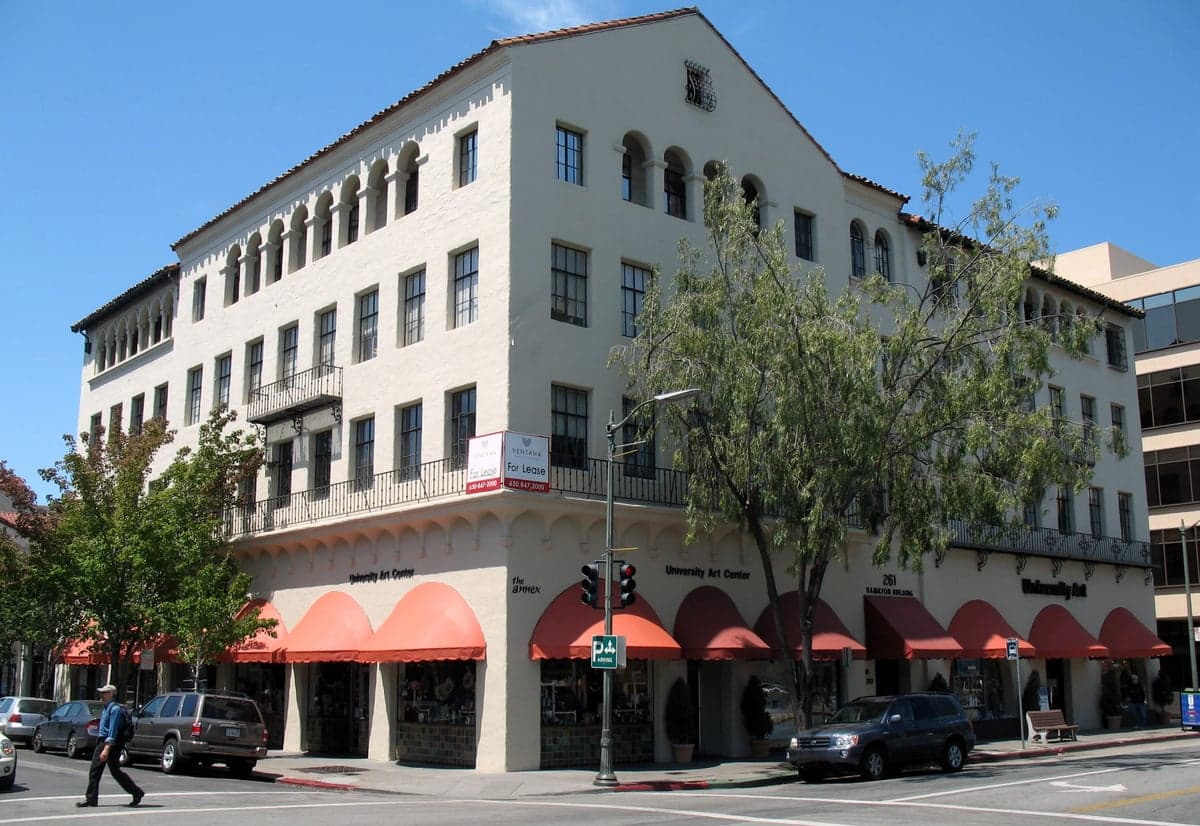
Photo: Wikipedia
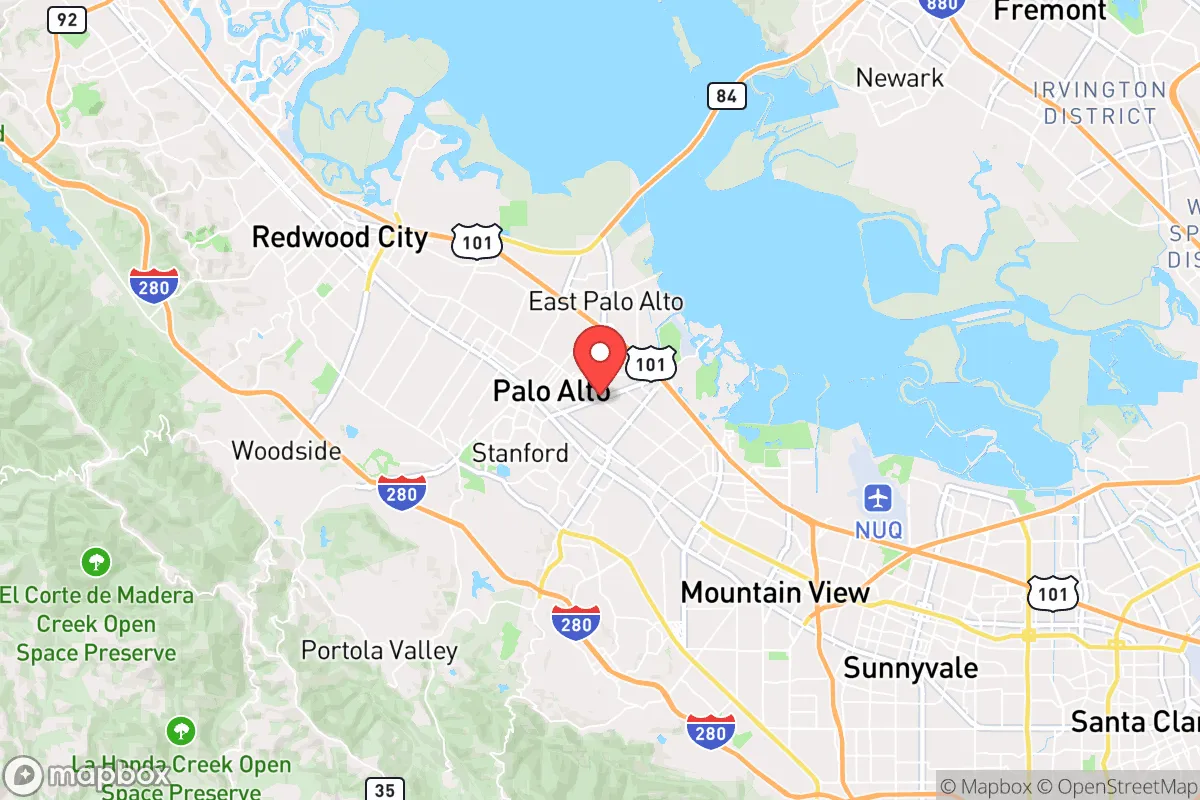
Strategic Assessment of Palo Alto, CA
High tactical risk. This location is likely close to major population centers, strategic targets, or sits in a high-disaster corridor. A retreat property and careful exit planning is required.
What does the Strategic Assessment tell us?
Our Strategic Assessment grades tactical survivability of an area. Major population centers, military targets, fallout zones, natural disasters, and border exposure all drive risk — lower exposure means a more defensible position in a crisis.
This is heavily inspired by Joel Skousen's Strategic Relocation book. Highly recommended you checkout the book ($)What does this tell us?
Our Strategic Assessment grades tactical survivability of an area. Major population centers, military targets, fallout zones, natural disasters, and border exposure all drive risk — lower exposure means a more defensible position in a crisis.
This is heavily inspired by Joel Skousen's Strategic Relocation book. Highly recommended you checkout the book ($)Strategic Pillars

Key Distances
Regional Safe Places
Below is our recommended "safe zones" in California and the surrounding area based on our strategic heuristics. For most people, it's unrealistic to live in a “safe zone” full-time due to work, family or other personal reasons. They tend to be more rural. However, many of these areas are perfect for second homes and retreat properties that double as a vacation home or even a short-term rental.

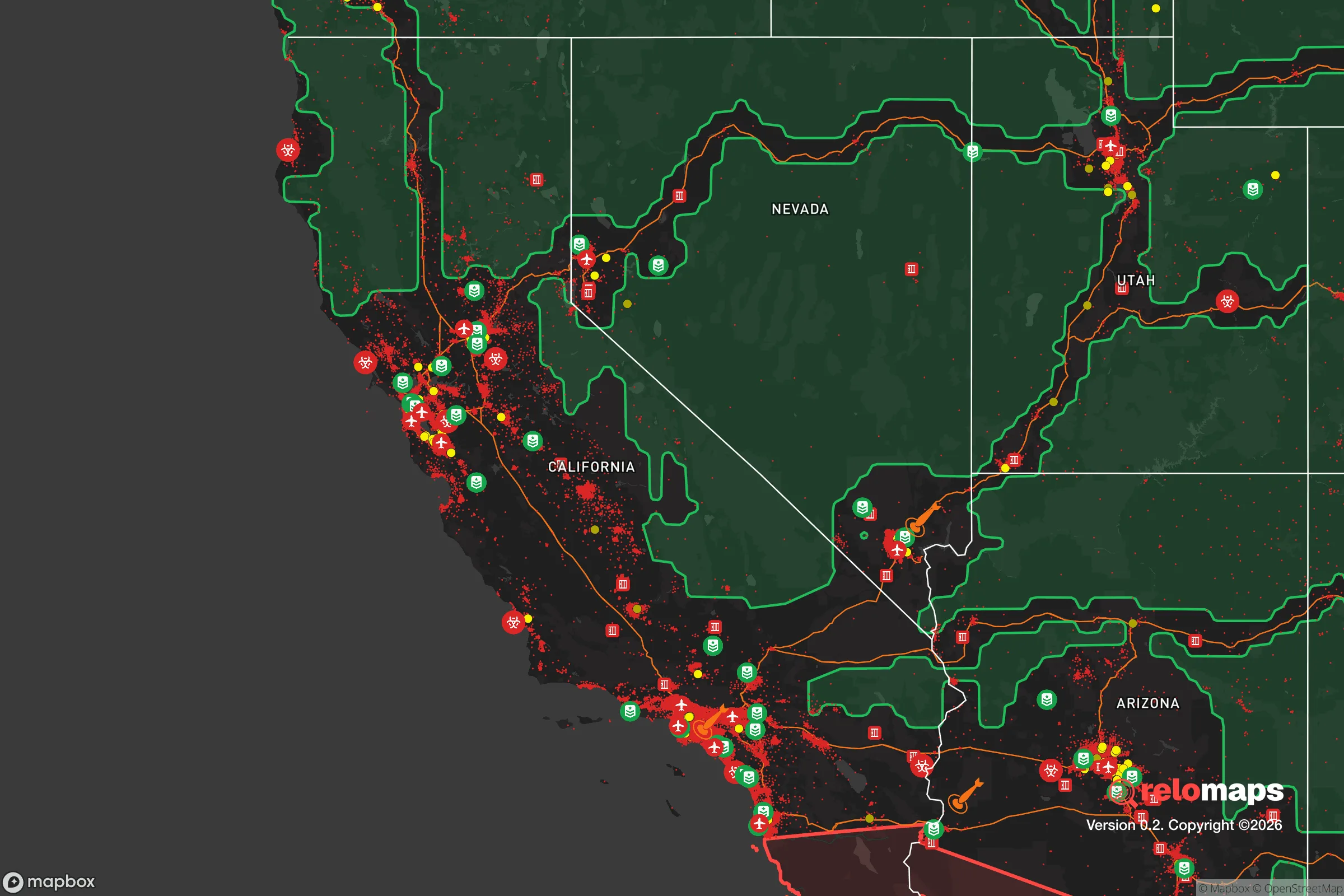


Important Note: For informational purposes only. This does not mean nothing bad ever happens in the green zones. Please use common sense. This is based on public data and modeled with AI. We tried to take a conservative approach but mistakes happen. We update this regularly as new information becomes available.
Solar Generator Recommendations
Backup power matters more here than in safer locations. We've picked three solar generators across budgets and capacity tiers — start with the budget unit if you only need a few essentials, or step up if you want to run a fridge and HVAC for days at a time.

Jackery Portable Power Station Explorer 300
Budget OptionPower on the Go: Weighing only 11 lbs, it's convenient to set up and store with book-sized foldable solar panels

BLUETTI Portable Power Station AC180
Designed for both indoor and outdoor scenarios, AC180 is highly capable as it has a robost capacity and continuous output power.

EF ECOFLOW DELTA Pro Ultra Power Station
Upgraded PickEcoFlow DELTA Pro Ultra is a whole-home energy system designed to grow with your family. Integrated with the Smart Home Panel 2, it scales to meet your evolving energy needs — keeping your home powered, intelligent, and secure through every stage of life.
We earn a commission, at no additional cost to you.
Strategic Assessment Analysis
Palo Alto sits at the geographic and economic heart of Silicon Valley, but from a strategic relocation standpoint, its resilience profile is deeply mixed. The city’s location on the San Francisco Peninsula offers proximity to major tech infrastructure and wealthy networks, but that same density makes it a high-priority target for civil unrest, supply chain disruption, and fallout from regional disasters. For a conservative-leaning prepper or survivalist, Palo Alto presents a paradox: abundant resources and community organization exist, but they come with extreme exposure to the very systems most likely to fail in a crisis.
Geographic position and natural advantages for long-term survival
Palo Alto’s geography is defined by its position between the San Francisco Bay to the east and the Santa Cruz Mountains to the west. This narrow corridor funnels traffic and resources through a handful of choke points—Highway 101, Interstate 280, and the Dumbarton Bridge—which are both a blessing and a curse. In a grid-down scenario, these routes become impassable within hours, effectively isolating the city. On the positive side, the nearby foothills and open space preserves (like the Arastradero Preserve and Foothills Park) offer limited but real opportunities for off-grid movement and foraging. The Mediterranean climate means no extreme cold or heat, reducing the need for heavy heating fuel or cooling infrastructure. However, the region’s seismic risk is significant: the San Andreas Fault runs just west of the city, and a major quake would sever water, power, and gas lines across the entire peninsula. The natural advantages here are mild weather and some undeveloped land, but they are outweighed by the vulnerability of the narrow geography and fault proximity.
Risks, exposures, and proximity to fallout-relevant landmarks
Palo Alto’s biggest strategic weakness is its proximity to high-value, high-risk infrastructure. The city lies within 10 miles of the Stanford Linear Accelerator (SLAC) and the NASA Ames Research Center at Moffett Field—both potential targets for cyber or physical attacks. Moffett Field also hosts a Superfund site and a massive hangar that could be a secondary hazard in a disaster. The Port of Oakland and the San Francisco International Airport are within 20 miles, meaning any major event at those hubs—whether a terrorist strike, industrial accident, or supply chain collapse—will ripple directly into Palo Alto. The city’s dense residential and commercial zones, combined with its status as a global tech hub, make it a prime location for civil unrest. The 2020 protests and the 2021 Antifa/BLM clashes in nearby Oakland and San Francisco demonstrated how quickly chaos can spread down the peninsula. For a prepper, the concentration of wealth and political activism here creates a high probability of looting, targeted violence, and social fragmentation during a crisis. The city’s police force is well-funded but stretched thin, and the surrounding county (Santa Clara) has a reputation for progressive policies that may deprioritize law enforcement in a prolonged emergency.
Practical resilience for a relocator: food, water, energy, and defensibility
When assessing day-to-day survival logistics, Palo Alto scores poorly on self-sufficiency. The city’s water supply comes from the Hetch Hetchy system, which relies on a single aqueduct crossing the San Andreas Fault. A major quake would cut water for weeks or months. Most residents depend on municipal water, and private wells are rare due to high groundwater contamination from historic industrial use (the area has multiple Superfund sites, including the former Hewlett-Packard plant). Food resilience is equally weak: the city has no significant agricultural land, and the few farmers’ markets are supplied by distant Central Valley farms that would be cut off in a disaster. The local grocery stores hold only 3-5 days of inventory. Energy is a bright spot—Palo Alto has its own municipal utility (Palo Alto Utilities) with a relatively modern grid and some local solar generation. But the grid is still tied to PG&E’s transmission lines, which have a history of failure during fire season and high winds. Defensibility is the hardest challenge. Palo Alto is a flat, open suburban grid with no natural barriers. The city’s wealth means many homes have security systems, but in a mass evacuation or civil unrest scenario, there are no defensible perimeters. The best option for a relocator would be a property on the western edge near the foothills, where you can retreat into the open space, but even that is limited by the lack of water sources and the presence of mountain lions and other wildlife. For a prepper, the practical takeaway is that Palo Alto requires a heavy reliance on stored supplies (food, water, medical, ammunition) and a well-rehearsed evacuation plan to a secondary location in the Sierra foothills or Central Coast.
The overall strategic picture for Palo Alto is one of high risk with moderate reward. The city offers access to some of the best medical facilities in the world (Stanford Hospital), a well-educated population that could organize mutual aid, and a climate that reduces survival stress. But these advantages are offset by extreme vulnerability to seismic events, civil unrest, and supply chain collapse. For a conservative relocator who values preparedness, Palo Alto is not a long-term bug-out location—it is a place to have a well-stocked home base with a clear exit strategy. The city’s density and political climate make it a likely flashpoint in any national crisis, and the lack of defensible terrain means you are betting on social stability holding. If you are willing to invest in a hardened home, store 90+ days of supplies, and maintain a vehicle ready for immediate departure, Palo Alto can work as a temporary hub. But for anyone serious about surviving a multi-year breakdown, the better move is to look 60-90 miles inland, where land is cheaper, water is more accessible, and the population density drops by an order of magnitude. Palo Alto is a place to pass through, not to dig in.

* Values derived from national, state, county, city and local statistics and may differ in a specific area. Last updated: 2026-04-15T23:40:51.000Z
Narrative content on this page is AI-generated and may contain mistakes. Verify any details that matter before acting on them.
ReloMaps may earn a commission from affiliate links at no extra cost to you.

