
Photo by Tyrel Johnson on Unsplash
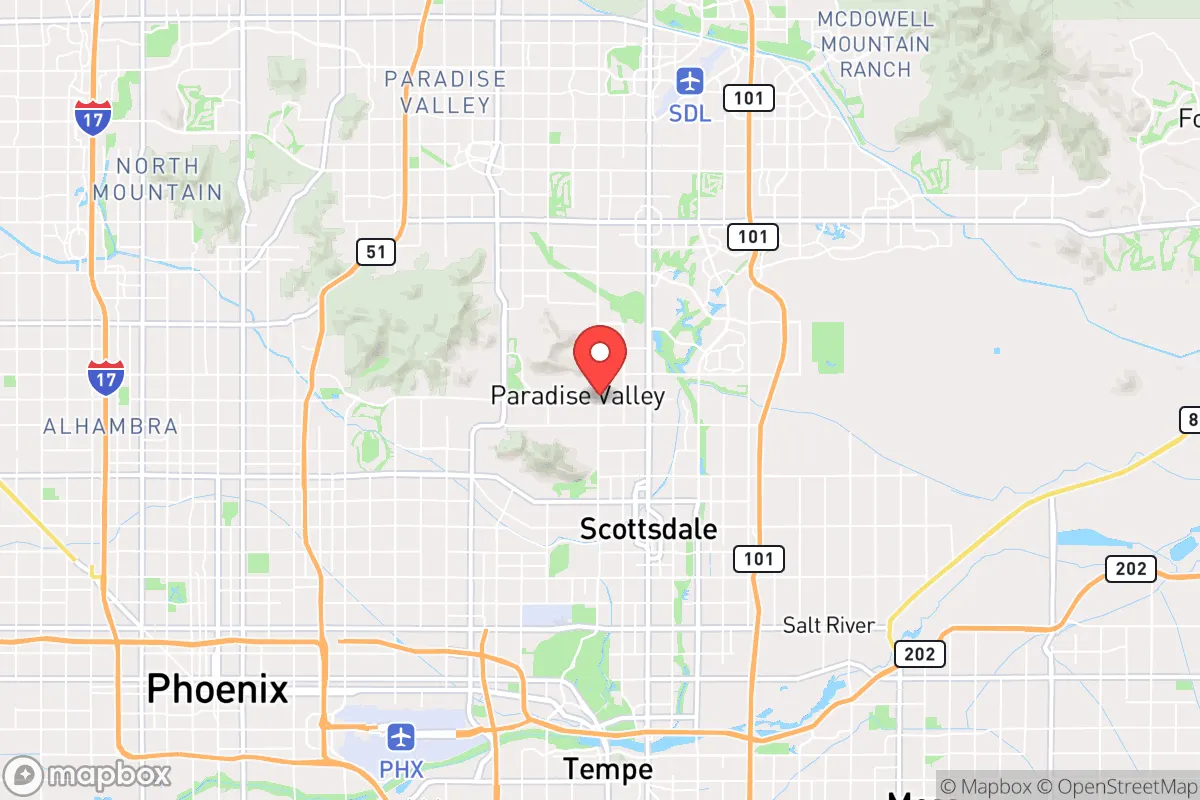
Strategic Assessment of Paradise Valley, AZ
Multiple tactical vulnerabilities. Population density, target proximity, or disaster risk are likely compounding. A retreat property and exit planning is required.
What does the Strategic Assessment tell us?
Our Strategic Assessment grades tactical survivability of an area. Major population centers, military targets, fallout zones, natural disasters, and border exposure all drive risk — lower exposure means a more defensible position in a crisis.
This is heavily inspired by Joel Skousen's Strategic Relocation book. Highly recommended you checkout the book ($)What does this tell us?
Our Strategic Assessment grades tactical survivability of an area. Major population centers, military targets, fallout zones, natural disasters, and border exposure all drive risk — lower exposure means a more defensible position in a crisis.
This is heavily inspired by Joel Skousen's Strategic Relocation book. Highly recommended you checkout the book ($)Strategic Pillars

Key Distances
Regional Safe Places
Below is our recommended "safe zones" in Arizona and the surrounding area based on our strategic heuristics. For most people, it's unrealistic to live in a “safe zone” full-time due to work, family or other personal reasons. They tend to be more rural. However, many of these areas are perfect for second homes and retreat properties that double as a vacation home or even a short-term rental.
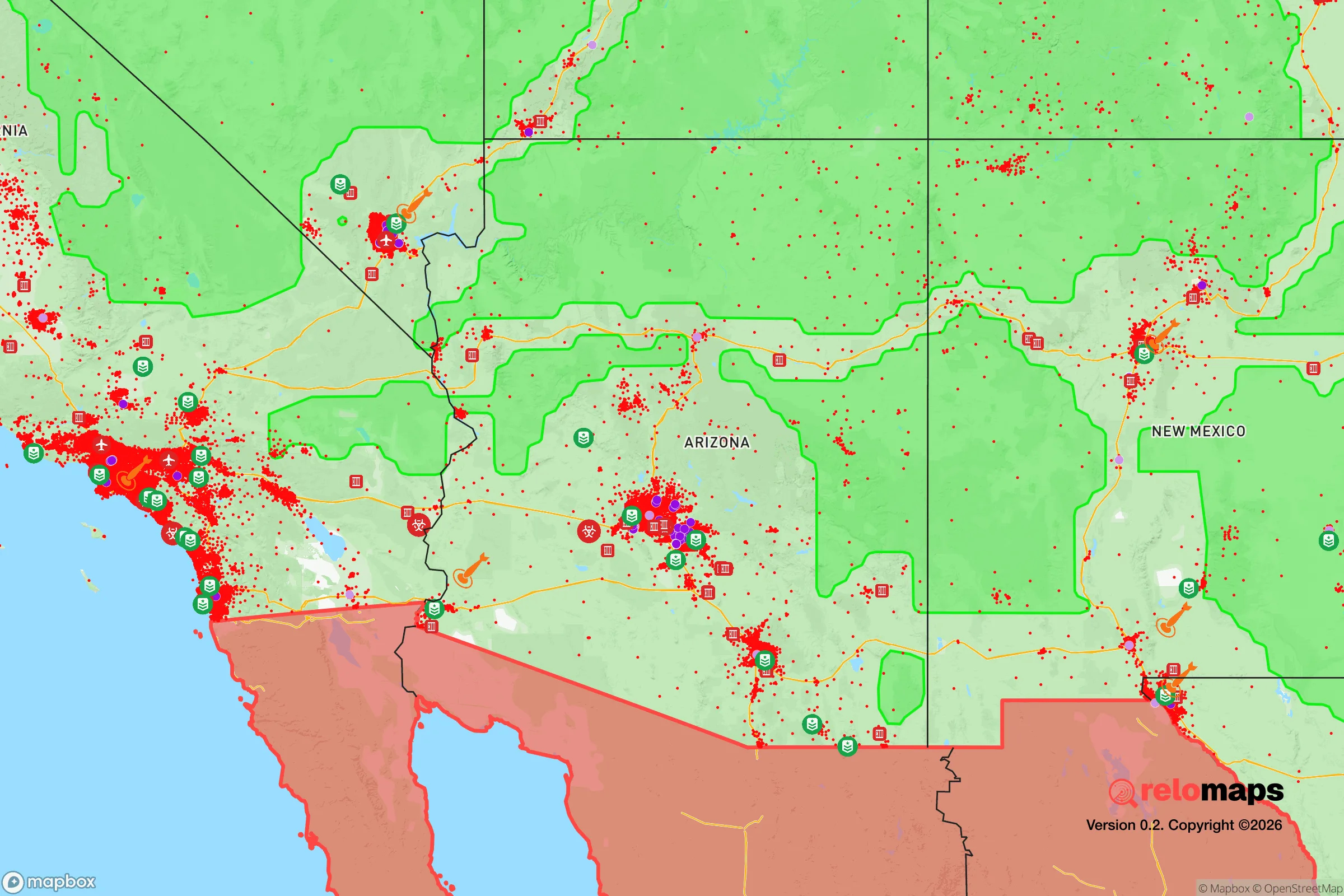


Important Note: For informational purposes only. This does not mean nothing bad ever happens in the green zones. Please use common sense. This is based on public data and modeled with AI. We tried to take a conservative approach but mistakes happen. We update this regularly as new information becomes available.
Solar Generator Recommendations
Backup power matters more here than in safer locations. We've picked three solar generators across budgets and capacity tiers — start with the budget unit if you only need a few essentials, or step up if you want to run a fridge and HVAC for days at a time.

Jackery Portable Power Station Explorer 300
Budget OptionPower on the Go: Weighing only 11 lbs, it's convenient to set up and store with book-sized foldable solar panels

BLUETTI Portable Power Station AC180
Designed for both indoor and outdoor scenarios, AC180 is highly capable as it has a robost capacity and continuous output power.

EF ECOFLOW DELTA Pro Ultra Power Station
Upgraded PickEcoFlow DELTA Pro Ultra is a whole-home energy system designed to grow with your family. Integrated with the Smart Home Panel 2, it scales to meet your evolving energy needs — keeping your home powered, intelligent, and secure through every stage of life.
We earn a commission, at no additional cost to you.
Strategic Assessment Analysis
Paradise Valley, Arizona, presents a complex strategic picture for the conservative prepper or survivalist. Its primary resilience advantage is its location within the Sonoran Desert, far from the immediate blast zones of major coastal targets, yet its extreme wealth and proximity to Phoenix create a unique set of vulnerabilities and opportunities. The town’s low crime rate, high property values, and insular geography offer a degree of natural defensibility, but the same factors that make it desirable also make it a potential target for looting and civil unrest during a systemic collapse. For the relocator seeking a long-term, self-sufficient redoubt, Paradise Valley is a high-risk, high-reward proposition that demands a clear-eyed assessment of its trade-offs.
Geographic position and natural advantages in the desert
Paradise Valley sits in a natural bowl at the base of Mummy Mountain and Camelback Mountain, offering a unique microclimate and a degree of physical separation from the sprawling Phoenix metro area. This elevated terrain provides natural vantage points and chokepoints for ingress and egress, which is a significant tactical advantage for those concerned with civil unrest. The surrounding mountains create a natural barrier that slows movement and provides cover, making the area more defensible than the flat, open grid of Scottsdale or Tempe. The dry desert climate drastically reduces the risk of hurricane, tornado, or flood damage, and while wildfires are a seasonal concern, the area’s low humidity and sparse vegetation in the immediate foothills limit fuel loads. For the prepper, the lack of major water bodies means no storm surge or tsunami risk, and the region’s seismic activity is minimal compared to California. The high altitude (around 1,300 feet) also provides slightly cooler temperatures than the valley floor, which can be a marginal advantage for heat management during a prolonged grid-down scenario.
Risks, exposures, and proximity to fallout-relevant landmarks
The most glaring vulnerability for Paradise Valley is its location within the Phoenix metropolitan area, home to over 4.8 million people. In a mass casualty event or societal collapse, the town would be surrounded by a sea of desperate, resource-deprived populations. The nearby Sky Harbor International Airport (a major hub) and Luke Air Force Base (a key fighter training base) are both high-value targets for a first-strike scenario, and while Paradise Valley is roughly 10-15 miles from each, fallout patterns could still affect the area depending on wind direction. The town’s extreme wealth—median home prices consistently above $3 million—makes it a prime target for organized looting gangs or roving mobs during civil unrest. The lack of a robust local police force (the town contracts with the Maricopa County Sheriff’s Office) means response times could be slow in a widespread emergency. Additionally, the area’s reliance on the Central Arizona Project canal system for water makes it vulnerable to sabotage or contamination, a critical concern for any long-term survival plan. The proximity to the Salt River and the potential for dam failure at Roosevelt Lake or other upstream reservoirs is a low-probability but high-consequence risk that cannot be ignored.
Practical resilience for a relocator: food, water, energy, and defensibility
Water is the single most critical issue for any prepper in Paradise Valley. The town sits on a finite groundwater supply, and the Colorado River allocation is under constant legal and environmental pressure. A relocator must plan for deep well access (if permitted) or a substantial rainwater catchment system, though the average annual rainfall of only 7 inches makes the latter unreliable. The area’s HOA restrictions and strict zoning laws often prohibit visible solar panels, large gardens, or livestock, meaning self-sufficiency is legally difficult within the town limits. For energy, the grid is reliable in normal times but vulnerable to cascading failures during a heatwave or cyberattack. A hidden, off-grid solar setup with battery storage is essential, but it must be discreet. Food storage is straightforward due to the dry climate, but resupply would require trips to Scottsdale or Phoenix, which become dangerous in a collapse. Defensibility is the town’s strongest suit: the winding, dead-end roads and gated communities create natural kill zones and chokepoints. A well-armed, well-trained group could hold a single street against a larger force for a significant period. However, the lack of a cohesive community culture among the ultra-wealthy means mutual aid networks are weak, and many residents are transient or seasonal, reducing long-term social resilience.
The overall strategic picture for Paradise Valley is one of a high-value, high-visibility asset that offers excellent short-term security but poor long-term sustainability. For the single individual or family with deep resources, it can serve as a temporary safe haven during a localized crisis, provided they have a pre-planned bug-out location in a more remote, self-sufficient area like the White Mountains or the Mogollon Rim. The town’s isolation within the metro area is a double-edged sword: it provides a buffer from the immediate chaos of the city, but it also creates a trap if the surrounding population becomes hostile. The conservative prepper should view Paradise Valley as a staging ground or a secondary location, not a final redoubt. The combination of water scarcity, legal restrictions on self-sufficiency, and proximity to a massive urban population makes it a poor choice for a long-term survival homestead. If you can afford the property and maintain a low profile, it offers a defensible position for the first 30-90 days of a collapse, but after that, the lack of local resources and the inevitable pressure from the surrounding population will force a move. Plan accordingly, and never rely on the town’s infrastructure or neighbors for your survival.

* Values derived from national, state, county, city and local statistics and may differ in a specific area. Last updated: 2026-04-16T00:42:05.000Z
Narrative content on this page is AI-generated and may contain mistakes. Verify any details that matter before acting on them.
ReloMaps may earn a commission from affiliate links at no extra cost to you.

