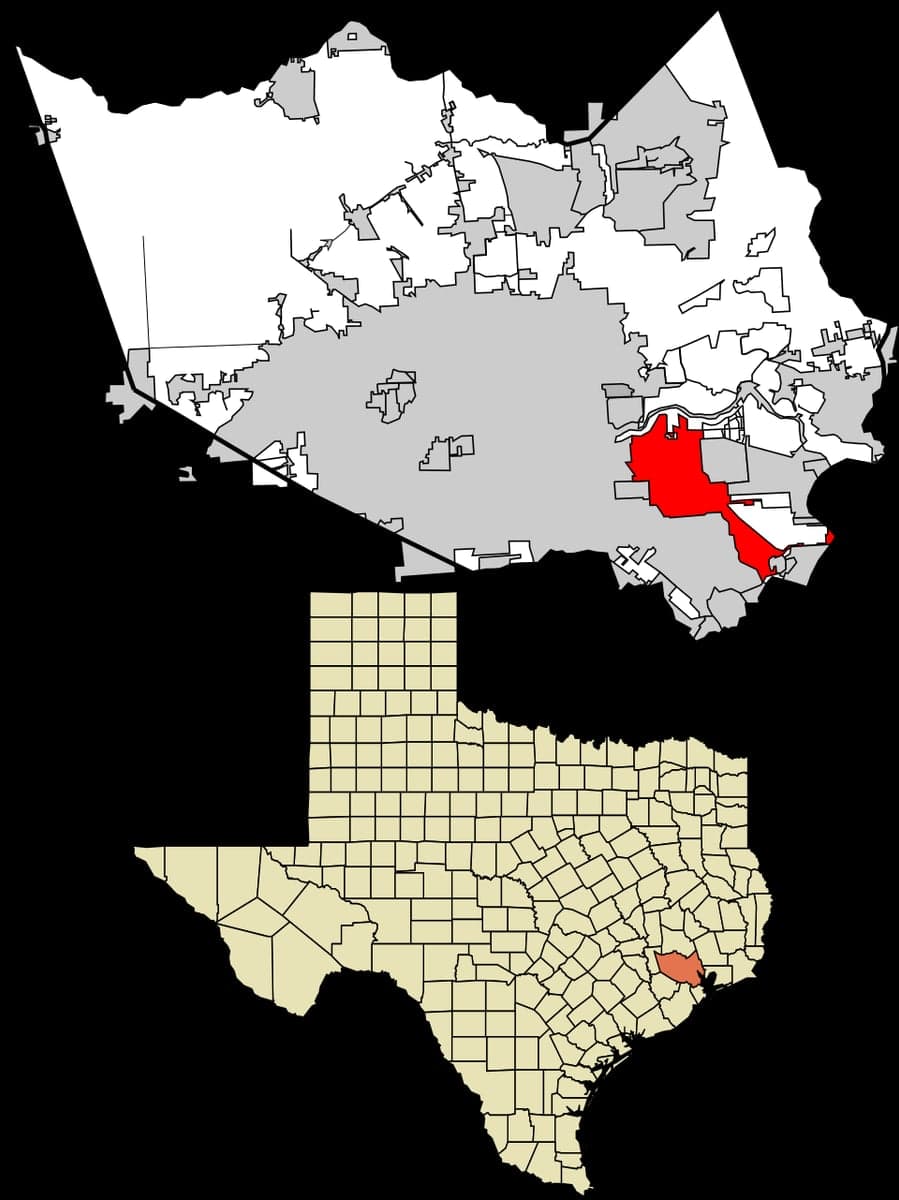
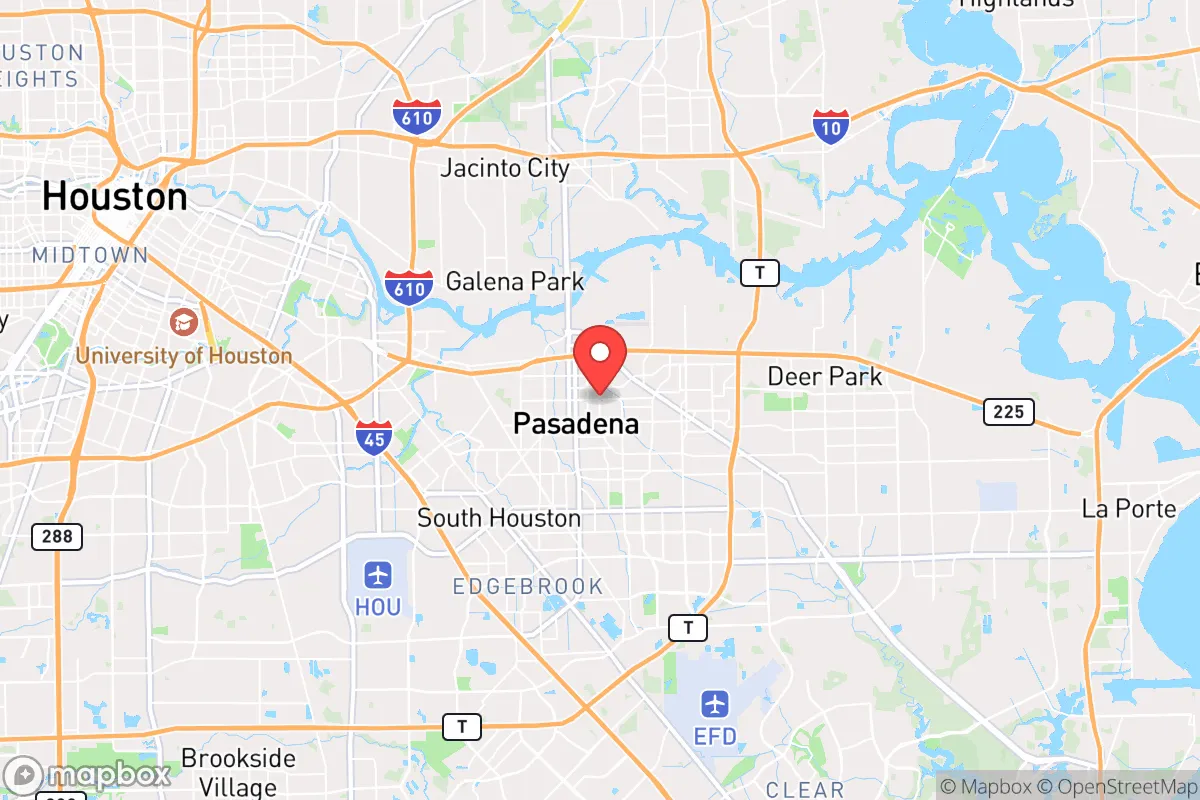
Photo: Wikipedia
Political ClimatePolitical Climate in Pasadena, TX
District shown is the primary district for this city’s centroid. Cities may span multiple districts.
Local Political AnalysisPolitical Analysis of Pasadena, TX
Pasadena, Texas, has long been a working-class, blue-collar community, but its political leanings have shifted noticeably in recent years. The Cook Partisan Voting Index (PVI) of D+12 might suggest a solidly Democratic area, but that number doesn't tell the whole story. In reality, Pasadena is a place where traditional, conservative values—like personal responsibility, limited government, and a strong sense of local community—are still deeply held by many long-time residents, even as the city's voting patterns have become more aligned with the national Democratic party. The real story is a tension between the old guard and a newer, more progressive influence that's been creeping in, especially since the 2020 election.
How it compares
To understand Pasadena's political climate, you have to look at its neighbors. Drive a few miles north to Deer Park or La Porte, and you'll find communities that still lean reliably Republican, with a strong emphasis on local control and fiscal conservatism. Those towns feel like a throwback to the Pasadena of the 1990s. Head west to the sprawling, more affluent suburbs of Katy or Pearland, and you'll see a mix of both parties, but with a much more pronounced libertarian streak—people who want lower taxes and less government interference in their lives. Pasadena, by contrast, has become a bit of a political island. It's surrounded by areas that are either more conservative or more suburban-liberal, but it's stuck in a middle ground where the old-school, "keep the government out of my business" attitude is fighting a losing battle against a rising tide of progressive policies coming from Harris County as a whole.
What this means for residents
For a resident who values personal freedoms and limited government, the trend is concerning. The D+12 PVI isn't just a number; it reflects a real shift in local governance. You're seeing more pressure to adopt county-wide mandates on things like business regulations and property use, which can feel like an overreach into decisions that used to be made by neighbors at city council meetings. The school board, once a bastion of local control, has become a battleground over curriculum and parental rights. The biggest red flag for many is the feeling that the city's identity is being reshaped by outside political forces, rather than by the people who actually live and work here. The days of a city council that reflexively said "no" to new taxes and "yes" to local business are fading, replaced by a more bureaucratic, top-down approach that feels out of step with the community's independent spirit.
On a cultural level, Pasadena still holds onto its roots. You'll find more pickup trucks than Teslas, and the local diners are still full of folks talking about hunting, fishing, and the Astros. But the policy direction is increasingly at odds with that culture. The push for "equity" initiatives in local government, the expansion of public transit that many see as inefficient, and the growing influence of environmental regulations on the petrochemical industry that employs so many locals—these are all signs of a government that's becoming more interested in social engineering than in protecting the freedoms of its citizens. For a long-time resident, it feels like the city is being pulled away from its common-sense, live-and-let-live foundation, and that's a trend that doesn't look like it's reversing anytime soon.

State Political ClimatePolitical Climate in Texas
State Political AnalysisPolitical Environment in the State
Texas has been a reliably Republican state for decades, with the GOP holding every statewide office and both chambers of the legislature since the mid-1990s. The dominant coalition is a mix of rural conservatives, suburban moderates, and a growing number of Hispanic voters who lean right on economic and social issues. Over the last 10-20 years, the state has shifted slightly more competitive at the presidential level — Donald Trump won Texas by 9 points in 2016 and 5.5 points in 2020 — but the state legislature and local offices remain deeply red, with no serious threat of a statewide Democratic win on the horizon. The real story is the urban-rural split, which has only widened as cities like Austin and Houston have become more progressive while the rest of the state digs in.
Urban vs. rural divide
The political map of Texas is a tale of two worlds. The major metros — Austin, Dallas, Houston, San Antonio, and El Paso — are the Democratic strongholds, with Austin and El Paso being the most reliably blue. In 2020, Travis County (Austin) gave Biden 71% of the vote, while El Paso County gave him 65%. These cities are driven by a mix of young professionals, university populations, and a growing number of out-of-state transplants who bring progressive voting habits with them. Meanwhile, the rest of Texas — from the Panhandle down to the Rio Grande Valley — is overwhelmingly Republican. Counties like Lubbock (Lubbock County) voted 70% for Trump in 2020, and rural West Texas counties often hit 80-90% Republican. The suburbs are the battleground: places like Collin County (north of Dallas) and Fort Bend County (southwest of Houston) have seen rapid growth and are becoming more competitive. Collin County, once a GOP fortress, voted for Trump by only 5 points in 2020, down from 17 points in 2016. The Rio Grande Valley, historically Democratic, has been shifting right — Zapata County flipped from Clinton in 2016 to Trump in 2020, a sign that Hispanic voters are increasingly open to Republican messaging on economics and border security.
Policy environment
Texas has no state income tax, which is the single biggest policy draw for conservatives and businesses alike. The state relies on high property taxes and sales tax to fund services, and there’s no sign that’s changing. The regulatory posture is famously business-friendly — Texas is a right-to-work state, meaning union membership is voluntary, and there are no state-level occupational licensing requirements for many trades. On education, the state has embraced school choice through charter schools and the Texas Education Agency’s push for parental empowerment, though a full school voucher program has yet to pass the legislature. Healthcare is a mixed bag: Texas did not expand Medicaid under the Affordable Care Act, leaving a large uninsured population, but the state has also kept COVID-19 mandates minimal and allowed telehealth to flourish. Election laws have tightened since 2020 — Senate Bill 1 (2021) banned drive-through voting, restricted mail-in ballot access, and gave poll watchers more authority. It’s a clear signal that the state is serious about election integrity, even if critics call it suppression. On social issues, Texas passed the Heartbeat Act (SB 8) in 2021, banning abortion after roughly six weeks and allowing private citizens to sue violators. It’s one of the most restrictive abortion laws in the country, and it’s a point of pride for conservatives who see it as protecting life.
Trajectory & freedom
Texas is becoming more free in some areas and less free in others, depending on who you ask. On the plus side for conservatives: the state expanded gun rights in 2021 with permitless carry (HB 1927), allowing adults to carry handguns without a license or training. Property rights got a boost with the Texas Property Tax Reform and Transparency Act (SB 2, 2019), which capped annual appraisal increases at 10% for homesteads. Parental rights were strengthened by HB 4549 (2023), which banned public schools from requiring students to use pronouns that don’t match their biological sex, and HB 900 (2023), which restricted sexually explicit content in school libraries. On the concerning side: the state has seen a rise in government overreach during the pandemic, including Governor Greg Abbott’s executive orders that shut down businesses and mandated masks in 2020 — though those were later rolled back. More recently, the state has cracked down on medical autonomy for minors, banning gender transition procedures for anyone under 18 (SB 14, 2023). While many conservatives support that, it’s a reminder that Texas is willing to use state power to enforce moral standards. The trajectory overall is toward more freedom on guns, taxes, and parental rights, but less freedom on abortion and transgender issues. For a conservative moving in, that’s mostly good news — the state is actively pushing back against federal overreach and cultural leftism.
Civil unrest & political movements
Texas has seen its share of political flashpoints. The 2020 protests in Austin and Houston over George Floyd’s death were large and occasionally violent, with property damage in downtown Austin. The state legislature responded with HB 9 (2021), which increased penalties for rioting and made it a crime to block highways during protests. Immigration is the hottest button: the Texas Department of Public Safety has been busing migrants to New York, Chicago, and Washington D.C. since 2022 under Operation Lone Star, a state-funded border security effort that has drawn both praise and lawsuits. The Sanctuary City ban (SB 4, 2017) prohibits local governments from adopting policies that limit cooperation with federal immigration enforcement, and it’s been upheld in court. There’s a growing secessionist movement — the Texas Nationalist Movement has gained visibility, though it’s fringe and has no real political power. Election integrity remains a flashpoint: after the 2020 election, Attorney General Ken Paxton filed a lawsuit to overturn results in four swing states, and the state has since purged voter rolls aggressively. A new resident would notice the constant political ads, the strong presence of the Republican Party of Texas at local events, and the fact that most people openly discuss politics without fear of backlash — it’s a place where conservative views are mainstream, not hidden.
Projection
Over the next 5-10 years, Texas will likely stay Republican at the state level, but the margins will continue to shrink in the suburbs. In-migration from California, New York, and Illinois is bringing more moderate and even left-leaning voters to places like Austin, Dallas, and Houston. However, many of those transplants are also conservatives fleeing blue states, and they tend to settle in exurbs like Kyle or New Braunfels, which are growing fast and staying red. The Hispanic vote is the wild card: if Republicans continue to gain ground with Hispanic voters — especially in the Rio Grande Valley and around San Antonio — the state could actually become more Republican over time. Demographically, Texas is getting younger and more diverse, but that doesn’t automatically mean more liberal — younger Hispanics are often more socially conservative than their parents. The biggest risk for conservatives is that the urban cores keep growing and the suburbs flip blue, turning Texas into a purple state by 2032. But for now, the state legislature is gerrymandered to protect Republican majorities, and the governor’s office is safe. A new resident moving in today should expect a state that is still firmly conservative, with a strong economy, low taxes, and a culture that values individual liberty — but with growing political tension in the cities.
For a conservative single person or parent moving to Texas, the bottom line is this: you’ll find a state that generally respects your right to live as you see fit, keep your money, and raise your kids without government interference. The schools are decent in the suburbs, the job market is strong, and the political climate is welcoming to traditional values. Just be aware that the cities are becoming more liberal, so choose your suburb carefully — places like Frisco or Katy are safer bets than Austin proper. The state is not perfect — property taxes are high, and the summer heat is brutal — but on the big issues of freedom, family, and faith, Texas is still one of the best bets in the country.
* Values derived from national, state, county, city and local statistics and may differ in a specific area. Last updated: 2026-05-03T04:48:54.000Z
Narrative content on this page is AI-generated and may contain mistakes. Verify any details that matter before acting on them.
ReloMaps may earn a commission from affiliate links at no extra cost to you.

