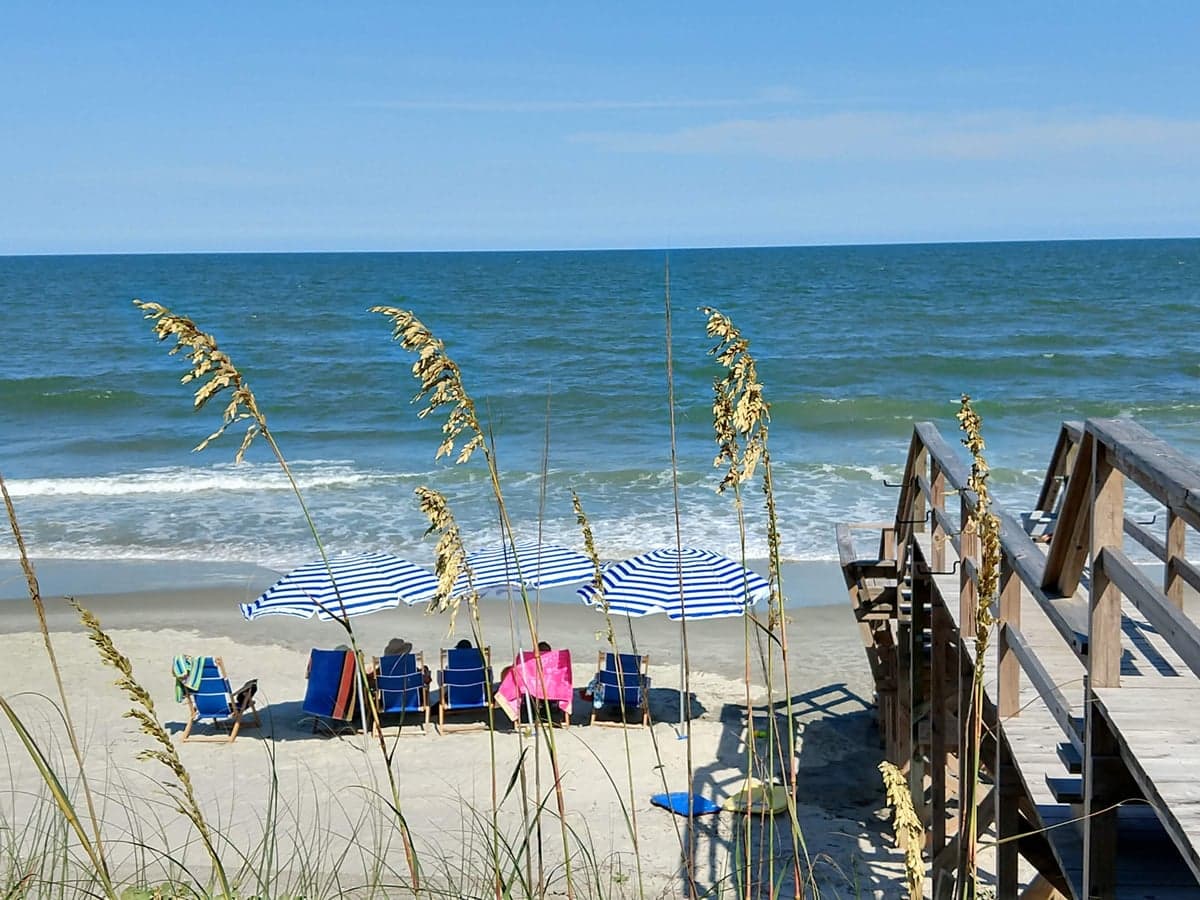
Photo: Wikipedia
Personal Sovereignty in Pawleys Island, SC
Viable for self-reliance. Generally workable, though some barriers may limit total independence.
What does Personal Sovereignty tell us?
Personal Sovereignty measures your capacity for self-reliance and independence with minimal government friction. Higher scores mean fewer barriers between you and the way you want to live... but it assumes you have the space you need and good neighbors.
What does this tell us?
Personal Sovereignty measures your capacity for self-reliance and independence with minimal government friction. Higher scores mean fewer barriers between you and the way you want to live... but it assumes you have the space you need and good neighbors.
State Policy
Energy independence: Importer (25% of energy produced in-state)
Personal Liberty
Homesteading

Personal Liberty Analysis
Pawleys Island, South Carolina, offers a notably high degree of personal sovereignty compared to many coastal destinations, largely because South Carolina is a state that structurally limits government overreach in daily life. For the individual or family who values the ability to live without constant regulatory friction—whether that means keeping and bearing arms, making medical decisions without state interference, or building a self-reliant homestead—this area presents a strategic balance of coastal access and constitutional freedom. The local culture leans heavily on the principle that the government that governs least governs best, and the legal framework reflects that ethos from the statehouse down to the county level.
Tax burden and regulatory posture: how South Carolina protects your wallet and choices
South Carolina’s tax structure is among the most favorable in the Southeast for those seeking to minimize government claims on their income and property. There is no state income tax on Social Security benefits, and the state’s top marginal income tax rate has been steadily dropping—it now sits at 6.2% and is scheduled to decline further to 6.0% by 2026. Property taxes in Georgetown County, where Pawleys Island sits, are remarkably low: the effective rate on owner-occupied homes hovers around 0.5% to 0.6% of assessed value, which is roughly half the national average. There is no state-level property tax; all property taxes are levied locally, and the state’s “Act 388” limits how much local governments can increase assessments for primary residences. For a prepper or survivalist mindset, this means less of your hard-earned money is siphoned off to fund programs you may not support. Regulatory posture is similarly restrained. South Carolina is a “right-to-work” state, meaning no forced union membership, and it has no statewide building code that mandates expensive energy-efficiency upgrades on existing homes—only new construction follows the International Residential Code. Zoning in unincorporated Georgetown County is minimal; you won’t face the kind of HOA-style restrictions common in Horry County to the north. The county’s comprehensive plan allows for agricultural and rural residential uses on parcels as small as one acre without special permitting, giving you room to garden, keep chickens, or even raise small livestock without bureaucratic hassle.
Self-defense and gun law specifics: what you can carry and where
South Carolina is a “constitutional carry” state as of 2024, meaning any law-abiding adult 18 or older can carry a concealed firearm without a permit. This is a significant shift from the previous permit-required system and reflects the state’s strong commitment to the Second Amendment. For those living in or visiting Pawleys Island, this means you can carry openly or concealed in most public spaces, including parks, beaches, and commercial establishments unless they post a “no weapons” sign that carries the force of law. The state preempts local governments from enacting their own gun ordinances, so Georgetown County cannot impose restrictions stricter than state law—no local bans on magazine capacity or specific firearm types. Stand-your-ground laws are fully in effect: you have no duty to retreat before using deadly force if you are lawfully present and reasonably believe force is necessary to prevent death, great bodily harm, or a violent felony. Castle doctrine applies to your home, vehicle, and workplace. For a prepper, the practical takeaway is that your defensive options are not limited by local whim. The only notable restriction is that concealed carry is prohibited in places like schools, courthouses, and law enforcement facilities, but that is standard nationwide. The state also issues a “CWP” (Concealed Weapons Permit) for reciprocity with other states, which is useful if you travel frequently. Ammunition and firearm purchases face no state-level background check beyond the federal NICS check, and there is no waiting period for long guns or handguns.
Self-reliance and homesteading viability: lot sizes, zoning, and off-grid feasibility
Pawleys Island proper is a narrow barrier island with strict building restrictions due to flood zones and environmental regulations, but the mainland areas—particularly along Highway 17 and the Waccamaw Neck—offer genuine homesteading potential. Minimum lot sizes in unincorporated Georgetown County are typically one acre for single-family homes on septic, and many parcels in the Pawleys Island area are 2 to 5 acres. Zoning allows for “agricultural and rural residential” uses, which means you can keep chickens, goats, and even a horse on a properly sized lot without a special permit. The county does not require a building permit for sheds under 200 square feet, and there are no restrictions on rainwater collection—a critical factor for off-grid water security. Solar panels are permitted by right, and net metering is available through Santee Cooper and Duke Energy, though the state’s net metering cap is 20 kW for residential systems, which is sufficient for most off-grid or grid-tied setups. The biggest hurdle for full off-grid living is the septic system requirement: all homes must have an approved septic system or connect to public sewer, and composting toilets are not recognized as a primary sanitation solution under county code. However, you can install a composting toilet as a secondary system. Well water is common in rural areas, and the county does not restrict well drilling on parcels of one acre or more. For a survivalist, the key limitation is that the area is in a flood zone (Zone AE in many parts), so any homestead must be built to FEMA elevation standards, which adds cost but also ensures resilience. The county’s emergency management is well-organized, with a strong focus on hurricane preparedness, and the local prepper community is active through informal networks and the Georgetown County Emergency Preparedness Facebook group.
Personal liberties: parental rights, medical autonomy, speech, and property
South Carolina has been a battleground for parental rights, and the current legal environment strongly favors family autonomy. The state’s “Parental Bill of Rights” (passed in 2023) explicitly affirms that parents have the fundamental right to direct the upbringing, education, and healthcare of their minor children. This includes the right to opt out of any school curriculum or activity, and schools must obtain parental consent before administering any medical or mental health screening. Medical autonomy for adults is similarly robust: there is no state vaccine mandate for employment or public accommodation, and the state’s “Right to Try” law allows terminally ill patients to access experimental treatments without FDA approval. Telehealth for out-of-state doctors is permitted, which is useful for those seeking alternative medical opinions. Free speech protections are strong, with no state-level “hate speech” laws that criminalize political or religious expression. Property rights are protected by the state’s “Private Property Rights Protection Act,” which requires government agencies to conduct a takings analysis before any regulation that reduces property value by more than 20%. This is a direct check on regulatory overreach. The only notable limitation on personal liberty is the state’s strict drug laws: marijuana possession, even for medical use, remains illegal, though CBD and hemp-derived products are legal under federal farm bill provisions. For a prepper, the practical implication is that you can stockpile supplies, build a bunker, or homeschool your children without fear of government interference. The local sheriff’s office in Georgetown County is known for a “no-knock warrant” policy that requires judicial approval for any no-knock entry, and the county has a strong track record of respecting property rights in civil asset forfeiture cases.
Overall, Pawleys Island offers a level of personal sovereignty that is rare for a coastal community. The combination of constitutional carry, low taxes, minimal zoning, strong parental rights, and a culture of self-reliance makes it a strategic relocation choice for those who prioritize freedom over convenience. Compared to areas like Charleston or Myrtle Beach, where tourism-driven regulations and HOA-dominated neighborhoods can erode autonomy, Pawleys Island remains a quieter, more independent enclave. The trade-off is that you are in a hurricane-prone zone and must accept the realities of coastal living—but for the prepared individual, those risks are manageable. If your goal is to live with minimal government interference while maintaining access to the ocean, this is one of the best options on the East Coast.

* Values derived from national, state, county, city and local statistics and may differ in a specific area. Last updated: 2026-04-23T03:11:35.000Z
Narrative content on this page is AI-generated and may contain mistakes. Verify any details that matter before acting on them.
ReloMaps may earn a commission from affiliate links at no extra cost to you.

