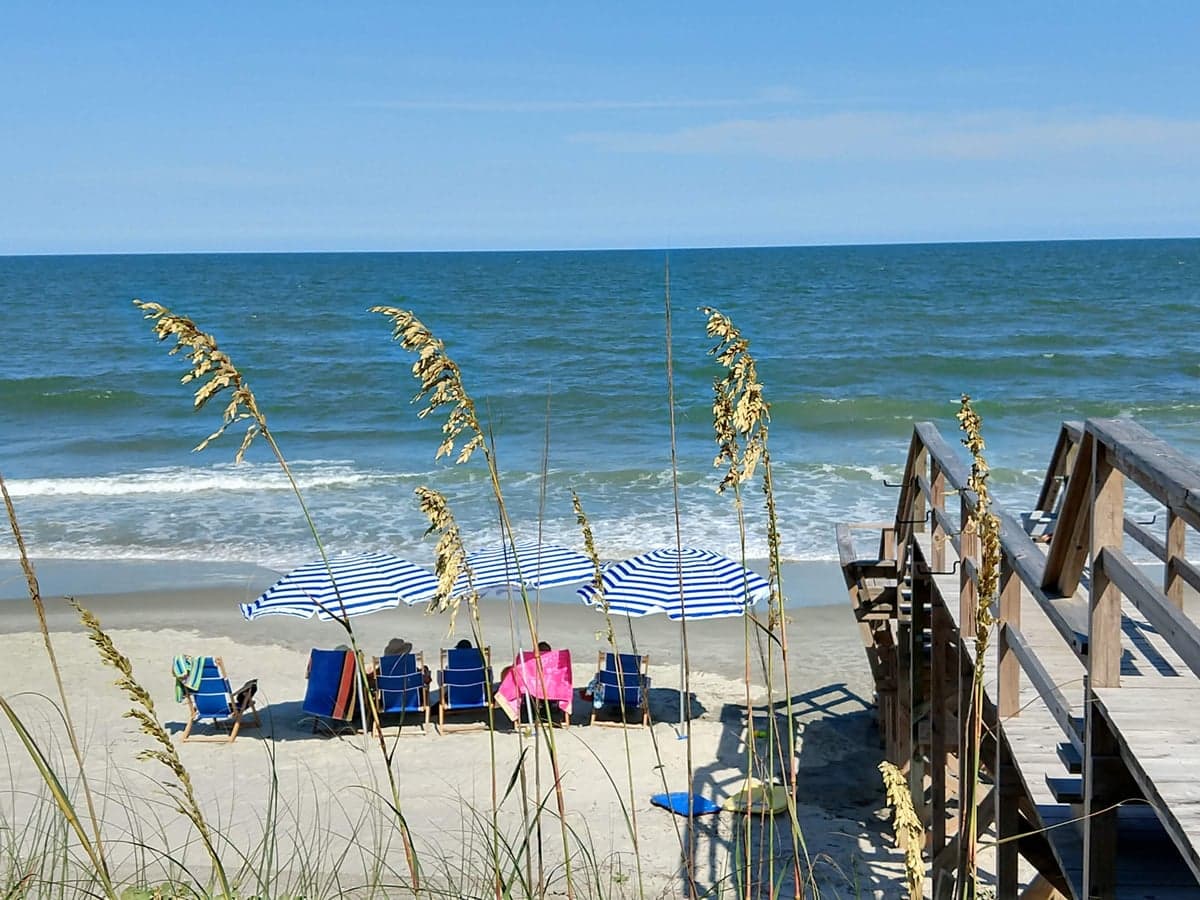
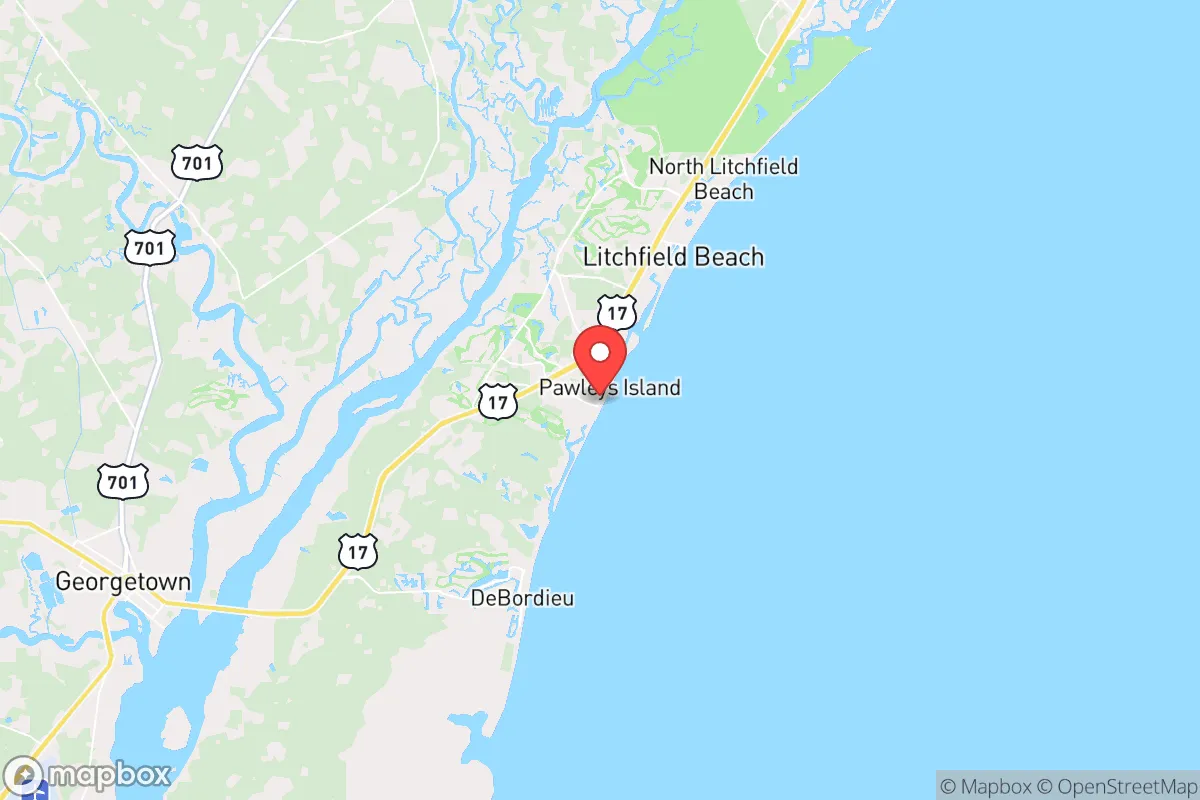
Photo: Wikipedia
Political ClimatePolitical Climate in Pawleys Island, SC
District shown is the primary district for this city’s centroid. Cities may span multiple districts.
Local Political AnalysisPolitical Analysis of Pawleys Island, SC
Pawleys Island leans solidly conservative, with a Cook PVI of R+12 that reflects the broader political character of Georgetown County. This isn't a recent shift—it's been the steady heartbeat of the area for decades, rooted in a deep preference for limited government and personal responsibility. The local electorate consistently votes Republican by double-digit margins, and while you'll find a few progressive-leaning pockets near the coast or among newer transplants from the Northeast, the overall trajectory has held firm. If anything, the past few election cycles have reinforced that lean, as residents push back against what they see as overreach from Columbia and Washington.
How it compares
Drive 30 minutes north to Myrtle Beach, and you'll find a similar conservative tilt, though the tourist economy there introduces a more transient, less politically engaged population. Head southwest toward Charleston, and the contrast sharpens—Charleston County has trended bluer in recent years, especially in the city proper, where progressive policies on zoning and taxes have gained traction. Pawleys Island sits in a sweet spot: close enough to enjoy Charleston's cultural amenities, but far enough to avoid its political drift. The surrounding towns like Murrells Inlet and Litchfield Beach share Pawleys' conservative DNA, with local elections often turning on property rights, school curriculum, and tax restraint. You won't see the kind of ideological battles here that you'd find in more urbanized coastal areas—most folks just want to be left alone to live their lives.
What this means for residents
For someone moving here, the political climate translates into tangible everyday freedoms. There's no heavy-handed zoning board dictating what color you can paint your shutters, and the county sheriff's office takes a common-sense approach to law enforcement rather than chasing progressive social experiments. Property taxes remain among the lowest in the coastal region, and the school board has resisted the kind of curriculum overhauls that have stirred controversy elsewhere. That said, there's a quiet concern among long-time residents about the slow creep of outside influence—new developments sometimes bring new voters who don't share the local values. If you value being able to build a deck without a dozen permits, or send your kids to a school that teaches fundamentals without ideological baggage, this area still delivers. But keep an eye on local elections; the margin for maintaining that balance is thinner than it was a decade ago.
Culturally, Pawleys Island remains a place where the Fourth of July parade still feels like a community event, not a political statement. The biggest policy debates you'll hear about at the local coffee shop involve beach access rights and short-term rental regulations—not the culture war flashpoints that dominate national headlines. That's the real distinction here: the politics are conservative, but they're also practical. People care more about keeping the island's character intact than about scoring ideological points. If you're looking for a place where government stays out of your business and neighbors look out for each other without being told to, Pawleys Island still fits that bill. Just don't expect it to stay that way without paying attention.

State Political ClimatePolitical Climate in South Carolina
State Political AnalysisPolitical Environment in the State
South Carolina has long been a reliably red state, but the flavor of that conservatism has shifted noticeably over the past decade. The state’s overall partisan lean remains solidly Republican — Donald Trump carried it by 11 points in 2024, and both U.S. Senate seats are held by Republicans — but the coalition driving that majority has evolved. The old-school, establishment GOP that dominated Columbia for decades is increasingly being challenged by a more populist, liberty-minded wing, while explosive growth in the Lowcountry and Upstate is injecting new political dynamics. For a conservative considering relocation, the key question isn’t whether the state is red — it’s what kind of red it’s becoming, and whether that aligns with your priorities.
Urban vs. rural divide
The political map of South Carolina is a study in contrasts. The state’s two major metros — Charleston and Greenville — are both growing fast, but they lean in opposite directions. Charleston County has been trending blue for years; in 2024, it went for Kamala Harris by about 8 points, driven by transplants from the Northeast and a booming tech and tourism economy. The city of Charleston itself is now a Democratic stronghold, though the surrounding suburbs like Mount Pleasant and Summerville remain more competitive, with Mount Pleasant still voting Republican by single digits. Greenville, by contrast, is a conservative success story. Greenville County voted +18 for Trump in 2024, and the city proper has maintained a center-right character even as it grows. The real red meat, though, is in the rural counties. Oconee, Pickens, Anderson, and Lexington counties routinely deliver 70-75% of their votes to Republicans. The Pee Dee region — places like Florence and Horry County (Myrtle Beach) — is reliably red but with a strong populist streak, favoring candidates who talk tough on immigration and trade. The Lowcountry islands like Beaufort and Hilton Head are a mixed bag: Beaufort County went +12 for Trump, but the city of Beaufort itself and the coastal enclaves are trending purple as retirees from blue states move in.
Policy environment
South Carolina’s policy posture is broadly conservative, but with some notable wrinkles. The state has a flat income tax of 6.2%, which is being phased down to 6.0% by 2026 under a law signed by Governor Henry McMaster. Property taxes are among the lowest in the Southeast, thanks to a 2006 law that capped annual increases at 15% for owner-occupied homes. There is no state estate tax. On education, the state passed a universal school choice program in 2023 — the Education Scholarship Trust Fund — which allows any family to use state funds for private school tuition, homeschooling expenses, or tutoring. This was a major win for parental rights advocates. Healthcare is a mixed bag: South Carolina did not expand Medicaid under the Affordable Care Act, and the state has some of the most restrictive abortion laws in the country — a fetal heartbeat bill was signed in 2023, banning abortion after roughly six weeks, with no exceptions for rape or incest. Election integrity is a hot topic. The state requires photo ID to vote, has no same-day registration, and in 2021 passed a law banning ballot drop boxes and limiting absentee voting. These measures have been praised by conservatives and criticized by progressives, but they remain in place. On the regulatory front, South Carolina is a right-to-work state with a business-friendly climate, but local governments in Charleston and Columbia have been pushing zoning reforms and environmental regulations that some conservatives view as overreach.
Trajectory & freedom
Over the past five years, South Carolina has moved decisively in the direction of expanding personal liberty in several key areas, but there are warning signs. The biggest win for freedom was the 2023 permitless carry law, which allows any law-abiding adult to carry a concealed firearm without a permit. This was a long-sought goal for gun rights advocates. On parental rights, the state passed a Parents’ Bill of Rights in 2022, requiring schools to notify parents about curriculum changes and allowing them to opt their children out of certain materials. The school choice expansion in 2023 was another major step. However, there are areas where freedom has been constrained. The state’s medical marijuana program remains stalled in the legislature, despite broad public support. Property rights have been tested by the rapid growth in the Lowcountry, where local governments in Charleston and Mount Pleasant have imposed short-term rental bans and stricter building codes that some homeowners see as government overreach. On the medical freedom front, South Carolina did not impose broad vaccine mandates during COVID, but the state did allow private businesses to require them — a point of contention for some. The trajectory is generally positive for conservatives, but the influx of new residents from blue states is beginning to shift the Overton window in the suburbs.
Civil unrest & political movements
South Carolina has not seen the kind of large-scale civil unrest that has hit cities like Portland or Atlanta, but there have been flashpoints. The 2020 Black Lives Matter protests in Columbia and Charleston were significant, with several nights of demonstrations and some property damage. In response, the state legislature passed a law in 2021 increasing penalties for rioting and blocking highways. Immigration politics are a growing issue. While South Carolina is not a border state, the influx of migrants through the southern border has been felt in places like Greenville and Spartanburg, where the Hispanic population has grown rapidly. There have been local debates over sanctuary policies — no South Carolina city has declared itself a sanctuary, but some activists have pushed for it. The most visible political movement in recent years has been the rise of the “constitutional conservative” wing within the state GOP, which has challenged incumbents in primaries over issues like election integrity and spending. The 2022 primary defeat of longtime state representative Gary Clary by a more conservative challenger was a sign of this shift. Election integrity remains a live issue; the state’s 2020 election was not marred by major fraud allegations, but the 2021 voting law was driven by concerns about public confidence. A new resident would notice that political signs and flags are common in rural areas, and that local politics can be intensely personal.
Projection
Looking ahead five to ten years, South Carolina is likely to remain a red state, but the nature of that redness will be shaped by two forces: in-migration and internal GOP dynamics. The state is adding about 100,000 new residents per year, many of them from New York, New Jersey, and California. These transplants tend to be more moderate on social issues and more focused on economic opportunity. They are settling disproportionately in Charleston, Greenville, and the Lake Murray area near Columbia. Over time, this could push the suburbs of Charleston and Columbia toward purple status, while the Upstate and rural areas remain deeply red. The state GOP will likely continue its internal battle between establishment and populist wings, with the populists gaining ground. On policy, expect further tax cuts, continued school choice expansion, and possibly a push for a constitutional carry law (already passed) and medical marijuana. The biggest wild card is the growth of the Lowcountry: if Charleston becomes a blue city with a purple metro, it could shift the state’s overall partisan balance by a few points. But for the foreseeable future, South Carolina will be a state where conservative values dominate state policy, even as local dynamics vary widely.
For a conservative moving to South Carolina, the bottom line is this: you will find a state that broadly shares your values on taxes, guns, education, and abortion, but you need to pick your location carefully. If you want a deep-red environment with strong community ties, look at Lexington, Anderson, or Oconee counties. If you want a growing, economically vibrant area with a more moderate conservative flavor, Greenville is your best bet. Avoid Charleston city limits unless you’re comfortable with blue local governance. The state is trending in the right direction on most freedom metrics, but the cultural battle is being fought at the local level — and your vote will matter more in a county commission race than in a presidential one. Come for the low taxes and the school choice; stay for the sense that your voice still counts.
* Values derived from national, state, county, city and local statistics and may differ in a specific area. Last updated: 2026-04-23T03:11:35.000Z
Narrative content on this page is AI-generated and may contain mistakes. Verify any details that matter before acting on them.
ReloMaps may earn a commission from affiliate links at no extra cost to you.

