Photo: Wikipedia
Demographics of Pearl City, HI
Affluence Level in Pearl City, HI
An upper-middle-class area. Household wealth, education levels, and homeownership run ahead of national benchmarks.
People of Pearl City, HI
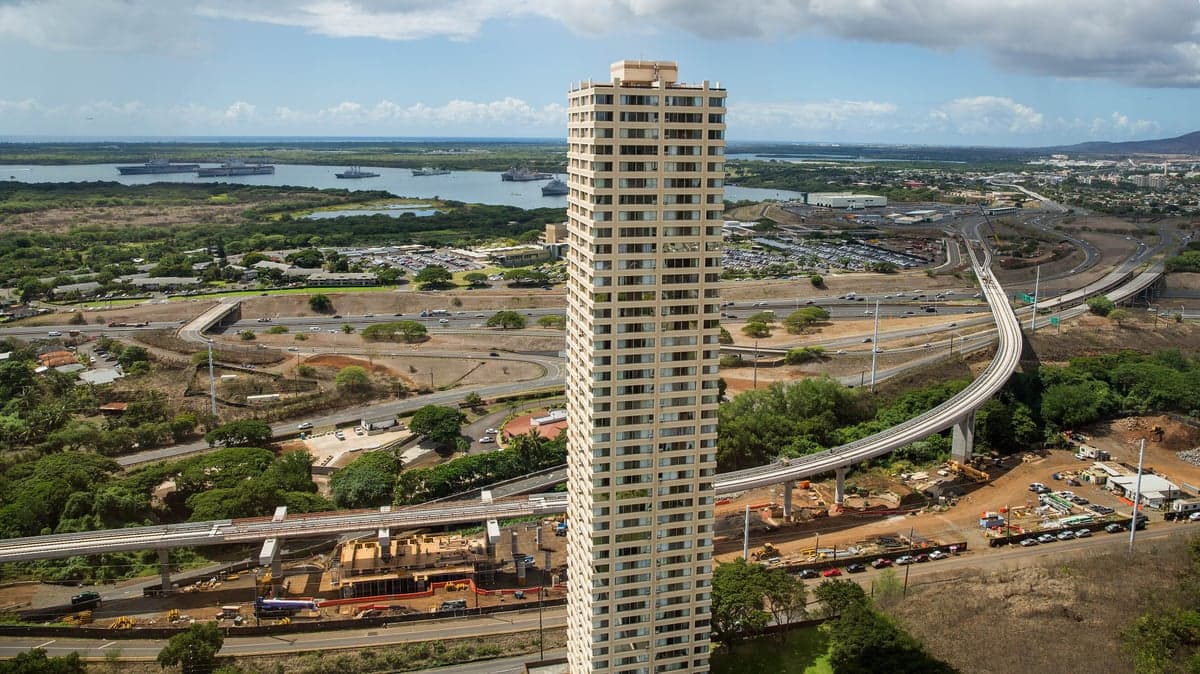
Pearl City, Hawaii, is a dense, middle-class suburb of Honolulu with a population of 45,079 that is overwhelmingly East and Southeast Asian (53.1%) and notably stable, with only 5.0% foreign-born residents. The city’s identity is shaped by its deep-rooted plantation-era families, a strong military-adjacent presence from nearby Joint Base Pearl Harbor-Hickam, and a growing but still small Hispanic (7.9%) and White (9.8%) population. It feels less like a transient tourist hub and more like a multi-generational, family-oriented community where local-born residents of Japanese, Filipino, Chinese, and Korean ancestry form the cultural backbone.
How the city was settled and grew
Pearl City’s population history begins not with indigenous Hawaiian settlement—the area was largely wetlands and fishponds—but with the sugar plantation boom of the late 19th and early 20th centuries. The Oahu Sugar Company, established in the 1890s, drew waves of contract laborers from Japan, China, and later the Philippines. These workers built the first residential clusters in what are now Pearl City Highlands and Momilani, where plantation camps evolved into stable neighborhoods. By the 1920s, Japanese immigrants and their children formed the largest ethnic bloc, a pattern that persisted through World War II despite the internment of some community leaders. The post-war era saw a second wave: military personnel and defense contractors assigned to Pearl Harbor, many of whom settled in Pacific Palisades and Waimalu, areas developed in the 1950s and 1960s with single-family homes. These neighborhoods attracted a mix of White mainlanders and second-generation Asian-American families, cementing Pearl City’s character as a suburb of homeowners rather than renters.
Modern era (post-1965)
The 1965 Immigration and Nationality Act opened the door to new Asian immigration, but Pearl City’s foreign-born share (5.0%) remains low compared to Honolulu’s 18.4%, indicating that most growth came from domestic relocation and natural increase rather than fresh immigration. The Filipino community expanded significantly in the 1970s and 1980s, settling in Pearl City Gateway and the older sections of Waiau, often in duplexes and townhomes. Meanwhile, the White population, which once dominated the military housing tracts, has declined to just 9.8% as military families increasingly choose off-base rentals in Kapolei or Ewa Beach. The Hispanic population (7.9%) is a newer presence, largely Puerto Rican and Mexican families drawn to service and construction jobs, concentrated in the more affordable apartment complexes near Kamehameha Highway. The Black population (1.7%) remains small and is almost entirely military-affiliated, living in scattered rentals rather than a distinct enclave. Notably, the Indian subcontinent population (0.1%) is negligible, reflecting Pearl City’s lack of the tech-sector draw that attracts South Asians to Honolulu’s urban core.
The future
Pearl City’s population is aging and slowly homogenizing. The median age is 40.5, several years above the state average, as younger adults move to Kapolei or the mainland for cheaper housing. The East/Southeast Asian majority (53.1%) is stable but not growing, as second- and third-generation families intermarry and assimilate into a broader local identity. The Hispanic share is rising modestly, likely reaching 10-12% by 2035, driven by births rather than immigration. The White population will continue its slow decline as military basing shifts toward Guam and as retirees choose drier climates. No single ethnic group is tribalizing into a distinct enclave; instead, Pearl City is becoming a more blended, older, and economically stable suburb. The biggest demographic risk is out-migration of young families, which could flatten or slightly shrink the population over the next decade.
For a conservative-leaning mover, Pearl City offers a rare combination: a dense, walkable suburb with strong family networks, low crime, and a population that is overwhelmingly native-born, Asian-American, and politically moderate. It is not a place of rapid change or ethnic tension, but of slow, predictable continuity. The city is becoming quieter, older, and more locally rooted—a safe, stable choice for those who value community stability over urban dynamism.

* Values derived from national, state, county, city and local statistics and may differ in a specific area. Last updated: 2026-04-24T00:03:02.000Z
Narrative content on this page is AI-generated and may contain mistakes. Verify any details that matter before acting on them.
ReloMaps may earn a commission from affiliate links at no extra cost to you.

