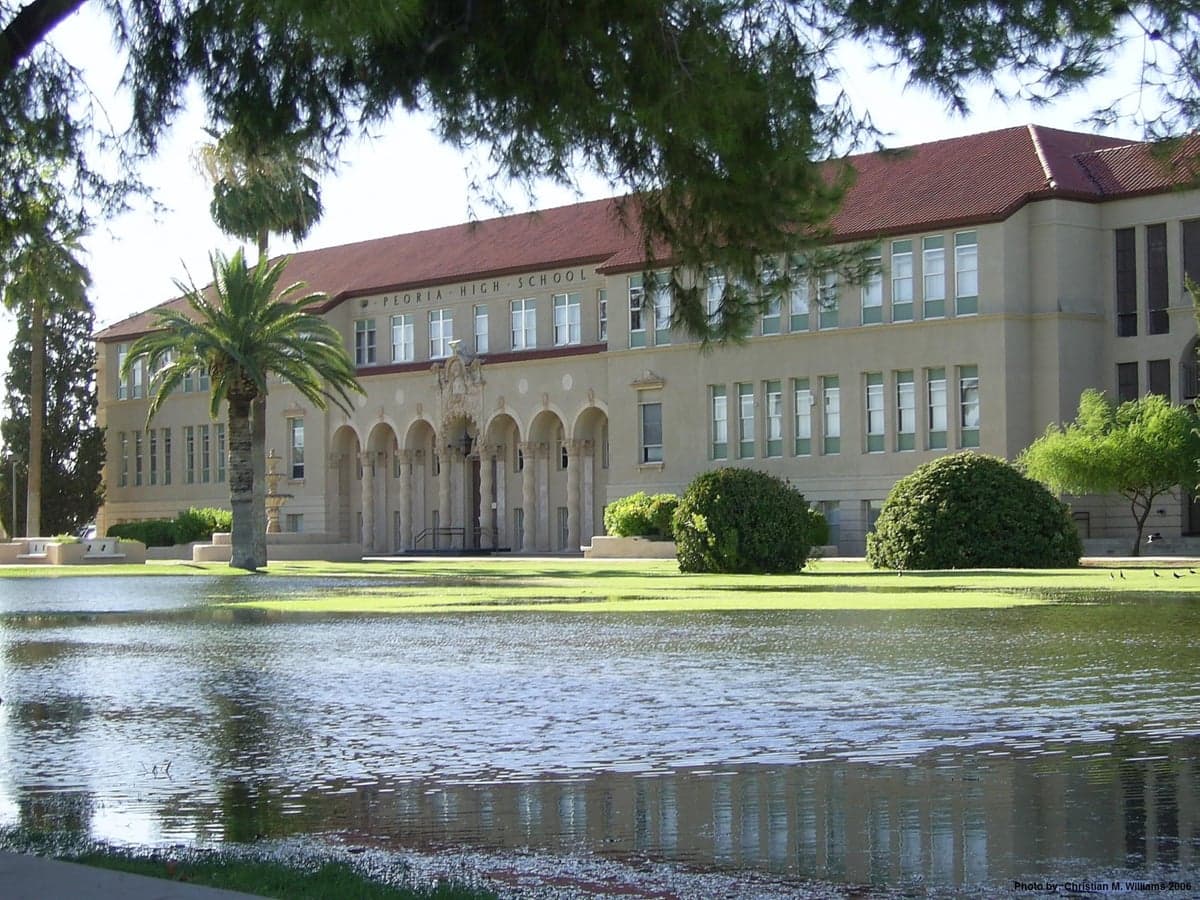
Photo: Wikipedia
Demographics of Peoria, AZ
Affluence Level in Peoria, AZ
An upper-middle-class area. Household wealth, education levels, and homeownership run ahead of national benchmarks.
People of Peoria, AZ
The people of Peoria, Arizona, today number roughly 194,000, forming a predominantly white (65.8%) and politically conservative suburb on the northwest edge of the Phoenix metro area. The city is characterized by a family-oriented, master-planned feel, with a notably low foreign-born population of just 4.4% and a college-educated rate of 35.5%. Distinctive identity markers include a strong retiree presence in active-adult communities like Sun City and a growing, younger family base in newer developments such as Vistancia and Lake Pleasant. This is a place where domestic migration—not international immigration—has been the primary driver of growth, creating a relatively homogeneous but expanding population.
How the city was settled and grew
Peoria was founded in 1890 by a small group of settlers from the original Peoria, Illinois, who were drawn by the promise of irrigated farmland along the Agua Fria River. The town’s early economy was built on cotton, citrus, and alfalfa, with the first wave of residents being largely white Protestant farmers from the Midwest. The historic Old Town Peoria district, centered around Grand Avenue and 83rd Avenue, was the original settlement core, where these families built homes, churches, and a downtown commercial strip. A second, smaller wave arrived during the Dust Bowl era of the 1930s, with displaced farmers from Oklahoma and Texas settling in the surrounding agricultural areas, though Peoria remained a tiny farming hamlet of fewer than 1,000 residents through the 1950s. The city’s population did not begin to meaningfully expand until the post-World War II era, when the construction of the Beeline Highway (now US 60) and later the Loop 101 freeway made it accessible to Phoenix commuters.
Modern era (post-1965)
The modern demographic transformation of Peoria began in earnest after the 1965 Immigration and Nationality Act, though the city’s growth was driven almost entirely by domestic in-migration rather than foreign-born arrivals. The most significant catalyst was the development of Sun City in 1960, a massive age-restricted retirement community that straddled the Peoria-Youngtown border. Sun City drew tens of thousands of white retirees from the Midwest and Northeast, establishing Peoria’s reputation as a retirement destination and cementing its older, conservative character. In the 1980s and 1990s, suburban expansion pushed north and west, with master-planned communities like Westbrook and PebbleCreek attracting middle-class families and professionals from within Arizona and from California. The Hispanic population, now 19.7%, grew primarily through domestic migration from other parts of Arizona and the Southwest, concentrating in older neighborhoods near Old Town and along the Grand Avenue corridor. The East/Southeast Asian population (3.1%) and Indian subcontinent population (2.5%) are more recent arrivals, settling in newer, higher-end developments like Vistancia and Lake Pleasant, drawn by tech and healthcare jobs in the broader Phoenix metro. The Black population (3.1%) is dispersed but slightly more concentrated in the central parts of the city near the 101 freeway corridor.
The future
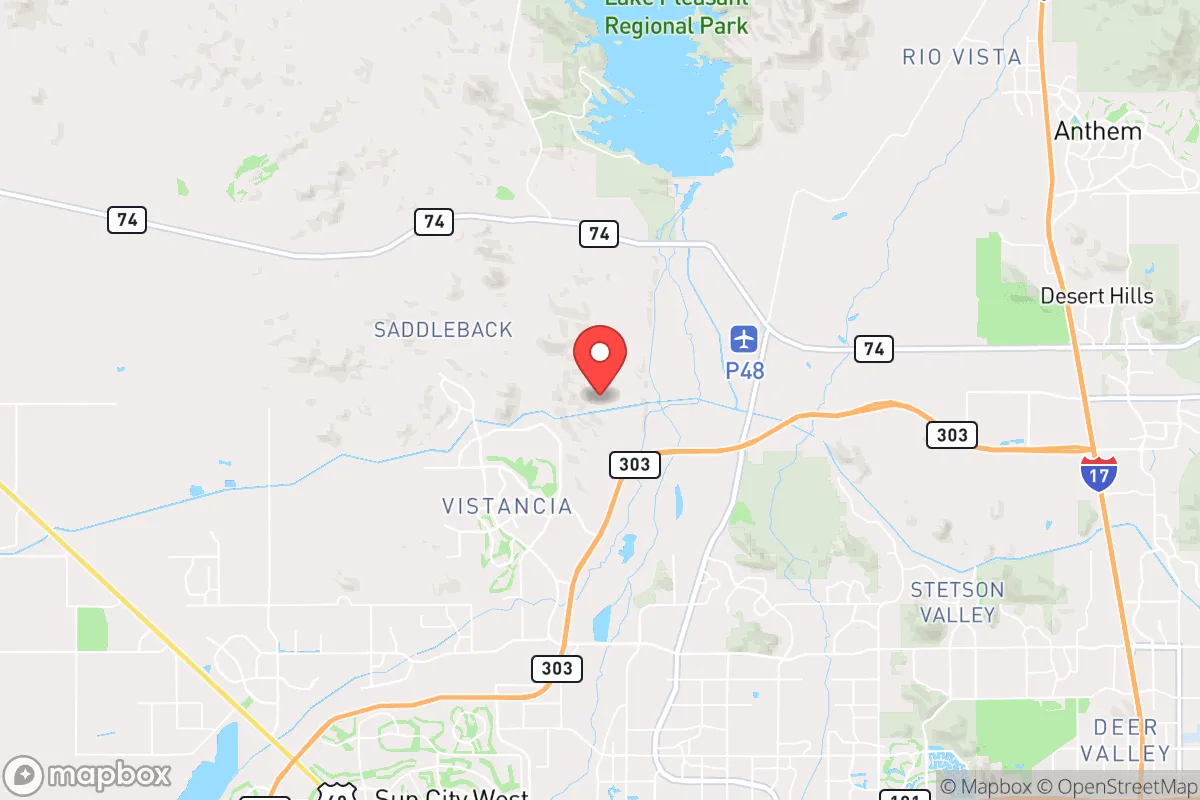
Peoria’s population is projected to continue growing, likely reaching 250,000–300,000 by 2040, driven by ongoing master-planned development in the northern reaches of the city, particularly around Lake Pleasant and the Sonoran Foothills area. The city is not homogenizing into a single demographic block but is instead tribalizing into distinct enclaves: the far north (Vistancia, Lake Pleasant) is becoming younger, more affluent, and slightly more diverse, with growing Indian and East/Southeast Asian communities; the central and southern areas (Sun City, Westbrook) are aging and remaining predominantly white; and the Old Town corridor is seeing a slow increase in Hispanic and lower-income families. The foreign-born population, at just 4.4%, is among the lowest in the Phoenix metro and is not expected to rise dramatically, as Peoria lacks the industrial and service-sector job base that attracts immigrant communities to cities like Phoenix or Glendale. The Indian subcontinent population, while small, is the fastest-growing non-white group, driven by professionals in healthcare and technology who are drawn to the area’s good schools and newer housing stock. Over the next 10–20 years, Peoria will likely become slightly more diverse but will remain a predominantly white, conservative, family-and-retiree suburb where domestic migration continues to outpace international immigration.
For someone moving in now, Peoria is becoming a city of distinct, self-selecting neighborhoods: a retiree haven in the south, a family-oriented master-planned suburb in the north, and a modestly diversifying corridor in the center. The low foreign-born share and high domestic migration rate mean the culture is overwhelmingly American-born and English-dominant, with a political and social character that leans conservative. New residents should expect a place that values order, planning, and stability, with demographic change coming slowly and primarily through internal migration rather than global flows.

* Values derived from national, state, county, city and local statistics and may differ in a specific area. Last updated: 2026-05-02T09:08:40.000Z
Narrative content on this page is AI-generated and may contain mistakes. Verify any details that matter before acting on them.
ReloMaps may earn a commission from affiliate links at no extra cost to you.

