
Photo: Wikipedia
Political ClimatePolitical Climate in Peoria, AZ
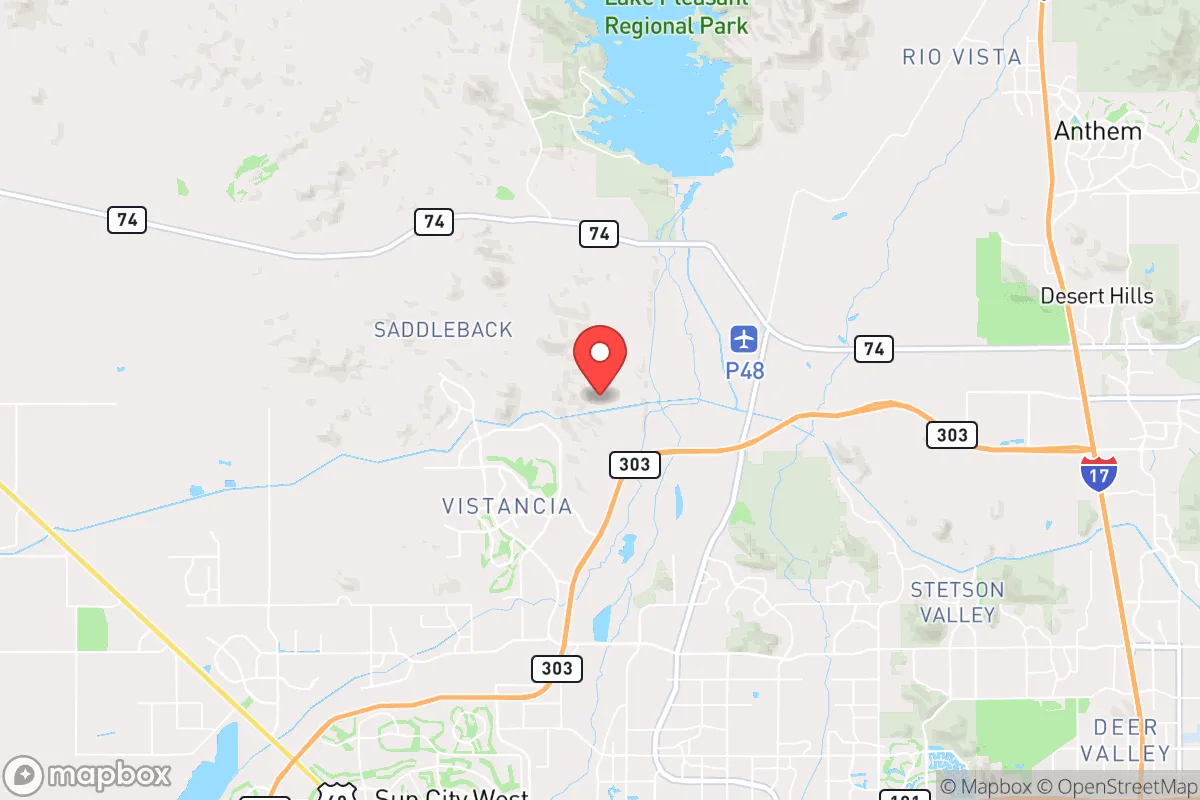
District shown is the primary district for this city’s centroid. Cities may span multiple districts.
Local Political AnalysisPolitical Analysis of Peoria, AZ
Peoria, Arizona, has long been a solidly conservative community, and that hasn't changed much. The Cook PVI rating of R+8 tells you the baseline, but living here, you feel it more in the local school board meetings and city council decisions than in any national election map. We've seen a steady, quiet shift over the last decade, though—more families moving in from California and the Midwest, and with them, a slow creep of progressive ideas that would have been laughed out of a town hall ten years ago. For now, the conservative majority holds firm, but you can sense the tension building, especially around property rights and how much say the government should have in your daily life.
How it compares
Drive ten minutes east into Glendale or Phoenix proper, and you're in a different world politically—those areas have swung noticeably left, with Phoenix itself becoming a blue island in Maricopa County. Head west toward Surprise or north to Anthem, and you'll find communities that still vote like Peoria used to, with a strong emphasis on limited government and personal responsibility. The real contrast is with Scottsdale and Tempe, where progressive policies on housing density, zoning, and even local taxes have taken hold. Peoria still feels like the old Arizona: neighbors look out for each other, but nobody wants a bureaucrat telling them what they can do with their own backyard. That said, the city's rapid growth—we're adding thousands of homes a year—means new voters are coming in who don't share that instinct. If you're looking for a place where your vote still counts and your voice isn't drowned out by out-of-state transplants pushing a progressive agenda, Peoria is one of the last strongholds in the West Valley.
What this means for residents
For folks who value their Second Amendment rights and don't want the city dictating how they use their property, Peoria is still a safe bet. The city council has resisted most attempts at overreaching zoning laws and has kept local taxes low compared to Phoenix or Tempe. But you need to stay engaged. The biggest red flag I've seen is the school board—there's been a quiet push for more centralized control over curriculum and parental rights, which is exactly the kind of government overreach that starts small and snowballs. If you're moving here, get involved in the local precinct meetings and pay attention to city council elections. The long-term trajectory depends on whether the conservative base stays active or gets complacent. Right now, we're holding the line, but it takes work.
Culturally, Peoria still has that small-town feel where people wave at each other at the grocery store, but the policy battles are heating up. One thing that stands out is the city's approach to water rights—they've been smart about protecting local resources without letting the state or federal government muscle in. That's the kind of practical, freedom-minded governance that keeps Peoria distinct. The biggest concern for the next decade is whether the influx of new residents will dilute that ethos. If you're tired of places where the government treats you like a child, Peoria is still worth a look—just don't expect it to stay that way without a fight.

State Political ClimatePolitical Climate in Arizona
State Political AnalysisPolitical Environment in the State
Arizona has shifted from a reliably red state to a genuine battleground over the past two decades, but its overall partisan lean remains a toss-up with a slight rightward tilt in statewide races. The dominant coalitions are a mix of traditional Western libertarians, conservative retirees, and a growing bloc of moderate suburbanites, while a surge of left-leaning transplants from California and the Midwest has made Maricopa County the epicenter of electoral volatility. Over the last 10-20 years, the state has gone from voting Republican by double digits (George W. Bush won it by 10 points in 2004) to flipping blue for Biden in 2020 by just 10,457 votes, then swinging back to Trump in 2024 by roughly 5 points. This whiplash reflects deep demographic churn and a political culture that is anything but settled.
Urban vs. rural divide
The political map of Arizona is a classic tale of two Arizonas. The urban core—Phoenix, Tucson, and Flagstaff—drives the Democratic vote, with Maricopa County alone containing about 60% of the state’s population and swinging from red to purple to blue-leaning over the last decade. Phoenix proper and its inner-ring suburbs like Tempe and Scottsdale have seen an influx of younger, college-educated voters and out-of-state migrants who lean left, while Tucson remains a reliably blue stronghold anchored by the University of Arizona. In contrast, the rural expanse—places like Yavapai County (Prescott), Mohave County (Kingman, Lake Havasu City), and Cochise County (Sierra Vista)—votes overwhelmingly Republican, often by 30-40 point margins. The real battleground is the suburban “donut” around Phoenix: Gilbert, Chandler, and Mesa were once solidly red but are now competitive, with Gilbert flipping from +16 R in 2016 to +2 R in 2020. Meanwhile, Pima County (Tucson) and Coconino County (Flagstaff) are deep blue, but they lack the population to offset rural turnout without Maricopa’s suburban shift.
Policy environment
Arizona’s policy environment is a mixed bag that still leans conservative on key fronts, but with notable exceptions. The state has a flat income tax rate of 2.5% (down from 4.5% in 2021 after a Republican-led tax cut), and no estate or inheritance tax, which keeps the fiscal posture business-friendly. Property taxes are low relative to the national average, and the state has a right-to-work law. On education, Arizona was a pioneer in school choice—the Empowerment Scholarship Account (ESA) program, expanded in 2022, gives parents state funding to use on private school, homeschooling, or tutoring, making it one of the most expansive school choice systems in the country. However, the state has also seen progressive pushes: the 2020 passage of Proposition 208 (a surtax on high earners for education) was struck down by courts, but it signaled a growing appetite for higher taxes among some voters. Healthcare policy is a flashpoint—Arizona expanded Medicaid under the Affordable Care Act in 2013, and the state has a strong telehealth framework, but there’s no state-level individual mandate. Election laws have been a rollercoaster: the 2021 law SB 1485 tightened voter ID requirements and limited mail-in ballot drop boxes, while the 2022 “Voter Protection Act” (Prop 211) mandated disclosure of dark money donors, a win for transparency that conservatives largely opposed. Overall, the policy environment is still more freedom-oriented than most blue states, but the trend lines are contested.
Trajectory & freedom
On the freedom front, Arizona is a tale of two trajectories: it has expanded personal liberty in some areas while contracting it in others. On the positive side, the state passed a landmark constitutional carry law in 2010 (SB 1108), allowing permitless concealed carry, and has not rolled it back. In 2022, the legislature passed a “Parents’ Bill of Rights” (HB 2161), which codifies parental authority over medical decisions, education, and records—a direct response to COVID-era school closures and mask mandates. Property rights remain strong, with no state-level rent control and a 2023 law (HB 2670) limiting local governments’ ability to impose inclusionary zoning. On the concerning side, the state has seen a creep of government overreach: in 2021, Governor Doug Ducey signed a law (SB 1828) that banned mask mandates in schools, which was a win for personal choice, but the same year saw the state impose a near-total abortion ban (the 1864 law) that was later repealed in 2024 after public backlash. The 2024 repeal was a loss for the pro-life movement, but it also showed that Arizona voters are wary of extreme government intrusion into private medical decisions. The biggest red flag for conservatives is the steady erosion of election integrity—the 2020 audit of Maricopa County ballots (the “Cyber Ninjas” audit) was a circus that damaged trust, and subsequent laws have not fully restored confidence. Overall, Arizona is still freer than most states, but the margin is shrinking.
Civil unrest & political movements
Arizona has been a hotbed of political activism on both sides, with immigration politics as the perennial flashpoint. The 2010 passage of SB 1070 (the “Show Me Your Papers” law) made Arizona the epicenter of the national immigration debate, and while the Supreme Court gutted key provisions, the issue remains raw. In 2024, the state saw large protests over the revived 1864 abortion ban, with activists on both sides clashing outside the capitol. The “Stop the Steal” movement was particularly active here—the 2020 election audit in Maricopa County drew national attention, with armed protesters and counter-protesters at the state capitol. On the left, groups like LUCHA (Living United for Change in Arizona) have organized mass voter registration drives and protests against SB 1070-style policies. Immigration enforcement remains a visible issue: the border is about a 3-hour drive from Phoenix, and the state has sent National Guard troops to the border under both Republican and Democratic governors. Election integrity controversies are still simmering—the 2022 gubernatorial race saw Kari Lake’s legal challenges, and many conservatives remain skeptical of the voting system. A new resident will notice the political polarization in everyday conversations, especially in the suburbs where yard signs and bumper stickers are a form of tribal signaling.
Projection
Over the next 5-10 years, Arizona is likely to become more competitive but not necessarily more liberal. The key demographic driver is in-migration: roughly 300,000 people move to Arizona each year, and while many are retirees from the Midwest (who lean conservative), a growing share are younger professionals from California (who lean liberal). The net effect is a slow leftward drift in Maricopa County’s suburbs, but rural areas are growing too, and the state’s Hispanic population (now about 32%) is not monolithic—many are socially conservative and skeptical of progressive policies. The 2024 election showed that Trump can still win the state, but the margin is thin. Expect more ballot initiatives on abortion, school choice, and tax policy, as the legislature and governor’s office seesaw between parties. The biggest wildcard is water—as the Colorado River crisis deepens, the state may face federal intervention that could reshape growth patterns and political alliances. For a conservative moving in now, the realistic expectation is a state that remains purple but with a strong conservative infrastructure (school choice, gun rights, low taxes) that will take sustained effort to defend. The days of easy Republican dominance are over, but Arizona is not California—yet.
Bottom line for a new resident: If you’re moving to Arizona, you’re entering a state that still values personal freedom—constitutional carry, school choice, low taxes—but you’ll need to be politically engaged to keep it that way. The suburbs of Phoenix (Gilbert, Chandler, Mesa) are the front lines of the culture war, while rural areas (Prescott, Kingman, Sierra Vista) offer a more reliably conservative environment. Expect to see constant political ads, ballot initiatives every election, and a state government that swings between red and blue. It’s a great place to live if you’re willing to fight for your freedoms, but don’t expect the status quo to hold without effort.
* Values derived from national, state, county, city and local statistics and may differ in a specific area. Last updated: 2026-05-02T09:08:40.000Z
Narrative content on this page is AI-generated and may contain mistakes. Verify any details that matter before acting on them.
ReloMaps may earn a commission from affiliate links at no extra cost to you.

