
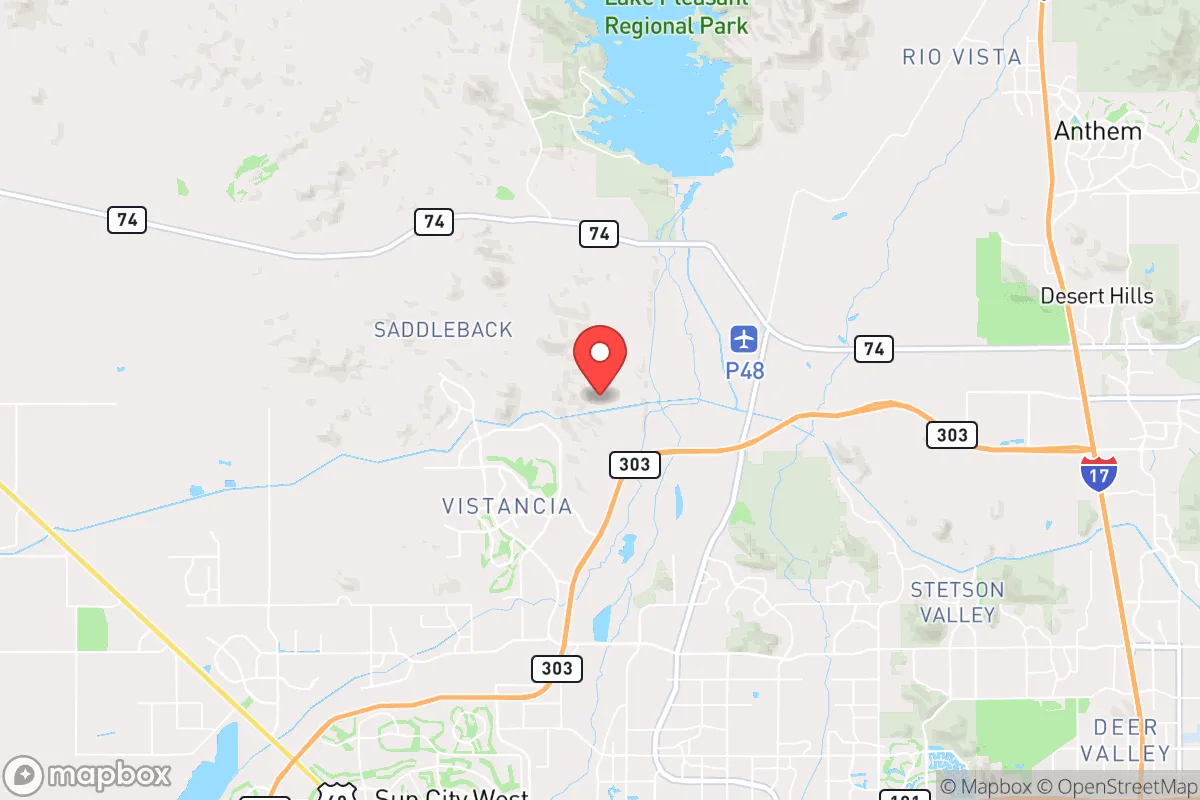
Photo: Wikipedia
Personal Sovereignty in Peoria, AZ
Viable for self-reliance. Generally workable, though some barriers may limit total independence.
What does Personal Sovereignty tell us?
Personal Sovereignty measures your capacity for self-reliance and independence with minimal government friction. Higher scores mean fewer barriers between you and the way you want to live... but it assumes you have the space you need and good neighbors.
What does this tell us?
Personal Sovereignty measures your capacity for self-reliance and independence with minimal government friction. Higher scores mean fewer barriers between you and the way you want to live... but it assumes you have the space you need and good neighbors.
State Policy
Energy independence: Importer (20% of energy produced in-state)
Personal Liberty
Homesteading

Personal Liberty Analysis
For the liberty-minded individual or family evaluating Peoria, Arizona, the city offers a notably strong environment for personal sovereignty compared to most of the United States, though it is not without its own set of municipal-level constraints. The state’s preemption laws on firearms, its flat income tax, and its generally pro-business regulatory climate create a foundation of autonomy that is increasingly rare. However, Peoria’s rapid suburban growth has introduced homeowners' association (HOA) covenants and city ordinances that can chafe against a true survivalist or prepper mindset, making it essential to understand where the city’s local rules intersect with state-level freedoms. This analysis breaks down the key pillars of personal sovereignty—tax burden, self-defense, self-reliance, and personal liberties—to give you a clear picture of what daily autonomy looks like here.
Tax burden and regulatory posture: How much of your income and property stays yours
Arizona’s tax structure is a major draw for those seeking to minimize government extraction. The state operates a flat income tax rate of 2.5% as of 2026, meaning no progressive brackets that punish higher earners or small business owners. There is no state-level estate or inheritance tax, and the state sales tax sits at 5.6%, though Peoria adds its own municipal rate, bringing the combined total to roughly 8.6% depending on the specific location within city limits. Property taxes are the real bright spot: the effective property tax rate in Maricopa County, which includes Peoria, averages around 0.55% of assessed value, well below the national average of roughly 1.1%. This means a $400,000 home would carry an annual tax bill of about $2,200—a fraction of what you’d pay in states like Illinois or New York. On the regulatory side, Arizona is a “right-to-work” state, and Peoria does not impose rent control or burdensome business licensing beyond standard building permits. The city’s zoning code is generally permissive for home-based businesses, but be aware that HOAs—which cover a large portion of newer subdivisions—can impose their own restrictions on vehicle storage, signage, and even home occupation types. For the prepper, the key takeaway is that state-level tax and regulatory burdens are low, but you must vet your specific neighborhood’s covenants before buying.
Self-defense and gun law specifics: What you can carry, where, and how to store it
Arizona is a constitutional carry state, meaning no permit is required to carry a concealed firearm for anyone legally allowed to possess one. This is a foundational liberty for the survivalist mindset. Peoria itself does not have any city-level gun restrictions that exceed state law—no magazine capacity bans, no “assault weapon” registries, and no waiting periods for private sales. The state preempts all local firearm ordinances, so Peoria cannot legally pass its own gun control measures. Stand-your-ground laws are fully in effect, with no duty to retreat in any place you are lawfully present. For storage, there is no state mandate for gun safes or trigger locks, though you should be aware that federal law still applies to certain transactions. One practical consideration: Peoria’s proximity to the Lake Pleasant recreation area and the Bradshaw Mountains means you can legally carry while hiking, camping, or off-roading without issue. The only notable restriction is that carrying in K-12 school zones without a permit is a federal offense, though Arizona law allows for a concealed weapons permit to bypass this. For the prepper, the legal environment is about as favorable as it gets in the continental U.S., but you still need to respect private property rights—many HOAs have no authority over firearms inside your home, but they can restrict shooting ranges on your lot if you’re in a subdivision.
Self-reliance and homesteading viability: Lot sizes, zoning, and off-grid feasibility
This is where Peoria presents a mixed picture. The city’s older, more rural western sections—areas near Lake Pleasant Parkway and north of the Carefree Highway—still offer lots of 1 to 5 acres where you can keep chickens, goats, and even horses under county zoning. However, the vast majority of Peoria’s recent growth has been master-planned communities with lot sizes of 6,000 to 10,000 square feet, often governed by HOAs that prohibit livestock, large gardens, or any structure that looks “temporary.” Off-grid feasibility is limited within city limits: Peoria requires connection to municipal water and sewer in most subdivisions, and solar panels are allowed but must meet HOA aesthetic guidelines. Rainwater harvesting is legal and even encouraged by the state, but you cannot drill a well on a standard suburban lot. For the serious homesteader, the best strategy is to target unincorporated areas of Maricopa County just north of Peoria, such as the Lake Pleasant or Morristown areas, where you can find 5- to 40-acre parcels with no HOA, no building permit requirements for sheds, and the ability to install septic systems and solar arrays without city interference. Inside Peoria proper, you can still have a substantial garden and a workshop, but you will be subject to city code enforcement and HOA rules that can limit your ability to stockpile materials or operate heavy equipment.
Personal liberties: Parental rights, medical autonomy, speech, and property
Arizona has been a battleground for personal liberties, and the outcomes have generally favored the individual. Parental rights are explicitly protected under state law, with a 2022 statute affirming that parents have the fundamental right to direct their children’s education, healthcare, and religious upbringing. This means no mask mandates for kids, no vaccine requirements for school attendance beyond standard childhood immunizations (which have a broad exemption process), and no government interference in homeschooling or private school choice. Medical autonomy is strong: Arizona does not have a state-level vaccine passport system, and emergency use authorization vaccines cannot be mandated by employers or schools. The state also has a robust “right to try” law for terminally ill patients and a medical marijuana program that is well-established. On speech, Peoria has no local ordinances restricting political signs or public assembly beyond standard time-place-manner rules, and the city council meetings are open to public comment. Property rights are protected by Arizona’s strong eminent domain laws, which require “just compensation” and a public purpose, though the city has used eminent domain for road widening projects. One notable liberty concern: Peoria’s noise ordinances are enforced, so if you plan to run a generator or workshop late at night, you may face fines. Overall, the state’s legal framework gives you wide latitude to live as you see fit, but the city’s suburban character means you must be mindful of neighbors and local codes.
In the broader context of the American Southwest, Peoria offers a top-tier balance of low taxes, strong gun rights, and parental autonomy, but it is not a libertarian free-for-all. The city’s rapid growth has brought with it the trappings of suburban governance—HOAs, zoning restrictions, and code enforcement—that can frustrate those seeking total self-reliance. For the survivalist or prepper, the smart move is to buy in the unincorporated fringe areas north of Peoria, where you get the same state-level freedoms without the municipal oversight. If you must live within city limits for work or schools, choose a neighborhood with minimal HOA restrictions and a lot size of at least half an acre. Compared to states like California, Oregon, or New York, Peoria is a sanctuary of personal sovereignty. Compared to rural Montana or Idaho, it is a compromise. But for a family that wants good infrastructure, solid schools, and the legal right to defend themselves and raise their children without government interference, Peoria is a strong contender.

* Values derived from national, state, county, city and local statistics and may differ in a specific area. Last updated: 2026-05-02T09:08:40.000Z
Narrative content on this page is AI-generated and may contain mistakes. Verify any details that matter before acting on them.
ReloMaps may earn a commission from affiliate links at no extra cost to you.

