Political ClimatePolitical Climate in Pine Ridge, FL
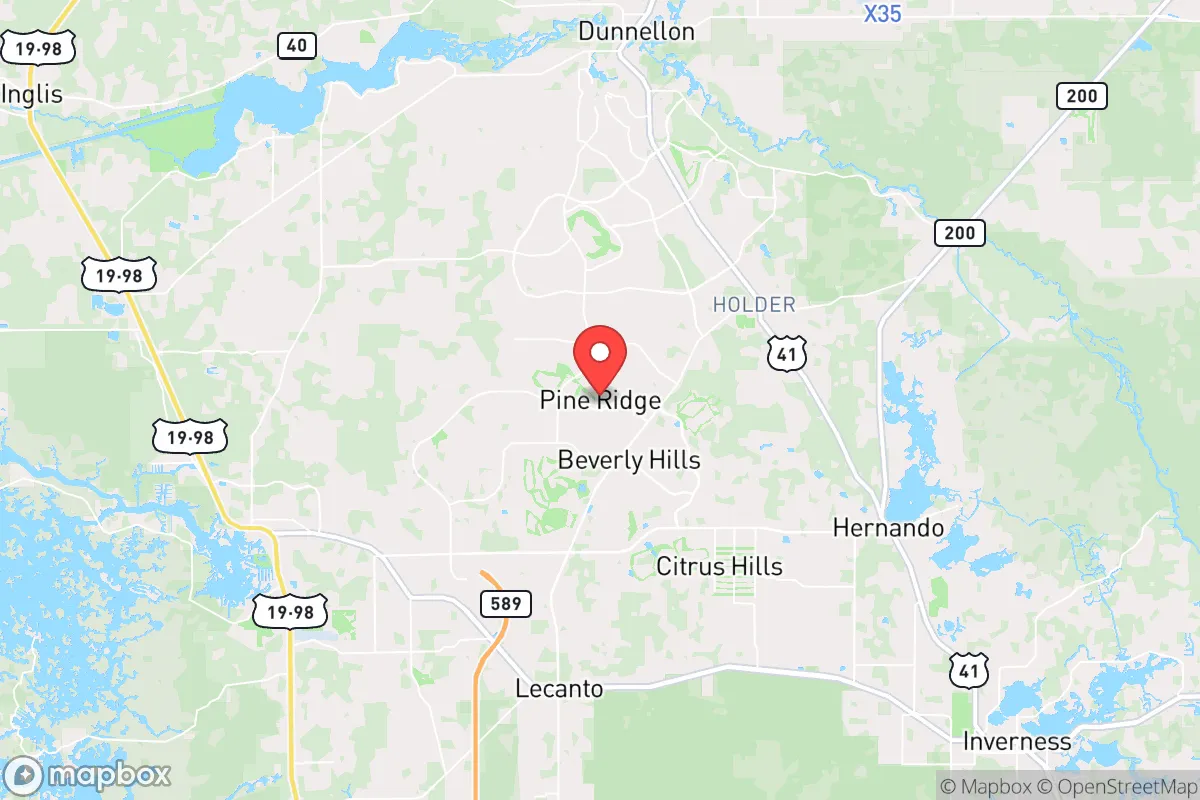
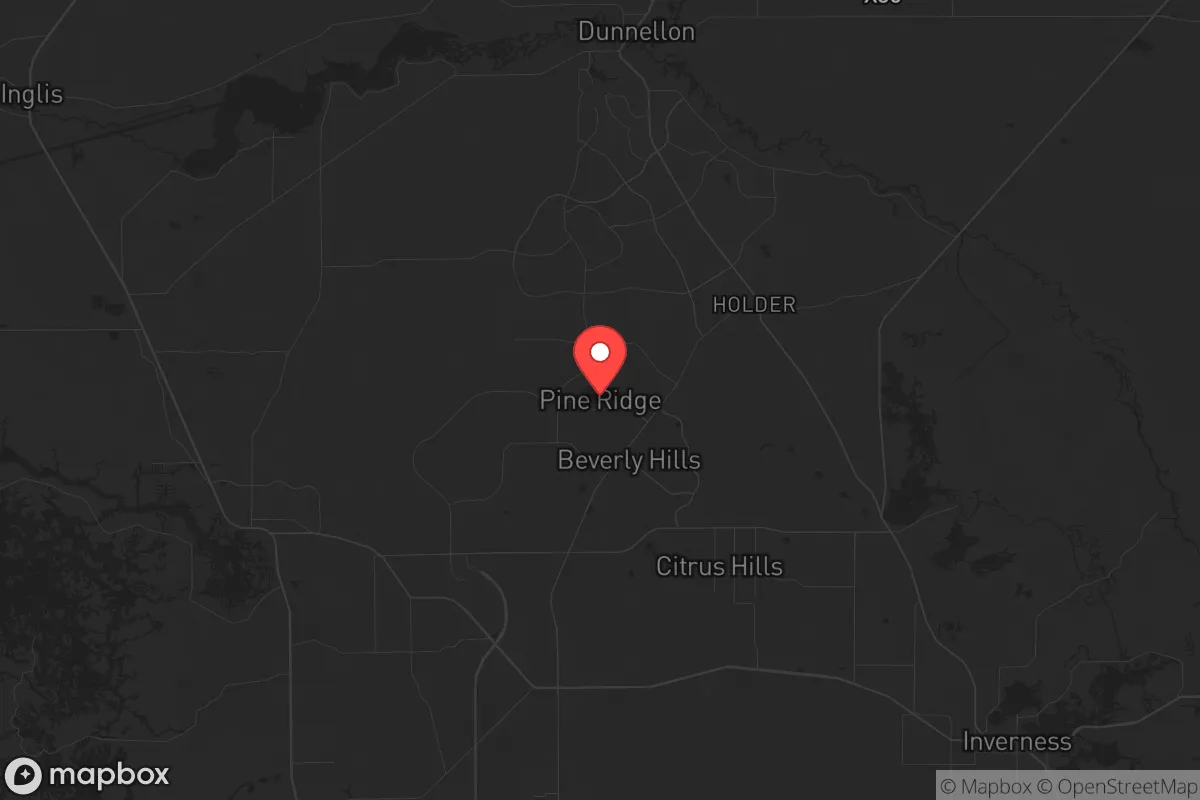
District shown is the primary district for this city’s centroid. Cities may span multiple districts.
Local Political AnalysisPolitical Analysis of Pine Ridge, FL
Pine Ridge, Florida, is about as solidly conservative as it gets in this part of the state, and it’s been that way for as long as I can remember. The Cook PVI here is a whopping R+17, which means you’re looking at a community that votes Republican by a margin that’s 17 points higher than the national average. That’s not just a lean; it’s a deep-rooted political identity. For context, the rest of Florida sits at R+5, so Pine Ridge is significantly more conservative than the state as a whole. You don’t see the kind of political flip-flopping you might find in some of the bigger cities or coastal towns. This area has a consistent, reliable voting record that reflects a strong preference for limited government, personal responsibility, and traditional values.
How it compares
When you stack Pine Ridge up against the rest of Florida, the difference is stark. The state’s R+5 rating means it’s still a Republican-leaning state overall, but it’s a lot more purple than Pine Ridge. You’ve got places like Miami-Dade or Orlando that are much more progressive, and even some of the nearby towns—like Ocala or Gainesville—have a more mixed political vibe. Ocala, for instance, is conservative but not as rock-solid as Pine Ridge, and Gainesville is a liberal stronghold thanks to the university. In Pine Ridge, you don’t have that kind of split. The local elections, the county commission, the school board—they’re all dominated by folks who believe in keeping government out of your business. The contrast is especially clear when you look at policy: while the state has seen some shifts toward progressive ideas on things like environmental regulations or housing mandates, Pine Ridge has largely held the line. It’s a place where the Second Amendment isn’t debated, taxes are kept low, and the idea of government overreach into personal freedoms is met with serious skepticism.
What this means for residents
For anyone living here, this political climate means a lot of day-to-day freedom. You’re not dealing with the kind of heavy-handed regulations you might see in more progressive areas. Property rights are respected, zoning is straightforward, and there’s not a lot of bureaucratic red tape getting in the way of your life. The local government tends to focus on core services—roads, public safety, schools—rather than trying to dictate how you live. That said, there’s a growing concern among long-time residents about the state-level trends. Florida as a whole has been drifting a bit more toward the center, and some of those progressive ideas are starting to creep in. You see it in things like state-level housing policies that push for more density, or environmental rules that can feel like an overreach. In Pine Ridge, folks are keeping a close eye on that. The worry is that if the state keeps shifting, it could start to erode the local character. For now, though, the community is resilient. People here are engaged, they vote, and they’re not shy about pushing back against anything that feels like an infringement on their rights.
Culturally, Pine Ridge stands apart from the rest of Florida in a few key ways. You won’t find the same kind of transient, tourist-driven vibe you get in places like Orlando or the coast. This is a community where people know their neighbors, and there’s a strong sense of local identity. The policy distinctions are clear: lower taxes, fewer regulations, and a general distrust of big government. While the state has flirted with more progressive policies on things like education and environmental management, Pine Ridge has stayed the course. It’s a place where the old-school Florida values—self-reliance, respect for the Constitution, and a healthy skepticism of authority—are still the norm. If you’re looking for a place where you can live your life without a lot of interference, this is it. Just keep an eye on the state legislature, because the winds of change are blowing, and not everyone in Pine Ridge is happy about where they’re headed.

State Political ClimatePolitical Climate in Florida
State Political AnalysisPolitical Environment in the State
Florida is a solidly Republican state with a Cook PVI of R+5, but calling it a simple red state misses the real story. The dominant coalition is a mix of conservative retirees, military veterans, and a growing number of families fleeing blue states, but the state’s trajectory over the last 20 years has been a dramatic lurch rightward. In the early 2000s, Florida was a true swing state—George W. Bush won it by just 537 votes in 2000, and Barack Obama carried it in 2008 and 2012. Since then, the GOP has consolidated power, with Donald Trump winning the state by 3 points in 2016, 3.4 points in 2020, and a decisive 13 points in 2024. The shift is driven by massive in-migration from the Northeast and Midwest, plus a wave of conservative Latino voters in Miami-Dade and the I-4 corridor.
Urban vs. rural divide
The political map is stark. The major metros—Miami-Dade, Broward, and Palm Beach in South Florida—are the Democratic strongholds, but even there, the blue is fading. Miami-Dade, once a Democratic lock, flipped to Trump in 2024 by 11 points, driven by Cuban and Venezuelan exiles who despise socialism. Orlando (Orange County) and Tampa (Hillsborough County) are purple, trending blue in the cities but red in the suburbs. The real engine of Republican power is the sprawling exurbs and rural counties: Pasco County north of Tampa, Lake County northwest of Orlando, and the entire Panhandle from Pensacola to Tallahassee. These areas vote 65-75% Republican and are growing fast. The I-4 corridor from Tampa to Daytona is the classic swing region, but it’s now reliably red in midterm and presidential cycles. The rural north and the conservative beach towns like Naples and Fort Myers are deep red, while the college towns like Gainesville (Alachua County) and Tallahassee (Leon County) are blue islands surrounded by a red sea.
Policy environment
Florida’s policy environment is aggressively conservative and pro-freedom by design. There is no state income tax, which is a massive draw for high-earners and retirees. Property taxes are moderate, and the state has a homestead exemption that caps annual assessment increases at 3% for primary residences. The regulatory posture is business-friendly: Florida is a right-to-work state, and permitting for construction and development is streamlined compared to the Northeast. On education, Governor Ron DeSantis pushed through the Parental Rights in Education Act (HB 1557, the so-called “Don’t Say Gay” law) and the Stop WOKE Act (HB 7), which restricts critical race theory and DEI training in schools and workplaces. School choice is robust, with the Family Empowerment Scholarship program allowing state funds to follow students to private or charter schools. Healthcare policy is mixed: Florida did not expand Medicaid under the ACA, and the state has a competitive private insurance market. Election laws were tightened after 2020 with SB 90, which requires voter ID, limits drop boxes, and restricts mail-in ballot harvesting. The state also passed a 15-week abortion ban (HB 5) in 2022, later extended to six weeks in 2023 (SB 300), with exceptions for rape, incest, and life of the mother.
Trajectory & freedom
Florida is becoming more free for conservatives, but the definition of freedom is contested. On gun rights, Florida is a “shall issue” state for concealed carry, and in 2023, DeSantis signed HB 543, allowing permitless carry (constitutional carry) for anyone 21 or older who can legally own a firearm. This was a major expansion of Second Amendment rights. On parental rights, the state has been a national leader: the Parental Rights in Education Act gives parents control over curriculum and medical decisions, and the Stop WOKE Act prohibits employers and schools from forcing employees or students to adopt certain ideological beliefs. Medical autonomy took a hit with the six-week abortion ban, but the state also passed SB 1580 in 2023, which protects medical professionals from being forced to perform procedures against their conscience. Property rights are strong: Florida has no state-level rent control (preempted by statute), and the Private Property Rights Protection Act limits eminent domain abuse. Taxation is trending lower: the state cut the corporate income tax rate from 5.5% to 4.5% in 2023 and has repeatedly suspended the gas tax. The trajectory is clearly toward more personal liberty in the traditional sense—less government interference in family, business, and gun ownership—but with a heavy hand on immigration and social issues.
Civil unrest & political movements
Florida has seen its share of political flashpoints, but the intensity has shifted. The 2020 Black Lives Matter protests in Miami, Tampa, and Orlando were large but mostly peaceful, with some looting in downtown Miami. The state responded with HB 1 (the “Combating Violence, Disorder and Looting and Law Enforcement Protection Act”) in 2021, which created new felonies for rioting and blocking roads, and made it easier to sue local governments that defund the police. Immigration politics are front and center: DeSantis made national headlines by flying migrants from Texas to Martha’s Vineyard in 2022, and the state passed SB 1718 in 2023, which requires businesses with 25+ employees to use E-Verify, bans local governments from issuing ID cards to undocumented immigrants, and makes it a felony to transport illegal aliens into the state. There is no sanctuary city movement—the state preempted that in 2019 with SB 168, which requires local law enforcement to cooperate with ICE. Election integrity remains a hot topic: the 2020 election in Florida was widely seen as clean, but the state created a new Office of Election Crimes and Security in 2022, which has prosecuted dozens of cases of alleged voter fraud. The organized activist scene is dominated by conservative groups like Moms for Liberty (founded in Florida) and the Florida Family Action, while progressive groups like Dream Defenders and ACLU of Florida are active but losing ground. A new resident would notice the constant political ads, the strong police presence in urban areas, and the palpable sense that the state government is actively fighting the culture war.
Projection
Over the next 5-10 years, Florida will likely become even more Republican and more culturally conservative. The demographic trends are clear: the state is adding about 300,000 new residents per year, and the majority are coming from high-tax, high-regulation states like New York, California, and Illinois. These migrants tend to be older, wealthier, and more conservative than the national average. The Latino vote, especially in Miami-Dade, is shifting right as second-generation Cuban and Venezuelan voters become more influential. The only wildcard is the growing population of young, college-educated professionals moving to Tampa and Orlando for tech and finance jobs—they tend to be more moderate or libertarian, but not necessarily Democratic. The state’s housing affordability crisis (home prices up 50% since 2020) could eventually slow in-migration, but for now, the political trajectory is a steady march rightward. Expect more school choice expansion, further tax cuts, and continued battles over abortion and immigration. The state will remain a national laboratory for conservative governance, and anyone moving here in 2026 should expect to live in a place where the government actively promotes traditional values, limits its own reach on most issues, and is unapologetically red.
For a new resident, the bottom line is this: Florida offers a high degree of personal freedom on taxes, guns, and education, but it comes with a government that is not shy about enforcing its values on immigration, abortion, and social issues. If you want low taxes, strong property rights, and a state that respects parental control over children, you’ll feel liberated. If you’re looking for a place where the government stays out of your personal medical decisions or where local communities can set their own immigration policies, you’ll find the state increasingly intrusive. The practical takeaway: Florida is a great fit for conservatives and libertarians who prioritize economic freedom and family autonomy, but it’s not a live-and-let-live paradise—it’s a state with a clear political vision, and it’s doubling down on that vision every year.
* Values derived from national, state, county, city and local statistics and may differ in a specific area. Last updated: 2026-05-14T02:26:57.000Z
Narrative content on this page is AI-generated and may contain mistakes. Verify any details that matter before acting on them.
ReloMaps may earn a commission from affiliate links at no extra cost to you.

