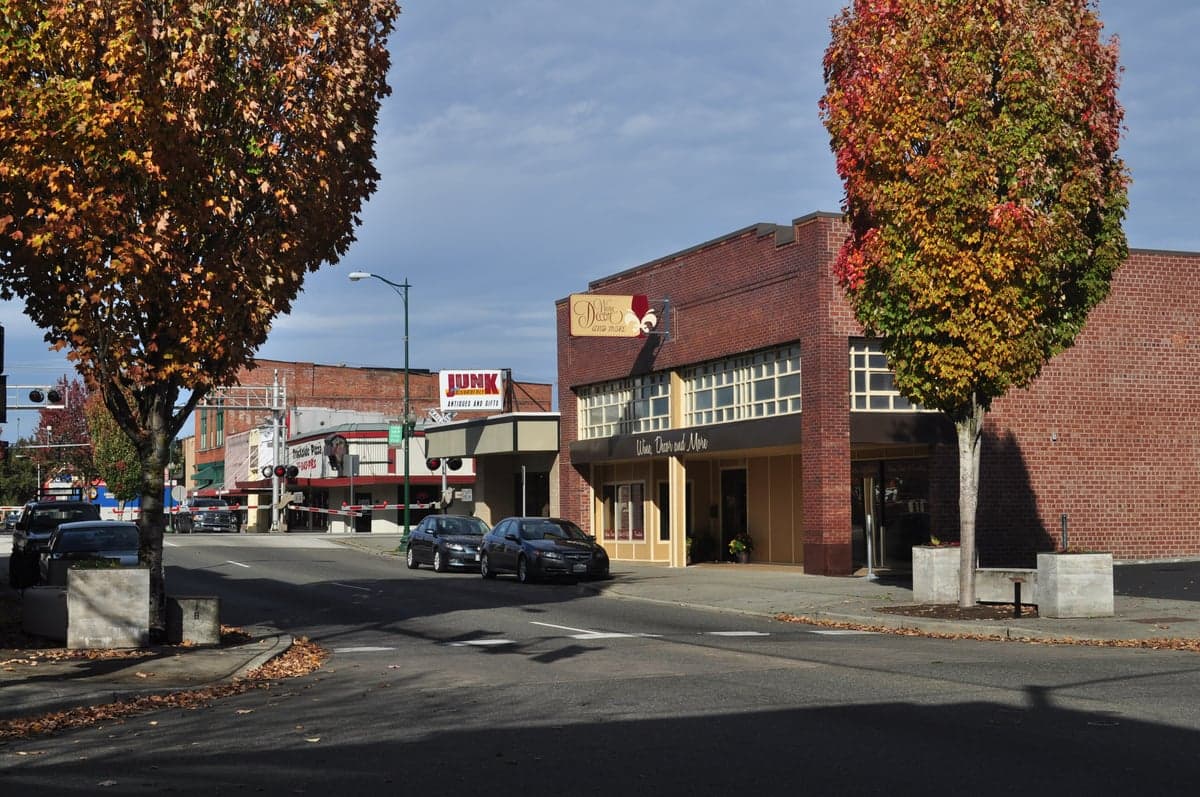
Photo: Wikipedia
Personal Sovereignty in Puyallup, WA
Viable for self-reliance. Generally workable, though some barriers may limit total independence.
What does Personal Sovereignty tell us?
Personal Sovereignty measures your capacity for self-reliance and independence with minimal government friction. Higher scores mean fewer barriers between you and the way you want to live... but it assumes you have the space you need and good neighbors.
What does this tell us?
Personal Sovereignty measures your capacity for self-reliance and independence with minimal government friction. Higher scores mean fewer barriers between you and the way you want to live... but it assumes you have the space you need and good neighbors.
State Policy
Energy independence: Importer (55% of energy produced in-state)
Personal Liberty
Homesteading

Personal Liberty Analysis
Puyallup, Washington, presents a mixed picture for those prioritizing personal sovereignty. While the city itself and surrounding Pierce County offer a more moderate, working-class character than Seattle, residents must contend with a state government in Olympia that has aggressively expanded its reach into areas of taxation, regulation, and personal liberties. For the individual or family with a survivalist or prepper mindset, Puyallup provides a strategic foothold—close to rural escape routes and military infrastructure—but the legal and fiscal environment requires careful navigation to preserve autonomy.
Tax burden and regulatory posture in Puyallup
Washington State’s lack of a personal income tax is a significant advantage for sovereignty-minded individuals. Your labor and investment income remain untaxed at the state level, which is a powerful tool for wealth accumulation and self-reliance. However, the state compensates with a high sales tax—currently over 10% in Pierce County when local options are included—which hits every purchase you make, from groceries to ammunition. Property taxes in Puyallup are moderate but rising, with the effective rate hovering around 1.0% of assessed value, though annual increases are capped at 1% plus new construction, limiting runaway growth. The regulatory posture is where the friction becomes acute. Washington has a robust state preemption law for firearms, but it has been eroded by recent legislation. The state’s Department of Ecology wields broad authority over land use, water rights, and building codes, making any off-grid or independent construction project subject to lengthy permitting processes. For a prepper, this means that while you can own land, the state’s regulatory grip on what you can do with it is tighter than in Idaho or Montana. The business climate is similarly constrained: no corporate income tax, but a Business & Occupation (B&O) tax on gross receipts, regardless of profitability, penalizes small-scale entrepreneurs and side hustles that are the backbone of self-reliance.
Self-defense and gun law specifics in Pierce County
Washington’s gun laws have shifted dramatically in recent years, and Puyallup residents are directly affected. The state now requires a 10-day waiting period for all firearm purchases, a mandatory background check for private sales (via a licensed dealer), and a permit-to-purchase system for semi-automatic rifles. Magazine capacity is capped at 10 rounds for rifles and 15 for handguns, which directly impacts defensive and prepping capabilities. The state also bans the manufacture, sale, and import of “assault weapons,” though existing firearms owned before the ban are grandfathered. Open carry is legal without a permit, but the political climate in Pierce County is increasingly hostile to visible firearms in public spaces. Concealed carry requires a license, which is shall-issue for residents, but the training requirement and fee create a barrier. For the survivalist, the most concerning development is the state’s red flag law, which allows for temporary firearm seizure based on a petition from law enforcement or family members—a tool that can be abused in a politically charged environment. On the positive side, Pierce County has a strong tradition of gun ownership, and ranges like the Paul Bunyan Rifle & Sportsmen’s Club offer training and community. The key takeaway: Puyallup is not a free state for gun owners. You can defend yourself, but the state has erected significant hurdles, and the legal landscape is trending toward further restriction.
Self-reliance and homesteading viability in the Puyallup Valley
The Puyallup Valley offers some of the best agricultural soil in the state, and the city’s zoning code allows for small-scale homesteading on standard residential lots. Many single-family homes sit on quarter-acre to half-acre parcels, which is enough for a substantial vegetable garden, a few fruit trees, and even small livestock like chickens or rabbits—provided you follow city ordinances on coop placement and noise. The city’s municipal code permits backyard chickens (hens only, no roosters) on lots under 10,000 square feet, and larger lots can accommodate goats or sheep with a permit. However, off-grid living is effectively illegal within city limits. Puyallup requires connection to municipal water and sewer, and building codes mandate compliance with state energy standards. Solar panels are allowed but must be grid-tied; battery storage for full independence is not prohibited but is subject to fire code restrictions. Rainwater collection is legal for non-potable uses, but the state’s water rights laws complicate any serious off-grid water system. For those seeking true self-reliance, the rural fringe of Pierce County—east toward Mount Rainier or south toward Eatonville—offers larger parcels (5-20 acres) with fewer restrictions, but the commute to Puyallup’s employment centers becomes a factor. The area’s moderate climate (mild winters, dry summers) is a boon for year-round gardening, and the proximity to the Cascades provides abundant hunting and foraging opportunities. But the regulatory overhead means that homesteading here requires working within the system, not outside it.
Personal liberties: parental rights, medical autonomy, speech, and property
Parental rights in Washington have been a battleground. The state has passed laws that allow minors to consent to certain medical procedures (including reproductive health and gender-affirming care) without parental notification, which is a direct challenge to family sovereignty. Puyallup’s school district, while more conservative than Seattle’s, operates under state mandates that include comprehensive sexual health education and policies that can override parental input on curriculum. For parents seeking to opt out or homeschool, Washington has relatively low barriers: you file a declaration of intent, provide annual assessments, and meet basic subject requirements. The homeschooling community in Pierce County is active and well-organized, with co-ops and support groups. Medical autonomy is similarly constrained. Washington has a state-run health insurance exchange and mandates coverage for a wide range of services. The state’s response to COVID-19 included vaccine mandates for healthcare workers and school staff, and while those have been relaxed, the precedent for government-mandated medical decisions remains. For the prepper, this means maintaining a robust personal medical kit and building relationships with independent-minded healthcare providers is essential. Free speech protections are strong under the Washington State Constitution, which has been interpreted more broadly than the First Amendment in some cases. However, the state’s hate crime laws and social media regulations create a chilling effect for controversial viewpoints. Property rights are the brightest spot: Washington’s strong homestead exemption protects up to $125,000 of equity from creditors, and the state does not have a forced-pooling law for mineral rights. But the Growth Management Act (GMA) restricts how you can use your land, particularly in rural areas, and the state’s environmental regulations can delay or block construction projects.
In the final analysis, Puyallup offers a strategic compromise for the sovereignty-minded individual. You get the economic benefits of a no-income-tax state, a moderate local culture, and access to some of the best natural resources in the Pacific Northwest. But the trade-offs are real: a heavy sales tax, increasingly restrictive gun laws, and a state government that has shown little hesitation in overriding local and parental control. Compared to a place like Coeur d’Alene, Idaho, or Kalispell, Montana, Puyallup is a less sovereign environment. Compared to Seattle or Portland, it is a bastion of relative freedom. For the prepper or survivalist, the key is to treat Puyallup as a base of operations—a place to build community and resources—while maintaining a plan for relocation if the state’s overreach becomes untenable. The area’s strategic location near Joint Base Lewis-McChord, the Port of Tacoma, and the Cascade escape routes makes it a defensible position, but only if you are willing to fight the regulatory battles that come with it.

* Values derived from national, state, county, city and local statistics and may differ in a specific area. Last updated: 2026-04-21T11:00:17.000Z
Narrative content on this page is AI-generated and may contain mistakes. Verify any details that matter before acting on them.
ReloMaps may earn a commission from affiliate links at no extra cost to you.

