Photo: Wikipedia
Quality of Life in Radford, VA
A high quality of life with strong walkability, manageable living costs, healthy neighborhood signals, and solid amenity access.
What does Quality of Life tell us?
Quality of Life blends cost of living, nearby amenities, socioeconomic signals, and neighborhood character. City-level scores represent the whole municipality; individual neighborhoods can differ.
What does this tell us?
Quality of Life blends cost of living, nearby amenities, socioeconomic signals, and neighborhood character. City-level scores represent the whole municipality; individual neighborhoods can differ.
Cost of Living
20% below national average
The Real Cost of Living in Radford, VA for 2026
| Tier | Individual | Family (4) |
|---|---|---|
| Survival | $15k | $29k |
| Comfortable | $41k | $60k |
| Luxury | $95k+ | $148k+ |
| Elite (Top 5%) | $117k+ | $181k+ |
87%
The Area Signal
A metric tracking the socioeconomic signals of the area.
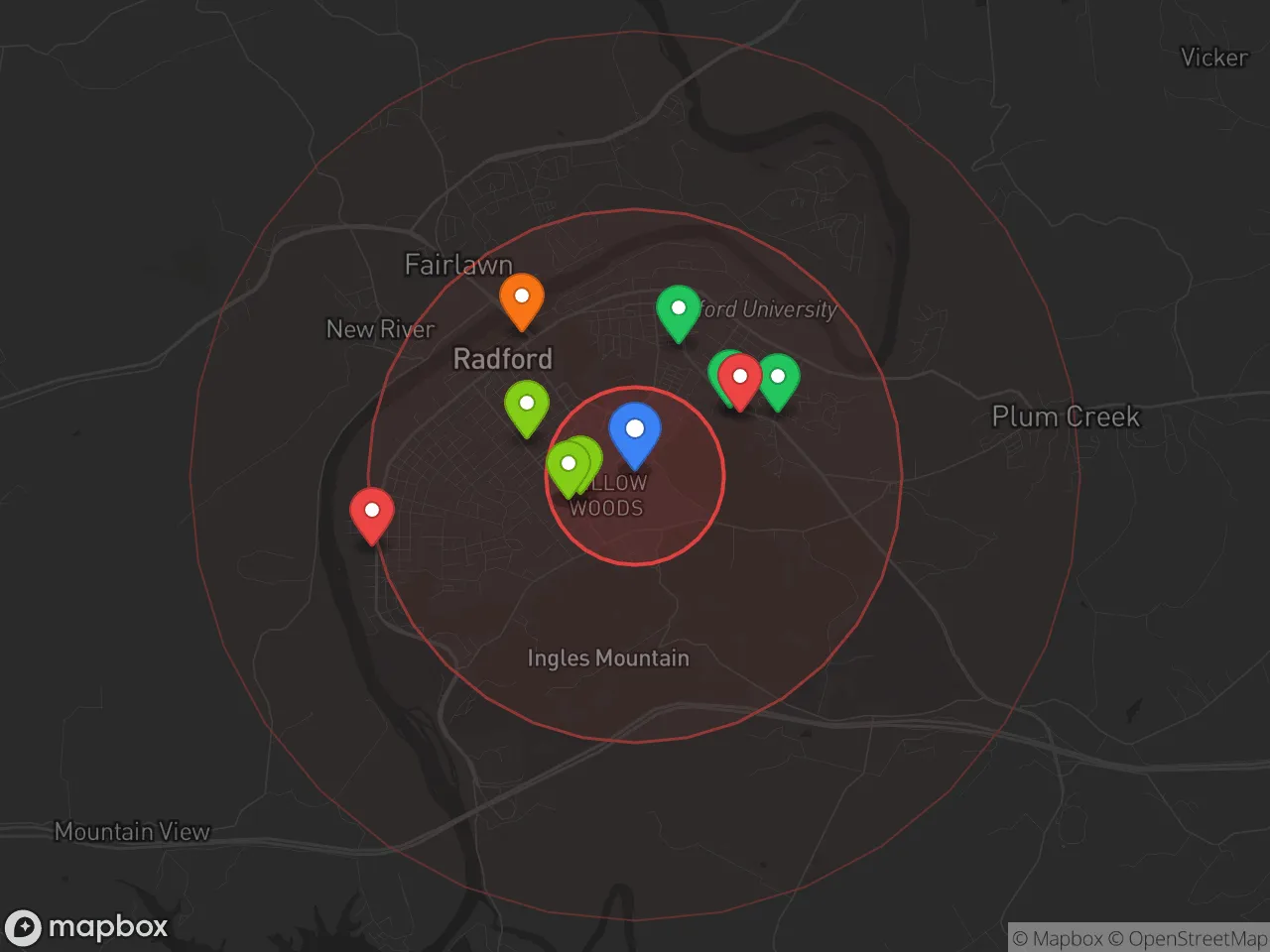
Hobbies
Explore the areaGroceries
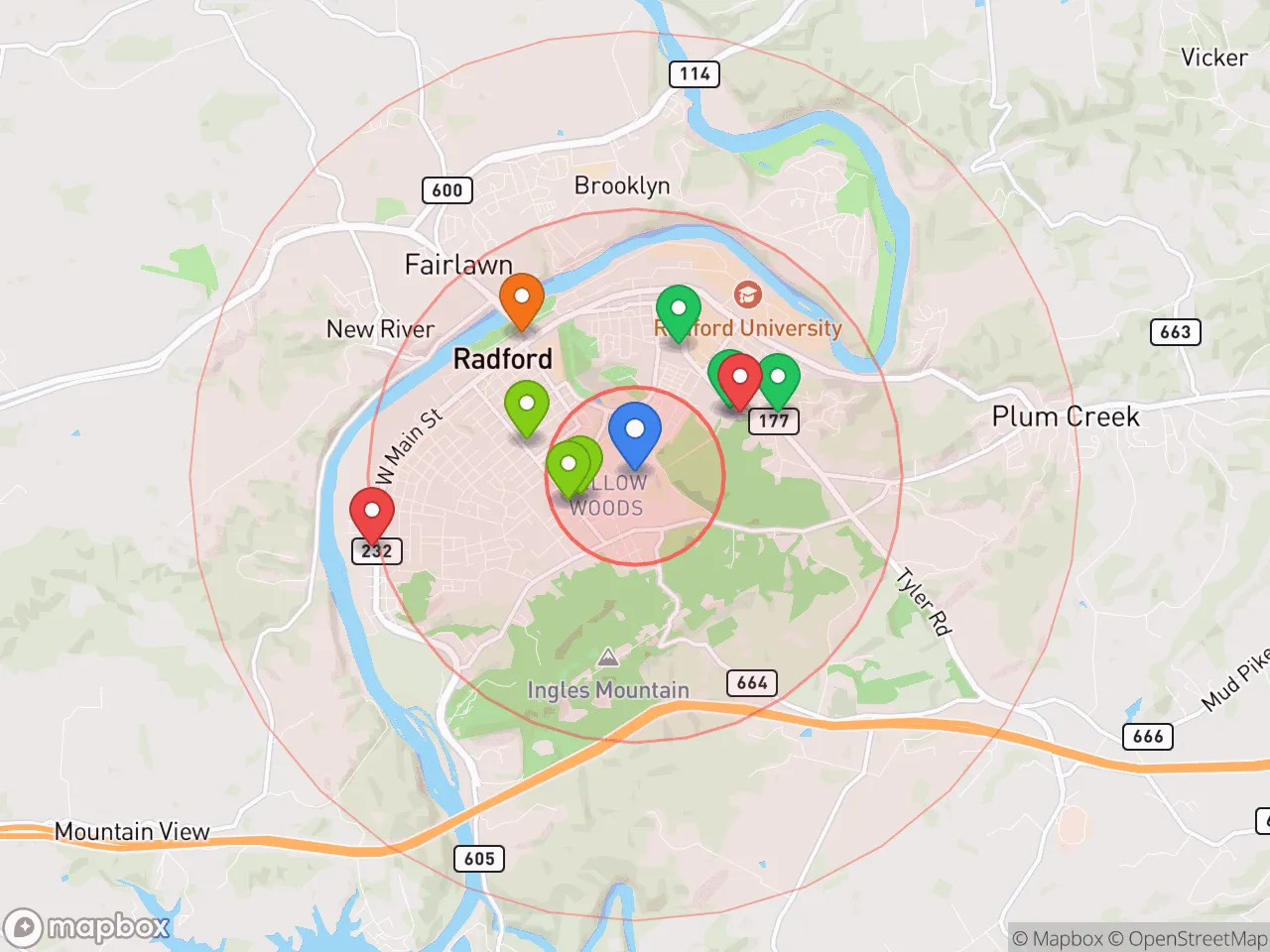
5 within 10 miles
Gas
20 within 10 miles
Hospital
5 within 20 miles
Airport
RDU — Raleigh–Durham International
Post Office
USPS — Radford, VA
Critical Amenities
Quality-of-Life Analysis
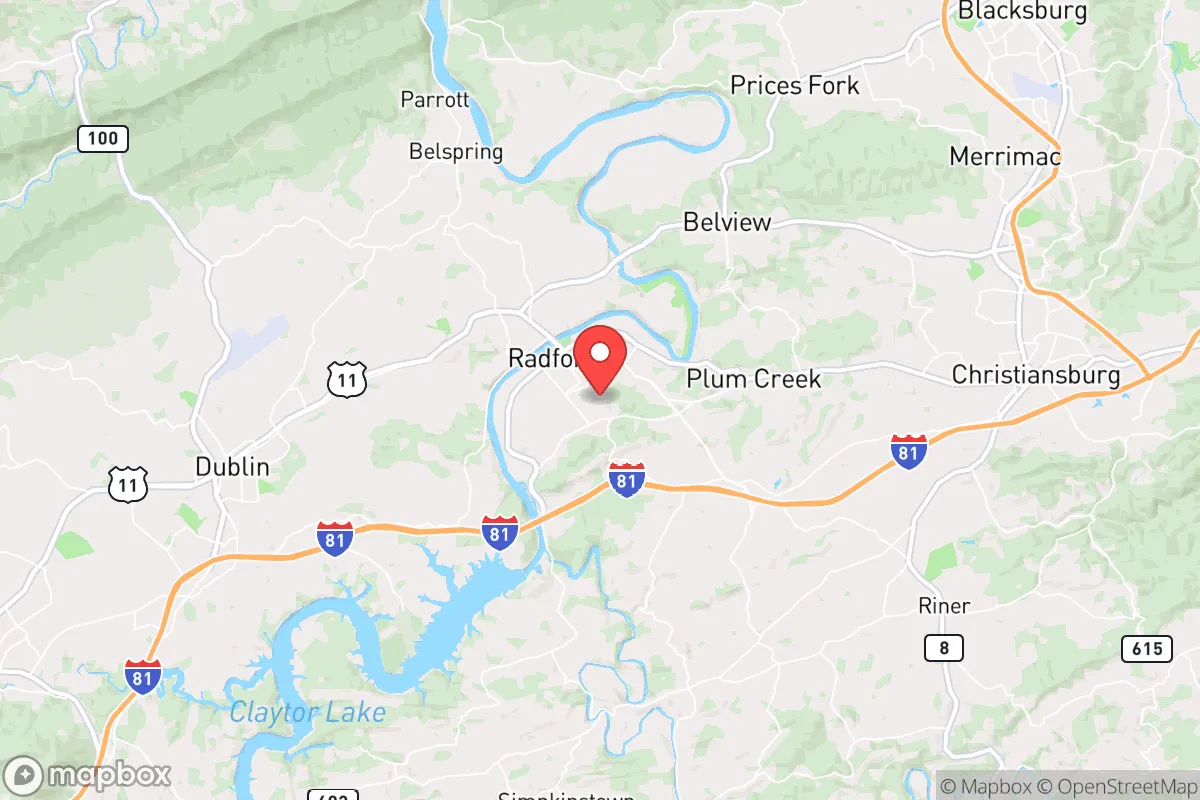
Radford, Virginia, presents a notably affordable quality of life that attracts a mix of university-affiliated residents, young families, and retirees seeking a slower pace without sacrificing access to outdoor recreation. With a cost of living index of 80 (20% below the U.S. average), the city offers a financial buffer that is increasingly rare in the New River Valley, particularly when compared to the higher housing costs of nearby Blacksburg and Christiansburg. The median home value of $211,700 and median rent of $966 place homeownership and stable rental options within reach for many, contrasting sharply with Blacksburg’s median home value exceeding $350,000.
Cost of living, housing, and how Radford compares to nearby cities
Radford’s affordability is its strongest draw, especially for those priced out of the Virginia Tech corridor. The median home value of $211,700 is roughly 40% lower than Blacksburg’s median, while the median rent of $966 is about $300 less per month than comparable units in Christiansburg. This price gap is driven largely by Radford’s smaller housing stock and less intense demand from student populations, though Radford University itself anchors a steady rental market. The average commute of just 17 minutes is among the shortest in the region, meaning residents save both time and transportation costs. Property taxes remain moderate, and the overall tax burden is lower than in Montgomery County, making Radford a practical choice for budget-conscious buyers and renters who still want proximity to the region’s employment and educational hubs.
Local amenities, schools, and what daily life feels like in Radford
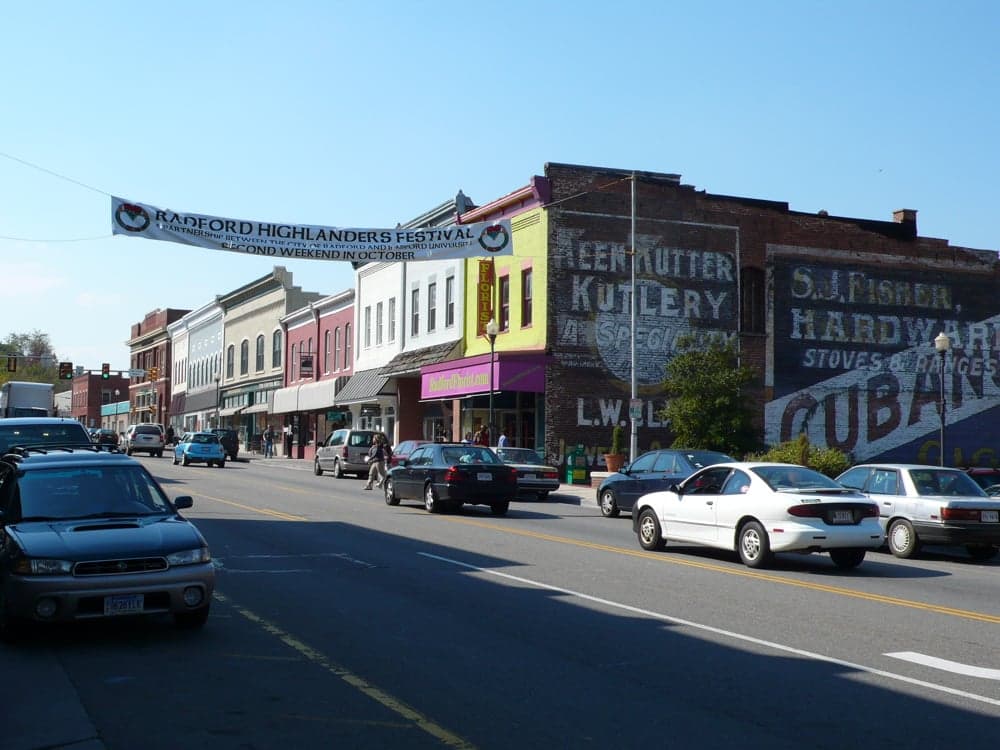
Daily life in Radford revolves around a compact, walkable downtown centered on Main Street, with local coffee shops, the Radford Public Library, and the New River Trail—a 57-mile rail-trail that runs directly through the city. The Radford City Public Schools system serves roughly 2,800 students, with Radford High School maintaining a solid reputation for college readiness, though some families opt for private or magnet options in nearby Roanoke. The presence of Radford University infuses the city with cultural events, Division I athletics, and a youthful energy, but the residential neighborhoods west of the university remain quiet and family-oriented. Grocery access is adequate with a Kroger and Food City, while major retail and healthcare services are a 15-minute drive to Christiansburg. The New River itself provides fishing, kayaking, and riverside parks like Bisset Park, which hosts summer concerts and a farmers market.
Radford is best suited for those who prioritize affordability, short commutes, and outdoor access over urban nightlife or high-end shopping. University employees, remote workers, and early-career professionals will find the housing market particularly accessible, while retirees on fixed incomes benefit from the low cost of living and walkable downtown. Families should weigh the school system’s size against the convenience of small-town life, but for anyone seeking a financially sustainable base in the New River Valley—especially those priced out of Blacksburg—Radford offers a genuine, quieter alternative without sacrificing proximity to the region’s amenities.

Crime in Radford, VA
Generally safer than 67% of comparable U.S. locations.
Violent CrimeViolent Crime Analysis
Property CrimeProperty Crime Analysis
Crime Analysis
Radford, Virginia, reports a violent crime rate of 255.4 incidents per 100,000 residents and a property crime rate of 805.8 per 100,000, placing it in a moderate range for a small city. While these figures are not the highest in the state, the city's proximity to the larger New River Valley metro area and its status as a college town (home to Radford University) create a safety profile that requires careful consideration. The overall safety picture is mixed, with property crime being a more frequent concern than violent offenses, though both rates warrant attention from potential residents.
Crime in context
Radford's violent crime rate of 255.4 per 100,000 is roughly 30% lower than the national average of about 380 per 100,000, but it sits close to the Virginia state average. Property crime at 805.8 per 100,000 is below the national average of approximately 1,950 per 100,000, yet it remains a persistent issue, particularly in areas near the university and commercial corridors. Compared to larger Virginia cities like Roanoke (which has a violent crime rate near 600 per 100,000) or Richmond (over 400 per 100,000), Radford appears safer on paper. However, the city's relatively small population means that a handful of incidents can skew annual statistics, and the presence of a progressive-leaning judicial environment in the New River Valley—common in many college towns—can influence how offenders are processed. Liberal district attorneys and judges in this region often prioritize diversion programs and reduced sentencing, which, while intended to reduce recidivism, can result in more offenders remaining on the streets and potentially re-offending, directly impacting public safety and victim justice.
What residents experience
Daily life in Radford involves a heightened awareness of property crime, particularly theft from vehicles and bicycle theft, which are common near the university campus and downtown areas. Violent crime, while less frequent, includes incidents of assault and robbery that often occur late at night near bars or student housing. Residents report that police response times are generally adequate, but the city's limited law enforcement resources mean that proactive patrols are concentrated in high-traffic zones. The progressive judicial philosophy in the region—where offenders are frequently given second chances through drug courts or probation rather than incarceration—can create a perception of leniency that frustrates victims and long-term residents. This approach, while sympathetic to offenders, can lead to repeat property crimes and a sense that the justice system prioritizes rehabilitation over accountability.
Neighborhood-level variation is notable in Radford. Areas west of the New River, including the Wildwood and Fairlawn communities, tend to have lower crime rates and a more suburban feel. In contrast, the East Radford neighborhoods near the university and along Main Street experience higher foot traffic and more opportunistic crime. The Bisset Park and downtown districts see occasional incidents, but overall, Radford's crime is not uniformly distributed, with the university area accounting for a disproportionate share of reported property offenses. Prospective residents should research specific blocks and consider proximity to campus when evaluating safety, as the city's compact size means that crime patterns can shift quickly based on seasonal student populations and local policing strategies.
* Values derived from national, state, county, city and local statistics and may differ in a specific area. Last updated: 2026-05-01T09:30:54.000Z
Narrative content on this page is AI-generated and may contain mistakes. Verify any details that matter before acting on them.
ReloMaps may earn a commission from affiliate links at no extra cost to you.

