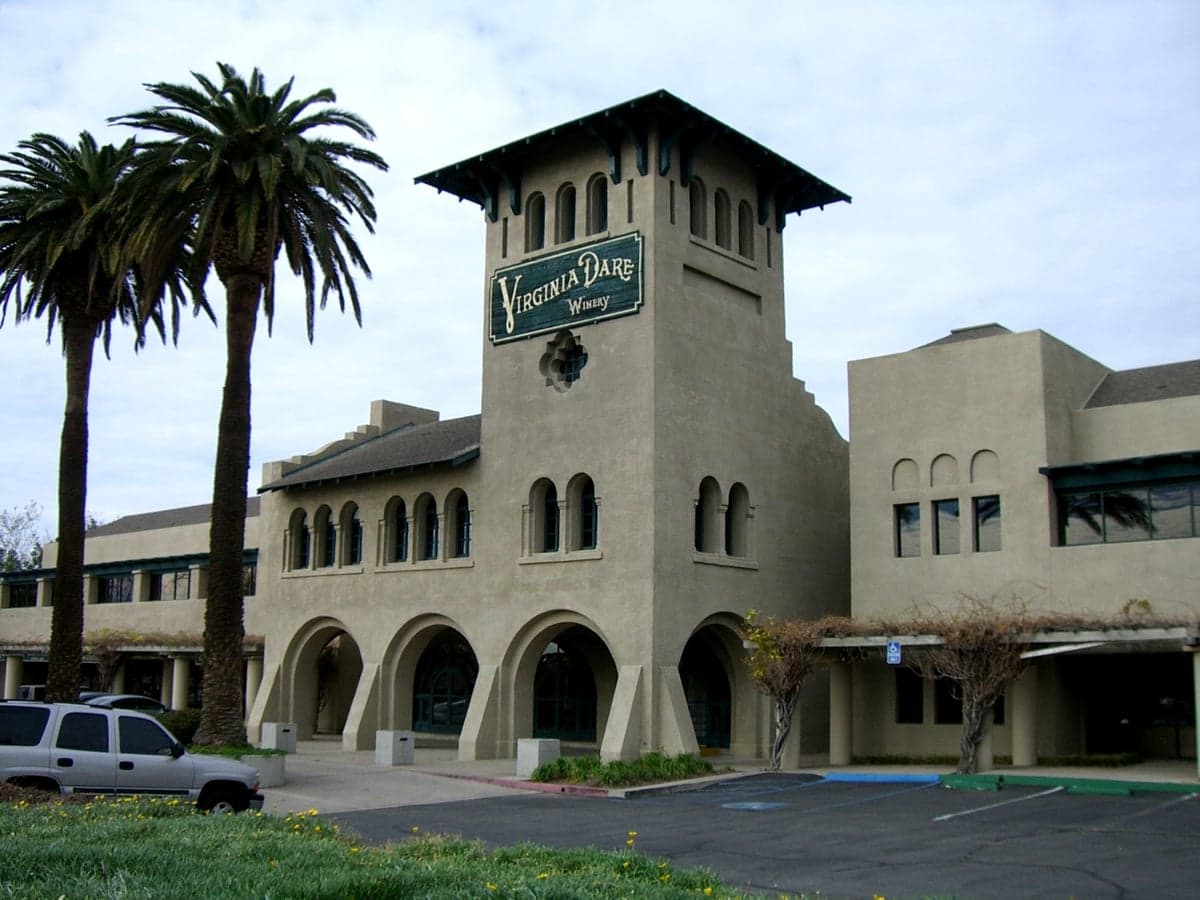
Photo: Wikipedia
Political ClimatePolitical Climate in Rancho Cucamonga, CA
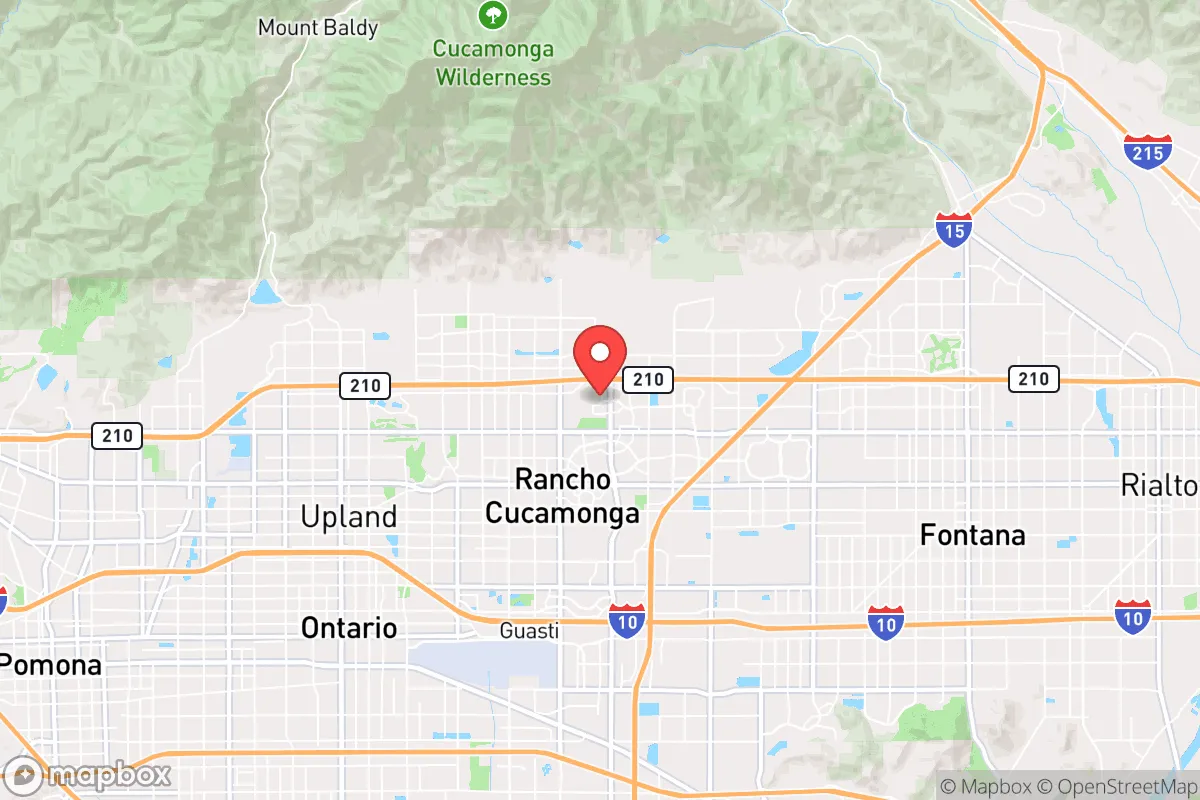
District shown is the primary district for this city’s centroid. Cities may span multiple districts.
Local Political AnalysisPolitical Analysis of Rancho Cucamonga, CA
Rancho Cucamonga leans reliably Democratic, with a Cook PVI of D+7, but it’s not the kind of deep-blue stronghold you’d find in Los Angeles proper. The city has shifted left over the past decade, especially among younger transplants and new arrivals from coastal areas, but it still holds onto a noticeable conservative undercurrent, particularly in the older neighborhoods near the foothills and among long-time residents. The 2020 presidential election saw Joe Biden carry San Bernardino County by about 7 points, and Rancho Cucamonga largely mirrored that, though pockets of the city—like the newer developments around Etiwanda and the gated communities near the 210—still lean red. The trajectory feels like a slow, steady drift toward progressive politics, which is a concern for anyone who values limited government and personal freedoms.
How it compares
Rancho Cucamonga sits in a kind of political buffer zone. Drive 15 minutes south to Ontario or Fontana, and you’ll find a more working-class, moderate-to-conservative vibe, especially in older precincts where union households and church attendance still shape voting patterns. Head north into Upland or Claremont, and you hit a different world—Claremont is a liberal college town with a D+15 lean, while Upland has a more mixed, slightly conservative tilt. The real contrast is with cities like Redlands or Yucaipa to the east, which are reliably Republican and have resisted the progressive wave. Rancho Cucamonga’s D+7 rating puts it squarely in the middle of the Inland Empire’s political spectrum, but the trend is unmistakable: each election cycle, the margins tighten or flip further left. The 2022 midterms saw local races where Democratic candidates outperformed their 2018 numbers, and the city council has grown more willing to adopt state-level progressive policies, like zoning changes that favor high-density housing and environmental mandates that add costs for homeowners.
What this means for residents
For a resident who values personal freedoms—like the right to choose your own healthcare, keep your property taxes predictable, or send your kids to a school that reflects your values—the shift is unsettling. The city has embraced California’s push for electric vehicle mandates and renewable energy targets, which means higher utility costs and more regulations on home improvements. The school board, while still moderate, has faced pressure to adopt curriculum changes that some parents see as ideological. Property crime has ticked up since 2020, and while Rancho Cucamonga is still safer than nearby San Bernardino or Rialto, the sense of security has eroded. The local government has also been quick to enforce state housing mandates, approving high-density apartment complexes near the Metrolink station that some residents worry will strain infrastructure and change the character of the community. If you’re a conservative, you’re not alone here—there are plenty of like-minded neighbors—but you’ll feel increasingly out of step with the direction of local policy.
Culturally, Rancho Cucamonga still holds onto some old-school Inland Empire values: church attendance is high, the Fourth of July parade is a big deal, and the local gun range is well-used. But the city’s identity is being reshaped by newcomers from Orange County and Los Angeles, who bring different expectations about government’s role in daily life. The long-term outlook is for continued leftward drift, especially as the population grows younger and more diverse. For a conservative, the best strategy is to stay engaged—vote in every local election, attend city council meetings, and support candidates who prioritize fiscal restraint and individual liberty. The alternative is watching Rancho Cucamonga become another cookie-cutter progressive suburb where government overreach is accepted as normal.

State Political ClimatePolitical Climate in California
State Political AnalysisPolitical Environment in the State
California is a deep blue state where Democrats hold every statewide office and supermajorities in both legislative chambers, but that monolithic label hides a fractured reality. The state’s overall partisan lean is roughly D+20 in presidential elections, with the 2024 race seeing Kamala Harris win her home state by about 20 points — a margin that has narrowed from the 29-point Biden victory in 2020. Over the last 10-20 years, California has shifted further left on cultural and economic issues, driven by massive population growth in coastal metros, but that trajectory is now showing cracks as hundreds of thousands of residents flee to red states and interior counties begin to push back.
Urban vs. rural divide
The political map of California is a tale of two worlds. The Bay Area — San Francisco, Oakland, San Jose — and Los Angeles County are the Democratic engine rooms, producing roughly 60% of the party’s statewide vote. These metros are solidly progressive, with San Francisco’s Board of Supervisors routinely passing resolutions on everything from reparations to defunding police. In contrast, the Central Valley — places like Bakersfield, Fresno, and Visalia — votes reliably Republican, with Kern County going +20 for Trump in 2024. The Inland Empire (Riverside and San Bernardino counties) is a genuine battleground: San Bernardino County flipped from Obama to Trump in 2016 and has stayed competitive, while Riverside County has trended right, voting for Trump in 2024 by about 5 points. Orange County, once a GOP stronghold, has become a purple-to-blue area thanks to Asian American and Latino suburban voters shifting left, though its northern cities like Yorba Linda and Huntington Beach remain conservative redoubts. The rural north — Shasta, Siskiyou, Modoc counties — is deep red, with some precincts voting 80%+ Republican, but these areas have little population weight.
Policy environment
California’s policy environment is aggressively progressive and interventionist. The state has the highest personal income tax rate in the nation (13.3% on incomes over $1 million) and a 7.25% sales tax that balloons to over 10% in many cities with local add-ons. Property taxes are capped by Prop 13 (1978), but recent legislation like Prop 19 (2020) weakened inheritance protections, effectively raising taxes on family homes passed to children. The regulatory posture is extreme: California has its own environmental standards (CARB), its own labor laws (AB 5 reclassifying gig workers as employees), and its own energy grid that has caused rolling blackouts. Education policy is dominated by the California Teachers Association, with school choice virtually nonexistent — no vouchers, weak charter laws, and a curriculum that emphasizes ethnic studies and critical race theory. Healthcare is heavily regulated, with the state running its own Covered California exchange and considering a single-payer system. Election laws are among the most liberal: universal mail-in ballots (mandated since 2020), same-day registration, and no voter ID requirement — a setup that has fueled ongoing election integrity concerns among conservatives.
Trajectory & freedom
California is becoming less free by almost any measure, particularly for conservatives. On gun rights, the state has some of the strictest laws in the nation: an assault weapons ban, a 10-day waiting period, a “may issue” concealed carry regime that was only loosened after the Supreme Court’s Bruen decision (2022), and a 2023 law (SB 2) that created “sensitive places” so broad they effectively ban carry in most public spaces. On parental rights, the state passed AB 1955 (2024), which prohibits schools from notifying parents if a child changes their gender identity — a direct attack on family authority. On speech, California’s AB 587 (2022) forces social media companies to disclose their content moderation policies, a law critics say is a backdoor to state censorship. Medical autonomy took a hit with the state’s COVID-19 mandates, which were among the longest-lasting in the country, including school vaccine mandates that remain in effect. Property rights are under constant assault: rent control was expanded statewide via the Tenant Protection Act (2019), and the state has sued cities like Huntington Beach for trying to limit homeless shelters. On taxation, the 2022 wealth tax proposal (AB 2590) failed, but a similar measure is expected to return. The only bright spot for freedom advocates was the 2024 defeat of Prop 33, which would have allowed even stricter local rent control.
Civil unrest & political movements
California has been a flashpoint for civil unrest and political movements on both sides. The 2020 George Floyd protests in Los Angeles, San Francisco, and Oakland saw widespread looting and arson, with the city of Los Angeles paying out over $100 million in settlements for police misconduct during the unrest. The homeless crisis has spawned activist groups like the “Housing is a Human Right” movement, which has successfully blocked efforts to clear encampments in cities like San Francisco and Sacramento. On the right, the “Recall Gavin Newsom” movement in 2021 gathered over 1.7 million signatures and came within 4 points of ousting the governor — a sign of deep dissatisfaction even in a blue state. Immigration politics are a constant flashpoint: California is a sanctuary state (SB 54, 2017), prohibiting local law enforcement from cooperating with federal immigration authorities, and the state has sued the Trump administration multiple times over border policies. The “Calexit” secession movement has fizzled, but the State of Jefferson movement — advocating for a new state carved from rural northern California and southern Oregon — remains active, with several counties passing symbolic resolutions. Election integrity is a persistent concern: the 2020 and 2022 elections saw widespread use of unmonitored ballot drop boxes, and a 2024 audit of Los Angeles County’s voter rolls found over 1.5 million inactive or outdated registrations. A new resident would notice the political tension in everyday life — from “Defund the Police” signs in Berkeley to “Don’t California My Oregon” bumper stickers in Redding.
Projection
Over the next 5-10 years, California’s political trajectory is toward continued leftward drift with growing internal resistance. Demographic trends are working against conservatives: the state’s population is aging, with a shrinking share of white voters and a growing share of Asian American and Latino voters who lean Democratic, though the Latino vote is more volatile — Trump improved his share among Latinos in California from 25% in 2020 to 35% in 2024. The out-migration of over 700,000 residents since 2020 has disproportionately been middle-class families and conservatives heading to Texas, Arizona, and Idaho, which further concentrates the remaining population in blue metros. However, the housing crisis is forcing some Democrats to reconsider their policies: Governor Newsom has signed bills to streamline housing construction (SB 9, 2021) and preempt local zoning, which could eventually moderate the cost of living. The fiscal situation is dire — the state faces a $68 billion deficit in 2025, which will likely force tax increases or service cuts, further alienating the business community. Expect more recall attempts against Democratic officials, more county-level secession resolutions, and a continued exodus of conservative-leaning industries like oil and gas. A new resident moving in now should expect to find a state that is more expensive, more regulated, and more politically polarized in a decade, with the coastal cities becoming even more progressive and the interior counties becoming more defiant.
For a conservative considering relocation, California offers a mixed bag. The natural beauty and economic opportunity are unmatched, but the cost of living, tax burden, and erosion of personal freedoms are real and worsening. If you value parental rights, gun ownership, school choice, and low taxes, you will find yourself fighting an uphill battle against a state government that sees those as obstacles to its agenda. The best bet for a conservative is to target inland counties like Riverside, San Diego’s North County, or the Central Valley, where local politics are more balanced and the cost of living is lower. But be prepared: even in those areas, state-level policies on education, housing, and taxation will affect your daily life. California is not a place for someone who wants to be left alone — it is a place where the government is deeply involved in your choices, and that involvement is only likely to grow.
* Values derived from national, state, county, city and local statistics and may differ in a specific area. Last updated: 2026-04-24T11:02:32.000Z
Narrative content on this page is AI-generated and may contain mistakes. Verify any details that matter before acting on them.
ReloMaps may earn a commission from affiliate links at no extra cost to you.

