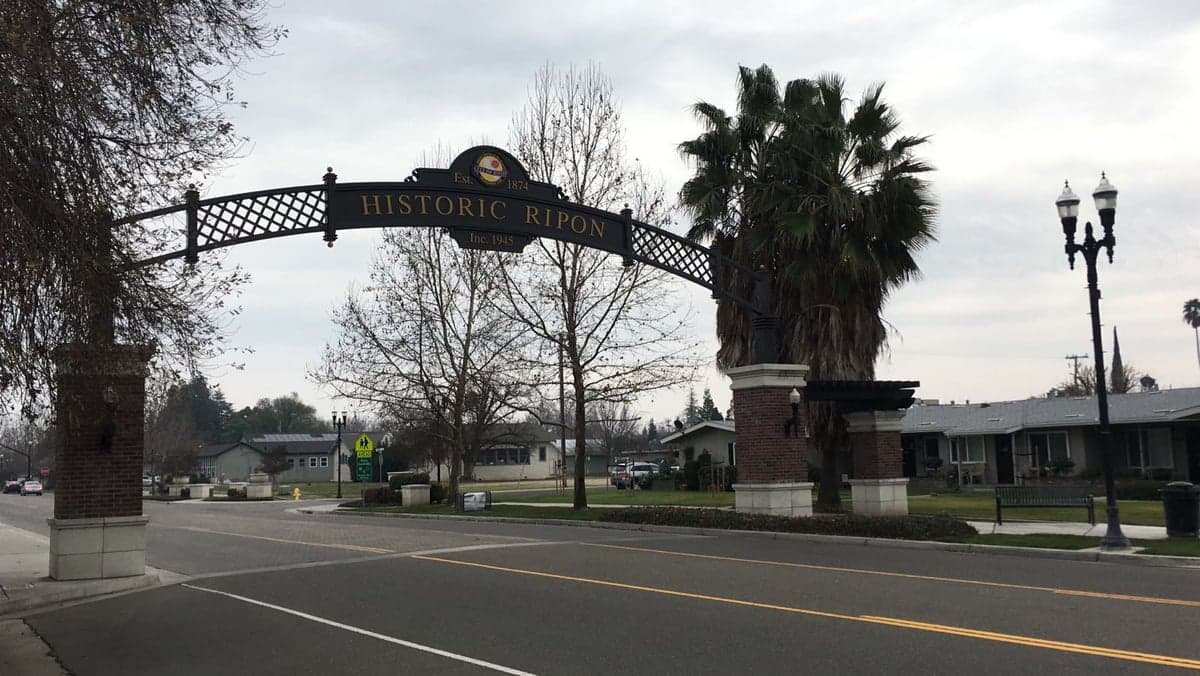
Photo: Wikipedia
Political ClimatePolitical Climate in Ripon, CA
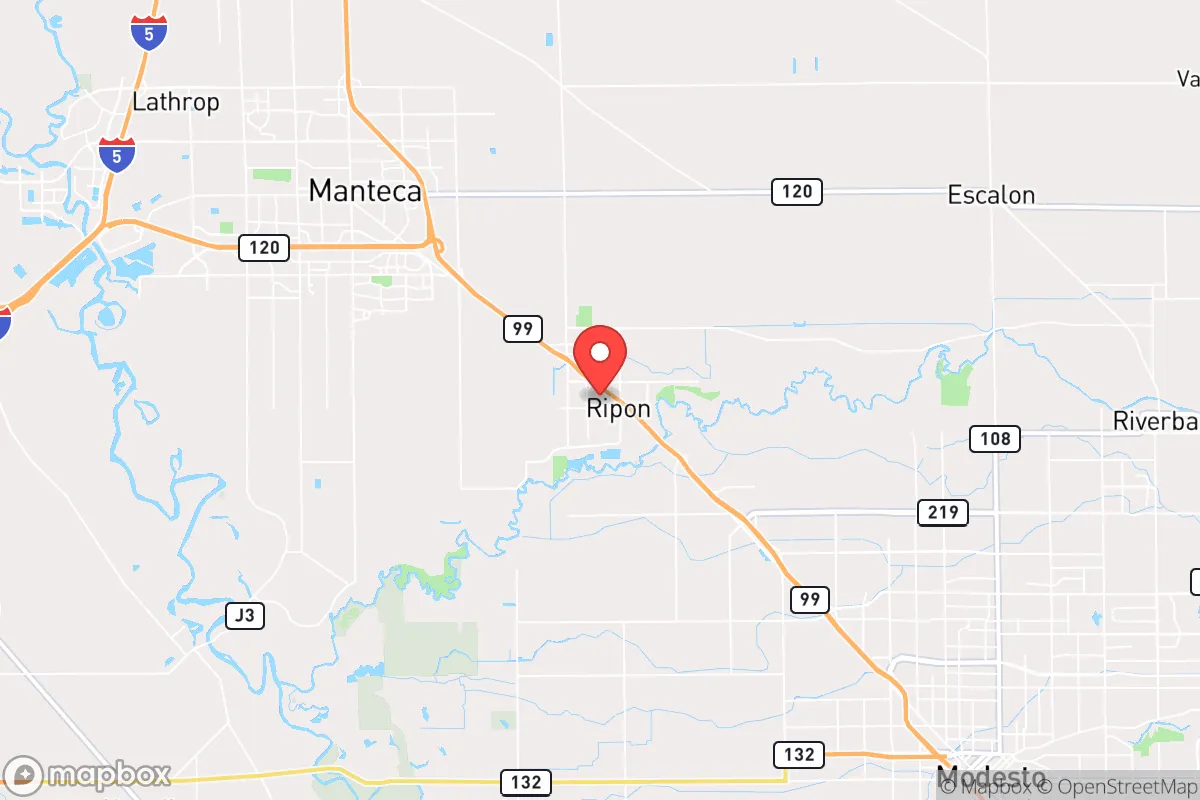
District shown is the primary district for this city’s centroid. Cities may span multiple districts.
Local Political AnalysisPolitical Analysis of Ripon, CA
Ripon sits in a bit of a political sweet spot, leaning just slightly to the right of the state as a whole with a Cook PVI of D+1, which means it's about one point more Republican than the national average. That makes it a genuine purple town in a deeply blue state, and the trajectory over the last decade has been a slow but steady shift rightward, mirroring the broader trend in the Central Valley. While California as a whole has no single Cook PVI because it's a state, not a congressional district, the statewide lean is roughly D+13 to D+15, so Ripon is a solid 14 to 16 points more conservative than the state average. Locals will tell you that twenty years ago, the town was more evenly split, but as the Bay Area's housing crisis pushed people east, a lot of those newcomers brought their politics with them, and the old farming families have held their ground, creating a genuine tug-of-war at the ballot box.
How it compares
Drive ten miles west to Manteca or fifteen miles south to Modesto, and you'll find similar dynamics — blue-collar towns trending redder, but still with a strong Democratic base in the older neighborhoods and among public-sector workers. Head twenty miles northwest to Stockton, and you're in a completely different world: a deep-blue city with a D+10 lean, where progressive politics dominate city council races and the mayor's office. Ripon's real contrast, though, is with the coastal California that dominates the state's image. In San Francisco or Los Angeles, a D+1 district would be considered a swing district; in Ripon, it feels like a conservative stronghold because the local culture — church attendance, gun ownership rates, small business ownership — aligns much more with the Central Valley's values than with the coast's. The city council is reliably moderate to conservative, and while you'll see a few Harris-Walz yard signs in the nicer neighborhoods, the dominant visual during election season is still red, white, and blue with a distinctly Republican flavor.
What this means for residents
For conservative residents, Ripon offers a rare experience in California: you can live in a place where your politics are the local norm, not a fringe position. The city government is business-friendly, zoning is relatively permissive for new development, and the police department is well-funded and well-regarded. You won't feel like an outlier at the grocery store or the high school football game. For liberal residents, the reality is more nuanced. You'll find plenty of like-minded neighbors, especially among the younger families moving in from the Bay Area, but you'll also encounter a lot of "don't tread on me" bumper stickers and a city council that rarely takes progressive stances on housing or environmental issues. The upside is that Ripon is small enough that local politics are accessible — if you want to make a difference, you can show up to a council meeting and actually be heard, which is harder to do in a big city. The downside is that you'll often be in the minority on the big-ticket items, and the local Democratic club is smaller and less organized than the Republican one.
One cultural distinction that sets Ripon apart from much of California is the strong sense of local identity tied to the almond and dairy industries. The annual Almond Blossom Festival isn't just a parade; it's a statement about what the town values — hard work, family, and the land. That agricultural backbone means the local economy is less dependent on tech or government than the state average, which in turn shapes the political conversation. You'll hear more about water rights and property taxes than about rent control or public transit. For anyone moving here, the key takeaway is that Ripon is a place where your vote actually matters more than it does in most of California, because the margin between the two parties is narrow enough that local elections can swing either way. It's not a political bubble — it's a genuine battleground, just on a very small scale.

State Political ClimatePolitical Climate in California
State Political AnalysisPolitical Environment in the State
California is a deeply blue state, with Democrats holding every statewide office and supermajorities in both legislative chambers, but its reputation as a monolithic liberal bastion oversimplifies a far more complex reality. The state’s overall partisan lean has shifted leftward over the past 20 years—from a competitive purple state in the 2000s (where Arnold Schwarzenegger could win as a Republican) to a solidly Democratic stronghold where the GOP is effectively a minority party in statewide races. However, this trajectory masks a growing urban-rural chasm, a significant conservative minority (roughly 35-40% of voters), and a recent trend of moderate and even conservative voters migrating to inland exurbs and smaller cities, reshaping local politics in places like Bakersfield, Temecula, and Redding.
Urban vs. rural divide
The political map of California is a tale of two worlds. The coastal metros—Los Angeles, San Francisco, San Diego, and Oakland—drive the state’s Democratic dominance, with margins often exceeding 60-70% in presidential elections. The Bay Area, in particular, is the engine of progressive policy, with San Francisco and Berkeley routinely voting 85%+ Democratic. In contrast, the Central Valley and inland regions are reliably Republican: Bakersfield (Kern County) voted +26 points for Trump in 2024, while Redding (Shasta County) is a conservative stronghold where the GOP often wins by 30+ points. The Inland Empire—cities like Temecula and Murrieta—has become a key battleground, with these fast-growing exurbs trending rightward as families flee coastal costs. Orange County, once a GOP bastion, flipped blue in 2018 and now leans Democratic, though its northern suburbs like Yorba Linda remain conservative. The divide isn’t just geographic—it’s cultural: rural voters feel increasingly alienated from Sacramento’s policies on water, housing, and energy, fueling a “State of Jefferson” secession movement in far-northern counties like Siskiyou and Modoc.
Policy environment
California’s policy environment is defined by high taxes, heavy regulation, and progressive social legislation. The state has a progressive income tax with a top marginal rate of 13.3% (the highest in the nation), a 7.25% state sales tax (with local add-ons pushing it to 10%+ in many cities), and some of the highest gas taxes and property taxes (though Prop 13 caps annual increases at 2%). Regulatory costs are steep: California’s environmental review process (CEQA) is frequently weaponized to delay housing and infrastructure projects, while its labor laws (like AB 5, which reclassified many gig workers as employees) are among the most employer-unfriendly in the country. On education, the state spends over $20,000 per student but ranks near the bottom in NAEP scores—a paradox that frustrates both liberal and conservative parents. Healthcare is heavily regulated, with the state running its own insurance exchange (Covered California) and expanding Medi-Cal to all low-income adults regardless of immigration status. Election laws are among the most accessible: universal mail-in ballots (mandated since 2020), same-day registration, and no-excuse absentee voting. For conservatives, the policy environment feels like a constant headwind—high costs, limited school choice (though charter schools exist), and a regulatory apparatus that can make starting a business or building a home a multi-year ordeal.
Recent policy direction
Over the past five years, California has accelerated its progressive agenda, passing laws that touch nearly every aspect of life a relocator might weigh. On gun rights, the state has some of the nation’s strictest laws: an assault weapons ban, a 10-day waiting period, a “may issue” concealed carry regime (though a 2024 court ruling may loosen this), and a new law (SB 2) restricting carry in “sensitive places” like parks and banks. Parental and education rights have become a flashpoint: a 2023 law (AB 1078) bans school boards from removing books on LGBTQ+ or racial topics, while a 2024 law (AB 1955) prohibits schools from notifying parents if a child changes their gender identity—a direct clash with conservative parental rights groups. Speech is broadly protected under the state constitution, but a 2022 law (AB 587) requires social media platforms to report hate speech moderation, drawing First Amendment challenges. Privacy and surveillance are mixed: the California Consumer Privacy Act (CCPA) gives residents strong data rights, but the state also uses automated license plate readers and has expanded police surveillance in some cities. Medical and bodily autonomy is fully protected—abortion is a constitutional right under Prop 1 (2022), and gender-affirming care for minors is legal, with California becoming a “sanctuary state” for families traveling here for such care. Property rights are constrained by rent control (the Costa-Hawkins Act was weakened by 2024’s Prop 33, allowing more cities to impose rent caps) and by CEQA, which gives neighbors broad standing to block development. Taxation is trending upward: a 2024 ballot measure (Prop 5) would have lowered the threshold for local tax increases but failed; meanwhile, the state’s budget deficit has led to talk of new taxes on wealth or businesses. Voting and ballot access remain expansive, but a 2024 law (SB 423) streamlined housing approvals, overriding local zoning—a move that centralizes power in Sacramento and rankles local-control conservatives.
Civil unrest & political movements
California has a long history of political activism, and recent years have seen both left- and right-wing movements flare. The 2020 George Floyd protests in Los Angeles and Oakland were among the largest and most destructive in the nation, with looting and arson that reshaped downtown retail. The “Defund the Police” movement gained traction in cities like San Francisco and Los Angeles, though both have since reversed course amid rising crime concerns. On the right, the “Recall Newsom” movement in 2021 gathered 1.7 million signatures and forced a special election—a sign of deep dissatisfaction, though Newsom survived easily. Immigration politics are a constant flashpoint: California is a “sanctuary state” (SB 54, 2017), limiting local police cooperation with federal immigration authorities, and has funded legal defense for deportees. This has led to tensions with the Trump administration and periodic ICE raids in cities like Fresno and San Bernardino. The “State of Jefferson” movement, advocating for secession of rural northern counties, has gained symbolic support but no real traction. Election integrity controversies are less pronounced than in swing states, but some rural counties (like Shasta) have seen heated debates over voting machines and hand-counting. Visible flashpoints for a new resident include frequent protests at the state capitol in Sacramento, homeless encampments in downtown San Francisco and Los Angeles that have become political symbols, and the occasional armed standoff over land use or water rights in the Central Valley.
Projection
Over the next 5-10 years, California’s political trajectory points toward continued Democratic dominance at the state level, but with growing internal friction. Demographic shifts are key: the state’s population has declined slightly since 2020, with net out-migration of about 500,000 residents, many of them middle-class families and conservatives moving to Texas, Idaho, or Arizona. Those leaving are disproportionately Republican-leaning, which further deepens the blue hue of the remaining electorate. However, the people moving in—primarily immigrants and young professionals from other states—tend to be moderate or left-leaning but not necessarily progressive. This could create a “two Californias” dynamic: coastal urban centers doubling down on progressive policies, while inland and exurban areas (like Temecula, Bakersfield, and Redding) become more conservative and resistant. The state’s massive budget deficits (projected at $30-40 billion annually) will force hard choices—likely tax increases or service cuts—that could accelerate out-migration. Housing costs may moderate slightly due to new state laws streamlining construction (SB 423, 2024), but affordability will remain a top issue. For a conservative relocator, the next decade will likely mean living in a state where your vote for president or Senate is effectively meaningless, but where local politics in your city or county can still feel competitive. The practical reality: you’ll pay high taxes, navigate heavy regulation, and live under laws that may conflict with your values, but you’ll also find like-minded communities in specific regions and have a voice in local races that actually matter.
Bottom line for a new resident: If you’re a conservative considering California, go in with eyes open. You’ll be a political minority in statewide elections, but you can find your tribe in places like Temecula, Bakersfield, or Redding. The trade-off is access to world-class geography, a massive economy, and cultural diversity—but you’ll pay for it in taxes, regulation, and a constant sense of being out of step with Sacramento. For liberals, California is a policy laboratory where your values are reflected in law, but you’ll also face high costs, homelessness, and a growing backlash from the state’s conservative regions. Either way, the state’s political climate is not monolithic—it’s a patchwork of blue cities, red valleys, and purple exurbs, and your experience will depend heavily on which patch you choose to call home.
* Values derived from national, state, county, city and local statistics and may differ in a specific area. Last updated: 2026-08-23T00:49:21.000Z
Narrative content on this page is AI-generated and may contain mistakes. Verify any details that matter before acting on them.
ReloMaps may earn a commission from affiliate links at no extra cost to you.

