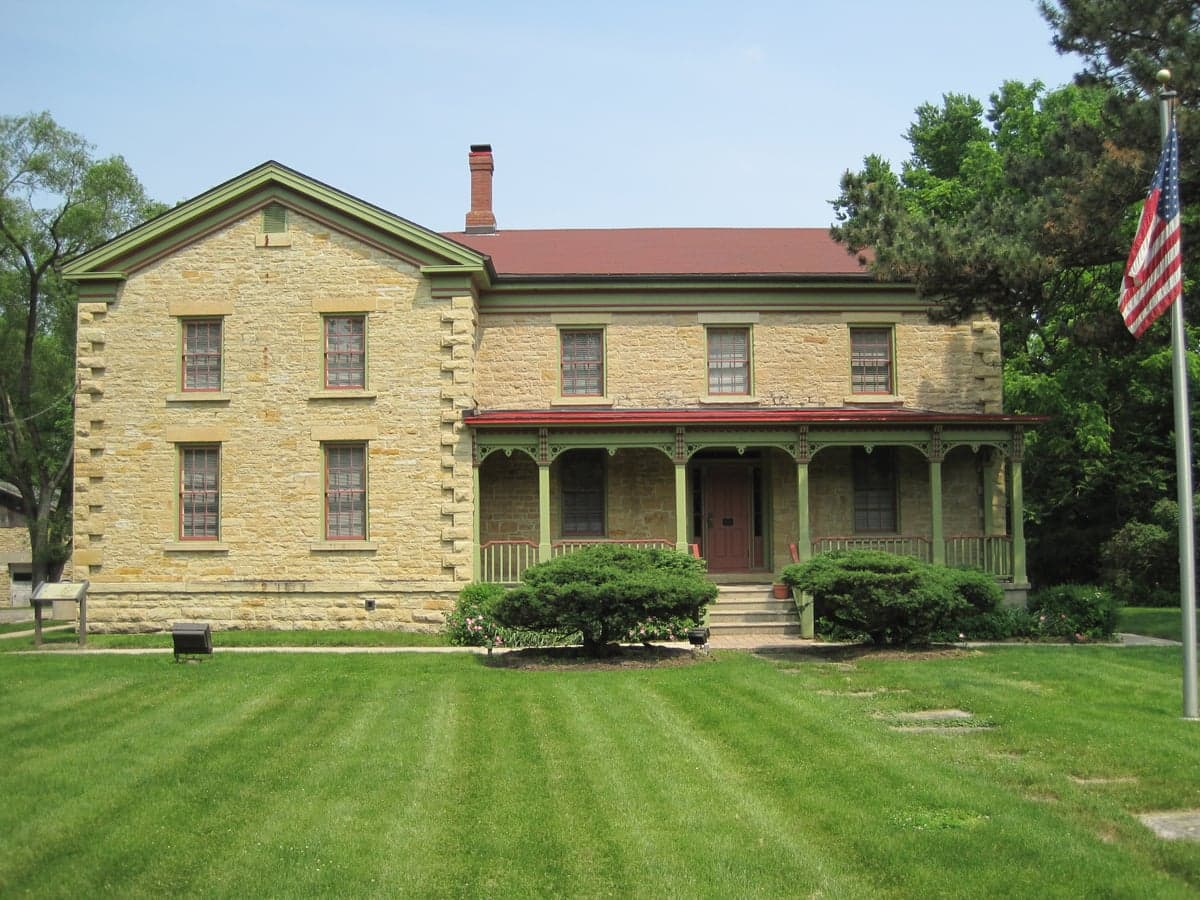
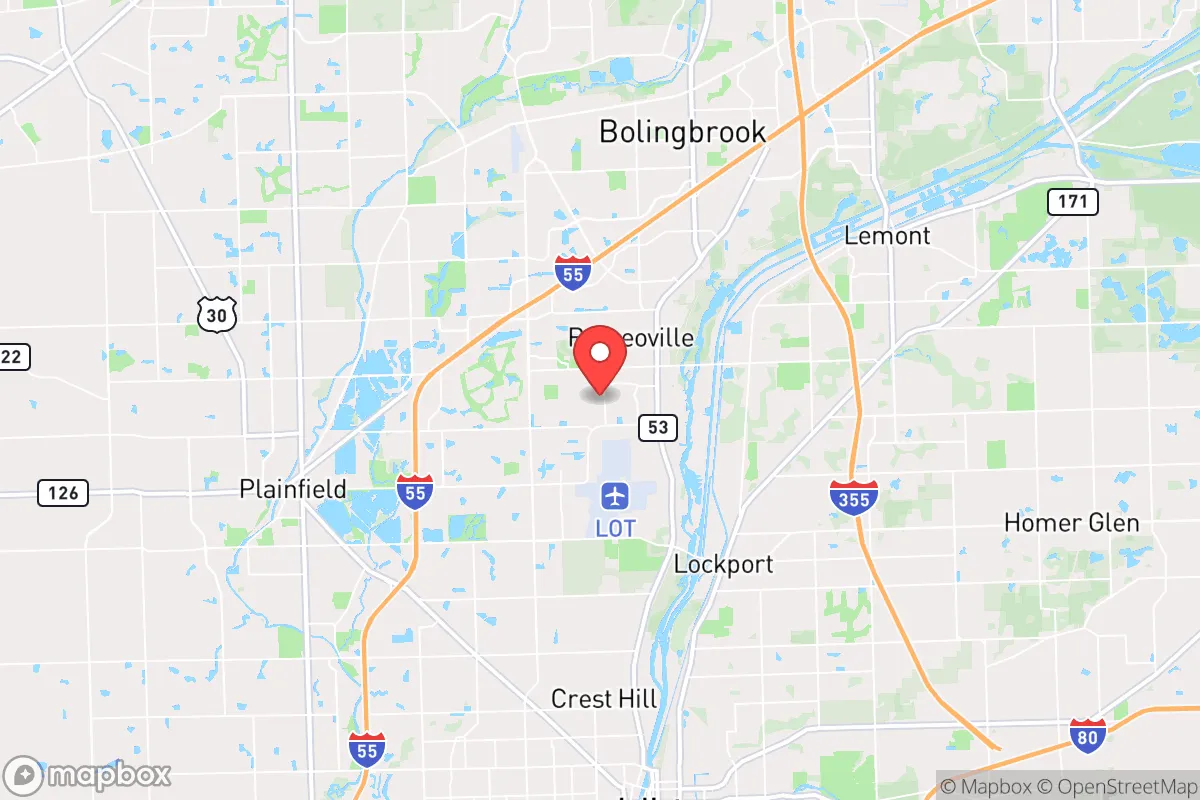
Photo: Wikipedia
Political ClimatePolitical Climate in Romeoville, IL
District shown is the primary district for this city’s centroid. Cities may span multiple districts.
Local Political AnalysisPolitical Analysis of Romeoville, IL
Romeoville, Illinois, sits in a Cook County that’s been trending bluer for years, and the numbers back it up—the Cook Partisan Voting Index (PVI) clocks the area at D+3, meaning it’s about three points more Democratic than the national average. That wasn’t always the case. If you’ve been around here since the 90s or early 2000s, you remember when this town felt more like a classic blue-collar, middle-ground suburb—folks who voted for common-sense local governance, not national party lines. But over the last decade, especially since the 2020 election cycle, the political winds have shifted noticeably. You’re seeing more progressive candidates win local races, and the county-level machine in Cook County has tightened its grip. The trajectory is clear: Romeoville is moving left, and not just on national issues—it’s showing up in local zoning, school board decisions, and even how the village handles public safety funding.
How it compares
To really get the picture, you gotta look at the towns around us. Head west a few miles to Joliet, and you’ll find a more mixed bag—Will County is a swing county that’s still got a strong conservative undercurrent, especially in the rural pockets. Bolingbrook, our neighbor to the north, leans left but has a more independent streak, with a mayor who’s been in office since the 90s and keeps things pragmatic. But the real contrast is with places like Plainfield or Shorewood to the southwest—those communities still vote reliably red in local races, and you’ll see yard signs for conservative school board candidates that you just don’t see in Romeoville anymore. Even Lockport, just a few miles east, has a more balanced political scene. Romeoville, though, is getting pulled into the Cook County orbit—where property taxes are high, regulations on small businesses keep piling up, and the county board seems more interested in social engineering than keeping the streets safe. It’s a stark difference from the more hands-off approach you’ll find in the towns just outside the county line.
What this means for residents
For the average family here, the political shift translates into real-life headaches. You’re seeing more government overreach in everyday decisions—like the village council pushing for stricter rental inspection ordinances that make it harder for landlords to keep rents affordable, or the school district adopting curriculum changes that prioritize social-emotional learning over core academics. The county’s tax burden is already among the highest in the nation, and with a D+3 lean, there’s little appetite for cutting spending. If you value personal freedoms—like the right to choose your own healthcare, keep your firearms without endless red tape, or run a small business without drowning in permits—Romeoville’s direction is concerning. The local government is getting more comfortable telling you what’s best, and that’s a far cry from the “live and let live” attitude that used to define this town.
Culturally, you’ll notice the change in small ways. The annual community events feel more curated, with less room for traditional values like faith-based organizations or veterans’ groups taking a lead role. The local library board has faced debates over book content and drag story hours—stuff that would’ve been unthinkable a decade ago. Long-term, if the trend holds, Romeoville could become another Naperville or Oak Park—a place where progressive policies are the norm, and conservative voices are pushed to the margins. For now, it’s still a decent place to raise a family, but you’ve got to keep an eye on the ballot box. The next few election cycles will decide whether this town stays a balanced suburb or becomes just another Cook County experiment in big-government living.

State Political ClimatePolitical Climate in Illinois
State Political AnalysisPolitical Environment in the State
Illinois has been a reliably blue state for decades, but its political climate is far more complex than a simple partisan label suggests. The Democratic stronghold is powered almost entirely by Chicago and its inner suburbs, while the rest of the state—downstate and the collar counties—has shifted sharply red over the past 20 years. Over the last decade, the state has moved further left on social and fiscal policy, driven by a supermajority in Springfield that has enacted progressive tax structures, expanded abortion access, and tightened gun laws, even as downstate voters have increasingly rejected those priorities. For a conservative-leaning individual or family, Illinois presents a deeply divided landscape where your experience depends almost entirely on which county you choose to call home.
Urban vs. rural divide
The political map of Illinois is a tale of two worlds. Cook County, anchored by Chicago, delivers roughly 40% of the state's total vote and is overwhelmingly Democratic—Joe Biden won it by 74 points in 2020. The collar counties (DuPage, Lake, Kane, Will, McHenry) have been trending blue for years, with DuPage County flipping from red to blue in the 2018 midterms and staying there. Meanwhile, downstate Illinois—places like Effingham, Quincy, and Marion—votes as red as any rural county in Texas or Tennessee. The divide is stark: in 2024, Donald Trump won 93 of Illinois's 102 counties, but lost the state by 11 points because of Chicago's massive vote margin. The metro-east area around St. Louis (Madison and St. Clair counties) leans blue, but the rest of southern Illinois is reliably conservative. The I-55 corridor from Chicago to Springfield is a political fault line, with the state capital itself being a blue island in a red sea.
Policy environment
Illinois's policy environment is a cautionary tale for conservatives. The state has a flat income tax rate of 4.95%, but a 2020 attempt to switch to a progressive tax (the "Fair Tax" amendment) failed at the ballot box—though the legislature keeps the option alive. Property taxes are among the highest in the nation, averaging 2.1% of home value, with Cook County and the collar counties often exceeding 2.5%. The state's regulatory posture is aggressively progressive: Illinois was the first state to eliminate cash bail entirely under the SAFE-T Act (2021), a move that sparked fierce backlash from downstate sheriffs and prosecutors. Education policy is dominated by the Chicago Teachers Union, which has successfully blocked charter school expansion and secured massive pension obligations. Healthcare is heavily regulated, with a state-run insurance exchange and strict abortion protections codified into law. Election laws are liberal: same-day voter registration, no-excuse mail-in voting, and automatic voter registration at DMVs are all in place. For a conservative, the policy environment feels like a one-party state, with the legislature overriding local control on everything from gun laws to energy mandates.
Trajectory & freedom
Over the past five years, Illinois has become less free by nearly every measure that matters to conservatives. The Protect Illinois Communities Act (2023) banned the sale of assault weapons and high-capacity magazines, a law that is currently being challenged in federal court but remains in effect. The state also passed a law requiring gun dealers to be licensed by the state, effectively creating a de facto registry. On medical freedom, Illinois mandates COVID-19 vaccines for healthcare workers and has no religious exemption for school vaccine requirements. Parental rights took a hit with the expansion of the SAFE-T Act, which allows minors to be charged as adults in certain cases without parental notification. Property rights are constrained by high property taxes and a state that has one of the worst pension crises in the nation—unfunded pension liabilities exceed $140 billion, meaning future tax hikes are baked in. The only area where freedom has expanded is on the social left: recreational marijuana was legalized in 2020, and the state has become a sanctuary for abortion seekers from surrounding states. For a conservative, the trajectory is clear: more regulation, higher taxes, and less local control.
Civil unrest & political movements
Illinois has seen its share of political flashpoints. The 2020 George Floyd protests in Chicago resulted in widespread looting and property damage, with over $60 million in damages in the Loop alone. The city's response—or lack thereof—became a national story, with then-Mayor Lori Lightfoot facing criticism for not deploying the National Guard sooner. On the right, the Illinois State Rifle Association remains a powerful lobbying force, organizing busloads of protesters to Springfield for gun rights rallies. The Will County Board's 2023 vote to declare itself a "sanctuary county" for gun owners (a symbolic gesture) shows the depth of the divide. Immigration politics are heated: Chicago is a sanctuary city, and the state has seen a surge of migrant buses from Texas, straining resources and sparking backlash in working-class neighborhoods. Election integrity remains a sore point—the 2020 election saw widespread use of mail-in ballots, and downstate Republicans have pushed for stricter voter ID laws, which have been blocked by the Democratic supermajority. A new resident would notice the tension between the progressive urban core and the conservative rural areas, especially in county board meetings and local school board elections.
Projection
Looking ahead five to ten years, Illinois is likely to continue its current trajectory, but with some important caveats. Demographic trends favor the Democrats: Chicago's population is stabilizing after a post-COVID dip, and the collar counties are becoming more diverse and liberal. Downstate, however, is shrinking—rural counties like Alexander and Pulaski have lost 20-30% of their population since 2010, reducing their political clout. The state's fiscal crisis is unsustainable: pension payments now consume 25% of the state budget, and a major tax hike or service cut is almost inevitable. This could accelerate out-migration of conservatives and businesses to Indiana, Wisconsin, and Tennessee. However, the state's geography means that conservatives will retain strongholds in places like the Metro East, the Quad Cities, and the southern tip—areas that will continue to vote red but have less influence in statewide races. A new resident moving to Illinois today should expect to see the state become more progressive on social issues, more strained fiscally, and more polarized geographically. The best bet for a conservative is to target a red county like Ogle, Stephenson, or Jefferson, where local governance still reflects conservative values, even as state policy moves left.
For a conservative individual or family considering Illinois, the bottom line is this: you can find a community that aligns with your values, but you will be fighting an uphill battle at the state level. The high property taxes, restrictive gun laws, and progressive education mandates are not going away. If you value local control and low taxes, Illinois is a tough sell—but if you have family or job ties that keep you here, the red counties offer a quality of life that is still affordable and community-oriented. Just know that every election cycle, you'll be voting against the tide in Springfield, and your property tax bill will remind you of it every year.
* Values derived from national, state, county, city and local statistics and may differ in a specific area. Last updated: 2026-04-30T02:37:14.000Z
Narrative content on this page is AI-generated and may contain mistakes. Verify any details that matter before acting on them.
ReloMaps may earn a commission from affiliate links at no extra cost to you.

