 Popular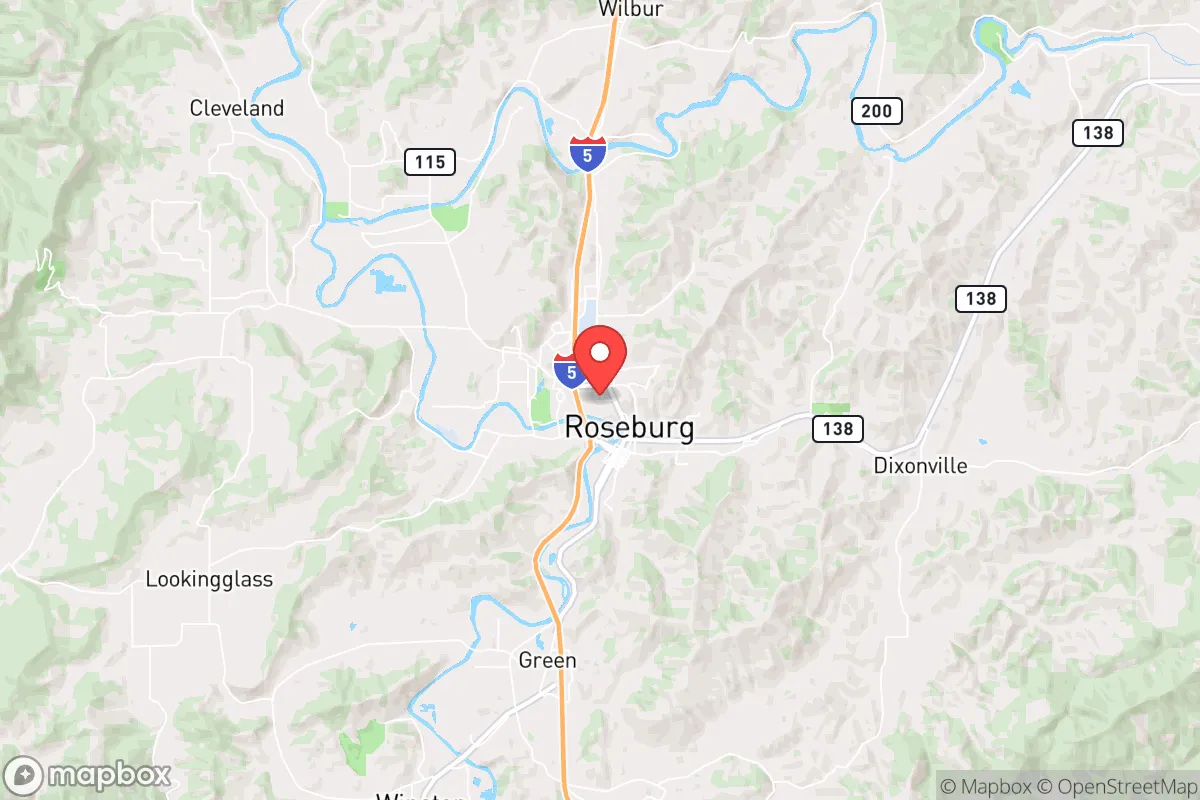
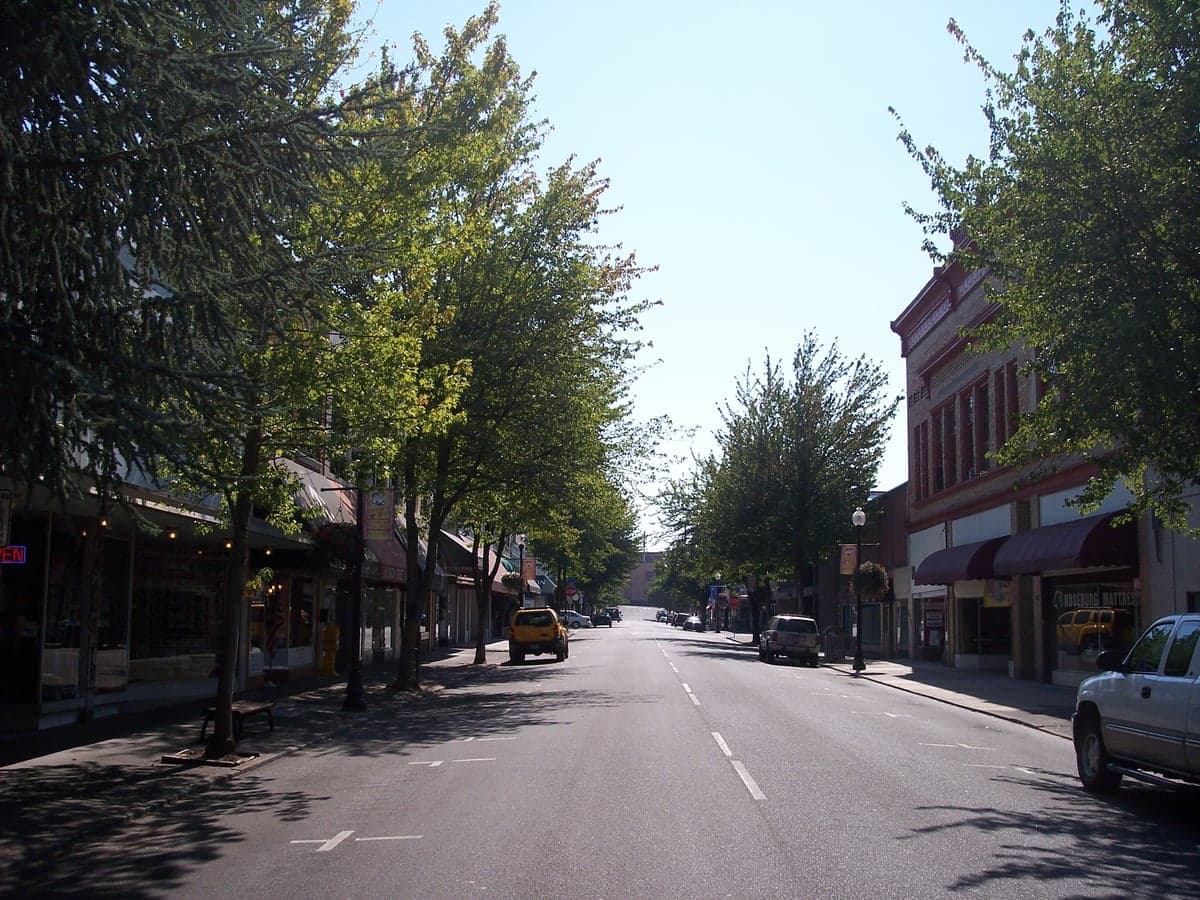
Photo: Wikipedia
Political ClimatePolitical Climate in Roseburg, OR
District shown is the primary district for this city’s centroid. Cities may span multiple districts.
Local Political AnalysisPolitical Analysis of Roseburg, OR
Roseburg, Oregon, has long been a conservative stronghold in a state that’s increasingly tilting left, but the political winds are shifting in ways that long-time residents find unsettling. While the Cook PVI rating of D+6 reflects the broader district’s Democratic lean, the city itself and much of Douglas County have historically voted Republican by comfortable margins—think 60-40 or better in most statewide races. That said, the last few election cycles have seen a slow but steady creep of progressive policies from Salem and Portland, and it’s starting to feel like the local way of life is under a quiet siege. If you’ve been here a while, you’ve watched the culture change, and it’s not for the better.
How it compares
Drive 30 minutes north to Sutherlin or 20 minutes south to Myrtle Creek, and you’ll find towns that still vote red by wide margins—places where folks don’t mince words about wanting less government interference. But Roseburg, as the county seat and economic hub, has become a battleground. The contrast with Eugene, just 75 miles north, is stark: Eugene is a progressive enclave where city council debates often center on defunding police or imposing new environmental mandates. Roseburg, by contrast, still values property rights, gun ownership, and local control over land use. Yet even here, you see the pressure—new zoning rules from the state, mask mandates that lingered longer than most wanted, and a growing push from activist groups to “reimagine” public safety. The nearby town of Winston, home to the Wildlife Safari, remains reliably conservative, but Roseburg’s status as a regional hub means it absorbs more outside influence, and that’s where the tension lives.
What this means for residents
For the average Roseburg resident, the political shift translates into daily friction that wasn’t there a decade ago. Property taxes have climbed 15% since 2020, driven partly by state-level education and social service mandates that locals had little say in. Business owners report more red tape—from stricter labor laws to environmental reviews that slow down even small construction projects. And if you value your Second Amendment rights, you’ve noticed the steady drumbeat of new restrictions out of Salem, like the 2022 ballot measure requiring permits for gun purchases, which passed statewide but was overwhelmingly rejected in Douglas County. The local school board, once a sleepy affair, now sees contentious meetings over curriculum and library books, with parents feeling their voices are drowned out by organized progressive groups. It’s not that Roseburg has turned blue—far from it—but the cultural and legal landscape is shifting in ways that make you feel like you’re constantly defending your way of life.
One of the biggest cultural distinctions here is the deep-rooted independence that comes from the area’s timber and ranching history. Roseburg still has a “live and let live” ethos, but that’s being tested by state-level overreach on everything from land use to energy mandates. The push for electric vehicle quotas and renewable energy targets, for example, feels disconnected from a community where many people rely on diesel trucks for work and wood stoves for heat. In the near term, expect more local pushback—recall efforts, ballot initiatives, and a growing number of residents simply opting out of the system by moving to unincorporated areas where county rules are looser. Long-term, the trajectory depends on whether enough people stay engaged to keep Roseburg from becoming a smaller version of Eugene. For now, it’s still a place where you can have a conversation with your neighbor about politics without it turning into a fight, but that’s getting harder every year.

State Political ClimatePolitical Climate in Oregon
State Political AnalysisPolitical Environment in the State
Oregon has shifted from a purple swing state to a solidly blue stronghold over the past 20 years, with Democrats controlling the governorship, both legislative chambers, and all statewide offices since 2018. The state’s overall partisan lean is now roughly D+10 in presidential elections, but that number hides a deep and growing chasm between the liberal Willamette Valley and the rest of the state. For a conservative considering relocation, the trajectory is concerning: the state has moved leftward in every cycle since 2000, driven by massive in-migration to Portland and its suburbs, while rural and eastern counties have become more Republican but less populous.
Urban vs. rural divide
The political map of Oregon is a tale of two states. The Portland metro area—Multnomah, Washington, and Clackamas counties—casts about 40% of the state’s vote and leans heavily Democratic. Multnomah County alone gave Biden 78% in 2020. The I-5 corridor south through Salem and Eugene reinforces this blue wall; Lane County (Eugene) is reliably Democratic, and Marion County (Salem) has trended blue as the state capital grows. Meanwhile, the rest of Oregon is deeply red. Eastern Oregon counties like Malheur, Harney, and Lake routinely vote 70-80% Republican. The southern Oregon counties of Jackson (Medford) and Josephine (Grants Pass) are conservative strongholds, though Medford itself has seen some in-migration from California that is slowly nudging it purple. The most dramatic flip in recent years is Deschutes County (Bend): once a redoubt of libertarian-leaning ranchers, it voted for Biden in 2020 after decades of Republican wins, driven by an influx of remote workers from Portland and California. Suburbs like Beaverton and Hillsboro (Washington County) are now reliably blue, while Gresham (east Multnomah) remains working-class and more purple but trending left.
Policy environment
Oregon’s policy environment is a case study in progressive governance. The state has no sales tax, which sounds good, but it has the 5th highest state income tax in the nation (top marginal rate of 9.9%) and high property taxes that vary by county. The regulatory climate is hostile to business: Oregon has some of the strictest land-use laws in the country (Urban Growth Boundaries), a statewide plastic bag ban, and a 2021 law that effectively bans new gas stations in many areas. Education policy is dominated by teachers’ unions; the state spends above the national average per pupil but ranks near the bottom in reading and math proficiency. Healthcare is heavily regulated, with a state-run insurance exchange and a 2023 law that mandates abortion coverage with no gestational limit. Election laws are among the most progressive: Oregon was the first state to vote entirely by mail (1998), and it automatically registers voters from DMV data. In 2021, it became the first state to decriminalize possession of small amounts of all drugs (Measure 110), a policy that has been widely criticized for fueling homelessness and public drug use. For a conservative, the policy environment feels like a slow-motion erosion of personal responsibility and economic freedom.
Trajectory & freedom
Oregon is becoming less free by nearly any measure. The most alarming recent trend is the erosion of property rights: the 2019 statewide rent control law (SB 608) caps annual rent increases at 7% plus inflation, and Portland’s 2024 “right to shelter” ordinance effectively allows homeless encampments on public property with minimal enforcement. Gun rights have been under sustained assault: in 2022, voters passed Measure 114, which requires a permit to purchase a firearm, bans magazines over 10 rounds, and mandates a completed background check before transfer (effectively ending the “Charleston loophole”). The law is currently tied up in court, but it signals the direction. Parental rights took a hit with the 2021 passage of HB 2502, which allows minors 15 and older to consent to gender-affirming care without parental notification. Medical autonomy was further restricted by the 2023 law requiring COVID-19 vaccine mandates for healthcare workers, which remains in effect. On the positive side, Oregon has no personal income tax on Social Security benefits, and the state’s “kicker” law refunds surplus tax revenue to taxpayers—a rare fiscal restraint. But the overall trajectory is toward more regulation, higher taxes, and less individual liberty.
Civil unrest & political movements
Oregon has been a flashpoint for civil unrest since the 2020 George Floyd protests, which escalated into months-long demonstrations in Portland’s federal courthouse district. The city became a national symbol of left-wing militancy, with the Department of Homeland Security deploying federal agents in July 2020. The “Wall of Moms” and “Patriot Prayer” groups clashed repeatedly, and the city saw arson, vandalism, and nightly confrontations. Since then, the intensity has faded, but the underlying tensions remain. The state’s sanctuary law (1987) prohibits local law enforcement from cooperating with federal immigration authorities, and Portland has repeatedly refused to assist ICE. In 2023, a secession movement called “Greater Idaho” gained traction: 11 eastern Oregon counties have voted to explore joining Idaho, citing cultural and political alienation from the Portland-dominated state government. The movement has no legal force but reflects deep frustration. Election integrity is a live issue: Oregon’s all-mail system has been criticized for lax signature verification and the potential for ballot harvesting, though no major fraud has been proven. A new resident will notice the visible homelessness crisis in Portland, Eugene, and even Salem, which is directly tied to Measure 110’s decriminalization and the state’s permissive camping laws.
Projection
Over the next 5-10 years, Oregon will likely continue its leftward drift, but with growing internal friction. Demographic trends favor Democrats: the state is aging, but in-migration from California and other blue states (especially to Bend, Portland, and the Willamette Valley) is replacing conservative-leaning rural populations. The Greater Idaho movement may gain symbolic victories but is unlikely to succeed without a constitutional amendment. The most realistic scenario is a slow-motion realignment where the Portland metro and Eugene become even more progressive, while eastern and southern Oregon become more Republican but lose population share. For a conservative moving in now, expect to live in a state where your vote for president or governor is effectively irrelevant, but where local elections in red counties still matter. The policy environment will likely become more restrictive: expect further gun control, expansion of rent control, and possibly a statewide wealth tax. The wild card is the drug decriminalization experiment: if Measure 110 continues to fail (overdose deaths rose 70% in its first two years), a backlash could flip the legislature to a more moderate posture, but that’s a long shot.
For a new resident, the bottom line is this: Oregon offers stunning natural beauty and a relatively mild climate, but you will pay for it with high taxes, heavy regulation, and a political culture that is increasingly hostile to conservative values. If you’re moving here, choose your county carefully—Grants Pass or Medford in the south, or Pendleton in the east, will feel far more like home than Portland or Eugene. But even in those redoubts, you’ll be subject to state-level laws that limit your freedom. Oregon is a beautiful place to visit, but a frustrating place to live if you value individual liberty and limited government.
* Values derived from national, state, county, city and local statistics and may differ in a specific area. Last updated: 2026-04-24T14:55:59.000Z
Narrative content on this page is AI-generated and may contain mistakes. Verify any details that matter before acting on them.
ReloMaps may earn a commission from affiliate links at no extra cost to you.

