 Popular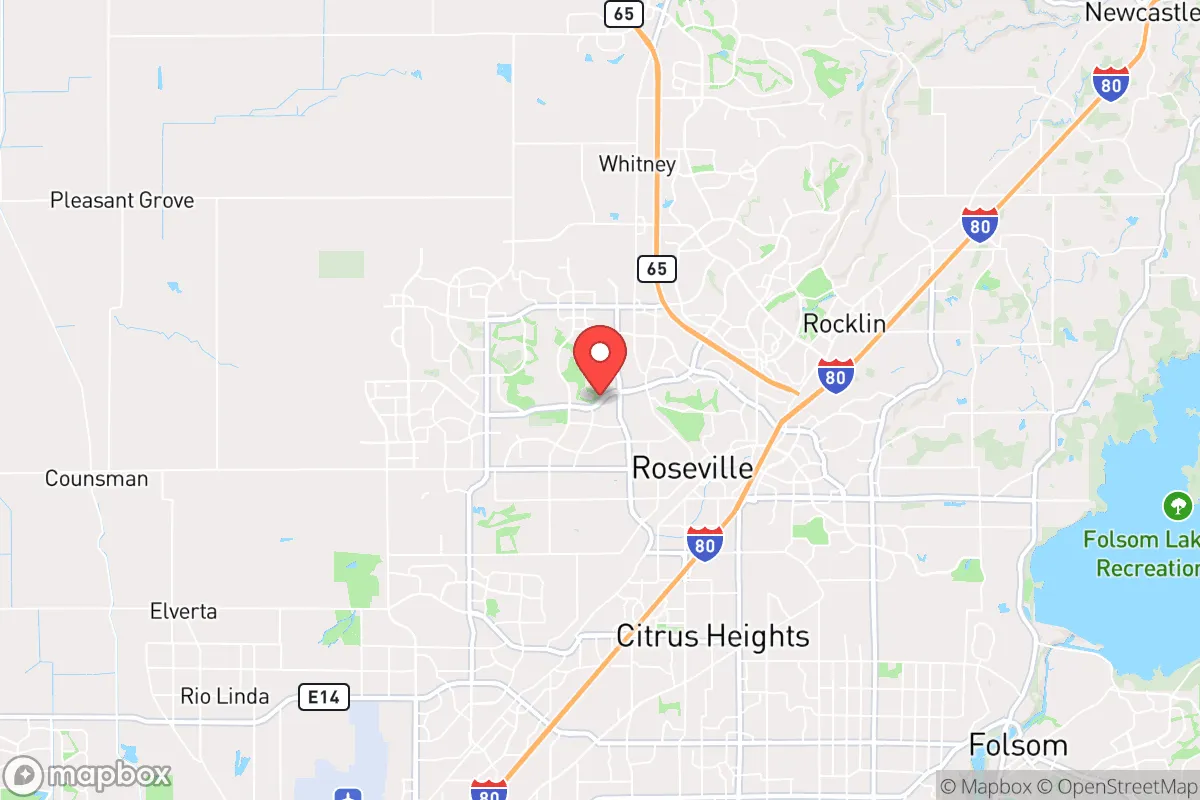
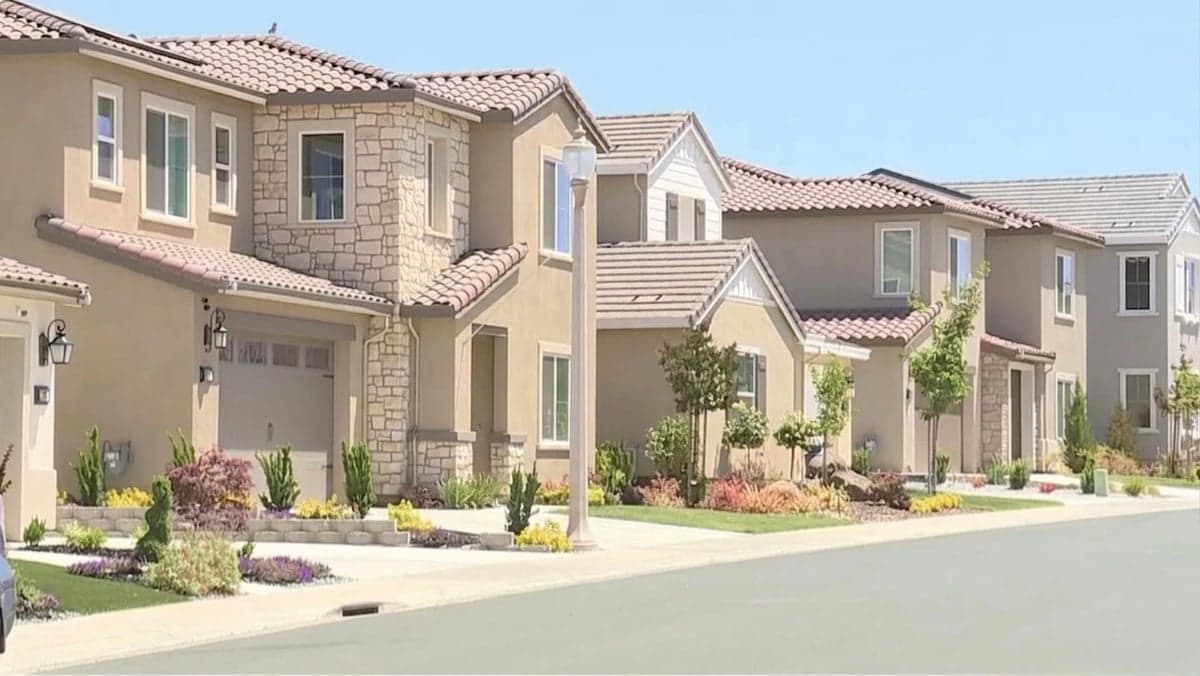
Photo: Wikipedia
Political ClimatePolitical Climate in Roseville, CA
District shown is the primary district for this city’s centroid. Cities may span multiple districts.
Local Political AnalysisPolitical Analysis of Roseville, CA
Roseville, California, has long been a reliably conservative stronghold in a state that often leans the other way, with a Cook PVI of R+2 that reflects a community that values personal responsibility and limited government. For decades, this was a place where folks could count on local leaders to prioritize public safety, keep taxes in check, and stay out of your business—a real breath of fresh air compared to the chaos you see in places like San Francisco or Los Angeles. But lately, there’s been a subtle shift, and if you’ve lived here as long as I have, you can feel the winds changing. The old-school conservative backbone is still there, but it’s facing pressure from an influx of newcomers and a growing progressive undercurrent that’s starting to test the limits of local governance.
How it compares
When you look at the surrounding area, Roseville stands out as a relative island of sanity. Head west to Sacramento, and you’re in a deep-blue city where the city council seems to think every problem can be solved with a new tax or regulation. Drive east to Rocklin or Granite Bay, and you’ll find communities that are even more conservative than Roseville—places where the Second Amendment is still respected and property rights aren’t up for debate. Lincoln, just north, is similar, but it’s growing fast and starting to import some of the same progressive ideas that are creeping into Roseville. The contrast is stark: in Placer County, we’ve historically voted red by comfortable margins, but the 2020 and 2024 elections showed the gap narrowing as younger, more liberal transplants from the Bay Area move in, drawn by our lower cost of living and good schools. They bring their politics with them, and it’s showing up in local school board meetings and city council votes on things like housing density and police funding.
What this means for residents
For those of us who value freedom from government overreach, the warning signs are there. The push for more “affordable housing” mandates sounds nice, but it often means sacrificing single-family neighborhoods for high-density developments that strain infrastructure and erode property values. There’s been chatter about “equity” initiatives in the school district that sound an awful lot like social engineering, and some local leaders are starting to cozy up to state-level green energy mandates that could drive up your utility bills. The biggest concern, though, is the slow creep of progressive policies that chip away at personal liberties—like restrictions on short-term rentals or new fees on small businesses. If you’re a longtime resident, you’re probably already watching the city council meetings more closely, because what used to be a hands-off local government is starting to feel a little too comfortable telling you how to live your life. The good news is that the conservative base here is still organized and vocal, but it’s going to take active engagement to keep Roseville from sliding into the same kind of overregulation that’s ruined other California cities.
One thing that still sets Roseville apart is its strong sense of community and a local culture that prizes self-reliance. You won’t find the same kind of aggressive homelessness policies or defund-the-police rhetoric here that you see in Sacramento—our city council has generally kept law enforcement well-funded and public spaces clean. But the cultural battle lines are being drawn over things like library programming and public art, where some activists are pushing for more overtly political content. The long-term outlook depends on whether the next wave of residents embraces the conservative values that made this area great or tries to remake it in the image of the places they left behind. For now, Roseville is still a good place to raise a family without the government breathing down your neck, but you’d better keep one eye on the ballot box if you want it to stay that way.

State Political ClimatePolitical Climate in California
State Political AnalysisPolitical Environment in the State
California is a one-party Democratic state where registered Democrats outnumber Republicans nearly 2-to-1, and the party holds every statewide office and supermajorities in both legislative chambers. Over the past 20 years, the state has shifted from a competitive purple state—it voted for George W. Bush in 2004—to a solid blue stronghold where no Republican has won a statewide election since 2006. The dominant coalition is a mix of coastal urban progressives, Latino voters, and a growing bloc of Asian-American professionals, while the GOP has been reduced to a rump party concentrated in the Central Valley, inland deserts, and a few wealthy coastal enclaves like Orange County’s Newport Beach and San Diego’s northern suburbs.
Urban vs. rural divide
The political map of California is a tale of two states. The coastal metros—Los Angeles, San Francisco, Oakland, San Jose, and San Diego—drive the state’s Democratic supermajority, with precincts routinely voting 70-85% Democratic. The Bay Area is the engine of progressive policy, while Los Angeles County alone casts more votes than 40 other states. Inland, the Central Valley cities of Bakersfield, Fresno, and Modesto lean Republican, but their populations are growing slower than the coast. The Inland Empire—Riverside and San Bernardino—is a true battleground: it voted for Obama twice, then flipped to Trump in 2020, then swung back to Biden in 2024 by a narrow margin. Orange County, once a GOP bastion, has flipped blue at the presidential level since 2016, though cities like Huntington Beach and Yorba Linda remain conservative holdouts. The rural north—Redding, Yreka, Susanville—votes 70%+ Republican, but those counties are losing population and political clout.
Policy environment
California’s policy environment is the most progressive in the nation, and it shows in every lever of government. The state income tax tops out at 13.3%, the highest in the country, and the sales tax can exceed 10% in cities like Los Angeles and San Francisco. Property taxes are capped at 1% of assessed value under Prop 13, but annual reassessments and parcel taxes have eroded that protection. The regulatory posture is aggressive: California has its own environmental review process (CEQA) that can delay any construction project for years, and the California Air Resources Board (CARB) sets emissions standards that effectively become national policy. In education, the state spends over $20,000 per pupil but ranks near the bottom in NAEP scores; school choice is limited, with no universal voucher program and strict charter school caps. Healthcare is dominated by the state’s Medicaid expansion (Medi-Cal), which covers nearly 40% of residents, and the state is moving toward a single-payer system. Election laws are among the most liberal: universal mail-in voting, same-day registration, and no voter ID requirement. For a conservative, the policy environment feels like a slow-motion takeover of personal choice by state bureaucracy.
Trajectory & freedom
California is becoming less free by nearly every measure of personal liberty, and the trend has accelerated since 2020. On gun rights, the state has the strictest laws in the nation: an assault weapons ban, a 10-day waiting period, a “may issue” concealed carry regime that was tightened further by SB 2 in 2023, which effectively bans carry in most public places. On parental rights, AB 1955 (2024) prohibits schools from notifying parents if a child changes their gender identity, overriding local school board policies. On speech, the state has criminalized “hate speech” in certain contexts and allows the California Civil Rights Department to investigate online posts. On medical autonomy, the state mandates COVID-19 vaccines for schoolchildren and has considered forced treatment for mental illness under SB 43. On property rights, rent control was expanded statewide under AB 1482 (2019), and the state has sued cities that try to enforce zoning laws against homeless encampments. The only area where freedom has expanded is on drug decriminalization—Proposition 47 (2014) reduced most drug possession to a misdemeanor—but that has led to visible open-air drug markets in San Francisco and Oakland. For a conservative, the trajectory is one of steadily shrinking personal autonomy in favor of state control.
Civil unrest & political movements
California has been a flashpoint for civil unrest and political movements for decades. The 2020 George Floyd protests in Los Angeles and Oakland were among the largest and most destructive in the nation, with billions in property damage and a lasting “defund the police” movement that led to budget cuts in San Francisco and Los Angeles. Organized activist groups like the Democratic Socialists of America (DSA) have won seats on city councils in Oakland and Los Angeles, pushing policies like cash bail elimination and police abolition. On the right, the “California Exodus” movement has gained traction, with groups like the California Republican Assembly and the “Recall Newsom” campaign (2021) drawing national attention. Immigration politics are a constant flashpoint: California is a “sanctuary state” under SB 54 (2017), which limits local law enforcement cooperation with ICE, and the state has sued the Trump administration over border policies. Secession rhetoric—the “Calexit” movement—peaked in 2016-2017 but has faded, though the “State of Jefferson” movement in the rural north still advocates for splitting off into a separate, more conservative state. Election integrity controversies have been muted compared to swing states, but the 2020 and 2024 elections saw widespread use of ballot drop boxes and universal mail-in voting, which raised concerns among conservatives about chain-of-custody and signature verification. A new resident in San Francisco or Los Angeles would see visible homelessness, open drug use, and frequent protests; in Bakersfield or Redding, the political tension is quieter but palpable.
Projection
Over the next 5-10 years, California will likely become more progressive and less politically diverse. Demographic trends favor the Democratic coalition: the state’s white population is shrinking, while Latino and Asian populations—both of which lean Democratic—are growing. In-migration from other states has slowed to a trickle, while out-migration to Texas, Arizona, and Nevada continues, disproportionately among higher-income conservatives and middle-class families. The state’s housing crisis will push more people into the Central Valley and Inland Empire, which could shift those areas leftward as new arrivals bring coastal voting habits. The GOP’s only realistic path to relevance is through a moderate, business-friendly candidate in a low-turnout special election, but the structural advantages for Democrats—gerrymandered districts, universal mail-in voting, and a media environment that is uniformly left-leaning—make a statewide Republican win nearly impossible. A conservative moving to California in 2026 should expect to live under a government that is increasingly hostile to their values, with higher taxes, more regulations, and less personal freedom than they would find in Texas, Florida, or Tennessee.
Bottom line for a new resident: If you’re a conservative considering California, you need to be honest with yourself about what you’re signing up for. The state offers unmatched natural beauty, a strong economy, and world-class universities, but it comes at the cost of living under a government that actively works against your political and personal freedoms. You’ll pay more in taxes, have less say in your children’s education, and face a legal system that prioritizes state mandates over individual choice. If you can afford it and are willing to fight for your values at the local level—in cities like Huntington Beach or Yorba Linda, where conservative communities still thrive—it can be done. But for most conservatives, the math doesn’t add up, and the exodus will continue.
* Values derived from national, state, county, city and local statistics and may differ in a specific area. Last updated: 2026-04-24T13:19:52.000Z
Narrative content on this page is AI-generated and may contain mistakes. Verify any details that matter before acting on them.
ReloMaps may earn a commission from affiliate links at no extra cost to you.

