Photo: Wikipedia
Political ClimatePolitical Climate in Sahuarita, AZ
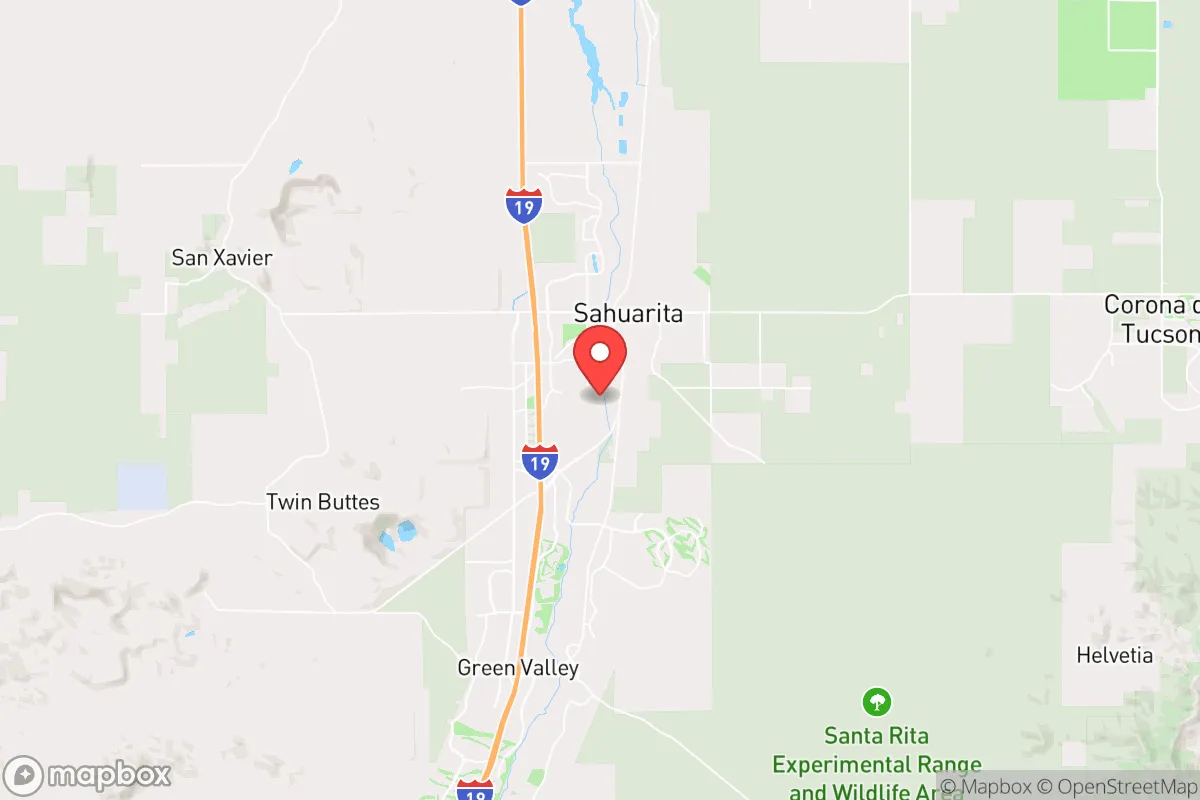
District shown is the primary district for this city’s centroid. Cities may span multiple districts.
Local Political AnalysisPolitical Analysis of Sahuarita, AZ
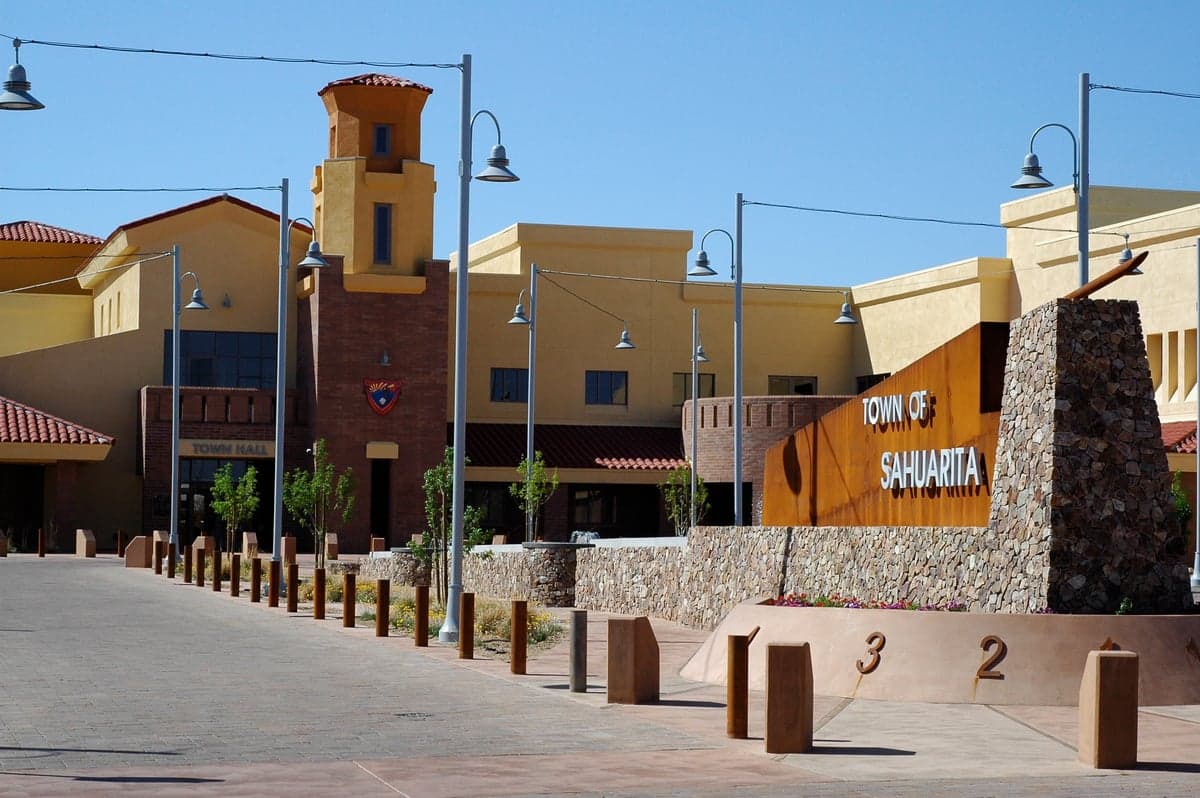
Sahuarita, Arizona, has historically been a quiet, conservative-leaning community, but the political winds have shifted noticeably in recent years. The Cook PVI rating of D+13 for the broader district tells you a lot — this area is now solidly blue, a stark contrast to the deep red of places like Green Valley or the more libertarian-leaning parts of rural Pima County just a few miles away. It’s a change that’s happened fast, and if you’ve been here a while, you can feel it in local elections and even in casual conversations at the hardware store.
How it compares
Drive 15 minutes south to Green Valley, and you’re in a different world — that’s a retiree stronghold that still votes reliably Republican, with a Cook PVI likely in the R+10 range. Head east toward Vail, and you’ll find a similar conservative vibe. But Sahuarita itself? It’s become an extension of Tucson’s political orbit. The influx of younger families and remote workers from more progressive states has flipped the script. Where local council races used to be sleepy affairs focused on water rights and road maintenance, now you see debates over zoning for affordable housing and climate action plans. The contrast is jarring — Sahuarita used to be the place people moved to escape Tucson’s politics, but now it feels like Tucson’s politics followed them here.
What this means for residents
For a long-time resident who values personal freedom and limited government, the trend is concerning. The shift toward progressive policies means more local ordinances that can feel like overreach — think stricter building codes, talk of “equity” initiatives in schools, and pressure to adopt California-style environmental regulations. Property taxes have crept up as the town expands services to match its growing population, and there’s a real worry that the next step will be more red tape for small businesses and homeowners. The 2024 election results in Pima County showed a 12-point margin for the Democratic candidate, and Sahuarita’s precincts mirrored that. If you value the old-school Arizona ethos of “live and let live,” the trajectory here is worth watching closely. The local school board and town council are the front lines — and they’re increasingly leaning left.
Culturally, you still see plenty of American flags and trucks with gun racks, but the new arrivals bring different priorities. The annual Fourth of July parade is still a big deal, but you’ll also see more “In This House, We Believe” signs in front yards. The biggest policy distinction? Sahuarita has been more aggressive than neighboring towns in pursuing state and federal grants for “sustainable development,” which often comes with strings attached that limit local control. For now, the community is still safe and the schools are decent, but the political drift is real. If you’re thinking of moving here, just know that the Sahuarita of 2026 isn’t the same one from 2016 — and it’s likely to keep changing. Keep an eye on local elections; that’s where the rubber meets the road.

State Political ClimatePolitical Climate in Arizona
State Political AnalysisPolitical Environment in the State
Arizona has transformed from a reliably Republican stronghold into a genuine battleground state over the past two decades, but its political soul remains deeply contested. The state voted for Joe Biden by just 10,457 votes in 2020 and for Donald Trump by a similarly razor-thin margin in 2024, reflecting a near-perfect 50-50 split at the presidential level. However, beneath that top-line number, the state’s conservative base remains formidable, anchored by massive growth in Maricopa County’s outer suburbs and a deeply red rural interior, while the left has consolidated power in the urban cores of Phoenix and Tucson.
Urban vs. rural divide
The political map of Arizona is a tale of three distinct regions. Maricopa County, home to over 60% of the state’s population, is the decisive battleground. The city of Phoenix itself leans left, but its sprawling suburbs tell a different story. Mesa, Chandler, and Gilbert have become conservative strongholds, with Gilbert voting over 55% Republican in recent cycles. Meanwhile, Scottsdale and Paradise Valley remain reliably red, though the former has seen a slight drift toward the center as wealthy transplants arrive from California. The real conservative engine, however, is the rural expanse. Pinal County, just south of the Phoenix metro, voted +18 for Trump in 2024, while Yavapai County (Prescott) and Mohave County (Lake Havasu City) routinely deliver 65-70% Republican margins. Tucson is the state’s second-largest city and a Democratic stronghold, but its surrounding Pima County suburbs like Oro Valley and Marana lean conservative, creating a donut of red around a blue core. The Flagstaff area in Coconino County is the state’s most reliably progressive region outside of Phoenix and Tucson, driven by Northern Arizona University’s student population.
Policy environment
Arizona’s policy landscape is a mixed bag for conservatives. On the plus side, the state has a flat income tax rate of 2.5% as of 2023, down from 4.5% in 2020, thanks to Republican-led tax cuts. There is no state estate tax, and property taxes are among the lowest in the nation, averaging about 0.62% of assessed value. The state is a right-to-work state, and its regulatory environment is generally business-friendly. However, the education policy front is contentious. Governor Katie Hobbs, a Democrat elected in 2022, has vetoed multiple school choice expansion bills, though the state still has one of the strongest Empowerment Scholarship Account (ESA) programs in the country, allowing parents to use public funds for private or homeschool expenses. On healthcare, Arizona expanded Medicaid under the Affordable Care Act in 2013, a decision that remains a sore point for fiscal conservatives. Election laws have been a flashpoint: the state passed a voter ID law in 2022, but it remains weaker than those in Texas or Georgia, and mail-in voting is widespread, with nearly 80% of ballots cast by mail in 2024. The state also has a Republican-controlled legislature, but Governor Hobbs has used her veto pen aggressively, blocking bills on parental rights in education and election integrity.
Trajectory & freedom
The trajectory of personal freedom in Arizona is a tug-of-war. On the positive side, the state remains a Second Amendment haven. Constitutional carry has been law since 2010, and there are no state-level magazine capacity limits or firearm registration requirements. In 2024, the legislature passed a bill prohibiting the enforcement of federal gun laws that violate the Second Amendment, though it was vetoed by Hobbs. On parental rights, the state has a strong Parental Bill of Rights law (HB 2162, 2022), which affirms parents’ authority over their children’s education and medical decisions. However, the left has made inroads. In 2024, the state supreme court upheld a near-total abortion ban from 1864, but the legislature quickly repealed it, and a 2024 ballot measure enshrined abortion access up to fetal viability in the state constitution. This was a major loss for the pro-life movement. On property rights, Arizona is generally strong, with no statewide rent control and relatively low eminent domain abuse, though local governments in Tucson and Flagstaff have experimented with zoning restrictions that limit housing supply. The state’s Proposition 207 (2022) legalized recreational marijuana, which some conservatives view as a freedom issue and others as a public health concern.
Civil unrest & political movements
Arizona has seen its share of political heat. The 2020 election aftermath was particularly intense, with Maricopa County at the center of the “Stop the Steal” movement. The county’s ballot audit in 2021, conducted by the state Senate, drew national attention and remains a point of contention. Immigration politics are a constant flashpoint. Yuma and Nogales are border towns that have seen massive migrant crossings, and the state has been a legal battleground over SB 1070 (the 2010 “show me your papers” law), portions of which were struck down by the courts. In 2024, the legislature passed a bill allowing local police to enforce federal immigration laws, but it was vetoed by Hobbs. Organized activist movements are visible: on the right, the Arizona Freedom Caucus is a vocal force in the legislature, pushing for election integrity and school choice. On the left, groups like LUCHA (Living United for Change in Arizona) organize for immigrant rights and progressive policies. Protests have been common in Phoenix and Tucson, particularly around abortion rights and immigration. A new resident in Chandler or Gilbert will see a quieter, family-oriented political culture, while those in central Phoenix will encounter more visible activism.
Projection
Looking ahead 5-10 years, Arizona is likely to remain a purple state, but the trend lines are concerning for conservatives. The state is growing rapidly, adding about 100,000 new residents per year, and many of these newcomers are coming from deep-blue states like California and Illinois. While some are conservative refugees, many bring progressive voting habits. The Phoenix metro’s continued expansion will likely dilute rural conservative influence, and the Democratic Party is investing heavily in voter registration in Maricopa County. However, the Republican base in Mesa, Gilbert, and Prescott is also growing, and the state’s independent voters—who now outnumber both registered Democrats and Republicans—tend to break conservative on economic issues. The wild card is the border: if the federal government fails to secure it, expect Arizona to become a national flashpoint, potentially driving more conservative voters to the polls. The state’s electoral votes will likely remain competitive, but the legislature may flip to Democratic control within a decade if current trends hold.
For a new resident, the bottom line is this: Arizona offers a low-tax, business-friendly environment with strong gun rights and school choice, but you’ll be living in a state where the political future is genuinely uncertain. If you settle in Gilbert or Prescott, you’ll find a conservative community that largely shares your values. If you land in Phoenix proper or Tucson, expect to be in a blue bubble. The state’s trajectory depends on who shows up to vote—and that includes you. Keep an eye on the legislature’s ability to override gubernatorial vetoes, and be prepared for ballot measures on abortion and taxes every couple of years. It’s a great place to live, but it’s not a political safe haven—it’s a fight.
* Values derived from national, state, county, city and local statistics and may differ in a specific area. Last updated: 2026-05-01T08:08:55.000Z
Narrative content on this page is AI-generated and may contain mistakes. Verify any details that matter before acting on them.
ReloMaps may earn a commission from affiliate links at no extra cost to you.

