Photo: Wikipedia
Personal Sovereignty in Salem, MA
Viable for self-reliance. Generally workable, though some barriers may limit total independence.
What does Personal Sovereignty tell us?
Personal Sovereignty measures your capacity for self-reliance and independence with minimal government friction. Higher scores mean fewer barriers between you and the way you want to live... but it assumes you have the space you need and good neighbors.
What does this tell us?
Personal Sovereignty measures your capacity for self-reliance and independence with minimal government friction. Higher scores mean fewer barriers between you and the way you want to live... but it assumes you have the space you need and good neighbors.
State Policy
Energy independence: Importer (5% of energy produced in-state)
Personal Liberty
Homesteading

Personal Liberty Analysis
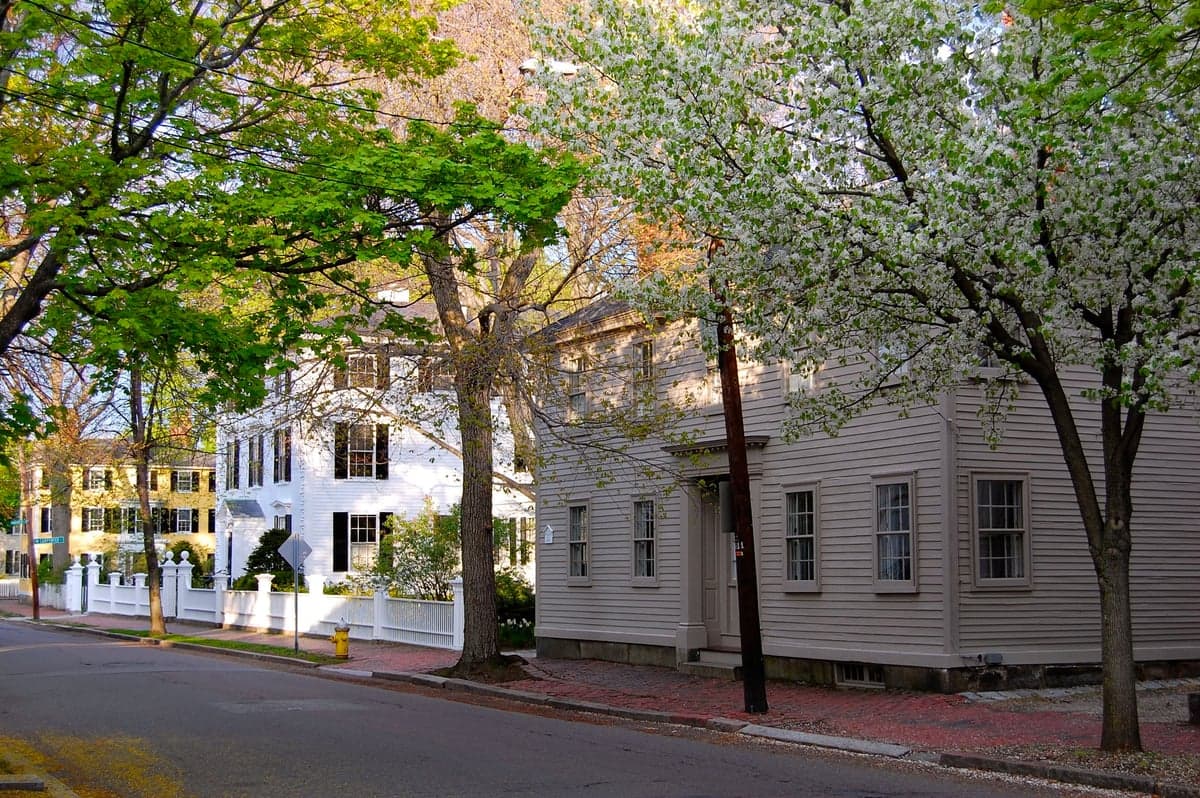
Salem, Massachusetts, presents a complex environment for personal sovereignty, where a rich colonial history of self-governance clashes with one of the nation’s most assertive state-level regulatory frameworks. For the strategic relocator with a survivalist or prepper mindset, the city offers a dense, walkable urban core with strong community ties, but it sits firmly within a state that consistently ranks among the lowest in the nation for personal freedom indices, particularly regarding gun rights, tax burden, and medical autonomy. The autonomy you can carve out here is less about wide-open spaces and more about navigating a high-tax, high-regulation system with strategic intent, making it a location for those who prioritize coastal access and historic infrastructure over low-interference living.
Tax burden and regulatory posture in Massachusetts: what it means for your household
Massachusetts imposes a flat state income tax of 5% on all earned income, which is moderate compared to some progressive states but still a fixed cost that cannot be avoided. The state’s sales tax is 6.25%, and while Salem itself does not add a local sales surcharge, property taxes in Essex County are a significant consideration. The average effective property tax rate in Salem hovers around 1.1% of assessed home value, which is slightly below the national average but applied to some of the highest home valuations in the country—median home prices in Salem exceed $550,000 as of 2025. This creates a substantial annual tax bill for homeowners. More critically for the sovereignty-minded, Massachusetts has a strict regulatory posture on land use, building codes, and environmental restrictions. The state’s Chapter 40B affordable housing law and wetlands protection act can severely limit what you can do with your property, including building additional structures, clearing land, or altering drainage. Permitting for anything beyond minor repairs is a multi-agency process involving the Salem Conservation Commission and the Massachusetts Department of Environmental Protection. This regulatory density means that any attempt at self-sufficient infrastructure—like a large garden shed, a greenhouse, or a rainwater catchment system—requires navigating a bureaucratic maze that can take months and cost thousands in fees and consultant reports.
Self-defense and gun law specifics: what you can and cannot own in Salem
For the prepper or survivalist, Massachusetts gun laws are among the most restrictive in the United States, and Salem offers no local relief. The state requires a License to Carry (LTC) for any handgun, and the issuing authority is the Salem Police Department, which operates under state guidelines that give significant discretion to the licensing officer. While Massachusetts is a “may-issue” state in practice, Salem has historically been more reasonable than Boston or Cambridge, but the process still demands a firearms safety course, fingerprinting, a background check, and a personal interview. The state bans “assault weapons” by name and feature, including the AR-15 platform and many common semi-automatic rifles. Magazine capacity is capped at 10 rounds for all firearms, and any magazine manufactured after 1994 that holds more than 10 rounds is illegal to possess, even if owned before the ban. There is no state preemption for local gun ordinances, but Salem has not added its own restrictions beyond state law. For self-defense in the home, a handgun or pump-action shotgun is the most practical option. Concealed carry is legal with an LTC, but the state’s “sensitive places” restrictions, expanded in 2024, prohibit firearms in schools, government buildings, hospitals, and any establishment serving alcohol. This means that carrying for personal protection in Salem’s many restaurants, bars, and public spaces is heavily restricted. For the prepper, this legal environment forces a reliance on less-lethal options and situational awareness rather than a robust firearms-based defense strategy.
Self-reliance and homesteading viability: lot sizes, zoning, and off-grid feasibility
Salem is a dense, historic city with a population density of over 5,000 people per square mile, making traditional homesteading nearly impossible. The typical residential lot in Salem is 0.1 to 0.25 acres, often with minimal backyard space. Zoning is predominantly R1 (single-family) and R2 (two-family), but the city’s historic district overlay covers much of the downtown and waterfront, imposing strict design review on any exterior changes, including fences, sheds, and solar panels. Off-grid living is not feasible within city limits. Salem is fully connected to municipal water, sewer, and electric grids, and the city code requires connection to these systems. Rainwater collection for potable use is prohibited under state plumbing codes, and composting toilets are not permitted as a primary sanitation method. Raising livestock is restricted to chickens only, with a permit required and a limit of six hens (no roosters). Beekeeping is allowed with registration. For the serious prepper, Salem’s urban density means that self-reliance must focus on food storage, community networking, and skills training rather than land-based production. The city does have several community gardens, but waitlists are long and plots are small. The best option for a homesteading mindset is to look at neighboring towns like Wenham, Ipswich, or Topsfield, where lot sizes of 1-5 acres are common and zoning is more permissive for outbuildings and small-scale agriculture. However, those towns come with even higher property taxes and longer commutes to Salem’s employment centers.
Personal liberties: parental rights, medical autonomy, speech, and property
Massachusetts is a state where individual liberties are often subordinated to collective public health and safety mandates, which is a key concern for the sovereignty-minded. On parental rights, the state has a strong public education system with mandatory vaccination requirements for school attendance (with limited medical and religious exemptions that have been tightened in recent years). The state’s Department of Children and Families has broad authority to investigate reports of educational neglect, including for families who choose homeschooling, though homeschooling is legal with a required annual submission of an education plan. Medical autonomy is significantly restricted. Massachusetts has some of the most stringent vaccine mandates in the country, and during public health emergencies, the governor has broad powers to mandate treatments or restrictions. The state also has a robust “right to shelter” law that can compel property owners to accept tenants in certain circumstances, limiting property rights. On free speech, Massachusetts generally protects political speech, but Salem’s local ordinances on noise, public assembly, and signage can be used to restrict expressive activities, particularly in the historic district. Property rights are further constrained by the state’s Chapter 61A program, which gives tax breaks to landowners who keep land in agricultural or forestry use, but also imposes a penalty if the land is developed—a tool that can be used to effectively control land use without direct regulation. For the prepper, the most concerning liberty issue is the state’s emergency management framework, which grants the governor unilateral authority to suspend laws, commandeer property, and restrict movement during declared emergencies, with limited judicial oversight.
Overall, Salem offers a low level of personal sovereignty relative to most of the United States, particularly when compared to states in the South, Midwest, or Mountain West. The city’s dense urban layout, high tax burden, restrictive gun laws, and heavy regulatory environment make it a challenging location for those seeking self-reliance and minimal government interference. However, for the strategic relocator who values coastal access, historic infrastructure, and a strong sense of community, Salem can work as a base of operations if you are willing to operate within the system—maintaining a low profile, investing in legal compliance, and building a network of like-minded individuals. The key is to view Salem not as a place to homestead, but as a place to build financial and social capital while keeping your true prepping activities—like land ownership, food storage, and skills training—in a secondary location outside the state’s regulatory reach. If absolute sovereignty is your priority, look elsewhere. If you can tolerate a managed existence with strategic workarounds, Salem has its merits.

* Values derived from national, state, county, city and local statistics and may differ in a specific area. Last updated: 2026-04-23T06:47:15.000Z
Narrative content on this page is AI-generated and may contain mistakes. Verify any details that matter before acting on them.
ReloMaps may earn a commission from affiliate links at no extra cost to you.

