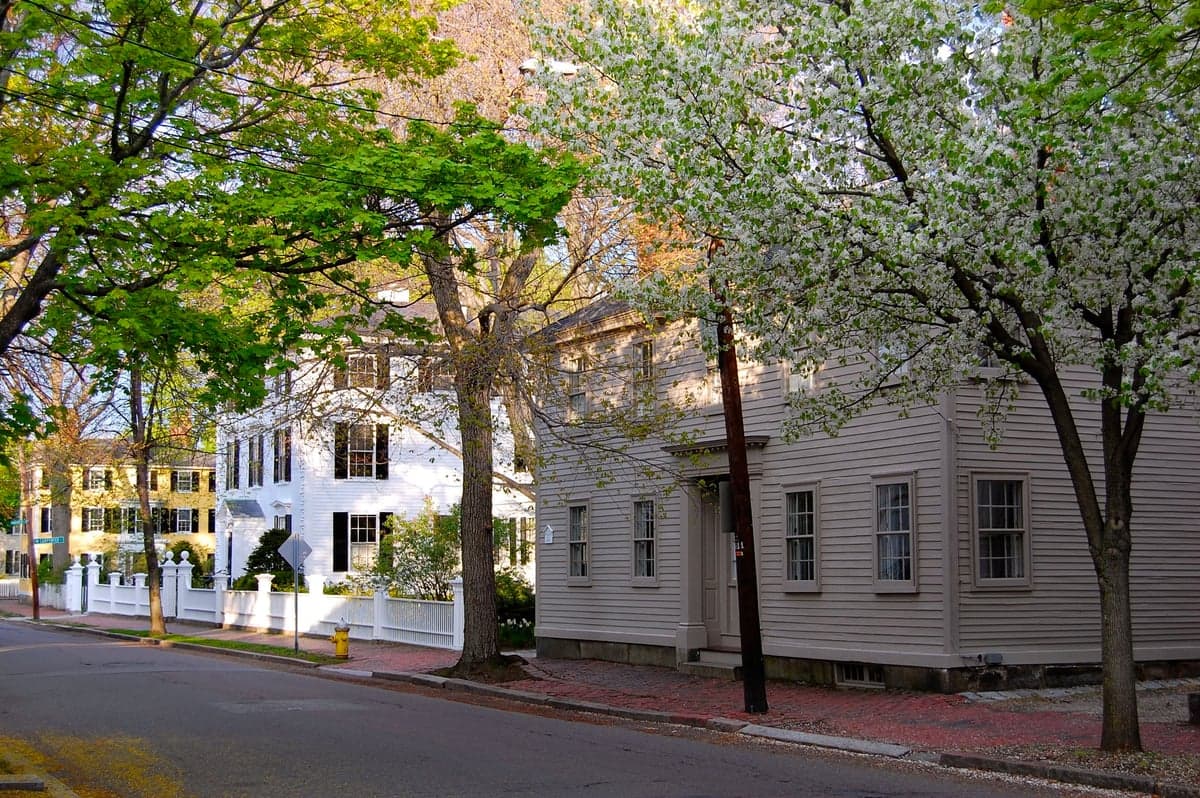
Photo: Wikipedia
Political ClimatePolitical Climate in Salem, MA
District shown is the primary district for this city’s centroid. Cities may span multiple districts.
Local Political AnalysisPolitical Analysis of Salem, MA
Look, Salem’s political climate has shifted hard and fast over the last decade. The city now carries a Cook PVI of D+11, which means it votes about 11 points more Democratic than the national average. That’s a big swing from even 15 years ago, when the place was more of a blue-collar, independent-minded town. Today, the local government and school board are firmly in progressive hands, and you can feel it in everything from zoning rules to how the police department is funded. If you’re used to a place where your personal freedoms—like how you run your small business or what you do on your own property—are respected, Salem might feel like it’s tightening the screws.
How it compares
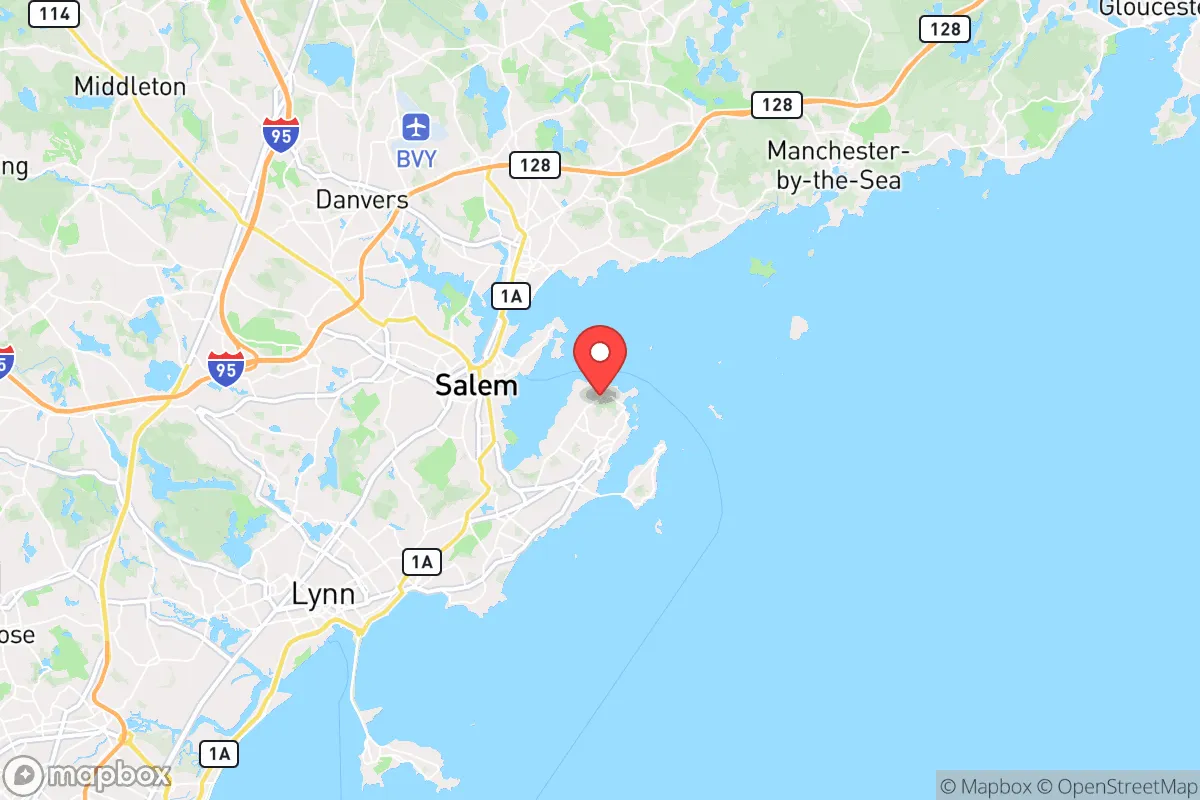
Salem sits in Essex County, surrounded by towns that give you a real contrast. Head north to Peabody or Danvers, and you’ll find more moderate, fiscally conservative communities where taxes are lower and the local government is less likely to meddle in your day-to-day life. Marblehead and Swampscott, just east, lean left but still have a strong independent streak—they’re not as quick to adopt every new progressive policy that comes down the pike. Meanwhile, Beverly, right across the bridge, is a mixed bag: it votes blue but has a more pragmatic, pro-business vibe. Salem, though, is the outlier. It’s the only city in the area where the city council regularly pushes for things like rent control expansions, sanctuary city status, and police oversight boards that can make you feel like the government is watching your every move. The state legislature in Boston only amplifies this, with Salem’s reps voting in lockstep with the most progressive agendas.
What this means for residents
For the average person living here, the political climate translates into higher costs and more bureaucracy. Property taxes have crept up as the city funds new social programs and affordable housing mandates. If you own a home or a small business, you’re dealing with more permitting hurdles, stricter short-term rental rules, and a general attitude that the city knows better than you do. The school system has shifted focus toward equity initiatives and social-emotional learning, which sounds nice but often comes at the expense of core academics and parental input. On the plus side, if you’re deeply progressive, you’ll find plenty of like-minded neighbors and a government that’s eager to act on your priorities. But if you value personal liberty—like the freedom to renovate your basement without a year of approvals or to speak your mind without being labeled—you’ll feel the squeeze. The long-term trend is concerning: each election cycle brings more candidates who see government as the solution to every problem, not a necessary evil to be kept in check.
Culturally, Salem leans hard into its identity as a progressive haven. The city’s famous Halloween celebrations have become a platform for political messaging, and the local arts scene is heavily subsidized by taxpayer dollars. There’s a strong push for “equity” in everything from public art to city contracts, which can feel like a one-size-fits-all approach that leaves little room for dissent. If you’re a conservative or even a moderate, you’ll likely keep your opinions to yourself in public—the social pressure to conform is real. Looking ahead, I’d expect Salem to keep moving left, with more regulations on housing, business, and even speech. It’s a beautiful, historic place, but the political climate is something to watch closely if you’re considering a move.

State Political ClimatePolitical Climate in Massachusetts
State Political AnalysisPolitical Environment in the State
Massachusetts has long been one of the most reliably Democratic states in the nation, with a partisan lean that has only deepened over the past two decades. In the 2024 presidential election, the state gave Kamala Harris a roughly 25-point margin, a shift from the 23-point margin for Joe Biden in 2020 and the 27-point margin for Hillary Clinton in 2016. The dominant coalition is a mix of urban progressives from Boston, Cambridge, and Somerville, combined with well-educated suburbanites in the Route 128 corridor and a shrinking but still present base of moderate Republicans in the exurbs and central/western regions. The state has not voted for a Republican presidential candidate since 1984, and the GOP holds no statewide elected offices as of 2026.
Urban vs. rural divide
The political map of Massachusetts is a textbook case of the urban-rural split, but with a twist: the suburbs are nearly as blue as the cities. Greater Boston, including Boston proper, Cambridge, Somerville, and Brookline, is the engine of the state’s Democratic dominance, routinely delivering 80-90% of the vote for Democratic candidates. The I-495 belt suburbs like Framingham, Newton, and Lexington are also deep blue, driven by highly educated professionals in tech, biotech, and academia. The western part of the state, including Springfield, Holyoke, and Pittsfield, leans Democratic but with more working-class, union-driven politics. The true red pockets are in the rural central and southeastern regions: towns like Sturbridge, Spencer, and the Cape Cod exurbs of Sandwich and Bourne. The only county that voted for Donald Trump in 2020 was tiny, rural Dukes County (Martha’s Vineyard), but even that flipped back to Harris in 2024. The most reliably Republican legislative districts are in the Plymouth County towns of Carver and Middleborough, and the Worcester County towns of Holden and Paxton, but these are islands in a blue sea.
Policy environment
Massachusetts has a policy environment that leans heavily toward government intervention and high taxation. The state has a flat income tax rate of 5.0% as of 2026, but a 2022 ballot question (Question 1) added a 4% surtax on income over $1 million, creating a de facto 9% top marginal rate. Property taxes are high, averaging about 1.1% of assessed value, but vary wildly by town—Boston’s rate is around 0.6%, while rural towns like Becket can hit 1.5%. The state has a robust regulatory apparatus, particularly in housing (the MBTA Communities Law mandates multi-family zoning near transit stops), energy (the 2021 climate law mandates net-zero emissions by 2050), and healthcare (Massachusetts has near-universal coverage under the 2006 Romneycare law, which served as the model for Obamacare). Education policy is heavily centralized, with the state Board of Education setting curriculum standards and the MCAS test as a graduation requirement. Election laws are among the most liberal in the country: no-excuse mail-in voting, same-day voter registration, and automatic voter registration at the RMV are all permanent fixtures. The state also has some of the strictest gun laws in the nation, including a ban on "assault weapons" (defined by cosmetic features), a 10-round magazine limit, and a licensing system that gives local police chiefs broad discretion to deny permits.
Trajectory & freedom
Over the last five years, Massachusetts has moved decisively toward more government control in several key areas of personal liberty. On gun rights, the 2024 "Massachusetts Gun Safety Act" expanded the "assault weapons" ban to include any semi-automatic rifle with a detachable magazine, effectively banning the AR-15 platform entirely, and required all gun owners to register their firearms with the state within 90 days—a move that many gun-rights advocates see as a precursor to confiscation. On parental rights, the state passed a 2023 law that allows schools to withhold information about a child’s gender identity from parents if the school deems it "in the best interest" of the child, a policy that has sparked heated school board meetings in towns like Andover and Needham. On medical autonomy, the 2020 "ROE Act" removed parental consent requirements for minors seeking abortions and allowed late-term abortions after 24 weeks if a physician deems it necessary, effectively codifying abortion access without limits. On speech, the state has not passed a specific "hate speech" law, but the Attorney General’s office has aggressively used existing anti-discrimination statutes to investigate conservative speakers on college campuses, particularly at UMass Amherst and Boston University. Property rights have been constrained by the MBTA Communities Law, which forces towns to rezone for multi-family housing, overriding local zoning control. The trajectory is clear: Massachusetts is becoming less free in the traditional sense, with the state government asserting more authority over firearms, family decisions, and local land use.
Civil unrest & political movements
Massachusetts has a history of organized political activism, but it is overwhelmingly dominated by the left. The 2020 Black Lives Matter protests in Boston were large and sustained, with some property damage in the Downtown Crossing area. The state’s sanctuary status—codified by a 2017 executive order and a 2021 law limiting local police cooperation with ICE—has made it a flashpoint in immigration politics. In 2023, the state saw a surge in migrant arrivals, with the governor declaring a state of emergency and opening temporary shelters in hotels in towns like Quincy and Woburn, leading to local backlash and town council resolutions opposing the policy. On the right, the "Massachusetts Fiscal Alliance" and the "Massachusetts Gun Rights" group are active but small, with their largest rally in 2024 drawing only about 500 people to the State House. Election integrity controversies have been minimal, though the 2020 and 2024 elections saw some conservative activists challenging the state’s no-excuse mail-in voting system in court, without success. The most visible flashpoint for a new resident would be the constant presence of political signage and bumper stickers—overwhelmingly Democratic—and the near-total absence of visible conservative organizing in most suburbs. In the rural towns of the Berkshires and the Cape, you’ll see the occasional Trump flag, but it’s a lonely display.
Projection
Over the next 5-10 years, Massachusetts is likely to become even more progressive, driven by demographic trends and in-migration patterns. The state is losing native-born residents to lower-tax states like Florida, Texas, and New Hampshire, but it is gaining highly educated, left-leaning transplants from other blue states and from abroad. The Boston metro area is a global hub for biotech and higher education, attracting a workforce that is overwhelmingly Democratic. The rural and exurban areas that currently provide the GOP’s base are aging and shrinking, while the urban and suburban cores are growing. The state’s tax burden is unlikely to decrease—if anything, the millionaire’s tax may be expanded to lower thresholds, and a proposed "wealth tax" on assets over $1 billion is being debated in the legislature. Gun laws will likely tighten further, with a possible "safe storage" mandate and a ban on private firearm sales. Parental rights will continue to erode, with the state considering a bill that would allow minors to consent to gender-affirming care without parental notification. A new resident moving in now should expect to find, in a decade, a state where the government has even more control over daily life, taxes are higher, and conservative voices are even more marginalized. The only realistic escape valve is the New Hampshire border, which is why towns like Salisbury and Amesbury are seeing an influx of Massachusetts residents commuting across the line for lower taxes and more freedom.
For a conservative-leaning individual or family considering a move to Massachusetts, the bottom line is this: you will be a political minority in almost every aspect of daily life, from your neighbors to your local government to the state legislature. The schools will teach from a progressive curriculum, your property taxes will fund programs you may not support, and your gun rights will be severely restricted. If you value high-quality public education, world-class healthcare, and a vibrant economy, Massachusetts delivers—but the trade-off is a state government that is actively expanding its reach into your personal decisions. If you can afford the taxes and are willing to keep your political views private, you can make it work. But if you value personal freedom, low taxes, and a community that shares your values, you’d be better off looking at New Hampshire, or even further afield.
* Values derived from national, state, county, city and local statistics and may differ in a specific area. Last updated: 2026-04-23T06:47:15.000Z
Narrative content on this page is AI-generated and may contain mistakes. Verify any details that matter before acting on them.
ReloMaps may earn a commission from affiliate links at no extra cost to you.

